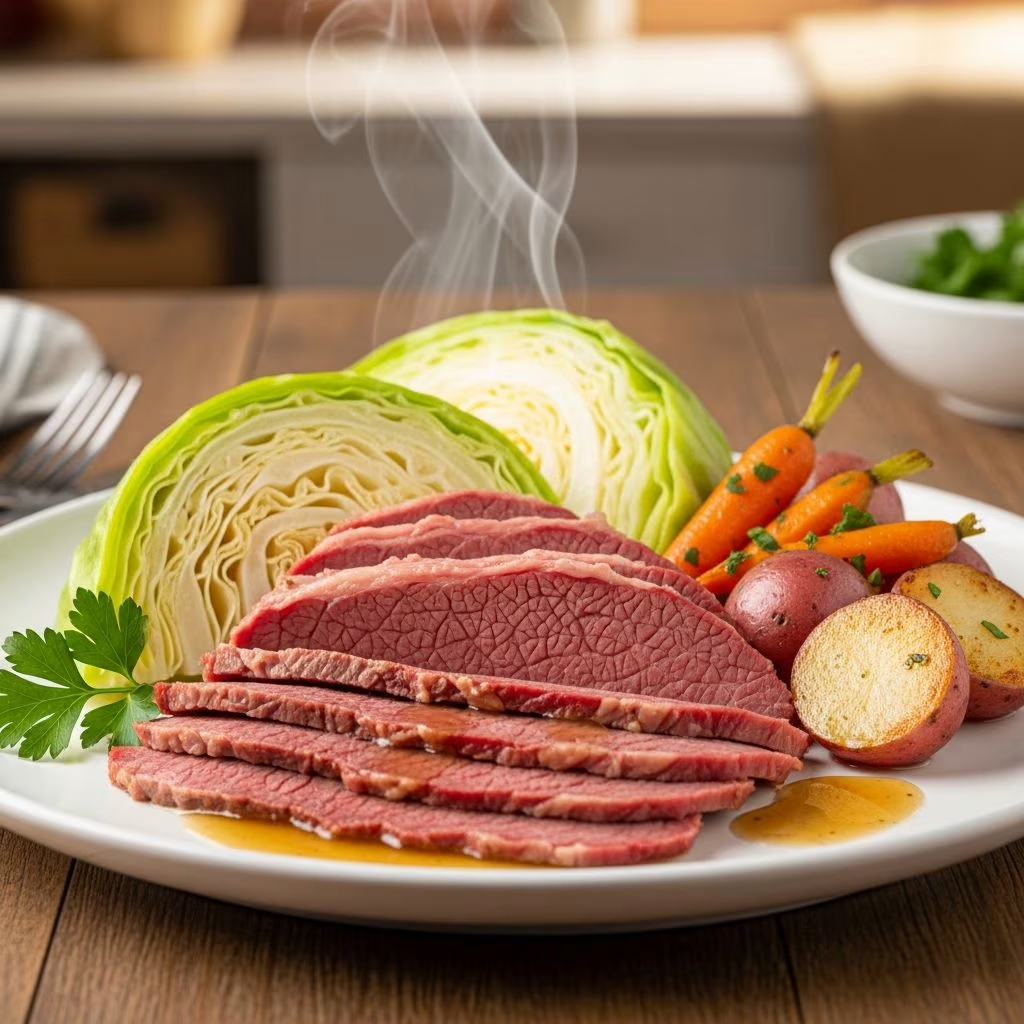
Experience the comforting flavors of a traditional boiled dinner that brings families together. This dish features succulent corned beef brisket slowly cooked with vibrant vegetables, creating a meal that’s both simple to prepare and profoundly satisfying. Perfect for celebrations like St. Patrick’s Day or any cozy evening, it transforms humble ingredients into a feast.
The Heritage Behind Corned Beef and Cabbage
While often linked to Irish heritage, corned beef and cabbage evolved as an Irish-American classic in the United States. Immigrants adapted affordable cuts like brisket, preserved with salt (or “corned”), paired with cabbage—a staple vegetable. This one-pot wonder simmered in spiced broth, offering nourishment and warmth. Today, it symbolizes festivity, especially around March 17th, evoking parades and green-clad gatherings.
Historical accounts trace its popularity to 19th-century New York, where Irish communities favored beef over scarce pork back home. The dish’s simplicity made it accessible, relying on long simmering to tenderize tough brisket. Modern versions retain this essence but incorporate tips for enhanced flavor and texture.
Selecting Quality Ingredients for Success
Start with a high-quality corned beef brisket, typically 3 to 5 pounds, including its seasoning packet of pickling spices like coriander, mustard seeds, and bay leaves. Look for flat-cut briskets for even cooking; point cuts offer more marbling but may shrink unevenly.
- Cabbage: Choose firm green heads, small to medium-sized, to fit easily in the pot. Savoy cabbage adds tenderness, while Napa provides milder crunch.
- Potatoes: Baby red or Yukon Gold varieties hold shape well; halve larger ones to ensure uniform cooking.
- Carrots: Fresh, thick carrots peeled and chunked add natural sweetness and color.
- Aromatics: Garlic cloves, onions, and extra spices elevate the broth.
Water or low-sodium broth covers the meat, allowing spices to infuse deeply. Fresh herbs like parsley finish the dish vibrantly.
Step-by-Step Cooking Guide
Patience is key—this recipe rewards slow cooking. Use a large stockpot or Dutch oven for best results.
- Prepare the Brisket: Rinse under cold water to remove excess salt. Place in pot with smashed garlic, onion halves, and seasoning packet. Cover with water by 2 inches.
- Simmer Low and Slow: Bring to a gentle boil, then reduce to simmer. Cook 50-60 minutes per pound (about 3-4 hours for 4 pounds). Skim foam periodically; add water if needed. Internal temperature should reach 195-205°F for fork-tenderness.
- Add Vegetables: In the last 30-40 minutes, introduce potatoes and carrots. Top with cabbage wedges (core intact to hold shape). Cover and cook until vegetables are tender.
- Rest and Slice: Remove brisket to rest under foil for 15-20 minutes. Slice against the grain for maximum juiciness.
Pro tip: Fat-side up during cooking bastes the meat naturally. For oven method, braise at 325°F covered for similar time.
Pro Tips for Perfect Results Every Time
Achieve restaurant-quality tenderness with these strategies:
- Don’t rush the simmer—low heat breaks down collagen without drying out the meat.
- Test doneness: Brisket should shred easily but hold shape when sliced.
- Vegetable timing prevents mushiness; cabbage last absorbs flavors without overcooking.
- Enhance broth with beer or apple cider vinegar for subtle tang.
- Pressure cooker shortcut: 90 minutes high pressure for 4-pound brisket, natural release.
| Method | Time for 4 lb Brisket | Pros | Cons |
|---|---|---|---|
| Stovetop Simmer | 3.5-4 hours | Traditional flavor control | Requires monitoring |
| Oven Braise (325°F) | 3-4 hours | Hands-off | Needs oven-safe pot |
| Pressure Cooker | 90 minutes | Fast | Less nuanced broth |
| Slow Cooker | 8-10 hours low | Convenient | Vegetables may soften too much |
Flavor Variations and Twists
Customize to suit tastes while honoring tradition:
- Spicy Kick: Add sliced jalapeños or red pepper flakes to the broth.
- Horseradish Cream: Mix sour cream, prepared horseradish, and chives for a zesty topping.
- Root Vegetable Medley: Include parsnips, turnips, or rutabaga for earthiness.
- Gluten-Free: Naturally so; pair with colcannon (mashed potatoes with cabbage).
- Vegetarian Swap: Use jackfruit or tempeh with pickling spices for plant-based version.
For leftovers, shred meat for Reuben sandwiches or hash with fried eggs.
Nutritional Profile and Serving Suggestions
This hearty meal provides protein from brisket (about 25g per serving), fiber from vegetables, and vitamins like C from cabbage. A 4-ounce serving offers roughly 300 calories, balancing indulgence with nutrition. Serve with mustard varieties—grainy, Dijon, or honey—for contrast.
Pair with Irish soda bread, boiled parsley potatoes, or a simple green salad. Beverages: Guinness stout or green-tinted lemonade for fun.
Frequently Asked Questions
Can I cook corned beef and cabbage in a slow cooker?
Yes, place brisket with spices and water on low for 8-10 hours, adding vegetables in the last 2 hours.
How do I know when the corned beef is done?
Fork should pierce easily, and internal temp hits 195-205°F. Resting firms it for slicing.
Why is my corned beef tough?
Cook longer at lower heat; brisket needs time to tenderize connective tissues.
Can I freeze leftovers?
Yes, portion broth with meat and veggies; thaw and reheat gently on stovetop.
Is corned beef the same as pastrami?
No, corned beef is boiled/brined beef; pastrami is smoked and spiced.
Storage and Reheating Best Practices
Store in airtight containers with some broth to retain moisture; refrigerate up to 4 days or freeze 3 months. Reheat covered on low stove or microwave with damp paper towel. Avoid high heat to prevent dryness.
This dish’s magic lies in its straightforward method yielding profound taste. Whether for holiday cheer or weeknight comfort, it delivers every time.
References
- Beef. It’s What’s For Dinner – Classic Corned Beef with Cabbage & Potatoes — National Cattlemen’s Beef Association. 2023. https://www.beefitswhatsfordinner.com/recipes/recipe/55605/classic-corned-beef-with-cabbage-potatoes
- Corned Beef and Cabbage — Simply Scratch. 2018-01-24. https://www.simplyscratch.com/corned-beef-cabbage/
- How to Cook Corned Beef — USDA Food Safety and Inspection Service. 2024. https://www.fsis.usda.gov/food-safety/safe-food-handling-and-preparation/meat-fish/corned-beef