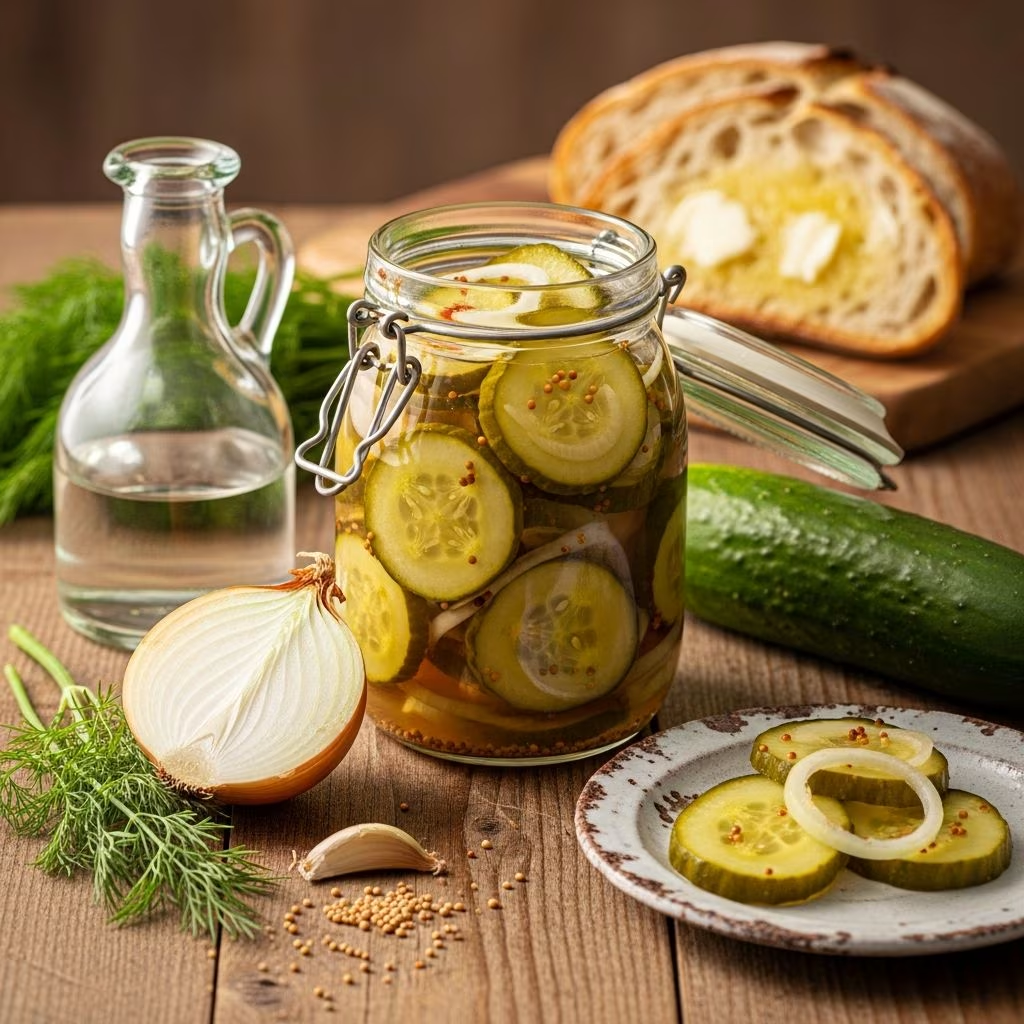
Classic bread and butter pickles deliver a delightful mix of sweetness, tanginess, and crunch that elevates sandwiches, burgers, and charcuterie boards. These beloved preserves originated in the early 20th century as a Depression-era staple, using affordable cucumbers and onions transformed into a versatile condiment through simple pickling techniques. Today, home cooks recreate this magic with fresh produce and pantry staples, ensuring vibrant flavor and texture that store-bought versions can’t match.
Why Home-Canned Pickles Outshine Store-Bought
Making your own bread and butter pickles allows control over ingredients, resulting in brighter flavors and customizable spice levels. Commercial pickles often contain preservatives and artificial colors, diluting the natural essence of cucumbers and spices. Homemade versions retain crispness longer when properly brined and processed, thanks to techniques like ice salting that draw out excess moisture without softening the vegetables.
- Freshness: Use peak-season cucumbers for superior snap and taste.
- Customization: Adjust sugar or add heat with peppers.
- Cost-Effective: A few pounds of produce yield pints for months.
- Preservation Skills: Builds confidence in safe canning practices.
Selecting the Best Cucumbers and Onions
Start with **pickling cucumbers** (4-6 inches long, firm, with bumpy skins) like Kirbys, which resist sogginess better than slicing varieties. Avoid waxed supermarket cukes; opt for farmers’ market or homegrown ones weighing about 3-4 pounds for a standard batch. Thinly slice to 1/4-inch thickness for even pickling—use a mandoline for uniformity.
Onions add sharpness; choose sweet varieties like Vidalias or reds for color contrast. Slice into thin half-moons, about 1-2 pounds per 3-4 pounds of cucumbers. Proportions ensure balanced flavor without overpowering the cukes.
| Ingredient | Ideal Type | Quantity (for 7 pints) | Tips |
|---|---|---|---|
| Cucumbers | Pickling/Kirby | 4 lbs | Firm, unwaxed, small |
| Onions | Sweet or red | 2 lbs | Thinly sliced |
| Salt | Canning/pickling | 1/3-1/2 cup | Non-iodized |
Essential Ingredients for the Signature Brine
The brine defines bread and butter pickles’ **sweet-tangy profile**. Key players include white vinegar (5% acidity for safety), sugar (1-2 cups for balance), and spices like mustard seeds, celery seeds, turmeric (for golden hue), and peppercorns.
- Vinegar: 2-3 cups distilled white prevents discoloration.
- Sugar: Granulated white harmonizes acidity.
- Mustard Seeds: 1-2 tbsp for pungent warmth.
- Turmeric: 1 tsp imparts earthy notes and color.
- Celery Seeds: 1 tsp for herbal depth.
Optional add-ins: ginger, cloves, or red pepper flakes for spice.
Step-by-Step Preparation Process
Patience yields perfection. This method ensures crunch via osmosis and heat processing.
- Slice Produce: Cut cucumbers and onions uniformly. Layer in a large bowl with canning salt (1/3-1/2 cup). Cover with crushed ice or ice water. Let sit 1.5-3 hours (or overnight for max crispness). This draws out water, preventing mushiness.
- Rinse Thoroughly: Drain ice water, rinse slices 2-3 times under cold water to remove salt. Drain well; pat dry with towels.
- Prepare Brine: In a pot, combine vinegar, sugar, water (if using), and spices. Heat to dissolve sugar, then boil briefly. Add drained veggies; simmer until heated through but not soft.
- Pack Jars: Sterilize pint jars. Ladle hot pickles and brine into jars, leaving 1/4-1/2 inch headspace. Remove bubbles, wipe rims, apply lids and bands fingertip-tight.
- Process in Water Bath: Submerge jars in boiling water (2 inches above tops) for 10 minutes (adjust for altitude). Cool undisturbed 24 hours; check seals.
Total time: 3-4 hours active, plus processing. Yields 6-8 pints.
Tips for Achieving Maximum Crunch
Crispness is paramount. Beyond ice salting, dry slices overnight on towels to evaporate moisture. Add calcium chloride (Pickle Crisp granules) per jar for commercial-level snap—about 1/4 tsp per pint. Use fresh spices and avoid overcooking veggies in brine.
- Chill jars post-processing before refrigerating.
- Test cukes pre-pickling: They should snap when bent.
- Avoid aluminum pots; use stainless steel or enamel.
Safe Canning Practices and Storage
Follow USDA guidelines for low-acid pickles to prevent botulism. Use tested recipes, new lids, and a boiling water canner. Process pints 10 minutes below 1,000 ft; add 5 minutes per 1,000 ft elevation. Store sealed jars in a cool, dark pantry up to 1 year. Refrigerate after opening; they last 2 months.
Signs of spoilage: Bulging lids, off odors, or mush—discard immediately.
Quick Refrigerator Version for Beginners
No canner? Make fridge pickles: Follow steps 1-4, skip processing. Store in fridge up to 2 months. Ideal for small batches; flavors peak in 1 week. Reduce vinegar slightly for milder tang.
Flavor Variations to Suit Your Taste
Experiment safely within acidic brines.
| Variation | Add-Ins | Best For |
|---|---|---|
| Spicy | Red pepper flakes, jalapeños | Tacos, burgers |
| Dill-Infused | Fresh dill, garlic cloves | Salads |
| Honey-Sweet | Replace half sugar with honey | Cheese boards |
| Curried | Curry powder, extra turmeric | Indian dishes |
Common Mistakes and How to Avoid Them
- Soft Pickles: Insufficient salting or old cukes—ice brine longer next time.
- Cloudy Brine: Tap water or reactive metals—use filtered water, proper pots.
- Seal Failures: Not wiping rims clean or loose bands—fingertip tight only.
- Overly Sweet: Taste brine pre-packing; reduce sugar incrementally.
Creative Ways to Use Bread and Butter Pickles
Beyond sandwiches, chop into potato salad, blend into relish for hot dogs, or infuse vodka for cocktails. Pair with fried chicken, pulled pork, or cheese platters. Their sweetness cuts richness perfectly.
Nutrition and Health Benefits
Per serving (1/4 cup): Low calorie (~20), provides probiotics from fermentation-like process, antioxidants from turmeric/onions, and hydration from cukes. Low sodium if sugar-balanced; vinegar aids digestion.
Frequently Asked Questions (FAQs)
Can I use regular cucumbers?
Pickling types are best, but waxed ones work if peeled. Expect less crunch.
How long do they last?
Canned: 1 year pantry, 2 months fridge. Fridge-only: 2 months.
Why add turmeric?
For color and anti-inflammatory benefits; it’s traditional.
Vegetarian/Vegan?
Yes, fully plant-based.
Altitude adjustments?
Add 5 min per 1,000 ft over 1,000 ft.
Scaling Recipes for Small or Large Batches
Double ingredients for more yield; maintain ratios. Small batch: Halve for 3 pints. Always calculate processing time based on jar size.
References
- Granny’s Bread and Butter Pickles Recipe — Grow a Good Life. 2020-06-15. https://growagoodlife.com/bread-and-butter-pickles/
- How to Make Bread and Butter Pickles — Pratesi Living. 2019-08-20. https://www.pratesiliving.com/how-to-make-bread-and-butter-pickles-and-a-giveaway/
- Crunchy, Sweet, and Tangy Bread and Butter Pickles — White on Rice Couple. 2021-07-10. https://whiteonricecouple.com/bread-butter-pickles/
- DIY Bread-and-Butter Pickles Recipe — America’s Test Kitchen (YouTube). 2018-07-12. https://www.youtube.com/watch?v=XDPsn5CRUtg
- Refrigerator Bread and Butter Pickles — Kevin Is Cooking. 2022-06-05. https://keviniscooking.com/refrigerator-bread-and-butter-pickles/
- How to Make Great Depression-Style Sweet Pickles — Food Wishes (YouTube). 2020-09-18. https://www.youtube.com/watch?v=0yOA1WnlpWY