Understanding the Origins and Appeal of This Argentine Condiment
Chimichurri sauce represents one of the most celebrated culinary contributions from Argentina’s rich gastronomic heritage. This vibrant green condiment has transcended its regional origins to become a globally recognized accompaniment to grilled beef dishes. The sauce’s enduring popularity stems from its ability to enhance the natural flavors of quality steak while adding brightness and complexity through its carefully balanced blend of fresh herbs, aromatics, and acidic elements. What makes chimichurri particularly appealing is its straightforward composition—despite containing only a handful of ingredients, the sauce delivers remarkable depth and sophistication that elevates even the simplest grilled steak into restaurant-quality fare.
The foundation of chimichurri lies in its use of fresh parsley as the primary ingredient, combined with garlic, olive oil, and vinegar to create a sauce that’s both herbaceous and tangy. This combination of elements creates a condiment that is simultaneously light and flavorful, making it an ideal complement to richly marbled beef cuts. The sauce’s versatility extends beyond steak applications, as many cooks have discovered that chimichurri works equally well with grilled chicken, fish, and roasted vegetables, though it remains most traditionally paired with beef.
Assembling Your Ingredient Arsenal
Creating an authentic chimichurri sauce requires gathering quality ingredients that will contribute their individual characteristics to the final product. The beauty of this sauce lies in its simplicity—most home cooks will find all necessary components already stocked in their kitchens.
Essential Components for the Base
- Fresh parsley: Italian flat-leaf parsley forms the sauce’s backbone, providing a clean, herbaceous foundation. Most recipes call for approximately one to one and one-half cups of tightly packed parsley leaves after removing stems.
- Garlic cloves: Ranging from three to five cloves depending on desired intensity, garlic should be minced or chopped finely to distribute evenly throughout the sauce.
- Premium olive oil: Extra virgin olive oil serves as the binding agent and flavor carrier, with quantities typically between one-third to one cup depending on the recipe’s intended consistency.
- Vinegar selection: Red wine vinegar remains the traditional choice, though apple cider vinegar offers a slightly different flavor profile. Approximately one-quarter cup of vinegar balances the oil’s richness.
- Dried oregano: This Mediterranean herb adds earthy depth, with most recipes incorporating between one-half to one tablespoon of dried oregano leaves.
- Red pepper flakes: Contributing heat and complexity, crushed red pepper flakes typically range from one-quarter to one teaspoon, allowing cooks to adjust spice levels to personal preference.
- Salt and black pepper: These fundamental seasonings bring out other flavors and should be added to taste, beginning with one-quarter teaspoon each.
Optional Flavor Enhancements
While the core ingredients create a perfectly balanced sauce, several optional additions can customize the chimichurri to complement specific palates or steak preparations. Fresh cilantro can substitute for or supplement parsley, adding a citrusy note that some find particularly appealing. Lime juice provides brightness and acidity, offering an alternative to or in addition to vinegar. Some cooks incorporate a touch of honey or agave nectar to round out sharp flavors and add subtle sweetness that balances the vinegar’s acidity.
Preparation Techniques and Methods
The method chosen for preparing chimichurri sauce significantly impacts the final texture and mouthfeel, offering cooks flexibility in achieving their preferred consistency.
The Food Processor Method
The modern approach utilizing a food processor offers speed and consistency. To prepare chimichurri this way, begin by adding garlic and parsley to the food processor bowl, pulsing until the herbs are finely chopped but not liquefied into a paste. This distinction matters considerably—over-processing creates an undesirable texture that lacks the pleasant textural variation of hand-chopped versions. After achieving the desired herb consistency, transfer the mixture to a bowl and gently stir in the remaining ingredients, adding oil last to prevent over-blending.
The Hand-Chopping Approach
Many experienced cooks prefer traditional hand-chopping methods despite requiring additional time investment. This approach involves finely mincing parsley and garlic on a cutting board before transferring to a mixing bowl, where remaining ingredients are combined. The advantage of hand-preparation lies in achieving uniform piece sizes and maintaining better control over texture. Additionally, this method prevents the potential for over-processing that occurs with mechanical tools.
Hybrid Technique
A compromise approach involves processing garlic and parsley minimally before hand-stirring in remaining ingredients. This method combines the speed of mechanical preparation with the textural benefits of manual finishing, offering an attractive middle ground for many home cooks.
Flavor Development and Resting Periods
Chimichurri sauce improves dramatically when allowed to rest before serving. After combining all ingredients, allowing the sauce to sit at room temperature for one hour permits flavors to meld and develop greater complexity. Even better results emerge when chimichurri is prepared a day in advance and refrigerated overnight, allowing the herbs to fully infuse the oil and vinegar while deeper, more rounded flavors emerge.
This resting period serves a practical purpose beyond flavor development—the sauce becomes easier to spoon and less likely to separate as the various components thoroughly combine. For immediate use situations, chimichurri remains acceptable, though it will lack the refined quality that extended resting provides.
Steak Selection and Preparation
While chimichurri sauce complements virtually any steak cut, certain selections pair particularly well with this Argentine condiment.
Ideal Cuts for Chimichurri
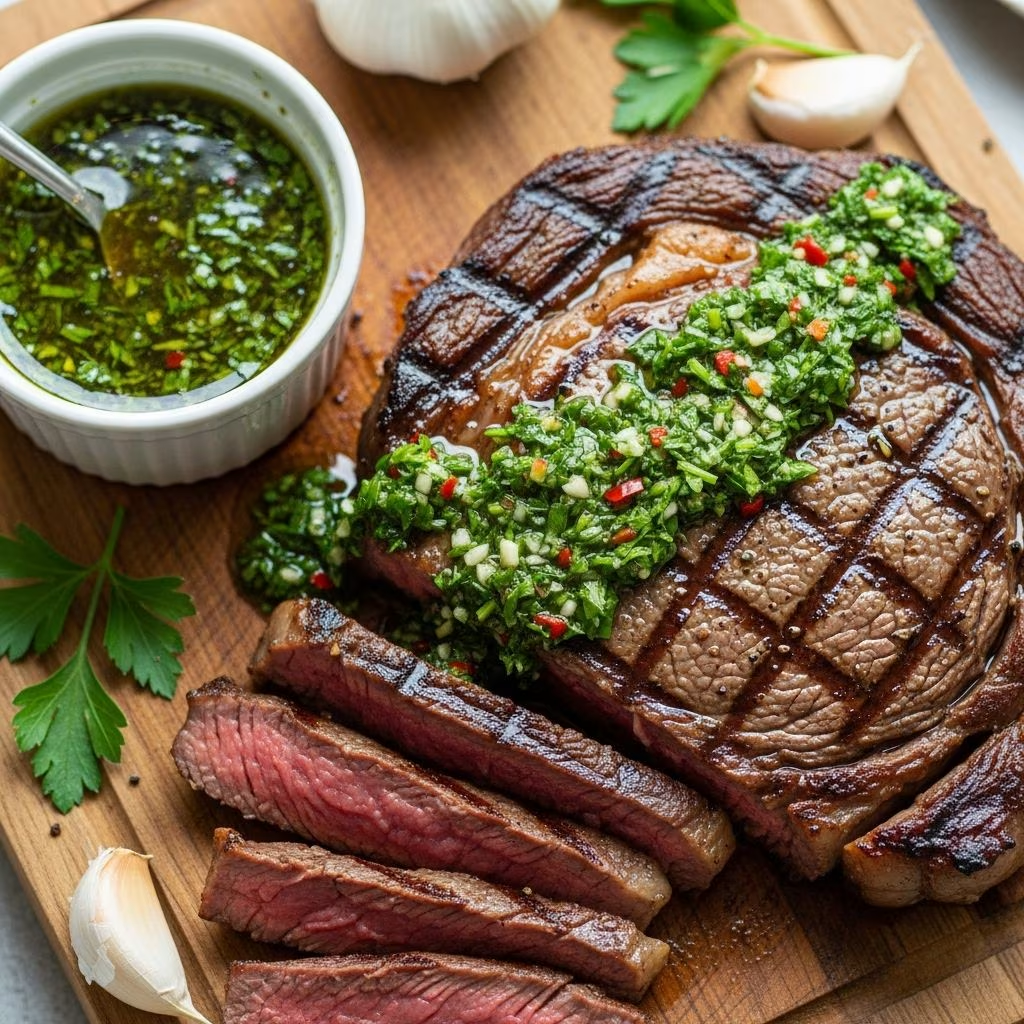
Flank steak represents perhaps the most traditional pairing, offering a lean profile that contrasts beautifully with chimichurri’s bright, herbaceous qualities. Skirt steak provides similar characteristics with pleasant grain structure ideal for slicing. Ribeye steaks, with their higher fat content, create rich combinations where the sauce’s acidity cuts through the beef’s richness elegantly. Even leaner cuts like sirloin benefit from chimichurri’s flavor contribution, though prime cuts with better marbling typically showcase the pairing most successfully.
Pre-Cooking Preparations
Many chimichurri steak recipes involve marinating the beef in a chimichurri-based mixture before cooking, allowing flavors to penetrate the meat. These marinades typically combine chimichurri sauce with additional seasonings like chili powder and a citrus component from lemon or lime juice. Marinating times ranging from thirty minutes to overnight yield increasingly pronounced flavor integration, with longer marination periods producing more complex results. However, reserve a portion of fresh chimichurri sauce for finishing the cooked steak, as marinating liquid becomes fully incorporated into the meat while finishing sauce remains bright and fresh.
Cooking Techniques for Optimal Results
Grilling Method
Preheating the grill to medium-high heat creates proper conditions for developing a caramelized crust while maintaining a tender, slightly pink interior. Searing the steak for six to eight minutes per side achieves the desired browning and doneness for most preferences. The intense heat of the grill complements chimichurri’s fresh characteristics perfectly, as the contrast between warm beef and cool, herbaceous sauce creates memorable flavor and textural contrasts.
Stovetop Searing
Indoor preparation using a preheated skillet with oil also produces excellent results for those without grill access. Medium-high heat generates sufficient temperature for proper searing while preventing excessive smoking. This method offers greater temperature control and consistency, making it particularly suitable for thicker cuts requiring precise cooking management.
Critical Resting Period
After cooking, allowing steaks to rest for several minutes before slicing represents a non-negotiable step toward achieving optimal texture and juiciness. This resting period permits meat fibers to relax and retain moisture rather than releasing it immediately upon cutting. Resting also allows residual heat to distribute evenly throughout the steak, promoting carryover cooking that completes the cooking process gently.
Serving Strategies and Presentation
Chimichurri sauce achieves maximum impact when applied strategically rather than smothered uniformly. After slicing the rested steak, arrange portions on serving plates before spooning chimichurri sauce directly over the meat, allowing some to drip onto the plate while maintaining visible steak surface. This approach showcases the meat’s quality while ensuring adequate sauce consumption. Alternatively, some prefer serving chimichurri in a small bowl alongside steaks, permitting diners to customize sauce quantity according to personal preference.
Storage Guidelines and Shelf Life
Proper storage extends chimichurri’s usability beyond single applications. Refrigerated in an airtight container, chimichurri remains fresh and flavorful for approximately three days, though some sources suggest slightly longer periods if kept consistently cold. For extended storage, chimichurri freezes successfully in portion-sized containers or ice cube trays, maintaining quality for several months. When ready to use frozen portions, thaw in the refrigerator rather than at room temperature to preserve color and flavor integrity.
Flavor Variations and Creative Adaptations
While traditional chimichurri maintains its core components, creative variations offer opportunities to customize the sauce for specific applications. A mint chimichurri variation, created by substituting fresh mint for cilantro and using lime juice instead of red wine vinegar, provides a lighter, more delicate flavor profile particularly suited to leaner beef cuts or fish applications. Cilantro-forward versions appeal to those favoring more pronounced citrus and floral notes. Some cooks experiment with additional herbs like basil or tarragon to create personalized interpretations that maintain chimichurri’s essential character while reflecting individual taste preferences.
Pairing Suggestions Beyond Steak
While chimichurri’s reputation centers on steak applications, this versatile sauce enhances numerous other preparations. Grilled chicken breasts or thighs benefit significantly from chimichurri’s brightness, cutting through poultry’s sometimes mild character. Fish preparations, particularly robust varieties like swordfish or tuna, pair beautifully with the sauce’s herbaceous qualities. Roasted or grilled vegetables including zucchini, bell peppers, and eggplant become more interesting when finished with chimichurri. Even simple roasted potatoes transform into memorable sides when dressed with this Argentine classic.
Frequently Asked Questions
Can I make chimichurri sauce without a food processor?
Absolutely. Traditional preparation involves hand-chopping parsley and garlic on a cutting board with a sharp knife, then combining with remaining ingredients in a bowl. This method requires additional time but produces excellent results and provides superior textural control.
What is the best vinegar for authentic chimichurri?
Red wine vinegar represents the traditional choice and contributes the authentic flavor profile most associated with Argentine chimichurri. However, apple cider vinegar or other acidic components like lime juice offer acceptable alternatives if red wine vinegar is unavailable.
Should chimichurri be thick or thin?
Chimichurri should maintain a consistency somewhere between a paste and a liquid—thick enough to cling to steak but liquid enough to drip slightly. The oil-to-vegetable ratio determines this consistency, which can be adjusted by adding more oil for thinner sauce or more herbs for thicker versions.
How far in advance can I prepare chimichurri?
Chimichurri improves with time and can be prepared up to three days ahead and stored in the refrigerator. Many cooks prepare sauce the day before serving to allow maximum flavor development. The sauce can also be frozen for several months.
Does chimichurri work with all steak cuts?
Chimichurri complements virtually any steak cut, though leaner cuts and those with prominent grain structure like flank and skirt steaks showcase the pairing most effectively. Higher-fat cuts like ribeye also pair beautifully, with the sauce’s acidity balancing the beef’s richness.
References
- Flank Steak with Chimichurri Sauce — Creme De La Crumb. Accessed 2026. https://www.lecremedelacrumb.com/flank-steak-with-chimichurri-sauce/
- Chimichurri Steak — Courtney’s Sweets. Accessed 2026. https://www.courtneyssweets.com/chimichurri-steak/
- Steak with Mint Chimichurri Sauce — Marc’s Recipes. Accessed 2026. https://marcsrecipes.com/steak-with-mint-chimichurri-sauce/
- Chimichurri Sauce for Grilled Flank Steak — Supper Sanity. Accessed 2026. https://www.suppersanity.com/chimichurri-sauce-for-grilled-flank-steak/
- Steak with Classic Chimichurri Sauce — Certified Angus Beef. Accessed 2026. https://www.certifiedangusbeef.com/recipes/Steak-with-Classic-Chimichurri-Sauce
- Skirt Steak with Chimichurri Sauce — RecipeTin Eats. Accessed 2026. https://www.recipetineats.com/skirt-steak-with-chimichurri-sauce/