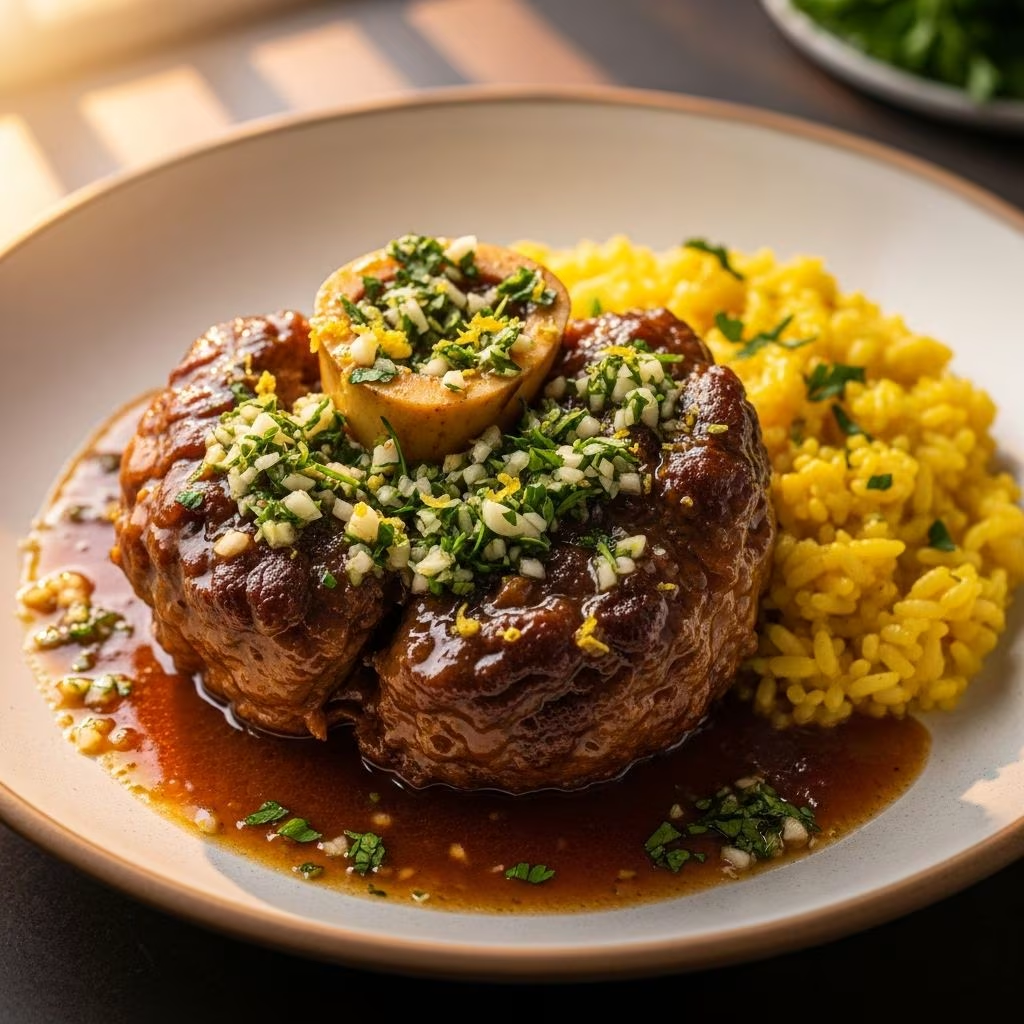
Osso Buco stands as one of Italy’s most cherished culinary treasures, originating from the vibrant kitchens of Milan. This dish features cross-cut veal shanks slowly braised until the meat melts from the bone, infused with a symphony of vegetables, herbs, and wine. Its name, translating to ‘bone with a hole,’ hints at the prized marrow inside, which becomes a luxurious treat for diners. Perfect for special occasions or cozy family dinners, Osso Buco pairs beautifully with creamy polenta or risotto, offering comfort in every bite.
The Roots and Rise of Osso Buco in Italian Tradition
Emerging in the 19th century in Lombardy, Osso Buco quickly became a staple in Milanese households and fine dining establishments. Butchers originally created it to utilize less desirable cuts like veal hind shanks, transforming them into a delicacy through patient braising. This method breaks down the tough connective tissues, yielding fork-tender results. Today, it symbolizes rustic Italian ingenuity, celebrated in cookbooks and restaurants worldwide.
While veal remains traditional, modern adaptations use beef, lamb, or even bison shanks for accessibility and ethical preferences. The dish’s essence lies in its braising liquid—a harmonious blend of white wine, stock, and tomatoes—that reduces into a velvety sauce. Fresh herbs like rosemary, thyme, and bay leaves provide aromatic depth, while a finishing touch of gremolata adds brightness with lemon, parsley, and garlic.
Essential Ingredients for Perfect Osso Buco
Gathering high-quality components is key to authenticity. Focus on fresh, vibrant produce and properly sourced meat. Here’s a breakdown:
- Veal Shanks: 4 pieces, about 1-1.5 inches thick, ideally from the hind shank for richness. Look for marrow-filled bones.
- Aromatic Vegetables: Onions, carrots, celery (mirepoix base), and garlic for foundational flavor.
- Herbs and Spices: Rosemary, thyme, bay leaves, and juniper berries for earthy notes.
- Liquids: Dry white wine (e.g., Pinot Grigio), chicken or veal stock, and canned peeled tomatoes.
- For Dredging: All-purpose flour seasoned with salt and pepper.
- Gremolata: Zest of one lemon, chopped parsley, minced garlic.
Optional enhancements include veal demi-glace for intensified savoriness or kitchen twine to secure the shanks.
Step-by-Step Guide to Braising Osso Buco
Preparation takes about 30 minutes, with 2-2.5 hours of braising. Preheat your oven to 325°F (165°C) for even cooking.
- Prepare the Shanks: Pat dry with paper towels. Tie each shank with kitchen twine to hold the meat intact. Season generously with salt and pepper, then dredge lightly in flour, shaking off excess.
- Brown the Meat: Heat vegetable oil in a large Dutch oven over medium-high heat until shimmering. Sear shanks on all sides, 3-4 minutes per side, for a deep caramelized crust. Remove and set aside.
- Build the Base: In the same pot, sauté diced onion, carrot, celery, and garlic until softened, about 8 minutes. Add chopped rosemary, thyme, bay leaves, and juniper berries. Stir in crushed tomatoes.
- Deglaze and Simmer: Pour in half the white wine to scrape up browned bits. Return shanks to the pot, add remaining wine, and reduce by half. Incorporate stock and demi-glace, bringing to a boil.
- Braise Low and Slow: Cover tightly and transfer to the oven. Cook for 2-2.5 hours, until meat pulls easily from the bone.
- Finish and Serve: Remove shanks, discard twine and bay leaves. Puree or strain the sauce, reducing if needed for thickness. Spoon over shanks and top with gremolata.
Mastering Gremolata: The Bright Finishing Touch
Gremolata elevates Osso Buco from good to unforgettable. This uncooked condiment contrasts the rich braise with zesty freshness.
Simple Recipe (Makes enough for 4 servings):
- 1/2 cup finely chopped fresh parsley
- Zest of 1 lemon
- 2 garlic cloves, minced
- Pinch of salt
Mix just before serving. Sprinkle generously—it cuts through the dish’s fattiness.
Pro Tips for Flawless Results
- Meat Selection: Choose shanks with visible marrow; it’s the star.
- Browning Matters: High heat ensures flavor via Maillard reaction.
- Liquid Balance: Wine should be dry to avoid sweetness; stock adds umami.
- Oven vs. Stovetop: Oven provides steady heat; check tenderness at 2 hours.
- Make-Ahead: Flavors deepen overnight; reheat gently.
Variations to Suit Every Palate
Adapt Osso Buco for dietary needs or twists:
| Variation | Key Changes | Why It Works |
|---|---|---|
| Beef Osso Buco | Substitute beef shanks; use red wine | Bolder flavor, more accessible meat |
| Lamb Version | Lamb shanks; add cinnamon | Gamey richness with warm spices |
| Vegetarian | Mushrooms and eggplant; veg stock | Hearty texture mimics meat |
| Short Rib Osso Buco | Beef short ribs; longer braise | Budget-friendly alternative |
Ideal Pairings and Side Dishes
Complement Osso Buco’s robustness:
- Polenta or Risotto: Creamy base absorbs sauce. For risotto alla Milanese, add saffron.
- Vegetables: Sautéed greens or roasted root veggies for balance.
- Wine: Full-bodied Italian reds like Barbaresco or Chianti.
- Bread: Crusty loaves for sopping up sauce and scooping marrow.
Common Mistakes and How to Avoid Them
Avoid these pitfalls for success:
- Skipping the Sear: No crust means flat flavor—always brown first.
- Overcrowding the Pot: Cook in batches for even browning.
- Rushing the Braise: Low and slow tenderizes; high heat toughens.
- Thin Sauce: Reduce post-braise or use less liquid initially.
Nutritional Profile and Health Notes
One serving (1 shank) offers protein-rich nourishment: approximately 450 calories, 35g protein, 25g fat (from marrow), and vitamins from veggies. Marrow provides healthy fats like oleic acid. Opt for grass-fed veal for better omega-3s. Portion control balances indulgence.
Storage, Freezing, and Reheating
- Fridge: Up to 4 days in airtight container.
- Freezer: 3 months; wrap individually.
- Reheat: Oven at 300°F covered, or stovetop with splash of stock.
Frequently Asked Questions (FAQs)
What if I can’t find veal shanks?
Beef or lamb shanks work excellently; adjust braising time slightly longer for beef.
Can Osso Buco be made in a slow cooker?
Yes—brown first, then low for 6-8 hours. Finish sauce on stovetop.
Is gremolata essential?
Absolutely; it brightens the dish. Omit only if citrus-allergic.
How do I know when it’s done?
Meat should pull from bone with a fork; internal temp around 195-205°F.
Pairing wine recommendations?
Nebbiolo-based wines like Barolo complement the earthiness.
Why Osso Buco Deserves a Spot in Your Repertoire
Osso Buco teaches patience and precision, rewarding with profound flavors. It’s versatile, scalable, and impressive—ideal for hosting. Experiment confidently, drawing from tradition to create your signature version. Buon appetito!
References
- Classic Italian Osso Bucco — Montana Chef. 2023-05-15. https://montanachef.com/classic-italian-osso-bucco/
- Osso Buco — Serious Eats. 2022-10-12. https://www.seriouseats.com/osso-buco-recipe
- The Food Lab: Osso Buco — J. Kenji López-Alt, Serious Eats. 2021-11-03. https://www.seriouseats.com/food-lab-osso-buco
- Italian Regional Cooking: Lombardy — Academia Barilla. 2024-01-20. https://www.academiabarilla.com/en/recipes/osso-buco/
- Braising Techniques — Institute of Culinary Education. 2023-08-07. https://www.ice.edu/blog/braising-101