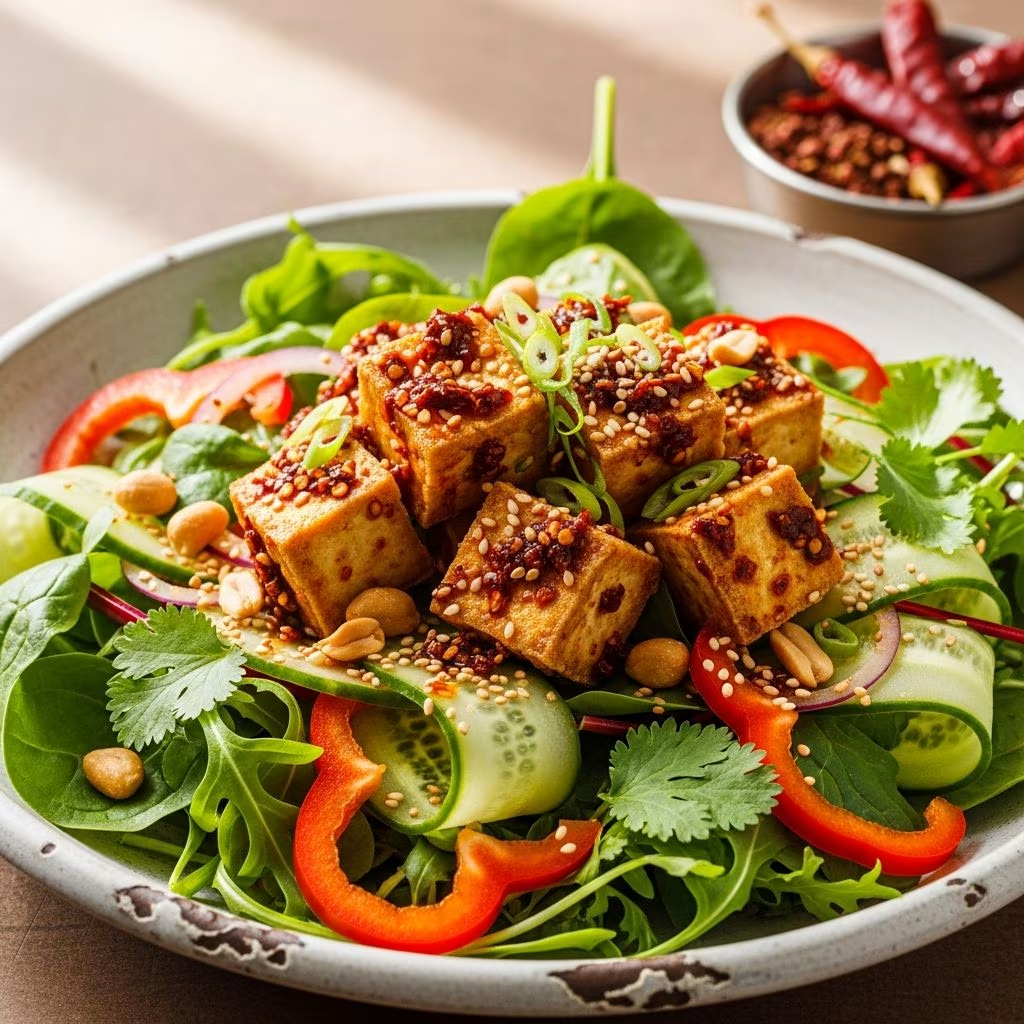
Sichuan cuisine has captivated food enthusiasts worldwide with its bold flavor profiles and distinctive numbing sensation from Sichuan peppercorns. While traditional mapo tofu typically appears as a hot, simmering braise, contemporary interpretations have evolved to embrace the refreshing quality of chilled preparations. A spiced tofu salad represents this modern adaptation—combining the essence of Sichuan seasonings with the cooling comfort of a cold dish, making it an ideal option for warm weather dining or as a sophisticated starter.
Understanding the Foundation: Silken Tofu Selection and Preparation
The success of any chilled tofu dish hinges on selecting the appropriate tofu variety. Silken tofu, with its delicate, custard-like texture, serves as the ideal canvas for this preparation. Unlike firm tofu, which maintains distinct edges and slices cleanly, silken tofu offers a smooth, creamy mouthfeel that absorbs flavoring elements beautifully.
Proper drainage and refrigeration are essential preliminary steps. After removing silken tofu from its packaging, allow it to rest in a fine-mesh strainer for several minutes to release excess moisture. This step prevents the final dish from becoming watery and ensures the tofu maintains its delicate structure. Arrange the drained tofu on a chilled serving dish, allowing adequate surface area for the flavorful sauce to coat the product evenly.
The Aromatic Sauce: Building Layers of Sichuan Flavor
The distinguishing characteristic of Sichuan cuisine lies in its complex flavor architecture. The sauce for this dish relies on several key components that work in concert:
- Doubanjiang paste — This fermented chili bean paste provides the foundation of umami and gentle heat. Located in international grocery aisles, typically in distinctive red containers, this ingredient cannot be adequately substituted.
- Sichuan peppercorns — Rather than creating heat like chili peppers, these aromatic berries produce a tingling, numbing sensation known as “málà,” which defines authentic Sichuan flavor profiles.
- Sesame oil — A small quantity of this potent ingredient contributes nutty aromatics and richness without overwhelming the palate.
- Rice vinegar — Providing brightness and acid balance, unseasoned rice vinegar cuts through the richness and enhances the other flavoring elements.
- Aromatics — Freshly grated garlic and ginger add pungency and warmth to the overall composition.
The preparation method involves whisking these elements together in a bowl before pouring over the prepared tofu. This straightforward approach allows the individual components to retain their distinct characteristics while melding into a cohesive sauce.
Temperature and Timing: Why Cold Serving Matters
Serving temperature significantly influences how flavor compounds register on the palate. Cold temperatures mute certain taste receptors while enhancing others, creating a notably different experience from warm preparations. When this chilled tofu salad rests in refrigeration before serving, the sauce gradually penetrates the delicate tofu surface, creating a more integrated flavor experience than would occur at room temperature.
This chilling process also allows volatile aromatics—particularly from ginger and sesame oil—to develop and mellow slightly, resulting in a more refined tasting experience. Plan to refrigerate the assembled dish for at least thirty minutes before consuming, though leaving it overnight intensifies the flavoring impact.
Textural Components: Creating Contrast Through Accompaniments
While the silken tofu provides a smooth, creamy foundation, textural variety elevates the dish from simple to sophisticated. Several accompaniments work beautifully with this preparation:
| Component | Texture Contribution | Flavor Influence |
|---|---|---|
| Roasted cherry tomato halves | Soft, yielding | Sweet-tart acidity |
| Chopped green onion | Crisp, sharp | Mild allium freshness |
| Crushed peanuts | Crunchy, substantial | Nutty earthiness |
| Toasted sesame seeds | Crispy, fine | Nutty aromatics |
The interplay between the silken, sauce-soaked tofu and these contrasting elements creates interest and prevents the dish from feeling monotonous. Green onions provide the most accessible enhancement, offering bright allium notes that complement the Sichuan seasonings without requiring additional ingredient sourcing.
Scaling for Different Occasions
This preparation adapts readily to different serving contexts and group sizes. As a light lunch for one person, a half-block of silken tofu provides adequate substance, particularly when accompanied by roasted tomatoes and fresh garnishes. For entertaining purposes, the same base ingredients scale down elegantly, with each appetizer-sized serving comprising approximately one-quarter of a tofu block, dressed with a proportionally smaller sauce quantity.
This flexibility makes the dish particularly valuable for hosts seeking to impress without requiring extensive advance preparation. The components can be readied several hours in advance, with final assembly occurring shortly before serving to maintain optimal textural contrast.
Ingredient Sourcing and Substitutions
Most components of this dish have become increasingly accessible in standard supermarkets, though certain items merit specific attention. Doubanjiang paste, traditionally found exclusively in Asian markets, now appears in international sections of many mainstream grocers, often shelved near other Asian condiments. Online retailers also stock this ingredient reliably, though shipping times should be considered when planning meal preparation.
Sichuan peppercorns represent another ingredient that benefits from intentional sourcing. While occasionally available in supermarket spice sections, purchasing from specialty purveyors typically ensures superior quality and freshness. These aromatic berries lose potency over time, so purchasing from higher-turnover sources guarantees maximum impact.
Sesame oil warrants careful selection between toasted (amber-colored, intensely aromatic) and untoasted (pale, mild) varieties. The toasted version imparts more pronounced character, though some cooks find the flavor profile overwhelming in this delicate preparation. Experimenting with quantities allows personal preference to dictate the final balance.
Flavor Balancing and Personal Customization
While the recipe provides specific measurements, individual palates vary considerably in their tolerance for heat, aromatic intensity, and saltiness. The beauty of this preparation lies in its adaptability to personal preferences. Those seeking reduced numbing sensation from Sichuan peppercorns can decrease the quantity or omit this element entirely, though doing so removes a distinctive characteristic of authentic Sichuan cuisine.
Likewise, the proportion of doubanjiang paste can be adjusted based on desired heat level. A quarter-teaspoon creates subtle warmth suitable for heat-sensitive eaters, while increasing to a full teaspoon produces more pronounced spiciness. Granulated sugar, included in small quantities primarily to balance the paste’s saltiness, can be increased slightly to create additional complexity or decreased to emphasize savory elements.
Frequently Asked Questions
Can this dish be prepared in advance for entertaining?
Yes, the sauce components can be whisked together several hours ahead of serving, and the tofu can be drained and arranged on the serving dish earlier in the day. However, pour the sauce over the tofu no more than two hours before serving to maintain textural contrast from fresh garnishes, particularly green onion, which will become limp if exposed to sauce moisture for extended periods.
Is there a way to reduce the intensity of Sichuan peppercorns?
Absolutely. Begin with half the specified quantity, taste, and adjust upward if desired. Some cooks prefer toasting the peppercorns briefly before grinding, which can either enhance or mellow the numbing sensation depending on temperature and duration. Experimenting with small batches allows you to identify your optimal quantity.
What alternatives exist if doubanjiang paste is unavailable?
While no substitute perfectly replicates doubanjiang’s distinctive fermented character, a combination of red miso paste and sambal oelek can approximate the flavor profile in a pinch. Use equal parts of each ingredient, starting with one teaspoon total and adjusting to taste. However, prioritizing sourcing the authentic ingredient will yield superior results.
Can firm tofu be substituted for silken variety?
Firm tofu creates a different textural experience—denser, more substantial, less cream-like. While this substitution produces an acceptable dish, it fundamentally alters the eating experience. The delicate quality of silken tofu specifically complements the refined Sichuan sauce, making it the preferable choice.
Nutritional Considerations and Dietary Applications
This preparation aligns well with various dietary frameworks due to its plant-forward base and minimal added fat. Tofu provides complete protein alongside various micronutrients, while the vegetable accompaniments contribute fiber and antioxidants. The dish accommodates vegetarian and vegan preferences entirely, provided animal products aren’t incorporated into the sauce itself.
The relatively modest caloric content, particularly when prepared without excessive oil, makes this preparation suitable for health-conscious diners seeking satisfying yet light options. Doubanjiang paste contributes sodium, so those monitoring salt intake may wish to reduce this component slightly.
Serving Suggestions and Menu Integration
This chilled tofu salad functions beautifully as a light lunch, a sophisticated appetizer course, or a component within a broader Asian-inspired meal. The refreshing quality makes it particularly suitable for warm-weather entertaining, while the bold flavors allow it to stand independently without substantial side dishes.
When serving as an appetizer, the scaled-down portions presented on individual serving spoons create an elegant first course. Paired with steamed dumplings or spring rolls, this salad provides textural and temperature contrast within a cohesive menu. As a lunch preparation, simply serve at chilled temperature with rice or alongside fresh vegetables for a complete meal.
Conclusion: Embracing Modern Interpretations of Classic Traditions
Contemporary cuisine thrives on respectful reinterpretation of classic traditions, adapting time-honored techniques and flavors to new contexts. This chilled tofu salad exemplifies this philosophy, capturing the essence of Sichuan cuisine’s distinctive flavor profile while presenting it in a refreshing, accessible format. The interplay between silken tofu’s delicate texture, the numbing heat of Sichuan peppercorns, and bright accompaniments creates a dish that satisfies on multiple levels. Whether prepared for personal enjoyment or to impress dinner guests, this preparation rewards attention to ingredient quality and thoughtful flavor balancing with results that transcend its simple component list.
References
- Sichuan Peppercorns and Málà Sensation in Chinese Cuisine — University of California Food Science Department. 2023. Available at academic food science databases.
- Doubanjiang: History and Production of Chinese Fermented Bean Paste — International Journal of Gastronomy and Food Science. 2022-06-15. Peer-reviewed research on fermented condiments.
- Tofu Varieties and Culinary Applications — Soy Foods Center, University of Illinois. 2024. https://www.soyfoodscenter.illinois.edu
- Temperature Effects on Taste Perception — Sensory Science Review, Food Chemistry Division. 2023-03-20. Research on how serving temperature influences flavor reception.