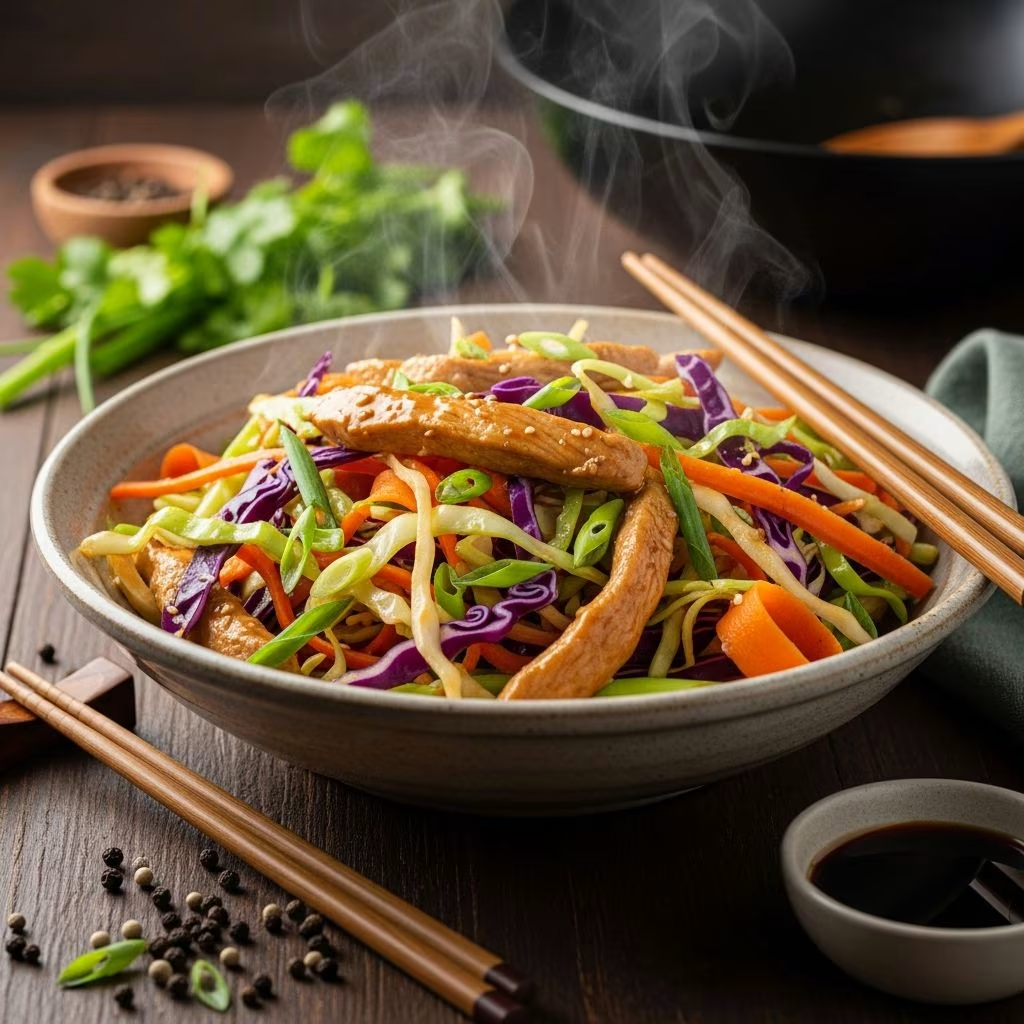
Chicken cabbage stir fry stands out as a go-to dish for anyone seeking a balance of speed, nutrition, and bold flavors. This recipe combines lean protein from chicken with the earthy crunch of cabbage, all tied together by a savory sauce inspired by Asian culinary traditions. Ready in about 25 minutes, it’s ideal for busy evenings when you crave something wholesome without spending hours in the kitchen.
Why This Dish Wins Every Time
Cabbage brings volume and texture to the plate while keeping calories low, making this stir fry a smart choice for weight management or balanced eating. Paired with chicken, it delivers complete protein alongside fiber-rich vegetables. The high-heat cooking method preserves nutrients and enhances natural sweetness in the veggies, resulting in a dish that’s both satisfying and light.
- Quick prep: Minimal chopping leads to dinner on the table fast.
- Budget-friendly: Uses everyday staples like cabbage and basic pantry sauces.
- Customizable: Adapt to dietary needs with simple swaps.
- Versatile serving: Pairs with rice, noodles, or stands alone.
Essential Ingredients for Success
Gathering the right components ensures your stir fry shines. Focus on fresh produce and quality proteins for the best results. Here’s a breakdown:
| Ingredient | Quantity | Purpose |
|---|---|---|
| Boneless chicken breast or thigh | 1 lb, diced | Tender protein base |
| Green cabbage | 1/2 head, shredded (about 4 cups) | Crisp, voluminous veggie |
| Soy sauce (low-sodium) | 3 tbsp | Umami depth |
| Garlic and ginger | 3 cloves + 1-inch piece, minced | Aromatic punch |
| Vegetable oil | 2-3 tbsp | High-heat cooking |
| Cornstarch | 1 tbsp | Sauce thickener |
| Chicken broth | 1/2 cup | Sauce liquid base |
| Add-ins: bell peppers, carrots, peas | 1 cup total | Color and variety |
Opt for fresh ginger over ground for brighter flavor, and choose thighs for juicier results if you prefer darker meat.
Step-by-Step Cooking Guide
Mastery comes from technique. Use a wok or large skillet for even heat distribution. High heat is key to avoid sogginess.
Marinate the chicken: Toss diced chicken with 1 tbsp soy sauce, 1 tsp cornstarch, minced ginger, and a splash of broth. Let sit 10-15 minutes. This ‘velveting’ keeps meat tender.
Prep veggies: Shred cabbage thinly for quick cooking. Slice garlic, remaining ginger, and any add-ins like carrots or peppers uniformly.
Heat the pan: Add 1 tbsp oil over medium-high heat until shimmering. Stir-fry chicken 3-4 minutes until browned. Remove and set aside.
Cook aromatics: Add another tbsp oil, garlic, and ginger. Sauté 30 seconds until fragrant.
Add cabbage and veggies: Toss in cabbage and extras. Stir 4-5 minutes until wilted but crisp. Season lightly with salt.
Combine and sauce: Return chicken to pan. Mix remaining soy sauce, broth, cornstarch slurry, and a pinch of sugar. Pour in, stir until thickened, 2 minutes.
Finish: Garnish with green onions or sesame seeds. Serve hot.
Pro Tips for Restaurant-Quality Results
Elevate your stir fry with these hacks drawn from traditional methods.
- Cut chicken against the grain for tenderness.
- Don’t overcrowd the pan; cook in batches if needed.
- Shred cabbage by hand or mandoline for even texture.
- Taste sauce before adding to adjust saltiness.
- For gluten-free, use tamari instead of soy sauce.
Nutritional Breakdown
Per serving (4 servings total): Approximately 300 calories, 25g protein, 15g carbs, 18g fat, 5g fiber. Cabbage provides vitamin C and K, while chicken offers B vitamins. This makes it a nutrient-dense option for family meals.
Flavor Variations to Try
Keep things exciting by switching up profiles.
- Spicy Szechuan: Add chili flakes and Sichuan peppercorns.
- Sweet & Tangy: Include hoisin and rice vinegar.
- Thai Twist: Use fish sauce, lime, and basil.
- Low-Carb Keto: Skip cornstarch, add cauliflower rice.
- Vegetarian: Swap chicken for tofu or mushrooms.
Common Mistakes and Fixes
| Mistake | Why It Happens | Fix |
|---|---|---|
| Soggy cabbage | Low heat, overcrowding | High heat, single layer stir |
| Dry chicken | Overcooking | Marinate, cook just until done |
| Thin sauce | No thickener | Cornstarch slurry |
| Blah flavor | Stale ingredients | Fresh garlic/ginger |
Pairing Suggestions
Serve over steamed jasmine rice or quinoa for absorption. For low-carb, try cauliflower rice. A crisp cucumber salad or egg drop soup complements the richness.
Storage and Reheating
Leftovers keep in an airtight container up to 3 days in the fridge. Reheat in a skillet with a splash of water to revive crispness. Freezes well for 1 month; thaw overnight before reheating.
Scaling for Crowds
Double ingredients for 8 servings, but cook in batches to maintain heat. Prep veggies ahead for efficiency.
Health Benefits Spotlight
Cabbage aids digestion with its fiber, and chicken supports muscle repair. The dish aligns with anti-inflammatory diets thanks to ginger’s properties.
Frequently Asked Questions
Can I use napa cabbage?
Yes, napa cooks faster and is more tender; reduce cooking time by 1-2 minutes.
Is this recipe spicy?
Not inherently, but add chili oil or fresh chilies for heat.
What oil works best?
Neutral oils like vegetable, canola, or avocado for high smoke point.
Chicken thighs vs. breast?
Thighs are juicier; breast is leaner. Both work well.
Make it dairy-free?
It’s naturally dairy-free; no changes needed.
How to make ahead?
Marinate chicken and chop veggies up to 4 hours ahead.
References
- USDA FoodData Central: Cabbage, raw — United States Department of Agriculture. 2023-05-15. https://fdc.nal.usda.gov/fdc-app.html#/food-details/169975/nutrients
- Chicken, broiler or fryers, breast, skinless, boneless, meat only, cooked, braised — United States Department of Agriculture. 2023-05-15. https://fdc.nal.usda.gov/fdc-app.html#/food-details/171477/nutrients
- Harvard T.H. Chan School of Public Health: The Nutrition Source – Vegetables and Fruits — Harvard University. 2024-01-10. https://www.hsph.harvard.edu/nutritionsource/what-should-you-eat/vegetables-and-fruits/
- Academy of Nutrition and Dietetics: Easy Ways to Boost Fiber in Your Daily Diet — Academy of Nutrition and Dietetics. 2023-11-20. https://www.eatright.org/health/wellness/healthy-aging/easy-ways-to-boost-fiber-in-your-daily-diet
- Journal of Food Science: Effects of High-Heat Cooking on Vegetable Nutrients — Institute of Food Technologists. 2022-07-12. https://doi.org/10.1111/1750-3841.12245