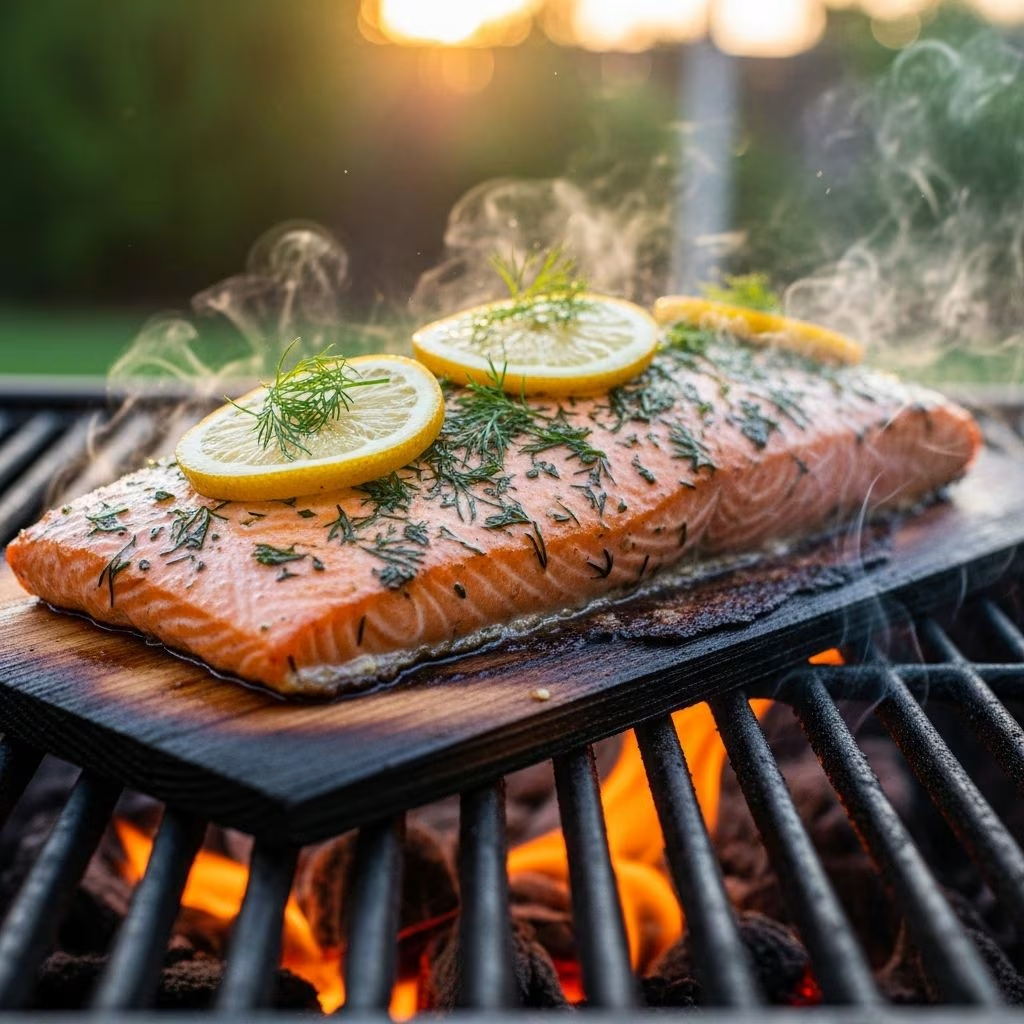
Grilling salmon on a cedar plank infuses the fish with a subtle smoky aroma while keeping it moist and flavorful. This technique, rooted in Pacific Northwest traditions, elevates simple salmon into a gourmet dish suitable for weeknight dinners or special gatherings.
Why Choose Cedar Plank Grilling for Salmon
Cedar planks act as a barrier between the fish and direct heat, preventing drying out and adding woodsy notes. The plank releases moisture during cooking, steaming the salmon gently for a tender texture. Unlike foil packets, planks provide authentic smoke without sogginess.
- Enhanced flavor from natural cedar oils
- Even cooking without flipping
- Visual appeal with charred plank presentation
- Versatile for gas, charcoal, or even oven use
Selecting the Best Salmon and Cedar Planks
Opt for fresh, wild-caught salmon like sockeye or coho for superior taste and texture. Skin-on fillets hold up best on planks. Aim for 1-1.5 inch thickness to avoid overcooking.
| Salmon Type | Best For | Thickness |
|---|---|---|
| Sockeye | Bold flavor | 1 inch |
| Coho | Mild, firm | 1-1.5 inches |
| Atlantic (farmed) | Budget-friendly | 1.5 inches |
Use untreated cedar planks, 8×12 inches for a side of salmon or smaller for fillets. Thicker planks (1/2 inch) last longer; thin ones (1/4 inch) are disposable after one use.
Essential Preparation Steps
Soaking prevents the plank from catching fire. Submerge in water for 1-12 hours—longer for thicker planks. Enhance with beer or wine for added depth.
- Fill a sink or pan with cold water.
- Weigh down the plank with a heavy object.
- Soak 30-60 minutes minimum; overnight for best results.
Pat salmon dry, then season skin-side down to preserve the skin barrier.
Signature Maple Glaze Recipe
A Canadian-inspired glaze balances sweet, tangy, and savory notes. Mix 3 tbsp pure maple syrup, 2 tbsp grainy mustard, 2 tbsp balsamic vinegar, 2 tbsp butter, 1 tsp garlic, and 1 tsp cornstarch. Simmer briefly to thicken.
- Brush one-third on salmon before grilling.
- Reserve remainder for drizzling post-cook.
- Optional: Add bourbon or chili for heat.
This glaze caramelizes beautifully over cedar smoke.
Seasoning Variations to Suit Every Palate
Customize with rubs or toppings for diversity.
- Classic Canadian: Maple syrup rub, chopped red onion, tarragon, crushed peppercorns.
- Spicy Cajun: 1 tbsp Cajun seasoning, lemon zest, parsley.
- Herb Mayo: Mayo mixed with garlic, lemon, dill, chives; spread thickly.
- Simple Grill: Olive oil, Montreal steak seasoning, sea salt.
- Bourbon Maple: Spices like paprika, onion powder, cayenne; glaze with maple-bourbon.
Experiment based on salmon’s natural richness.
Grilling Techniques for Perfect Results
Preheat grill to medium (350°F). Heat soaked plank 3-5 minutes until it crackles.
- Oil plank lightly.
- Place salmon skin-down; no flipping needed.
- Close lid; cook 12-25 minutes based on thickness.
- Test doneness: Internal temp 145°F or flakes easily.
- Spray water if plank flames.
Rest 5 minutes loosely tented for juiciness. Slide spatula under flesh, leaving skin on plank.
Oven and Alternative Cooking Methods
No grill? Use oven at 400°F. Place plank on a baking sheet; cook 15-20 minutes. For indirect heat on charcoal, position plank away from coals. Smoker users: Low 225°F for 1 hour yields fall-off-the-plank tenderness.
Pairing Sides and Presentation Ideas
Complement salmon’s richness with fresh contrasts.
- Grilled asparagus or zucchini
- Peach-tomato salsa: Tomatoes, peaches, onion, lemon, basil
- Herb rice or roasted potatoes
- Simple green salad with vinaigrette
Present on a platter with lemon wedges, parsley garnish, and charred plank for rustic charm.
Common Mistakes and Pro Tips
Avoid these pitfalls for flawless execution.
| Mistake | Solution |
|---|---|
| Plank catches fire | Soak longer; keep lid closed; have water spray ready |
| Overcooked salmon | Use timer; check thickest part early |
| Glaze burns | Apply sparingly at first; add later |
| No smoke flavor | Ensure plank dries slightly before adding fish |
- Reuse planks twice if not charred heavily; scrub and re-soak.
- Buy food-grade cedar only.
- Scale up for crowds: One large side serves 6-8.
Nutritional Benefits of Plank-Grilled Salmon
Salmon delivers omega-3s for heart health, protein for muscle repair, and vitamin D. Grilling preserves nutrients better than frying. A 4-oz serving: 200 calories, 25g protein, 12g healthy fats.
Frequently Asked Questions
Can I reuse cedar planks?
Yes, up to twice if not fully charred. Clean immediately after use.
How long to soak the plank?
1-2 hours minimum; overnight ideal for safety and flavor.
Is skin-on salmon necessary?
Recommended; skin protects flesh and eases removal post-cook.
What if my grill doesn’t have a lid?
Use oven or smoker alternative; monitor closely.
Can I use other woods?
Alder or maple work; avoid pine or treated wood.
Mastering cedar plank salmon opens doors to endless variations. Practice once, and it becomes a go-to summer staple.
References
- Canadian Cedar Planked Salmon Recipe — Food.com. Accessed 2026. https://www.food.com/recipe/canadian-cedar-planked-salmon-235926
- Canadian Maple Cedar Plank Salmon — Two Kooks In The Kitchen. Accessed 2026. https://twokooksinthekitchen.com/canadian-maple-planked-salmon/
- Cedar Plank Salmon Recipe — Primavera Kitchen. Accessed 2026. https://www.primaverakitchen.com/easy-cedar-plank-salmon/
- Simple Cedar Plank Salmon — The Defined Dish. Accessed 2026. https://thedefineddish.com/cedar-plank-salmon/
- Cedar Plank Salmon — Vikalink. Accessed 2026. https://vikalinka.com/cedar-plank-salmon/