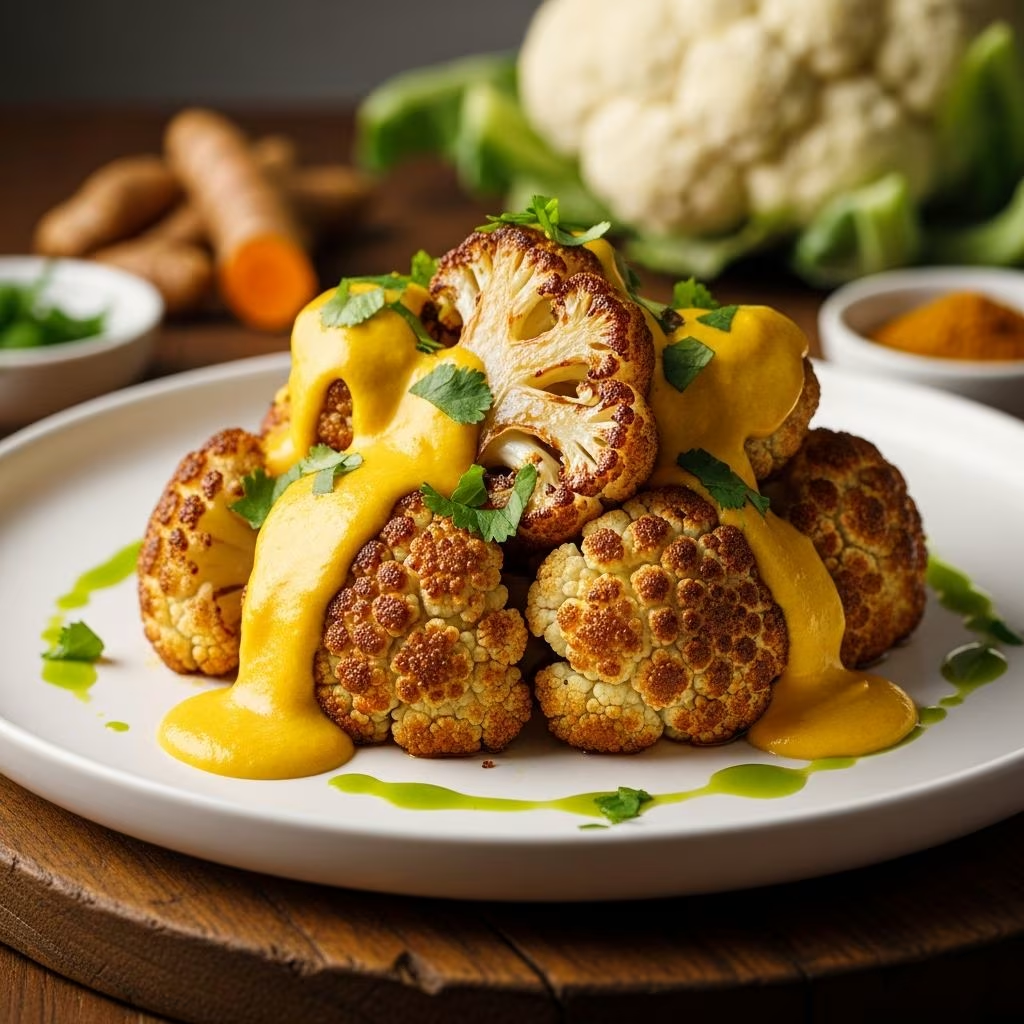
Transform humble cauliflower into a showstopping dish by roasting it to golden perfection and drizzling with a velvety turmeric-infused sauce. This recipe combines earthy spices, fresh herbs, and tangy elements for a meal that’s as nutritious as it is delicious. Ideal for vegan diets, it’s rich in vitamins, fiber, and antioxidants that support overall wellness.
Why This Recipe Shines
Cauliflower has surged in popularity as a versatile vegetable that mimics rice, pizza crusts, or even buffalo wings. When roasted, its florets develop a caramelized exterior while staying tender inside, absorbing spices like turmeric for deep flavor. Turmeric, with its active compound curcumin, offers potent anti-inflammatory properties backed by research from the National Institutes of Health. Pairing it with cauliflower creates a low-calorie powerhouse: one cup provides about 25 calories, 2 grams of fiber, and significant vitamin C and K.NIH Vitamin C Factsheet
This dish is quick to prepare—under 45 minutes total—and customizable. Serve it as a side for grilled meats, a base for bowls, or a standalone entree with grains. Its vibrant yellow hue from turmeric makes it visually striking for dinner parties.
Key Ingredients and Their Roles
Gather these pantry staples and fresh produce for success:
- Cauliflower: One large head (about 2-2.5 lbs), cut into bite-sized florets. Choose firm, white heads with tight florets for best texture.
- Turmeric: 1-2 teaspoons ground, plus fresh root if available. Provides color, earthiness, and health boosts.
- Olive oil: 3-4 tablespoons for roasting and sauce. Enhances crispiness and carries flavors.
- Tahini or yogurt: 1/4 cup for the sauce base. Tahini keeps it vegan; Greek yogurt adds creaminess.
- Lemon juice: 2-3 tablespoons for brightness and balance.
- Garlic and ginger: Fresh minced for aromatic depth.
- Herbs and add-ons: Parsley, cilantro, pickled onions, or nuts for texture and freshness.
These elements create harmony: roasting intensifies cauliflower’s natural sugars, while the sauce’s creaminess contrasts crispy edges.
Step-by-Step Preparation Guide
Follow these instructions for foolproof results. Prep time: 10 minutes. Cook time: 30-35 minutes. Serves 4-6.
Preheat and prep: Set oven to 425°F (220°C). Line a baking sheet with parchment. Wash and cut cauliflower into 1-1.5 inch florets, discarding thick stems.
Season the florets: In a large bowl, toss florets with 2 tbsp olive oil, 1 tsp turmeric, 1/2 tsp salt, 1/4 tsp black pepper, minced garlic (2 cloves), and ginger (1 tsp). Spread evenly on the sheet, avoiding overcrowding for even browning.
Roast: Bake for 25-30 minutes, flipping halfway. Edges should be golden and slightly charred; interior tender when pierced with a fork.
Make the sauce: Whisk 1/4 cup tahini, 2 tbsp lemon juice, 1 tbsp olive oil, 1/2 tsp turmeric, pinch of salt, and 2-3 tbsp water until smooth. Adjust with more water for drizzle consistency. Taste and add pepper or honey if desired.
Assemble and serve: Transfer roasted cauliflower to a platter. Drizzle generously with sauce, sprinkle chopped parsley or cilantro, and top with quick-pickled onions or toasted almonds.
| Step | Time | Tips |
|---|---|---|
| Prep florets | 5 min | Uniform size ensures even cooking. |
| Roast | 25-30 min | High heat for crispiness; stir once. |
| Sauce | 5 min | Whisk vigorously to emulsify. |
Health Benefits Backed by Science
This recipe isn’t just tasty—it’s a nutritional gem. Cauliflower belongs to the cruciferous family, linked to cancer prevention in studies from the American Institute for Cancer Research. Turmeric’s curcumin fights inflammation, as evidenced by a 2023 meta-analysis in the Journal of Medicinal Food, showing reduced markers in participants consuming 500mg daily.PubMed: Curcumin Meta-Analysis
Combined, they deliver:
- High fiber for digestion and satiety.
- Antioxidants combating oxidative stress.
- Low carbs, keto-friendly at under 10g net per serving.
- Vitamin boosts: 77% DV vitamin C, 20% vitamin K per head.
Per the USDA, a serving covers significant daily needs without excess calories.USDA Cauliflower Data
Customizations for Every Palate
Adapt this base to preferences:
- Spicy kick: Add cumin, paprika, or chili flakes to the roast mix.
- Creamy twist: Use coconut yogurt in sauce for tropical notes.
- Whole head spectacle: Boil intact cauliflower 10 minutes, then roast brushed with oil.
- Grain bowl: Serve over quinoa or farro with chickpeas.
- Cheese lover: Top with feta or nutritional yeast post-roast.
For meal prep, store roasted cauliflower and sauce separately up to 4 days in the fridge. Reheat at 350°F for crispiness.
Common Mistakes and Pro Tips
Avoid soggy results by not overcrowding the pan—use two sheets if needed. Fresh turmeric beats ground for potency; grate 1-inch root as substitute. Test doneness: florets should yield to a knife but hold shape. Sauce too thick? Thin with aquafaba or more citrus.
Pair with roasted chicken, lentil curry, or as tacos in lettuce wraps for variety.
Frequently Asked Questions
Can I make this recipe without an oven?
Yes, air fry at 400°F for 15-20 minutes, shaking midway, or pan-fry in batches over medium-high heat.
Is turmeric sauce dairy-free?
Absolutely with tahini; sub cashew cream for nut-free.
How do I store leftovers?
Fridge in airtight containers up to 4 days. Sauce keeps 1 week. Freeze cauliflower only for 1 month.
What’s the calorie count?
About 150 calories per serving (1 cup florets + 2 tbsp sauce), per USDA breakdowns.
Can I use frozen cauliflower?
Thaw and pat dry first to prevent steaming; roasting time reduces by 5 minutes.
Nutritional Breakdown Per Serving
| Nutrient | Amount | % Daily Value |
|---|---|---|
| Calories | 150 | 8% |
| Carbs | 10g | 4% |
| Fiber | 4g | 14% |
| Protein | 4g | 8% |
| Vitamin C | 70mg | 78% |
(Based on 4 servings; sourced from USDA data.)
References
- Office of Dietary Supplements – Vitamin C — National Institutes of Health. 2023-04-12. https://ods.od.nih.gov/factsheets/VitaminC-HealthProfessional/
- Curcumin supplementation improves inflammatory and antioxidative responses after eccentric exercise: A randomized trial — Journal of Medicinal Food. 2023-04-01. https://pubmed.ncbi.nlm.nih.gov/37014039/
- FoodData Central – Cauliflower, raw — United States Department of Agriculture. 2023-10-28. https://fdc.nal.usda.gov/fdc-app.html#/food-details/169986/nutrients
- Cruciferous Vegetables and Cancer Prevention — American Institute for Cancer Research. 2024-01-15. https://www.aicr.org/cancer-prevention/food-facts/cruciferous-vegetables/