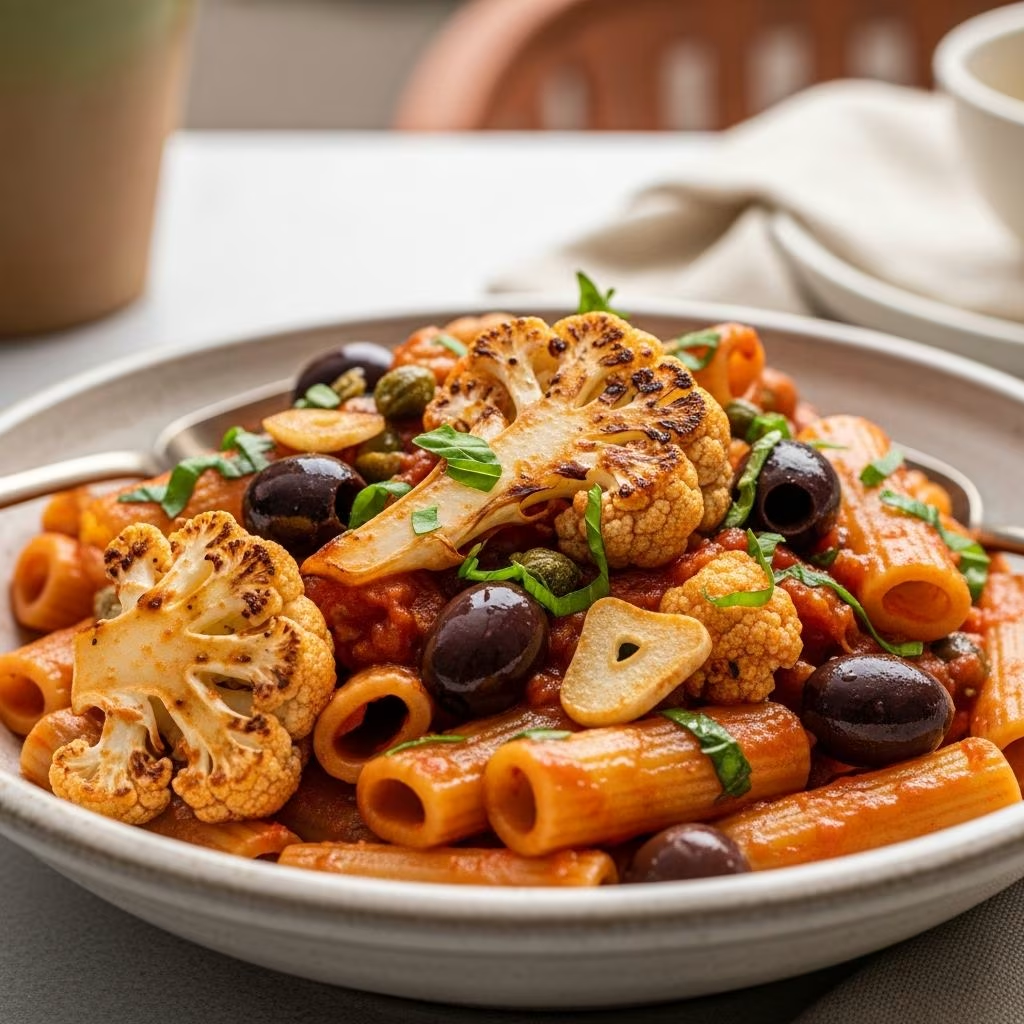
The culinary traditions of Mediterranean cooking have long celebrated the intersection of simplicity and sophistication, where a few quality ingredients combine to create dishes of remarkable depth and character. One such preparation that exemplifies this philosophy is cauliflower puttanesca, a contemporary adaptation of a beloved Italian classic. This dish transforms the often-overlooked cruciferous vegetable into a starring component of an elegant meal that delivers the briny, assertive flavors the puttanesca tradition is renowned for.
Cauliflower puttanesca represents a modern evolution in how home cooks and professional chefs approach seasonal vegetable cookery. Rather than serving vegetables as mere accompaniments to protein, this dish positions cauliflower as the centerpiece, paired with a sauce that includes the hallmark components of authentic puttanesca preparations: Kalamata olives, capers, garlic, tomatoes, and high-quality olive oil.
Understanding the Puttanesca Tradition
Puttanesca originates from the Naples region of Italy, where this assertive pasta sauce developed as an economical yet flavorful preparation. The name itself carries historical significance, derived from the Italian word “puttana,” reflecting the dish’s association with working-class Italian neighborhoods. Despite its humble origins, puttanesca has evolved into a sophisticated preparation enjoyed across Mediterranean cuisine.
The traditional sauce components work in concert to create a complex flavor profile that is simultaneously salty, briny, slightly spicy, and rich. The Kalamata olives contribute earthiness and saltiness, capers add a distinctive pickled tanginess, garlic provides pungency and depth, and tomatoes offer acidity and natural sweetness. This combination creates a multi-dimensional sauce that awakens the palate.
When adapting this sauce for cauliflower, the vegetable’s mild, slightly sweet character serves as a neutral canvas upon which the bold puttanesca flavors can shine. The cauliflower’s ability to absorb the sauce’s essence while maintaining its own textural integrity makes it an excellent vehicle for this preparation.
Ingredient Selection and Preparation Techniques
Success with cauliflower puttanesca begins with thoughtful ingredient selection. Each component plays a vital role in the final dish’s success.
The Cauliflower Foundation
Selecting a fresh cauliflower head with firm, tightly clustered florets ensures optimal texture and flavor development. Whether cutting florets from a whole head or purchasing pre-cut varieties, aim for consistent sizing to promote even cooking. Most recipes call for florets cut into bite-sized pieces, typically ranging from one to two inches in diameter.
Two primary cooking methods dominate contemporary cauliflower puttanesca preparations: roasting and sautéing. Roasting at temperatures between 425-450 degrees Fahrenheit develops caramelized exteriors while maintaining tender interiors, creating textural contrast. Sautéing in olive oil at medium-high heat offers faster preparation times and produces lightly browned florets with concentrated, nutty flavors.
The Sauce Component
Quality olive oil serves as the foundation for the puttanesca sauce. Extra virgin olive oil, with its complex flavor profile and superior taste, is preferred over refined varieties. The quantity typically ranges from two to four tablespoons, depending on the preparation method and desired sauce consistency.
Garlic should be minced finely to distribute evenly throughout the sauce. Fresh garlic cloves provide superior flavor to pre-minced alternatives, though quality varies with freshness. Typically, two to four cloves suffice for a four-serving batch.
Kalamata olives, with their deep purple-black color and meaty texture, are the traditional choice for puttanesca preparations. These olives should be pitted and chopped into manageable pieces. One-half to one full cup of chopped olives provides the signature briny character.
Capers, which are the unopened flower buds of a Mediterranean shrub that have been brined and pickled, contribute a distinctive salty-sour punch. Small capers, sometimes labeled nonpareilles, offer more delicate flavor than larger varieties. One to two tablespoons typically suffice.
Canned tomatoes form the sauce’s body. Crushed tomatoes provide smoother texture, while diced varieties offer more pronounced tomato chunks. A 14-28 ounce can, depending on desired yield and consistency, provides appropriate quantity.
Seasonal Enhancements
Dried oregano, a staple of Italian cooking, adds herbal character to the sauce. One-half teaspoon provides noticeable flavor without overwhelming other components. Red pepper flakes deliver gentle heat; one-quarter to one-half teaspoon accommodates most palates, though this quantity adjusts according to personal spice preference.
Fresh parsley, minced and added as garnish, contributes brightness and visual appeal. Fresh basil, though not traditional to puttanesca, pairs beautifully with cauliflower and complements the other sauce components.
Cooking Methods and Timing Considerations
Different preparation approaches yield distinct results, each with particular advantages.
The Roasting Approach
Roasting whole cauliflower heads in puttanesca sauce creates a striking presentation suitable for entertaining. This method involves basting the cauliflower head with sauce before covering and baking for approximately one hour at 400-425 degrees Fahrenheit until fork-tender. Uncovering during the final ten minutes and topping with grated Parmesan cheese creates a golden crust.
This approach requires approximately 70-75 minutes total time, making it suitable for weekend cooking or special occasions. The extended cooking time allows the sauce to penetrate the cauliflower thoroughly, creating deeply flavored results.
The Floret-Based Sauté Method
Cutting cauliflower into florets and sautéing in a skillet with puttanesca sauce reduces cooking time to approximately 25-30 minutes. Initial sautéing of florets in olive oil for six to eight minutes develops light browning before sauce components are introduced. Simmering for an additional eight to ten minutes completes the cooking process.
This method suits weeknight preparations when time constraints are relevant. The shorter timeline accommodates busy schedules while delivering the characteristic flavors and textures.
The Roasted Floret Variation
Roasting cauliflower florets separately from the sauce before combining offers maximum textural control. Tossed with olive oil and seasonings, florets roast for 12-15 minutes at 450 degrees Fahrenheit until golden and tender. The puttanesca sauce simmers concurrently, and components combine just before serving.
This approach preserves the cauliflower’s crisp-tender texture while ensuring the sauce maintains its integrity without overcooking.
Serving Styles and Culinary Applications
Cauliflower puttanesca accommodates diverse serving approaches depending on meal structure and dietary preferences.
Pasta Integration
Combining roasted or sautéed cauliflower with cooked pasta creates a complete main course dish. Gemelli, penne, spaghetti, linguini, or cavatelli pasta shapes work equally well. The pasta absorbs the sauce while its starch provides substance that transforms the dish into a satisfying meal. Approximately eight ounces of pasta accommodates four servings when combined with cauliflower and sauce.
Standalone Vegetable Course
Serving cauliflower puttanesca as a standalone vegetable course showcases the vegetable’s culinary potential. This presentation suits grain-based meals, protein-focused entrées, or light lunch preparations. The dish’s robust flavors complement lean proteins without overwhelming delicate fish varieties.
Temperature Variations
While traditionally served warm, cooled cauliflower puttanesca offers interesting possibilities. Room-temperature preparations work as salad components or appetizer offerings. The flavors actually intensify as components meld during cooling, creating increasingly complex taste experiences.
Nutritional Considerations and Dietary Adaptations
Cauliflower puttanesca inherently aligns with contemporary nutritional guidance and accommodates various dietary approaches.
Caloric Content: A typical serving contains approximately 115-150 calories, making it appropriate for calorie-conscious meal planning. The majority of calories derive from healthy fats in olive oil rather than refined carbohydrates.
Macronutrient Profile: The dish provides minimal protein from cauliflower itself, suggesting pasta addition for complete meals. Fats from olives and olive oil provide satiety and support fat-soluble nutrient absorption. Carbohydrates come primarily from tomatoes and, if included, pasta.
Vegetarian and Vegan Compatibility: The classic preparation is naturally vegetarian. It becomes vegan when Parmesan cheese is omitted or replaced with nutritional yeast. Traditional recipes including anchovies can be modified by increasing capers and olives for enhanced umami depth.
Gluten-Free Accommodations: The sauce itself is inherently gluten-free. When served with pasta, selecting gluten-free varieties maintains the dietary restriction without sacrificing quality or taste.
Ingredient Quality and Sourcing
The quality differential between premium and standard ingredients significantly impacts final results when preparing dishes with minimal ingredients.
Olive Oil Selection: Extra virgin olive oil from single-origin producers offers superior flavor to multi-regional blends. Italian oils, particularly those from Calabria or Sicily, provide authentic Mediterranean character. Oils stored in dark glass away from light preserve flavor integrity better than clear or plastic containers.
Olive Sourcing: Kalamata olives packed in glass jars typically maintain superior quality compared to plastic containers. Olives preserved in minimal brine (water and salt) are preferable to those with excessive additives or artificial colorants.
Caper Selection: Capers packed in salt preserve more nuanced flavor than vinegar-brined varieties. Rinsing salt-packed capers removes excess sodium while intensifying characteristic flavors.
Tomato Considerations: San Marzano tomatoes, traditionally grown near Naples, are regarded as the puttanesca standard. These tomatoes offer natural sweetness, lower acidity, and fewer seeds compared to other varieties.
Flavor Development and Customization
While puttanesca follows established parameters, creative modifications reflect personal preferences and available ingredients.
Spice Intensification: Those preferring pronounced heat can increase red pepper flakes beyond the standard one-quarter teaspoon. Alternatively, fresh chili peppers minced and incorporated during cooking provide fresh heat and vibrant visual appeal.
Herb Variations: Fresh basil, thyme, or tarragon can supplement or replace oregano. Each herb imparts distinct character: basil adds sweetness, thyme contributes earthiness, and tarragon introduces subtle anise notes.
Textural Additions: Toasted breadcrumbs, nuts, or seeds added as garnish create textural contrast. Pine nuts offer traditional Mediterranean authenticity, while walnuts or almonds provide economical alternatives.
Protein Integration: When cauliflower alone proves insufficient for satisfying meals, roasted shrimp, white fish, or poultry pair beautifully with puttanesca sauce. These additions transform the dish from vegetable side into complete protein-inclusive entrée.
Storage and Make-Ahead Strategies
Understanding proper storage extends this dish’s utility and simplifies meal preparation.
Refrigeration: Prepared cauliflower puttanesca keeps refrigerated in airtight containers for three to four days. The sauce flavors actually intensify during storage as ingredients continue melding.
Sauce Preparation Advance: The puttanesca sauce can be prepared several days in advance and stored separately from vegetables. This approach enables quick meal assembly when fresh vegetables are roasted or sautéed immediately before serving.
Freezing Considerations: While the sauce freezes successfully for up to three months, cooked cauliflower becomes soft upon thawing. Freezing vegetables and sauce separately and reheating gently before combining preserves optimal texture.
Wine Pairing and Beverage Accompaniment
The dish’s briny, slightly spicy character pairs remarkably well with specific wine selections. Crisp white wines such as Pinot Grigio, Vermentino, or Albariño echo the dish’s Mediterranean origins while providing refreshing acidity that cuts through the sauce’s richness. Rosé wines, particularly those from Provence, offer slightly fuller body while maintaining appropriate brightness. Light-bodied red wines such as Beaujolais or young Sangiovese work when the dish serves as a side course rather than the meal’s centerpiece.
Frequently Asked Questions
Can I use frozen cauliflower instead of fresh?
Frozen cauliflower works adequately, though fresh typically provides superior texture. Thaw frozen cauliflower completely and pat dry before cooking to minimize excess moisture that can impede proper browning during sautéing or roasting.
What if I don’t have capers available?
While capers provide distinctive flavor, increasing olives and adding a small splash of vinegar can approximate their salty-sour contribution. Chopped sun-dried tomatoes offer alternative briny complexity, though the flavor profile differs from traditional puttanesca.
Is this dish suitable for advance preparation?
The sauce can be prepared several days in advance. Vegetables should be cooked closer to serving time for optimal texture. Reheating gently before combining prevents overcooking the cauliflower.
How do I prevent the cauliflower from becoming mushy?
Roasting florets separately from the sauce, then combining just before serving, preserves textural integrity. Alternatively, reduce simmering time when cooking vegetables directly in sauce.
Can anchovies be added to the sauce?
Traditional puttanesca sometimes includes anchovies, which dissolve into the sauce during cooking, adding umami depth without fishiness. One to two chopped anchovies per serving provide subtle enhancement.
Conclusion: Embracing Modern Mediterranean Cooking
Cauliflower puttanesca exemplifies how contemporary cooking reinterprets classical traditions, using vegetables as principal components rather than supporting players. This dish delivers the complex, satisfying flavors Mediterranean cuisine is celebrated for while accommodating modern nutritional awareness and dietary diversity. Whether served as a weeknight main course or elegant entertaining option, cauliflower puttanesca proves that sophisticated flavors emerge not from complexity or exotic ingredients, but from quality components prepared with attention and intention.
References
- Easy and Delicious Cauliflower Pasta alla Puttanesca — Marlena’s Kitchen. https://marilenaskitchen.com/easy-cauliflower-pasta-alla-puttanesca/
- Roasted Cauliflower Puttanesca — UncomplicatedChef. https://uncomplicatedchef.com/roasted-cauliflower-puttanesca/
- Roasted Cauliflower Pasta Puttanesca Recipe — ChefDeHome. https://www.chefdehome.com/recipes/503/roasted-cauliflower-pasta-puttanesca
- Cauliflower in Puttanesca Sauce Recipe — Cookin Canuck. https://www.cookincanuck.com/cauliflower-in-puttanesca-sauce-recipe/
- Pasta Puttanesca With Cauliflower — Italian Food Forever. https://italianfoodforever.com/2014/02/pasta-puttanesca-with-cauliflower/
- Cauliflower Puttanesca — The Whole Food Plant Based Cooking Show. https://plantbasedcookingshow.com/2022/10/08/cauliflower-puttanesca/