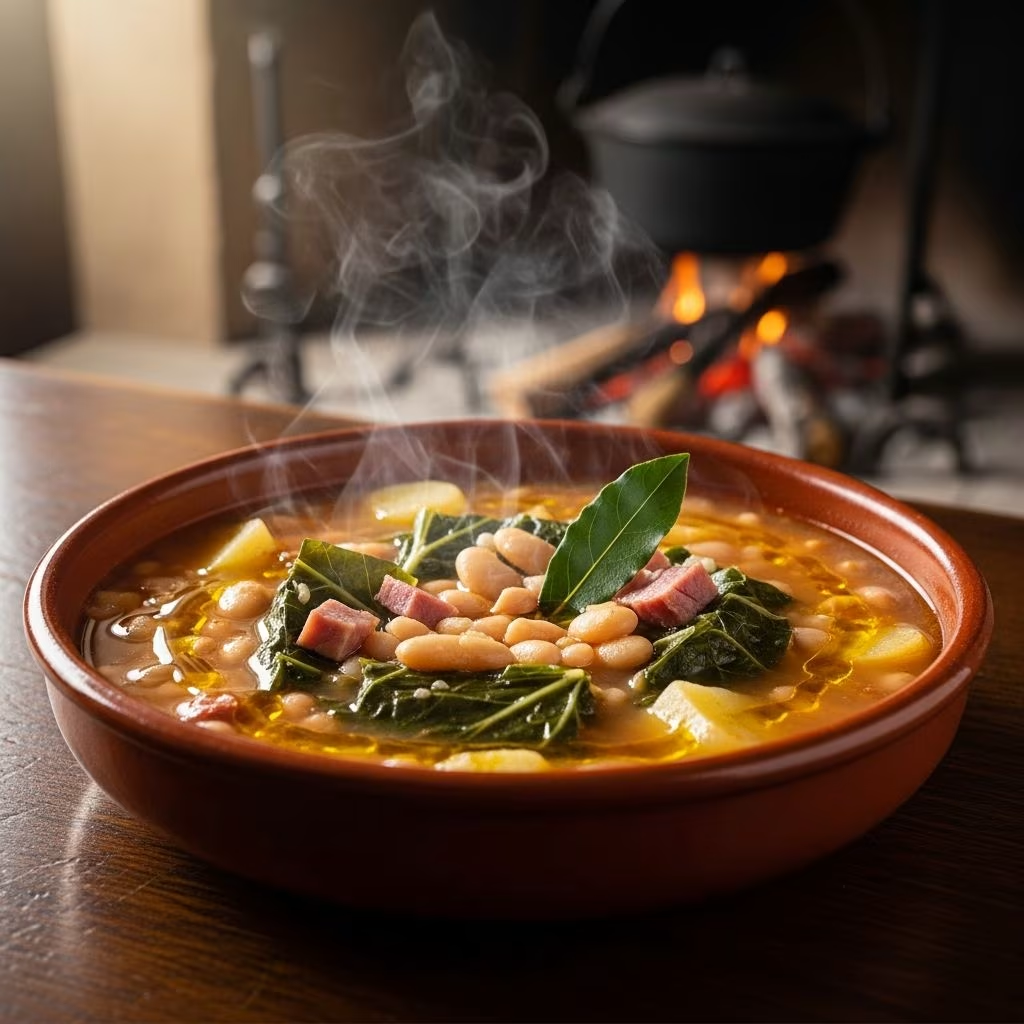
Caldo Gallego stands as a timeless emblem of Galician cuisine, originating from the lush, rainy region of northwest Spain. This robust white bean soup combines simple, earthy ingredients into a flavorful broth that warms the soul on cold days. Featuring tender beans, smoky meats like chorizo and ham, starchy potatoes, and vibrant greens, it delivers a perfect balance of protein, carbs, and vegetables in one satisfying pot.
The Roots of Caldo Gallego in Spanish Tradition
Caldo Gallego, translating to ‘Galician broth,’ traces its origins to medieval times in Galicia, where peasants crafted nourishing meals from locally abundant crops and preserved meats. White beans, a staple crop in the region, formed the hearty base, paired with affordable pork products for flavor and sustenance during harsh winters. Over centuries, the dish evolved, incorporating influences from neighboring Portugal’s caldo verde while retaining its distinct Galician identity.
Galicia’s maritime climate and fertile soils fostered ingredients like faba beans (a large white variety), potatoes introduced post-Columbus, and hardy greens such as collards or turnip leaves. Families passed recipes orally, leading to regional tweaks—some add chestnuts for seasonal depth, others emphasize salted pork fats for richness. Today, it remains a staple on the Camino de Santiago pilgrimage routes, fueling walkers with its restorative qualities.
Signature Ingredients That Define the Dish
The magic of Caldo Gallego lies in its harmonious blend of pantry heroes and fresh produce. Core components include dried or canned white beans (cannellini, navy, or faba), which provide creaminess without overpowering the broth. Smoked ham hocks or bones infuse a deep, savory umami, while Spanish chorizo adds spicy smokiness—essential for authenticity.
- Meats: Smoked ham hock (1-2 lbs), Spanish chorizo (2-3 links, sliced), optional bacon or salted pork for extra fat.
- Beans: 1 lb dried cannellini or 2-3 cans (15 oz each), undrained for starch-thickened broth.
- Vegetables: Russet potatoes (2-3 large, cubed), onions, garlic, bell peppers, and greens like collards, kale, or turnip greens (2-3 cups chopped).
- Aromatics: Olive oil, smoked paprika, oregano, bay leaves, salt.
Variations abound: Cuban adaptations use collards and chicken broth, while traditionalists might swap in turnips or parsnips for earthiness. Always choose dry-cured chorizo over fresh for that signature cured flavor.
Step-by-Step Guide to Cooking Caldo Gallego
Preparing Caldo Gallego is straightforward, yielding 8-10 servings in about 2 hours (plus bean soaking if using dried). Start by soaking beans overnight for optimal texture, or use canned for speed.
- Prep the base: In a large Dutch oven, heat 2 tbsp olive oil over medium. Sauté diced onion, bell pepper, and minced garlic (4-6 cloves) until softened, about 5 minutes. Stir in 1 tsp smoked paprika and oregano.
- Add proteins: Brown sliced chorizo (2-3 links) and diced bacon (4 oz) for 3-4 minutes. Add smoked ham hock and 4 cups broth or water.
- Incorporate beans and veggies: Add soaked beans (or canned with liquid), cubed potatoes (2-3 large), and optional turnips. Pour in 4-8 cups total liquid (broth-water mix). Toss in 2 bay leaves. Boil, then simmer 1-1.5 hours until beans tenderize the broth.
- Finish with greens: In the last 10-15 minutes, stir in chopped greens. Adjust salt; remove ham bone, shred meat, and return to pot.
- Rest and serve: Let sit 10 minutes off heat for flavors to meld. Ladle into bowls with crusty bread.
Total time: 70-120 minutes. Pro tip: For thicker soup, mash some potatoes against the pot side.
Ingredient Swaps and Customizations
Caldo Gallego’s flexibility makes it adaptable to diets and availability. Here’s a comparison table of common substitutions:
| Original Ingredient | Substitution | Why It Works |
|---|---|---|
| Cannellini beans | Navy beans or garbanzos | Similar creamy texture and mild flavor. |
| Collard greens | Kale, Swiss chard, or cabbage | All hold up to simmering; add nutrition. |
| Ham hock | Smoked turkey or vegetarian broth | Maintains smokiness without pork. |
| Potatoes | Turnips or parsnips | Earthy sweetness complements beans. |
| Chicken broth | Vegetable broth | Keeps it vegan-friendly. |
For a lighter version, reduce meats and boost veggies. Spice lovers can add saffron or extra paprika.
Nutrition Profile and Health Benefits
A 1.5-cup serving of Caldo Gallego offers roughly 350-450 calories, balancing 20g protein from beans and meats, 40g carbs from potatoes, and 15g fat (mostly healthy from olive oil). It’s rich in fiber (10g+), vitamins A and C from greens, and potassium from potatoes—ideal for heart health and satiety.
- Bean power: White beans provide plant-based protein and folate.
- Greens boost: Collards deliver antioxidants and iron.
- Meat moderation: Use lean cuts to control sodium (600-800mg per serving).
It’s naturally gluten-free; pair with whole-grain bread for completeness. Recent studies highlight bean soups’ role in stable blood sugar.
Pairing Suggestions and Serving Ideas
Serve Caldo Gallego hot as a main with Galician empanadas or cornbread. Wine pairing: Albariño, Galicia’s crisp white, cuts through richness. For leftovers, it reheats beautifully, thickening overnight—freeze up to 3 months.
Make it a feast: Top with parsley, a drizzle of olive oil, or pickled onions for brightness.
Frequently Asked Questions (FAQs)
Can I make Caldo Gallego in a slow cooker?
Yes! Sauté aromatics first, then cook on low 6-8 hours. Add greens at the end.
Is it spicy?
Mildly, from chorizo. Adjust with mild sausage or extra paprika.
Vegetarian version?
Swap meats for smoked paprika, liquid smoke, and veggie broth—still deliciously hearty.
How long does it last in the fridge?
4-5 days; flavors deepen daily.
What’s the difference from Portuguese caldo verde?
Caldo Gallego uses white beans and more meats; caldo verde relies on potatoes and kale in thinner broth.
Regional Variations Across Cultures
Beyond Galicia, Cuban families simmer it with sofrito and collards, while U.S. versions might use turkey for health. In Portugal’s influence, turnip greens dominate. Experiment to create your family heirloom.
This soup embodies comfort: rustic, forgiving, and profoundly satisfying. Whether for a weeknight or gathering, Caldo Gallego delivers Spain’s heart in every spoonful.
References
- Caldo Gallego (Galician White Bean Soup) — A Sassy Spoon. 2023. https://asassyspoon.com/caldo-gallego/
- Caldo Gallego — Coco and Ash. 2023. https://www.cocoandash.com/caldo-gallego/
- Caldo Gallego – Traditional Family Recipe — Andaspain. 2023. https://andaspain.com/blog/caldo-gallego/
- Abuela’s Caldo Gallego — Abuela’s Counter. 2023. https://abuelascounter.com/abuelas-caldo-gallego/
- Caldo Gallego (Galician Broth) — Delish D’Lites. 2023. https://www.delishdlites.com/course/soup-recipes/caldo-gallego-galician-broth/
- Galician-Style Soup — Goya Foods. 2023. https://www.goya.com/en/recipes/galician-style-soup/