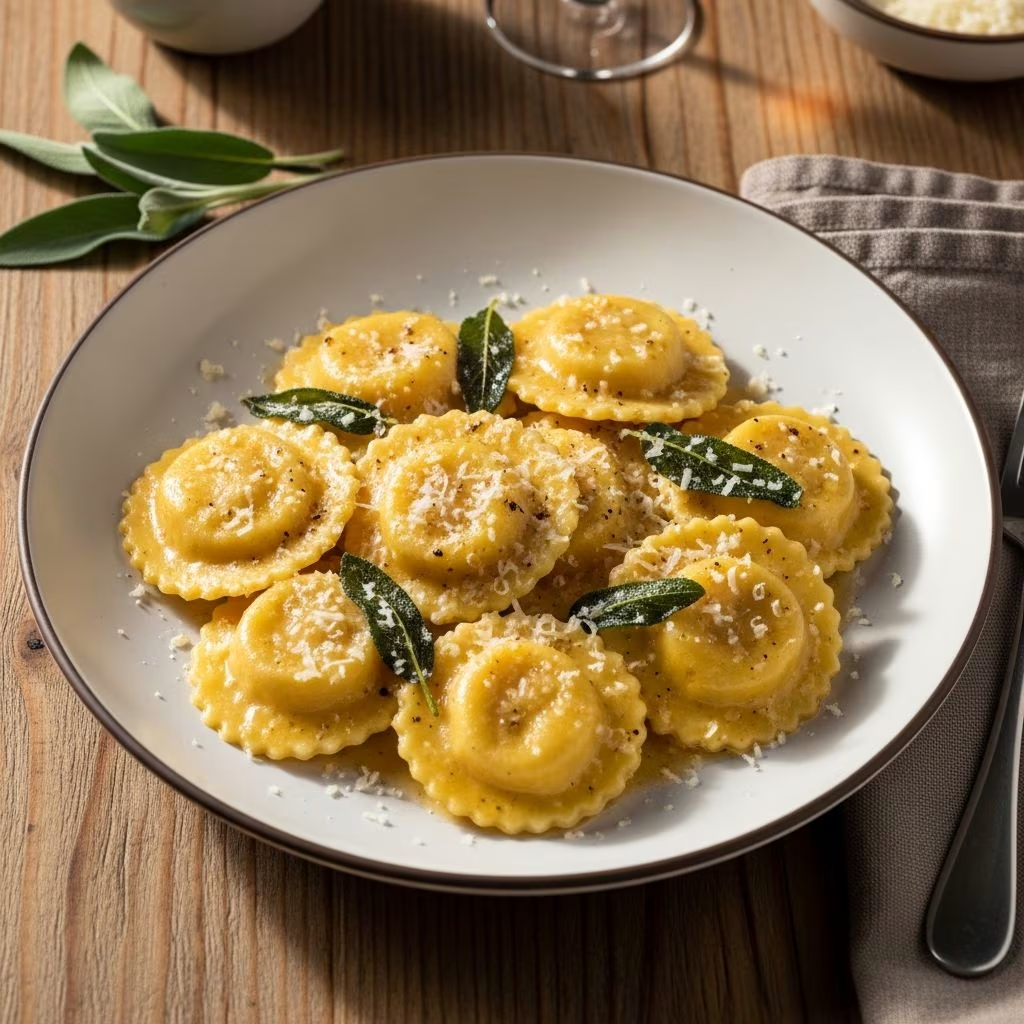
Butternut squash ravioli with brown butter sauce represents one of the most refined yet approachable pasta dishes to prepare at home. This elegant combination merges the natural sweetness of roasted butternut squash with the complex, toasted flavors of brown butter, creating a sophisticated meal that feels far more complicated than it actually is. Whether you’re planning a dinner party or seeking a rewarding cooking project for a weekend, this comprehensive guide will walk you through every step of the process.
Understanding the Components of This Classic Dish
The beauty of butternut squash ravioli lies in its simplicity combined with depth of flavor. This dish typically consists of three main elements: the pasta wrapper, the seasonal filling, and the silky sauce that brings everything together. Each component builds upon the others to create a harmonious, restaurant-quality experience. The pasta dough provides structure and elasticity, while the filling offers natural sweetness and earthiness, and the brown butter sauce delivers nutty, caramelized notes that tie the dish together perfectly.
Crafting Your Pasta Dough Foundation
Creating homemade pasta dough from scratch may seem intimidating, but the process becomes intuitive with understanding the basic principles. The traditional approach uses a combination of all-purpose flour and fine semolina, which provides elasticity and a pleasant texture. The ratio typically calls for approximately two cups of flour combined with three large room-temperature eggs and a pinch of salt.
Begin by mounding your flour mixture on a clean work surface, creating a well in the center similar to a volcano crater. Crack your eggs into this central well and gently whisk them together using a fork. As you whisk, begin incorporating flour from the interior walls of your well, mixing gradually until the dough becomes shaggy and manageable. Once the dough comes together, knead it for approximately ten minutes until it achieves a smooth, elastic texture. A properly kneaded dough will feel soft yet slightly firm and should not stick excessively to your hands.
After kneading, wrap your dough tightly in plastic wrap and allow it to rest at room temperature for a minimum of thirty minutes. This resting period permits the gluten to relax, making the dough significantly easier to roll and shape. Some experienced cooks prefer resting the dough for up to two hours for superior elasticity and easier handling.
Preparing the Butternut Squash Filling
The filling represents the heart of this dish, where the distinct flavors that make this ravioli memorable truly shine. Begin by selecting a medium to large butternut squash, approximately one to one and a half pounds. Cut the squash in half lengthwise and use a sturdy spoon to remove the seeds and stringy fibers. Lightly brush the cut sides with olive oil and place the halves cut-side down on a rimmed baking sheet.
Roast the squash at four hundred degrees Fahrenheit for approximately thirty to forty minutes, or until the flesh becomes very tender and can be easily pierced with a fork. The roasting process caramelizes the natural sugars within the squash, intensifying its flavor profile considerably. Once cooled sufficiently to handle, scoop the flesh away from the skin using a sturdy spoon and place it in a large bowl.
For the filling mixture, you’ll combine the cooled roasted squash with ricotta cheese, which provides creaminess and prevents the filling from becoming overly dense. Grate fresh parmesan cheese directly into the mixture, as pre-grated varieties often contain anti-caking agents that affect texture. A touch of nutmeg enhances the natural warmth in butternut squash, while salt and freshly ground black pepper provide essential seasoning balance. Some variations incorporate a small amount of brown sugar or a hint of sage to deepen the flavor complexity. Mix these components until thoroughly combined, then taste and adjust seasoning as needed.
Assembling and Shaping Your Ravioli
Rolling and cutting ravioli requires patience and a systematic approach, but the results justify the effort invested. After your dough has rested sufficiently, divide it into four equal portions. Working with one portion at a time (keeping others covered to prevent drying), flatten the dough slightly with your hand, then use a pasta roller to gradually thin the dough. If you lack a pasta roller, a rolling pin works effectively, though it requires more physical effort.
Roll your dough until it achieves a thin, nearly translucent consistency, approximately the thickness of a dime. Cut the rolled dough into roughly two-inch squares using a sharp knife, pastry cutter, or ravioli mold. Place approximately one teaspoon of butternut squash filling in the center of each square, then fold the dough in half diagonally to form a triangle, pressing firmly to seal the edges. Some cooks prefer the traditional square shape, achieved by folding in half to create a rectangle instead.
To ensure a proper seal that prevents filling from escaping during cooking, run your finger along the edges of each piece, moistening them very slightly with water before pressing. Place finished ravioli on a baking sheet dusted lightly with flour or semolina, ensuring they don’t touch one another. At this point, you can freeze the ravioli on the baking sheet, then transfer them to freezer bags for storage up to three months, or cook them fresh immediately.
Mastering Brown Butter Sauce Technique
Brown butter sauce transforms simple butter through the Maillard reaction, developing complex, toasted flavors that elevate the entire dish. This process requires attention but involves only basic technique. Cut unsalted butter into cubes and place them in a light-colored skillet over medium heat, which allows you to observe color changes more easily than in a dark pan.
As the butter melts, it will begin to foam. Continue stirring gently and frequently, swirling the pan occasionally to ensure even heat distribution. The foam serves an important purpose, as it allows water content to evaporate while the milk solids brown. After approximately five to seven minutes, the butter transforms through several stages: clear liquid, foaming stage, and finally the development of golden-brown solids on the pan bottom with a distinctly nutty aroma.
The crucial skill involves recognizing the precise moment when the butter achieves optimal brown color without tipping into burnt, which tastes acrid and unpleasant. Most home cooks find that continuing to stir prevents burning while also helping the milk solids brown evenly. Once the butter reaches the desired amber-brown color with a pleasantly toasted aroma, immediately remove it from heat to halt the cooking process. Some recipes call for adding fresh sage leaves at this final stage, which become crispy as they fry briefly in the residual heat of the brown butter.
Cooking and Combining the Elements
Cook your ravioli in a large pot of well-salted boiling water, similar in saltiness to ocean water. Fresh ravioli typically requires only three to four minutes to cook, while frozen varieties may need four to six minutes. The ravioli are finished cooking when they rise to the surface and remain there for approximately one minute. Avoid boiling the water too vigorously once ravioli are added, as aggressive bubbling can damage the delicate pasta.
Reserve a cup of pasta cooking water before draining the ravioli, as this starchy liquid helps create a cohesive sauce. Gently transfer the cooked ravioli directly to your brown butter sauce using a slotted spoon, preserving some of the delicate moisture clinging to each piece. Add a splash of pasta water to the butter and ravioli, then gently toss everything together for approximately one minute. The starch in the pasta water emulsifies slightly with the butter, creating a light coating that clings to each ravioli.
Plating and Finishing Touches
The presentation of your finished ravioli matters almost as much as the flavors themselves. Using a shallow bowl rather than a flat plate allows sauce to pool around the ravioli, creating visual appeal and practical functionality. Carefully transfer the ravioli to your serving vessel using a slotted spoon, then ladle additional brown butter sauce over the top.
Several finishing elements elevate both appearance and flavor profile. Crispy sage leaves provide textural contrast and aromatic complexity. Toasted nuts such as hazelnuts, walnuts, or pine nuts add crunch and earthiness. Shaved parmesan cheese, applied using a vegetable peeler rather than pre-grated varieties, provides sharp, salty notes. A light grinding of black pepper and perhaps a pinch of fleur de sel complete the composition. Some cooks add a squeeze of fresh lemon juice to brighten the overall flavor profile, particularly if cream has been incorporated into the sauce.
Recipe Comparison Table
| Component | Traditional Method | Simplified Approach |
|---|---|---|
| Pasta Dough | Homemade from scratch with semolina | Store-bought wonton wrappers |
| Butternut Squash Filling | Roasted fresh squash with ricotta | Canned pumpkin puree with ricotta |
| Brown Butter Base | Pure butter only | Butter with cream for richness |
| Sauce Proteins | Sage and toasted nuts | Sage only or parmesan exclusively |
| Total Time Investment | 2-3 hours | 30-45 minutes |
Exploring Flavor Variations and Adaptations
While the classic combination of butternut squash and brown butter represents perfection in many cooks’ opinions, numerous variations exist for those seeking different directions. Adding a small amount of heavy cream to the brown butter sauce creates richness and helps moderate the intensity of the brown butter flavor. Some recipes incorporate crispy pancetta or prosciutto for savory depth and textural contrast.
Herbs offer another avenue for customization. Beyond sage, fresh thyme, rosemary, or even basil can bring different character to the sauce. The butternut squash filling benefits from experimentation with spices such as ground cinnamon, ginger, or cardamom for additional warmth. Some cooks incorporate toasted breadcrumbs or ground amaretti cookies into the filling for subtle crunch and additional flavor dimensions.
Frequently Asked Questions
How far in advance can I prepare butternut squash ravioli? Homemade ravioli freeze exceptionally well for up to three months when placed on a baking sheet, frozen individually, then transferred to freezer bags. Cook from the frozen state without thawing, adding approximately one to two minutes to the cooking time.
Can I use store-bought ravioli instead of homemade? Absolutely. Quality store-bought butternut squash ravioli works beautifully with brown butter sauce. This adaptation significantly reduces preparation time while still delivering impressive results.
What wine pairs well with butternut squash ravioli? White wines with good acidity and slight sweetness complement this dish wonderfully. Consider Riesling, Pinot Grigio, or even a light Chardonnay. The acidity cuts through the richness while the slight sweetness echoes the squash.
How do I prevent my brown butter from burning? Use a light-colored pan to observe color changes easily, stir constantly, and remove from heat the moment the butter achieves golden-brown color. The pan’s residual heat continues the cooking process briefly after removal.
Can this dish be made dairy-free? Brown butter sauce adapts well to dairy-free approaches using quality olive oil-based alternatives or even excellent extra-virgin olive oil combined with toasted nuts for richness and texture.
References
- Butternut Squash Ravioli with Brown Butter Sauce — AllRecipes. https://www.allrecipes.com/recipe/283381/butternut-squash-ravioli-with-brown-butter-sauce/
- Homemade Butternut Ravioli with Brown Butter — The Burnt Butter Table. https://www.theburntbuttertable.com/homemade-butternut-ravioli-with-brown-butter/
- Butternut Squash Ravioli Recipe in Brown Butter — Cooking with Cocktail Rings. https://cookingwithcocktailrings.com/butternut-squash-ravioli-recipe-in-brown-butter/