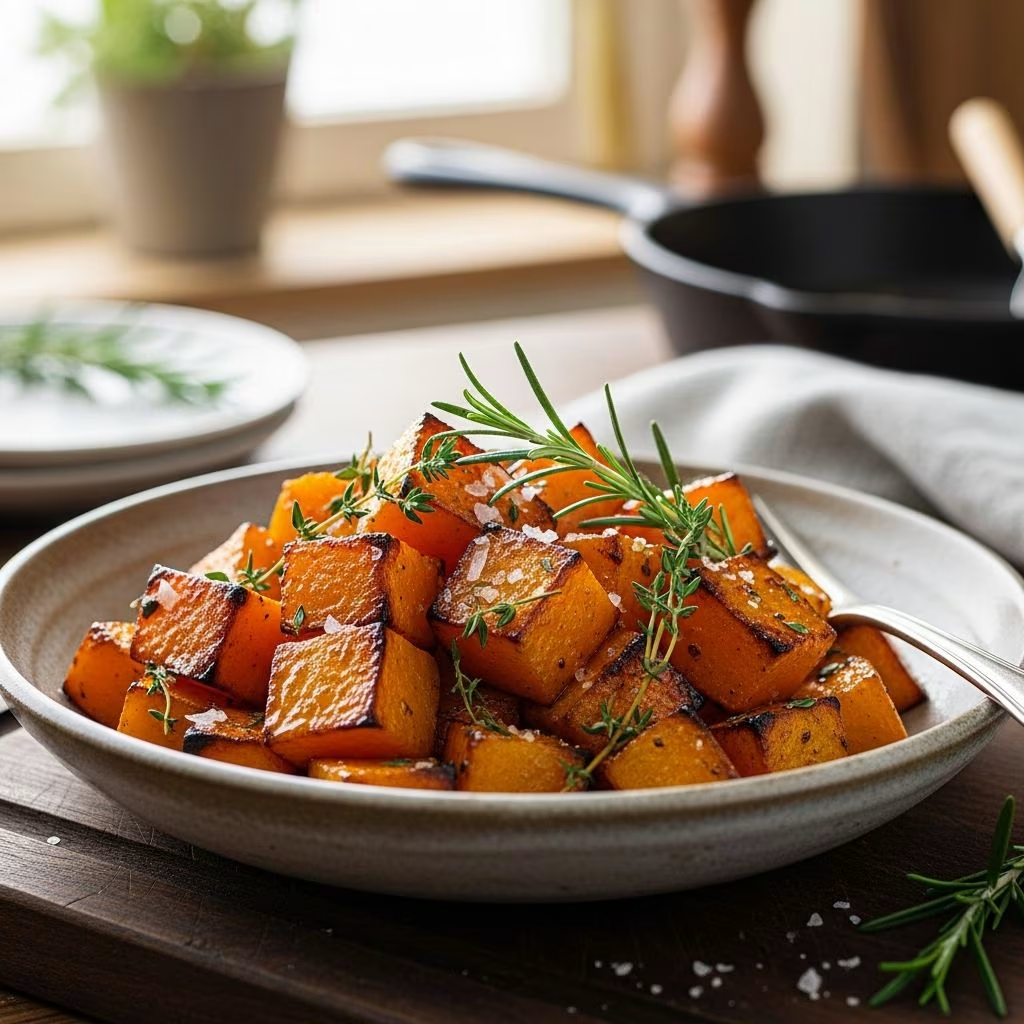
Butternut squash emerges as a star ingredient during cooler months, offering its sweet, nutty flavor and vibrant orange hue in countless dishes. Baking this versatile vegetable unlocks its natural sugars, creating tender bites that pair beautifully with savory mains or stand alone as a nourishing side. Whether you prefer roasting it whole for minimal prep or cubing it for even caramelization, mastering baked butternut squash opens doors to healthy, seasonal eating.
Why Choose Baked Butternut Squash?
Baking butternut squash stands out for its simplicity and health benefits. This method preserves nutrients like vitamin A, which supports eye health and immunity, while requiring minimal added fats. Unlike boiling, baking concentrates flavors through gentle caramelization, yielding a texture that’s soft yet slightly crisp on the edges. Home cooks appreciate its hands-off nature—prep once, then let the oven do the work. It’s budget-friendly too, as one medium squash serves four to six people generously.
Seasonal appeal peaks in autumn when squash is harvested fresh, boasting peak sweetness. Nutritionally, a cup of baked cubes delivers about 80 calories, 20 grams of carbohydrates, and over 100% of daily vitamin A needs, making it ideal for balanced meals.
Selecting the Best Butternut Squash
Start with quality produce for optimal results. Look for squash that’s heavy for its size, indicating moist, dense flesh. The rind should be smooth, matte tan without blemishes or soft spots. A short, wide neck suggests more flesh and less seeds. Size matters: medium 2-3 pound squashes (about 8-10 inches long) bake evenly without overwhelming portion sizes.
- Heavy weight: Signals freshness and full interior.
- Firm rind: Avoids stringy or watery texture.
- Uniform shape: Ensures even cooking.
Store whole squash in a cool, dark place for up to two months. Once cut, wrap tightly and refrigerate for five days max.
Preparation Techniques for Baking
Prep sets the stage for success. For cubed baking, wash the exterior, then slice off stem and bottom for stability. Peel using a sturdy Y-peeler, removing all green stripes. Halve widthwise to separate neck from bulb, scoop seeds from the bulb, and cut into ¾-1 inch uniform cubes. Consistency prevents uneven cooking.
Whole baking skips peeling: halve lengthwise, remove seeds, and roast skin-side down. Post-bake, the flesh scoops out effortlessly. Save seeds for roasting like pumpkin seeds—rinse, dry, toss in oil and salt, bake at 300°F for 45 minutes.
| Method | Prep Time | Best For |
|---|---|---|
| Cubed | 10-15 min | Even seasoning, salads |
| Halved Whole | 5 min | Minimal effort, soups |
| Whole Intact | 2 min | Pierce and bake, stuffed dishes |
Classic Savory Baking Recipe
This foundational recipe yields tender, golden cubes perfect for weeknight dinners. Serves 6; prep 15 min, bake 25-30 min.
Ingredients
- 1 medium butternut squash (2-3 lbs), peeled, seeded, cubed
- 3 tbsp olive oil
- 1 tsp salt
- ½ tsp black pepper
- 1 tsp garlic powder
- 1 tsp dried Italian herbs
Steps
- Preheat oven to 425°F. Line a baking sheet with parchment.
- Toss cubes with oil and seasonings in a large bowl until evenly coated.
- Spread in a single layer, avoiding overcrowding for crisp edges.
- Bake 20 min, flip with spatula, bake 5-10 min more until fork-tender and browned.
- Serve hot, optionally drizzled with browned butter.
Tips: High heat promotes browning via Maillard reaction. Flip midway for uniform results.
Sweet Cinnamon Baked Variation
Elevate with autumn spices for a dessert-like side. Same prep, but swap savory for:
- 2 tbsp maple syrup
- 1 tsp cinnamon
- ¼ tsp nutmeg
- 1 tbsp brown sugar
Toss with oil and bake at 400°F for 30-40 min, stirring halfway. The sugars caramelize, creating sticky, irresistible bites ideal for holiday tables. Pairs with roasted chicken or yogurt parfaits.
Whole Roasted Butternut Squash Method
For ultimate ease, bake halves or whole. Preheat to 400°F.
- Halve lengthwise, scoop seeds.
- Brush cut sides with oil, season with salt, pepper, optional brown sugar.
- Place cut-side down on parchment-lined sheet.
- Bake 40-60 min until skin yields to fork pressure.
- Scoop flesh or serve in skin.
Larger squashes take 60-80 min; test doneness by piercing thickest part. Stuff pre-baked halves with grains, nuts, and cheese for mains.
Nutrition and Health Benefits
Baked butternut squash shines nutritionally. Key perks:
- Vitamin A powerhouse: Beta-carotene converts to vitamin A, aiding vision and skin.
- Fiber-rich: Promotes digestion, satiety.
- Antioxidants: Combats inflammation.
- Low calorie: Fills plates without excess energy.
Per cup (baked, plain): 82 calories, 0g fat, 22g carbs, 2g protein, 6g fiber. Enhances meals with potassium for heart health.
Creative Serving Suggestions
Versatility defines this dish. Beyond sides:
- Salads: Mix with kale, quinoa, feta, balsamic.
- Soups: Puree with broth, ginger for creaminess.
- Tacos: Top with black beans, avocado, lime.
- Pasta: Toss with sage butter, parmesan.
- Breakfast: Blend into smoothies or hash with eggs.
Store leftovers in airtight containers up to 4 days; reheat at 350°F. Freeze cubes for 3 months.
Common Mistakes and Fixes
Avoid pitfalls for pro results:
- Overcrowding pan: Causes steaming; use two sheets if needed.
- Uneven cubes: Leads to raw or mushy pieces; measure 1-inch.
- Skipping oil: Prevents sticking and browning.
- Low temp: Use 400°F+ for caramelization.
Sharp knife essential for tough rind; microwave 2 min softens it.
Seasonal Pairings and Menu Ideas
Thanksgiving staple: alongside turkey, green beans, cranberry sauce. Weeknights: with grilled pork, wild rice. Vegan feasts: curry-spiced with chickpeas, coconut milk.
Experiment: Add chili for heat, rosemary for earthiness, or parmesan pre-bake for crunch.
Frequently Asked Questions
Can I bake butternut squash without peeling?
Yes, halve and roast skin-side down; scoop after. Edible skin adds fiber.
How long to bake at 350°F?
Cubes: 35-45 min; halves: 50-70 min. Higher temps (400°F+) speed it up.
Is it safe to eat the skin?
Yes, when baked tender, though some prefer peeled for smoothness.
Can I use frozen cubes?
Thaw first, pat dry, bake 5-10 min longer to avoid sogginess.
How to cut butternut squash safely?
Stable surface, sharp knife; halve first, then cube.
Advanced Twists for Foodies
Infuse global flavors: harissa for spice, miso for umami. Air-fryer option: 380°F, 20 min, shake halfway. Sous-vide at 185°F for 1 hour, then sear.
Word count: 1678 (excluding metadata/HTML tags).
References
- Roasted Butternut Squash Recipe (Oven Baked) — Le Creme de la Crumb. 2023-10-15. https://www.lecremedelacrumb.com/roasted-butternut-squash/
- Easy Roasted Butternut Squash — Well Plated by Erin Clarke. 2024-09-01. https://www.wellplated.com/cinnamon-roasted-butternut-squash/
- Simple Roasted Butternut Squash — The Real Food Dietitians. 2023-11-20. https://therealfooddietitians.com/roasted-butternut-squash/
- How to Roast Butternut Squash — Elana’s Pantry. 2022-08-10. https://elanaspantry.com/how-to-roast-butternut-squash/
- Oven Roasted Butternut Squash — Kristine’s Kitchen. 2024-02-14. https://kristineskitchenblog.com/roasted-butternut-squash/