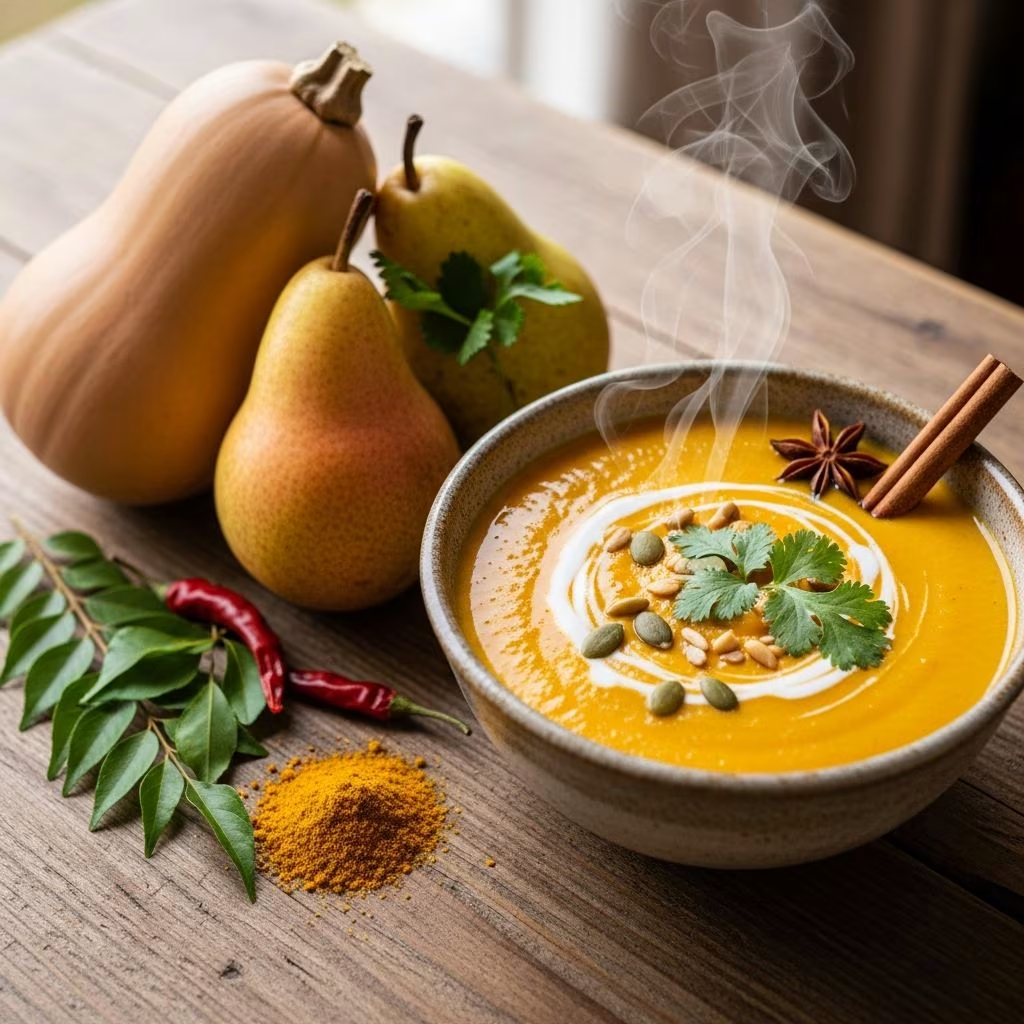
Butternut squash has long been celebrated in autumn kitchens for its naturally sweet flavor and creamy texture when cooked. When combined with ripe pears and the warmth of curry spices, this humble vegetable transforms into an elegant, restaurant-quality soup that feels both comforting and sophisticated. This combination works because the pears add subtle fruity notes that complement the earthiness of the squash, while curry powder introduces complexity and depth. The result is a dish that captures the essence of fall in a single bowl.
Understanding the Core Ingredients
The foundation of this soup relies on just a few primary ingredients, each selected for its unique contribution to the final dish. The butternut squash provides the body and creaminess of the soup without requiring heavy cream or stock as a base. A large butternut squash, weighing approximately three pounds and yielding around three cups of flesh when cooked, serves as the primary component. The skin should be deep tan, and the squash should feel heavy for its size, indicating proper ripeness and moisture content.
Pears bring a gentle sweetness and subtle complexity that prevents the soup from tasting one-dimensional. Bosc pears work particularly well because they hold their shape during cooking and contribute a slightly firmer texture to the blended mixture. One large pear, roughly four ounces, provides enough fruity flavor without overwhelming the other ingredients. Some variations use multiple pears to increase the fruit component and adjust the sweetness level according to preference.
Curry powder functions as the signature spice, delivering warmth without heat. Standard curry powder contains turmeric, coriander, fenugreek, and other aromatic spices that create layers of flavor. Approximately one tablespoon of curry powder suits most batches, though this can be adjusted based on personal spice tolerance and the potency of the specific brand used.
Additional aromatics include onions for sweetness and depth, garlic cloves that add pungency, and fresh ginger root that contributes brightness and a subtle peppery note. A modest amount of apple cider vinegar or fresh apple cider introduces acidity and additional fruity undertones that balance the richness of any cream or coconut milk used in the recipe.
Preparation Techniques and Methods
Multiple cooking approaches yield excellent results depending on available equipment and time constraints. Each method produces slightly different flavor profiles due to how ingredients are treated during preparation.
The Traditional Stovetop Approach
The conventional method begins with heating olive oil in a large pot over medium heat. Onions are sautéed until they become translucent and begin to caramelize slightly, requiring approximately five to ten minutes of stirring. This step builds flavor by developing the natural sugars in the onions. Once the onions reach the desired state, fresh minced garlic and ginger are added, cooking for approximately one minute to release their aromatic oils.
Fresh butternut squash cubes and chopped pears are then added to the aromatic base. Curry powder is stirred into this mixture, allowing the spices to bloom in the hot oil for one minute before any liquid is introduced. This blooming process activates the flavor compounds in the spices. Apple cider and water are added next, with the mixture brought to a simmer and cooked for thirty to forty minutes until the squash becomes completely tender and easily pierced with a fork.
Once cooking is complete, an immersion blender transforms the mixture into a smooth cream. For those without an immersion blender, the soup can be carefully transferred in batches to a regular blender, processed until smooth, and returned to the pot. Heavy cream or coconut milk is stirred in after blending, and the soup is brought back to a gentle simmer before serving.
The Roasted Vegetable Method
This approach develops deeper, more caramelized flavors through initial oven roasting. The butternut squash is halved lengthwise, and the seeds and stringy interior are scooped out. Both squash halves, placed skin-side down on a parchment-lined baking sheet, are roasted at four hundred degrees Fahrenheit for forty to fifty minutes until completely tender. Pear chunks and onion pieces are roasted separately on another sheet pan for thirty to forty minutes until lightly caramelized.
After roasting, the squash flesh is scooped from the skin and added to a large pot with the roasted pears and onions. The vegetables are then combined with curry powder, stock, and seasonings, simmered for twenty to thirty minutes, and blended until smooth. This method produces a soup with more pronounced flavors due to the caramelization that occurs during roasting.
The Slow Cooker Option
For those preferring minimal hands-on time, a slow cooker accommodates all ingredients simultaneously. Peeled and cubed butternut squash, chopped pears, diced onions, and curry powder are combined with stock and water in a four to six-quart slow cooker. Cooking on the low setting requires six to eight hours, while the high setting accomplishes the same result in three to four hours. Once the squash is completely tender, the mixture is blended and cream is stirred in before serving.
Flavor Building and Customization
The basic recipe framework accommodates numerous modifications based on dietary preferences and available ingredients. Those seeking additional warmth can incorporate ginger root in larger quantities, add a pinch of cayenne pepper, or include cinnamon and nutmeg for autumn spice notes. These warm spices complement both the squash and pears naturally.
The liquid component can be adjusted by substituting vegetable or chicken stock for water, which adds richness and deeper savory notes. Some variations incorporate apple cider exclusively or combine it with stock for a balance of fruity and savory flavors. The ratio of liquid to vegetables determines the final consistency; less liquid produces a thicker, more concentrated soup suitable for serving in smaller portions.
The finishing cream can be heavy cream for richness, coconut milk for a lighter dairy-free option, crème fraîche for tanginess, or Greek yogurt for protein enhancement. Some recipes omit cream altogether, relying on the natural creaminess of the blended squash. Each choice alters the mouthfeel and flavor profile subtly.
Serving Suggestions and Garnishes
Presentation elevates this soup from everyday comfort food to an elegant starter suitable for entertaining. A traditional garnish combines a small dollop of Greek yogurt or crème fraîche with fresh dill sprigs, adding visual contrast and a bright herbal note. Toasted pumpkin seeds contribute crunch and visual interest. Freshly cracked black pepper, chives, or cilantro provide herbaceous finishing touches.
For special occasions, consider more elaborate presentations such as a drizzle of pumpkin seed oil, crispy sage leaves, or toasted breadcrumbs for textural variation. Some preparations include a small spoonful of pear compote as a garnish, reinforcing the fruit component visually.
Nutritional Considerations
Butternut squash provides significant amounts of vitamin A from beta-carotene, supporting eye health and immune function. Pears contribute dietary fiber that aids digestive health. Curry spices, particularly turmeric, contain compounds with anti-inflammatory properties studied in traditional medicine. The soup becomes a nutrient-dense option when prepared with stock instead of water and finished with yogurt rather than heavy cream, increasing protein content without excessive calories.
Storage and Make-Ahead Strategies
This soup stores well in refrigerator containers for up to five days, making it ideal for meal preparation. The flavors often intensify after a day, resulting in an even more complex taste profile. For longer storage, the soup freezes successfully in portion-sized containers for up to three months. When reheating, gentle warming over medium heat maintains the smooth texture, though additional liquid may be needed if the soup thickens during storage.
The dish can be prepared through the blending step and refrigerated overnight before finishing with cream and garnishes, allowing flexibility in meal timing. Alternatively, all components can be prepped ahead and combined in a slow cooker just before leaving home, with a finished soup ready upon return.
Frequently Asked Questions
Can this soup be made vegan?
Yes, substitute vegetable stock for any animal-based stock and use coconut milk or cashew cream instead of dairy cream. The soup remains delicious and maintains its creamy texture through the blended vegetables.
What if I cannot find Bosc pears?
Any ripe pear variety works, including Bartlett, Anjou, or Comice pears. The specific variety matters less than choosing fruit that is ripe but still firm enough to maintain some structure during cooking.
How spicy is this soup?
Standard curry powder provides warmth and complexity without significant heat. Those seeking more spice can add cayenne pepper, white pepper, or fresh jalapeño. Those preferring milder flavor can reduce curry powder and emphasize other spices.
Can I make this without a blender?
While a smooth texture is traditional, you could mash the vegetables with a potato masher for a chunkier consistency. Alternatively, use a food mill or very carefully transfer small batches to a food processor.
What is the best serving temperature?
This soup is traditionally served hot, allowing the flavors to fully develop and the aromatic spices to be most prominent. However, it can be served at room temperature or chilled during warmer months.
Pairing and Menu Integration
This soup pairs excellently with crusty bread, allowing diners to soak up every flavorful drop. Grilled cheese sandwiches complement the soup’s sweetness and warmth. For lighter meals, serve the soup as a starter before a simple green salad and protein. In vegetarian menus, this soup functions as a substantial main course when paired with whole grains or accompanied by a hearty side salad.
The autumn spices and pear component make this soup particularly appropriate for fall menus, though it works year-round for those seeking comfort food. It suits casual family dinners and formal dinner parties with equal success, adapting easily to various serving styles and meal structures.
References
- Vitamin A and Beta-Carotene — National Institutes of Health Office of Dietary Supplements. 2024. https://ods.od.nih.gov/factsheets/VitaminA-Consumer/
- Dietary Fiber: Essential for a Healthy Diet — U.S. Department of Agriculture. 2024. https://www.fsis.usda.gov/
- Turmeric and Curcumin Research — National Center for Complementary and Integrative Health. 2023. https://www.nccih.nih.gov/health/turmeric