Cabbage often takes a backseat in the vegetable world, yet when prepared with care and attention, it transforms into an extraordinary dish that deserves prominence at any table. Braising cabbage is one of the most effective cooking methods to unlock its potential, creating a tender exterior with a delicate flavor profile that surprises even the most skeptical diners. This cooking technique combines dry heat searing with moist heat braising, creating layers of flavor and texture that elevate this humble cruciferous vegetable into something truly special.
The beauty of braised cabbage lies in its simplicity and versatility. Whether you’re preparing a weeknight dinner or hosting a sophisticated gathering, this dish adapts effortlessly to various flavor profiles and ingredient combinations. Understanding the fundamentals of braising will empower you to create consistently excellent results in your kitchen.
Understanding the Braising Method
Braising is a two-stage cooking process that begins with searing and culminates in gentle simmering. This technique works exceptionally well for cabbage because it develops complex flavors through caramelization while maintaining the vegetable’s natural texture and nutritional integrity. The initial searing creates a flavorful crust through the Maillard reaction, which occurs when proteins and sugars interact at high heat.
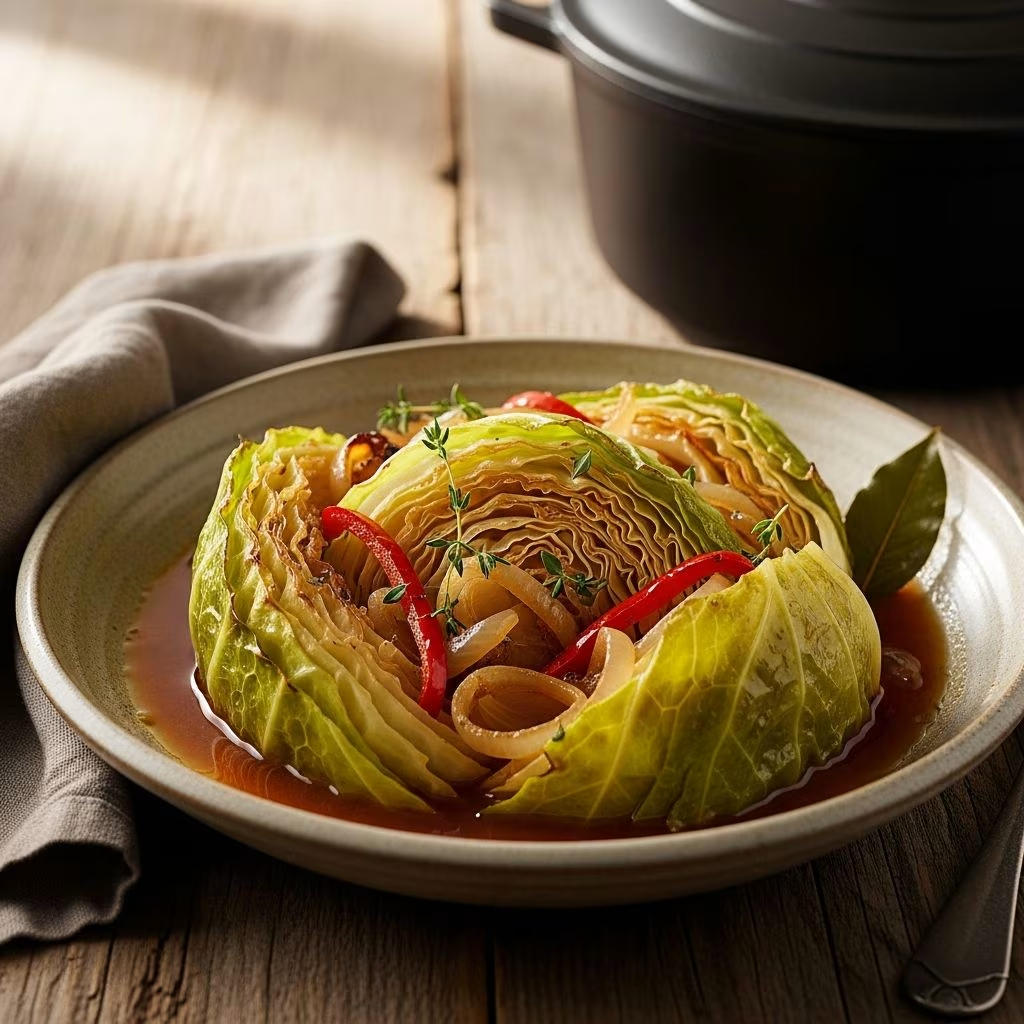
The process begins by cutting the cabbage into substantial wedges while keeping the core intact. This structural integrity ensures the wedges hold together throughout cooking rather than disintegrating into loose leaves. The searing phase typically occurs in a large oven-safe skillet or Dutch oven, where wedges are browned on multiple sides. After searing, aromatics like onions and garlic are introduced to the pan, followed by a flavorful braising liquid that will gently cook the cabbage until it reaches a fork-tender consistency.
Selecting and Preparing Your Cabbage
Begin with a firm, medium to large head of green cabbage weighing approximately two pounds. Examine the outer leaves for bruising or discoloration and remove any damaged portions. The core, which some recipes suggest removing, actually serves an important function by holding the wedges together during cooking. To cut cabbage properly for braising:
- Rinse the entire head thoroughly under cool water
- Place the cabbage cut-side down on a cutting board
- Cut the head in half through the core
- Cut each half into quarters, then eighths to create eight uniform wedges
- Ensure each wedge retains a portion of the core
Uniform sizing is critical because it ensures even cooking throughout the batch. Smaller or thinner wedges will overcook while larger pieces remain underdone if you’re not careful with your cuts. Taking time to create consistent portions pays dividends during the cooking process.
Building Flavor Through Aromatics and Seasonings
The foundation of exceptional braised cabbage rests upon building layers of flavor before the cabbage even enters the braising liquid. Most recipes begin with salt and pepper applied directly to the oil before searing, which seasons the cabbage from the first moment it touches the hot pan. Additional seasonings can include chili flakes for subtle heat, smoked paprika for depth, or dried oregano for Mediterranean notes.
After searing the cabbage wedges and setting them aside, the aromatics phase begins. Yellow onions sliced thickly, along with several cloves of finely minced or grated garlic, are sautéed in the same pan where the cabbage was browned. This technique, known as fond deglazation, extracts the flavorful browned bits stuck to the bottom of the pan. Sautéing aromatics for two to three minutes until fragrant ensures they soften slightly while releasing their essential oils into the fat.
Some variations introduce additional seasonings at this stage, such as bouillon powder, tomato paste, or even mustard. These ingredients can substantially alter the final flavor profile, allowing you to customize the dish to complement your meal’s overall theme.
Choosing and Preparing Braising Liquids
The braising liquid is perhaps the most crucial component for achieving tender, flavorful results. Traditional options include chicken broth, beef stock, and vegetable stock, each imparting distinct characteristics to the finished dish. The liquid should come approximately halfway up the height of the cabbage wedges, creating an environment where the vegetable steams and braises simultaneously.
Many recipes incorporate wine into the braising liquid, typically white wine or dry white vermouth. This addition provides acidity and complexity that balances the natural sweetness of cooked cabbage. The wine is usually added early and brought to a simmer, which allows some of the alcohol to evaporate while preserving the flavor compounds.
Additional liquid elements that enhance braised cabbage include:
- Apple cider vinegar or white wine vinegar for brightness
- Worcestershire sauce for umami depth
- Dijon mustard for tangy complexity
- Fresh lemon juice added toward the end of cooking
The ideal braising liquid balances richness from broth and fat with acidity from wine or vinegar, creating a harmonious flavor that complements rather than overpowers the cabbage’s subtle sweetness.
The Searing Phase: Building Caramelization
Searing cabbage wedges is the gateway to developing the depth and complexity that distinguishes restaurant-quality braised cabbage from mediocre versions. This phase requires adequate heat, typically medium-high, and a generous amount of oil or fat in a large, heavy-bottomed skillet. Cast iron or stainless steel pans work exceptionally well because they distribute heat evenly and develop superior browning compared to nonstick alternatives.
Pour approximately one-quarter cup of olive oil into your selected pan and allow it to heat until shimmering but not smoking. Season the oil with salt, pepper, and optional chili flakes before adding the cabbage. Working in batches if necessary to avoid overcrowding, place cabbage wedges cut-side down initially. The goal is to achieve a golden-brown color with light charring on the cut surfaces. This process typically requires three to four minutes per side, depending on the thickness of your wedges and the intensity of your heat source.
Avoid moving the cabbage excessively while it sears. Allowing each side to make uninterrupted contact with the hot pan promotes superior browning. Once adequately browned, transfer the wedges to a plate and continue with remaining batches.
Assembling and Cooking Your Braised Cabbage
After searing is complete and aromatics have been sautéed, it’s time to combine all elements. Add the prepared braising liquid to the pan, stirring to incorporate any seasonings or aromatics that may have concentrated on the bottom. Bring the liquid to a gentle simmer before nestling the seared cabbage wedges back into the pan. The cabbage should be partially submerged, with the braising liquid reaching approximately the midpoint of each wedge.
Cover the skillet or Dutch oven tightly and transfer to a preheated oven set between 325°F and 375°F, depending on your recipe and desired cooking time. Lower temperatures (325°F) require longer cooking but may produce more tender results, while higher temperatures (375°F) reduce cooking time to approximately 30-35 minutes.
For most standard recipes, braising in the oven for 30 to 45 minutes produces beautifully tender cabbage. Some variations cook for up to two hours at lower temperatures, gradually breaking down the vegetable’s cellular structure into an exceptionally delicate texture. Checking doneness halfway through cooking allows you to flip wedges if desired, ensuring even cooking on all surfaces.
Optional Flavor Enhancements and Garnishes
While braised cabbage is excellent in its simplest form, numerous finishing touches can elevate it further. A gremolata—a mixture of finely minced garlic, lemon zest, and fresh parsley—adds brightness and textural contrast to the soft braised vegetable. This garnish is particularly effective when sprinkled over the finished dish just before serving.
Cheese additions transform the dish into something more indulgent. Freshly grated Parmesan cheese stirred into the pan during the final minutes of cooking creates a rich, savory depth. Walnuts provide textural contrast and nutty undertones that complement braised cabbage beautifully. Fresh herbs like thyme, oregano, or parsley contribute aromatic complexity.
For those seeking additional richness, a dollop of crème fraîche or sour cream stirred into the braising liquid at the end creates a creamy sauce that coats each wedge. This variation transforms the dish into something approaching a gratin in character while maintaining its essential braised qualities.
Timing and Temperature Guidelines
| Oven Temperature | Approximate Cooking Time | Best For |
|---|---|---|
| 325°F | 1.5–2 hours | Extended, gentle cooking; most tender results |
| 350°F | 45–60 minutes | Balanced approach; tender without excessive cooking time |
| 375°F | 30–35 minutes | Quicker preparation; still achieving fork-tender cabbage |
The specific cooking time depends on multiple variables including wedge thickness, oven calibration, and your definition of doneness. Cabbage is properly braised when a fork pierces the thickest part of a wedge with minimal resistance, though some prefer an even softer, nearly melting texture. Begin checking around the halfway point of cooking, and adjust remaining time accordingly.
Storage and Reheating Instructions
Braised cabbage stores beautifully in the refrigerator for up to four days when kept in a covered container. The flavor actually deepens during storage as ingredients continue to meld and develop. To reheat, simply place the cabbage in a covered oven-safe dish and warm at 350°F for approximately 15-20 minutes until heated through.
For an interesting variation when reheating, remove the foil cover during the final five minutes and increase the oven temperature to 425°F to re-brown the exterior slightly. This creates a refreshed texture and appearance without compromising the tender interior you’ve worked to develop.
Frequently Asked Questions
Can I make braised cabbage on the stovetop instead of in the oven?
Yes, absolutely. After searing and adding your braising liquid with aromatics, reduce the heat to low, cover the pan with a tight-fitting lid, and simmer for 30-45 minutes until the cabbage reaches your desired tenderness. This method requires more attention to prevent scorching but produces equally delicious results. Adjust the heat as needed to maintain a gentle simmer rather than a vigorous boil.
What type of cabbage works best for braising?
Green cabbage is the traditional choice and produces excellent results due to its mild flavor and tender texture when cooked. Red cabbage can also be braised but requires additional acid (such as vinegar) to maintain its color and prevent it from turning gray during cooking. Napa cabbage works beautifully for a more delicate, quicker-cooking variation.
How can I prevent my braised cabbage from falling apart?
Keeping the core intact when cutting your wedges is the primary factor ensuring they hold together. Additionally, avoid excessively high heat during braising, which can cause the wedges to disintegrate. Handle wedges gently when flipping or serving. Some chefs prefer leaving the core completely intact, while others partially remove it for easier eating after cooking.
Can I make this dish vegetarian or vegan?
Certainly. Substitute vegetable broth for any meat-based stock, and use olive oil or vegetable oil instead of butter or animal fat. All the flavor-building techniques remain identical. The finished dish loses nothing in terms of taste or texture through these substitutions.
What side dishes pair well with braised cabbage?
Braised cabbage complements roasted or grilled proteins beautifully, including pork chops, beef brisket, and grilled fish. It also pairs excellently with creamy grain dishes like polenta or risotto. The tender, slightly acidic nature of braised cabbage provides balance to rich, fatty main courses.
References
- Feasting at Home — Braised Cabbage Recipe — Feasting at Home. Accessed April 2026. https://www.feastingathome.com/braised-cabbage/
- WellPlated — Braised Cabbage — WellPlated.com. Accessed April 2026. https://www.wellplated.com/braised-cabbage/
- Flavorful Eats — Braised Cabbage & Onions — Flavorful Eats. Accessed April 2026. https://flavorfuleats.com/braised-cabbage-onions/
- Taste Cooking — World’s Best Braised Cabbage — Taste Cooking. Accessed April 2026. https://tastecooking.com/recipes/worlds-best-braised-cabbage/
- McGee, Harold — On Food and Cooking: The Science and Lore of the Kitchen. New York: Scribner, 2004. ISBN: 9780684800011. [Reference for Maillard reaction and cooking science principles]