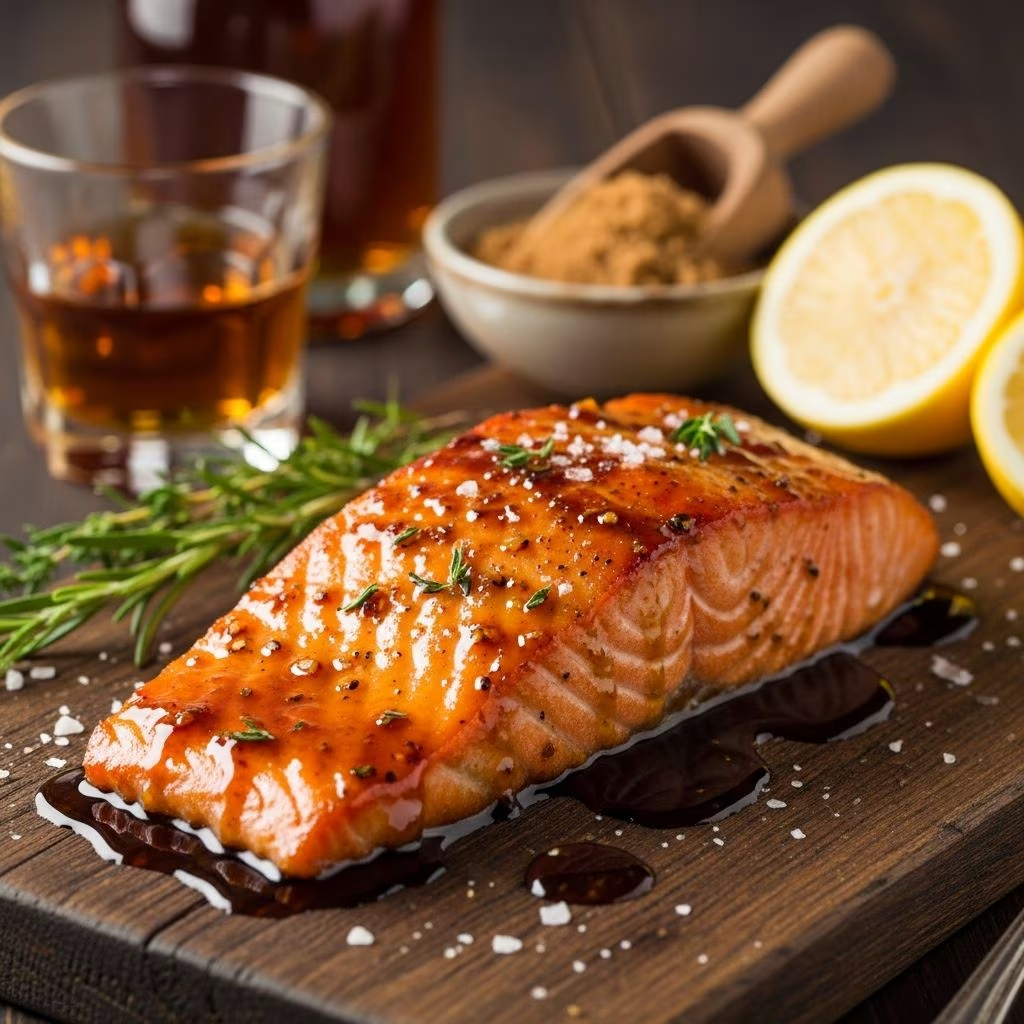
Cooking salmon with a bourbon and brown sugar glaze transforms a simple protein into an elegant main course that rivals upscale restaurant offerings. This cooking method combines the natural richness of salmon with a complex glaze that balances sweetness, savory notes, and subtle smokiness. The result is a dish that impresses dinner guests while remaining accessible to home cooks of varying skill levels.
Understanding the Flavor Profile
The magic of bourbon brown sugar glazed salmon lies in its multi-layered taste experience. Brown sugar contributes natural sweetness and caramel undertones that complement salmon’s buttery texture. Bourbon adds depth and complexity, introducing subtle notes of oak, vanilla, and spice that prevent the dish from becoming overly sweet. When combined with umami-rich ingredients like soy sauce and Worcestershire sauce, these elements create a glaze that enhances rather than masks the salmon’s delicate flavor.
The marinating process allows these flavors to penetrate the fish gradually, creating a caramelized crust during cooking while keeping the interior moist and tender. This technique ensures every bite delivers a cohesive blend of flavors rather than tasting like separate components layered on top.
Essential Ingredients and Their Roles
Success with this recipe begins with understanding each ingredient’s contribution to the final dish:
- Salmon fillets: Skin-on fillets are highly recommended as the skin protects the delicate flesh during cooking and provides crispy texture contrast. Wild salmon offers superior flavor compared to farmed varieties, though either works well in this preparation.
- Brown sugar: Packed brown sugar dissolves more effectively in marinades than crystalline white sugar and provides additional molasses notes that enhance depth of flavor.
- Bourbon: Select a quality bourbon that you enjoy drinking, as inferior spirits can introduce harsh or unpleasant flavors. The alcohol content cooks off during preparation, leaving behind the bourbon’s characteristic complexity.
- Soy sauce: Low-sodium varieties prevent excessive saltiness while still delivering umami depth that rounds out the glaze.
- Worcestershire sauce: This ingredient adds fermented complexity and subtle tang that balances the sweetness of brown sugar.
- Aromatics: Minced garlic, diced shallots, or ginger contribute aromatic intensity and prevent the glaze from tasting one-dimensional.
- Acid components: Lemon juice or lime juice brighten the glaze and cut through richness, ensuring the finished dish feels fresh rather than heavy.
- Optional garnishes: Toasted pecans or chopped scallions add textural interest and visual appeal to the finished plate.
Preparation Methods: Marinade vs. Glaze Techniques
Two primary approaches exist for applying bourbon brown sugar flavors to salmon, each with distinct advantages:
The Marinating Approach
This method involves submerging salmon in a marinade mixture for one to three hours before cooking. The extended contact allows flavoring compounds to penetrate the flesh, creating more thoroughly seasoned results. To marinate effectively, combine brown sugar, bourbon, soy sauce, Worcestershire sauce, and aromatics in a bowl, then place half the mixture with the salmon in a sealed plastic bag. Reserve the remaining half for use as a glaze. Flip the bag periodically to ensure even marination.
After marinating, discard the used marinade and reserve the fresh half for basting during cooking. This approach works particularly well for making-ahead, as marinating can occur several hours before your dinner party begins.
The Fresh Glaze Method
Alternatively, prepare a fresh glaze by whisking bourbon, brown sugar, Dijon mustard, soy sauce, Worcestershire sauce, and seasonings in a saucepan. Heat the mixture over medium-low heat, allowing the sugar to dissolve and the sauce to gently simmer without boiling vigorously. The bourbon should cook off sufficiently that the alcohol smell dissipates, typically after several minutes of gentle heating. This method produces a glossier, more refined glaze that maintains better texture during cooking.
Cooking Techniques for Perfect Results
Two cooking methods produce excellent bourbon brown sugar glazed salmon:
| Method | Temperature | Duration | Best For |
|---|---|---|---|
| Oven Baking | 400°F (200°C) | 20-25 minutes | Hands-off cooking, batch preparation |
| Stovetop Searing | High heat sear, then oven finish | 4-6 minutes sear, then 8-10 minutes oven | Developing crust, precise control |
Oven Baking Procedure
Line a baking dish with aluminum foil and spray lightly with nonstick spray to prevent sticking. Place salmon fillets skin-side down on the prepared surface. If desired, press toasted pecans or other garnishes into the flesh. Brush approximately one-third of the glaze onto the salmon, then place in a preheated 400°F oven. Baste with additional glaze every eight to ten minutes, using approximately three applications total. The salmon is finished when it flakes easily with a fork, typically after twenty to twenty-five minutes depending on fillet thickness.
Stovetop Searing with Oven Finish
Pat salmon fillets dry with paper towels and season with salt and pepper. Heat olive oil in an oven-safe skillet over high heat until shimmering. Sear salmon skin-side up for three to four minutes until the skin becomes crispy, then flip and sear the flesh side for one to two minutes. Pour the prepared glaze over the salmon and allow the mixture to reach a gentle boil while spooning the glaze over the fillets. Transfer the skillet to a preheated 400°F oven and cook until the salmon flakes easily, typically eight to ten minutes. This technique develops a flavorful crust while ensuring moist interior texture.
Critical Cooking Considerations
Several factors significantly impact the final result when preparing this dish:
- Don’t overcook: Salmon continues cooking after removal from heat. Remove it from cooking when it still appears slightly underdone in the thickest section, as carryover heat will complete the cooking process while maintaining moisture.
- Monitor bourbon carefully: When heating bourbon, maintain low to medium-low temperatures to prevent ignition. Ensure adequate ventilation and keep a lid nearby as a precaution.
- Glaze consistency: The glaze should reach a slightly thickened, syrupy consistency before applying to salmon. If it becomes too thick, it will be difficult to distribute evenly; if too thin, it won’t coat the fish effectively.
- Skin placement: Keeping skin-side down during cooking protects the delicate flesh and allows skin to crisp up, providing textural contrast.
Ingredient Quality and Selection Tips
The quality of individual ingredients directly influences the finished dish. For salmon, wild-caught varieties generally possess more robust flavor and superior texture compared to farm-raised alternatives. When selecting bourbon, mid-range options typically provide the best value; premium aged bourbons become obscured by competing flavors in this preparation, while bottom-shelf varieties may introduce undesirable harshness.
Brown sugar’s molasses content varies by brand; darker varieties contribute richer caramel notes, while lighter brown sugar produces a more delicate sweetness. Low-sodium soy sauce prevents the glaze from becoming excessively salty, an important consideration since other ingredients like Worcestershire sauce and bourbon contain substantial sodium.
Complementary Side Dishes and Serving Suggestions
The sophisticated flavor profile of bourbon brown sugar glazed salmon pairs beautifully with several side dishes. Steamed or roasted asparagus provides a crisp vegetable component without competing for attention. Rice pilaf or wild rice absorbs excess glaze and provides neutral starch balance. Roasted root vegetables like carrots or Brussels sprouts complement the dish’s richness. For lighter accompaniments, a simple green salad with lemon vinaigrette cuts through the glaze’s sweetness and richness.
Consider plating arrangement when serving: position the salmon fillet prominently with skin exposed, arrange side dishes thoughtfully, and drizzle any remaining glaze artfully around the plate. A garnish of fresh scallions, microgreens, or edible flowers adds professional polish to the presentation.
Make-Ahead and Storage Strategies
The marinating step can be completed up to eight hours in advance, making this recipe excellent for entertaining. Prepare the marinade and place salmon in the bag the morning of your dinner party, then cooking becomes a simple final-hour task. The prepared glaze mixture also stores in the refrigerator for up to three days before cooking, allowing you to compose the glaze during meal prep sessions.
Leftover cooked salmon stores safely in the refrigerator for up to three days in an airtight container. Reheat gently in a 300°F oven for eight to ten minutes, or enjoy cold salmon flaked over salads the following day. The glaze flavors actually intensify after cooling, making day-two consumption particularly flavorful.
Frequently Asked Questions
Can I use skinless salmon fillets?
While skin-on fillets are recommended, skinless fillets work acceptably with slightly adjusted cooking times. Reduce cooking duration by two to three minutes and monitor closely to prevent overcooking. The crisping benefit and protective qualities of skin will be absent, so handle fillets gently during cooking.
Is the bourbon flavor actually detectable in the finished dish?
When bourbon heats sufficiently to cook off the alcohol, the bourbon’s complex flavor compounds—including vanilla, oak, and spice notes—remain in the glaze, subtly enhancing the overall taste without tasting explicitly of alcohol.
Can I substitute the bourbon with another spirit?
Rye whiskey, cognac, or brandy provide acceptable substitutes with slightly different flavor characteristics. Avoid rum or vodka, which lack the complexity bourbon contributes to this dish.
How do I know when the salmon is properly cooked?
Properly cooked salmon flakes easily when tested with a fork in the thickest section. The flesh should appear opaque rather than translucent, though a slight undercooking is preferable to overdrying the fish.
What’s the ideal thickness for salmon fillets in this recipe?
Fillets between three-quarters and one inch thick cook most evenly. Thinner fillets risk drying out, while extremely thick fillets may not cook through adequately before the exterior caramelizes.
Variations and Creative Adaptations
This base recipe accommodates creative variations. Add maple syrup alongside brown sugar for additional depth. Include Dijon mustard to introduce subtle spiciness. Toast pecan pieces and press them into the salmon for textural contrast. Replace bourbon with good quality whiskey or brandy for different aromatic profiles. Incorporate fresh ginger or increase garlic quantity for intensified savory notes. The fundamental technique remains consistent regardless of modifications, ensuring successful results.
Bourbon brown sugar glazed salmon represents an elegant yet achievable dish that elevates everyday cooking into restaurant-quality cuisine. By understanding ingredient roles, mastering application techniques, and respecting the salmon’s delicate nature, home cooks create dishes that satisfy both casual weeknight dining and impressive entertaining occasions.
References
- Bourbon Brown Sugar Glazed Salmon Recipe — The Cookie Rookie®. Accessed April 2026. https://www.thecookierookie.com/bourbon-brown-sugar-salmon/
- Oven Roasted Bourbon Brown Sugar Glazed Salmon — Cooking with Wine Blog. Accessed April 2026. https://cookingwithwineblog.com/oven-roasted-bourbon-brown-sugar-glazed-salmon/
- Brown Sugar Bourbon Salmon — Pook’s Pantry. Accessed April 2026. https://www.pookspantry.com/brown-sugar-bourbon-salmon/
- Brown Sugar Bourbon Glazed Salmon — Butter Be Ready. Accessed April 2026. https://www.butterbeready.com/brown-sugar-bourbon-salmon/