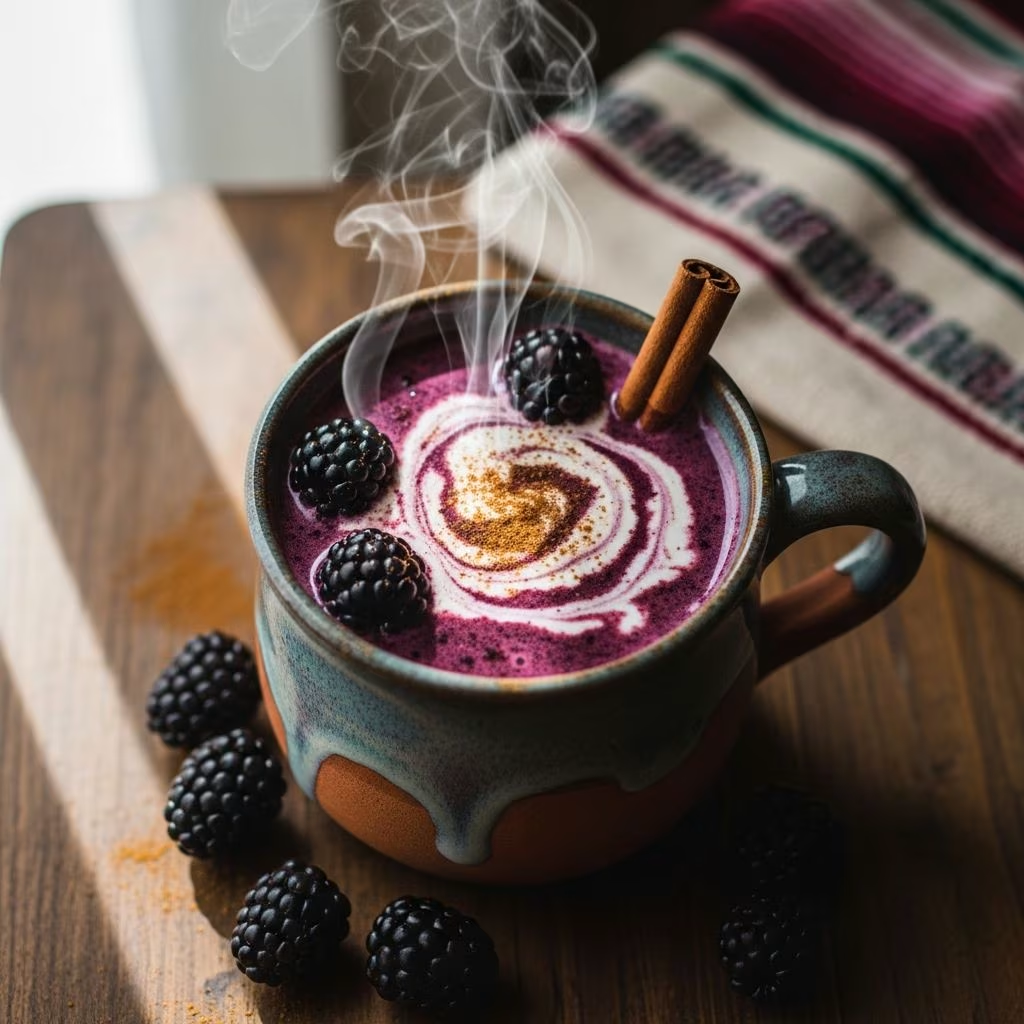
Blackberry atole stands as a beloved staple in Mexican culinary heritage, offering a velvety blend of ripe berries, corn-based thickener, and creamy milk. This drink captures the essence of comfort, especially during cooler months when families gather around steaming mugs. Rooted in indigenous traditions, it transforms simple pantry items into a luxurious treat that evokes nostalgia and warmth.
The Timeless Appeal of Atole in Mexican Culture
Atole traces its origins to pre-Hispanic Mexico, where corn masa formed the base of many nourishing drinks. Communities across regions like Michoacán have long cherished fruit-infused versions, with blackberries adding a tart-sweet profile that balances the drink’s richness. Today, it graces holiday tables, street markets, and home kitchens, symbolizing hospitality and shared joy.
Blackberries, known as zarzamoras in Spanish, thrive in Mexico’s diverse climates, making them a seasonal star. Their vibrant purple hue infuses the atole with eye-catching color and bold flavor, while providing natural sweetness that reduces the need for excess sugar. This beverage not only warms the body but also nourishes with vitamins from the fruit and sustaining carbs from the masa.
Essential Ingredients for Perfect Blackberry Atole
Crafting blackberry atole requires fresh, high-quality components to achieve its signature texture and taste. Core elements include:
- Fresh or frozen blackberries: About 2 cups provide the fruity base and natural color.
- Masa de maíz or corn flour: ½ cup thickens the mixture, giving it a smooth, pudding-like consistency.
- Milk: 2-4 cups of whole milk, or alternatives like evaporated milk for creaminess.
- Sweetener: Sugar, piloncillo, or condensed milk, adjusted to taste (¾ cup typical).
- Water: 1-2 cups to blend and cook the masa without clumping.
Optional garnishes like mint leaves, extra berries, or a dusting of cinnamon elevate the presentation and add aromatic layers.
Step-by-Step Guide to Homemade Blackberry Atole
Preparing blackberry atole is straightforward, taking around 30 minutes. Follow these detailed instructions for 4 servings.
- Prepare the berries: Rinse 2 cups of blackberries. In a blender, puree them with 1 cup of water until smooth. Strain through a fine mesh sieve to remove seeds, reserving the vibrant juice.
- Dissolve the masa: In a bowl, mix ½ cup masa de maíz with 1 cup water, stirring vigorously to eliminate lumps. For smoother results, blend this mixture briefly.
- Combine and heat: In a heavy-bottomed pot over medium heat, warm 2-4 cups milk. Gradually whisk in the masa slurry and blackberry puree.
- Sweeten and thicken: Add ¾ cup sugar or ⅓ cup piloncillo, stirring constantly. Simmer for 15-20 minutes until the atole thickens to coat the back of a spoon.
- Serve hot: Ladle into mugs, garnish with fresh blackberries, blueberries, or mint sprigs on skewers for a festive touch.
Pro tip: Use a wooden spoon or traditional molinillo to whisk, preventing sticking and incorporating air for frothiness.
Regional Variations Across Mexico
Mexico’s diversity shines in atole recipes. In Michoacán, versions often feature nixtamalized masa and generous milk for a robust flavor. Central regions might incorporate piloncillo for a molasses-like depth, while northern adaptations use canned milks for convenience.
| Region | Key Twist | Unique Ingredient |
|---|---|---|
| Michoacán | Thick, milky base | Nixtamalized masa, evaporated milk |
| Central Mexico | Sweet and spiced | Piloncillo, cinnamon stick |
| Northern States | Quick prep | Condensed milk, frozen berries |
These adaptations highlight how atole evolves with local ingredients and preferences.
Health Benefits and Nutritional Insights
Beyond indulgence, blackberry atole offers nutritional perks. Blackberries pack antioxidants, fiber, and vitamin C, supporting immunity and digestion. Corn masa provides complex carbs for sustained energy, while milk adds calcium and protein.
- Antioxidants from berries combat oxidative stress.
- Low glycemic impact when using fresh fruit over refined sugars.
- Customizable for dietary needs: Use plant-based milk for vegan versions.
A typical serving (1 cup) delivers around 250 calories, with variations based on sweetener. Opt for unrefined piloncillo to boost mineral content like iron and magnesium.
Pairing Suggestions for Blackberry Atole
This drink pairs beautifully with savory tamales, enhancing their flavors with its sweetness. Try it alongside:
- Chicken or pork tamales for contrast.
- Fresh pan dulce or conchas.
- Churros dusted with cinnamon sugar.
For breakfast, sip it with empanadas or as a postre alternative to flan.
Tips for Troubleshooting Common Issues
Achieving ideal consistency takes practice. If too thin, simmer longer while stirring. Lumps? Blend masa thoroughly before adding. Too tart? Increase sweetener gradually. Always use lead-free pottery for authentic, safe serving.
Seasonal Twists and Modern Adaptations
Experiment with strawberries, guavas, or mixed berries for variety. For a chilled summer take, cool and serve over ice with lime zest. Alcohol-infused versions for adults include a splash of rum or mezcal.
Frequently Asked Questions (FAQs)
What is the best masa for atole?
Masa de maíz nixtamalizada yields authentic flavor and texture; corn flour works as a substitute but may need extra cooking.
Can I make blackberry atole vegan?
Yes, swap dairy milk for almond, oat, or coconut milk, and use agave or maple syrup.
How long does it keep?
Store in the fridge up to 2 days; reheat gently with added milk to restore creaminess.
Is piloncillo necessary?
No, but it adds a traditional smoky sweetness superior to white sugar.
Frozen berries okay?
Absolutely; thaw first to avoid excess water diluting the mix.
Blackberry atole embodies Mexico’s vibrant food culture, blending simplicity with profound taste. Whether for Día de Muertos or a quiet evening, it invites connection through every sip.
References
- Receta: atole de zarzamora para acompañar los tamales — Animal Gourmet. 2022-01-31. https://www.animalgourmet.com/2022/01/31/receta-atole-zarzamora
- Atole de zarzamora: Receta para prepararlo paso a paso — Cocina Vital. 2017-08-01. https://www.cocinavital.mx/recetas/bebidas/atole-de-zarzamora/2017/08/
- TRADICIONAL Atole de Zarzamora de Michoacán — Cocinando con Angel (YouTube). Accessed 2026. https://www.youtube.com/watch?v=AaSLmg3xTmA
- Cómo preparar un delicioso atole de zarzamora — Infobae Mexico. 2025-11-13. https://www.infobae.com/mexico/2025/11/13/como-preparar-un-delicioso-atole-de-zarzamora-una-bebida-unica-ideal-para-la-temporada-de-frio/