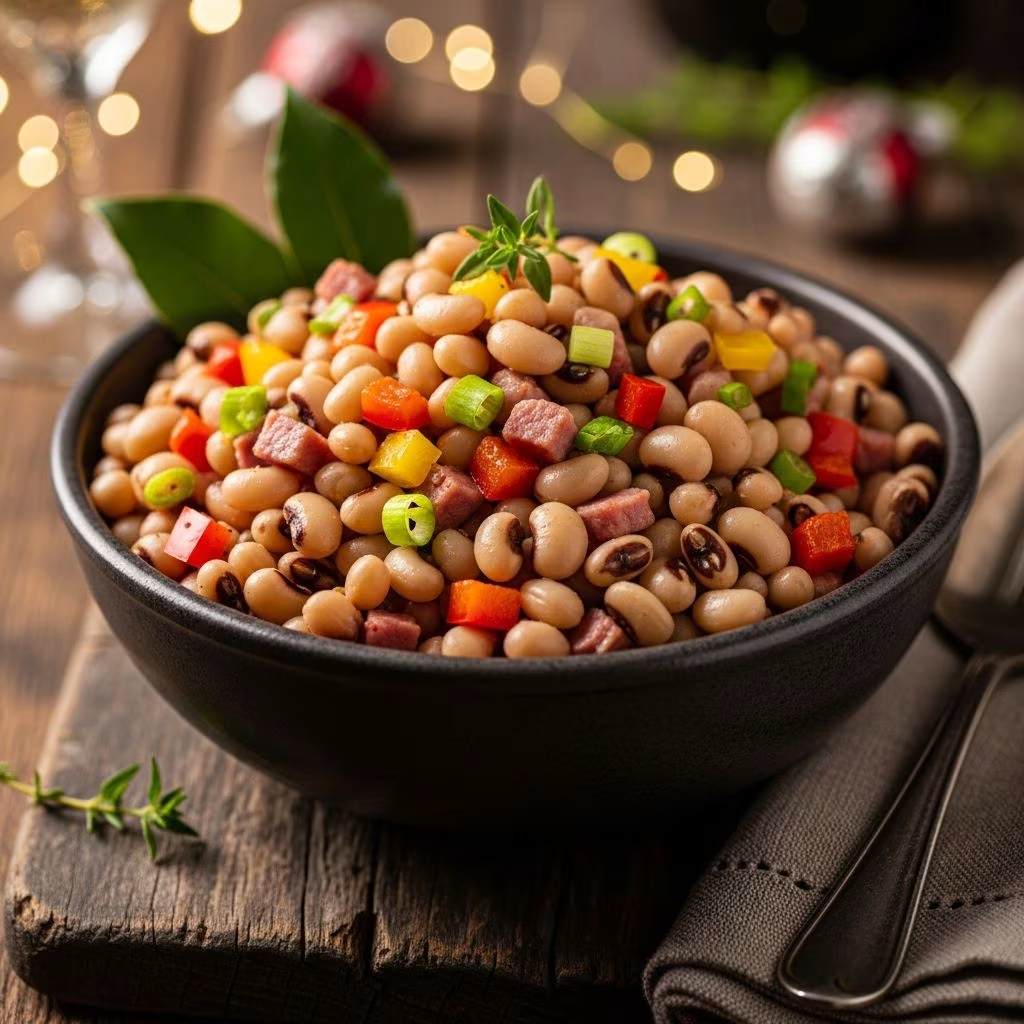
Black-eyed peas have long been a cornerstone of New Year’s celebrations, particularly in Southern U.S. cuisine, where they symbolize prosperity and good fortune. These small, creamy legumes are often simmered into hearty stews or soups, paired with greens and pork for a meal thought to bring luck in the coming year. This guide dives into the history, nutritional benefits, and multiple ways to prepare them at home.
The Tradition Behind Black-Eyed Peas on New Year’s
The custom of eating black-eyed peas on January 1st traces back to African American and West African influences blended with Southern American cooking. Legend holds that the peas represent coins or pennies, promising financial growth, while any greens added symbolize paper money. Pork, frequently bacon or ham hocks, signifies progress because pigs root forward, unlike chickens that scratch backward.
This tradition gained prominence during the Civil War when black-eyed peas, considered animal feed, spared them from destruction, allowing sustenance. Today, families across the South serve them alongside cornbread (gold) and collards (cash), creating a complete ‘lucky’ plate.
Nutritional Power of Black-Eyed Peas
Beyond superstition, black-eyed peas pack real health benefits. A cup of cooked peas delivers about 13 grams of plant-based protein, 11 grams of fiber, and essential folate for cell growth. They’re rich in iron, potassium, and antioxidants, supporting heart health and digestion. Low on the glycemic index, they help stabilize blood sugar.
| Nutrient | Amount per 1 Cup Cooked | % Daily Value |
|---|---|---|
| Calories | 200 | 10% |
| Protein | 13g | 26% |
| Fiber | 11g | 39% |
| Folate | 210mcg | 53% |
| Iron | 2.5mg | 14% |
Opt for dried peas to maximize nutrition over canned, which may have added sodium.
Classic Stovetop Black-Eyed Peas with Bacon
This savory version infuses smoky bacon flavor into a rich broth, perfect for traditionalists. Prep time: 15 minutes (plus soaking). Cook time: 2 hours. Serves 8.
Ingredients
- 1 lb dried black-eyed peas, soaked overnight and drained
- 12 oz bacon, chopped
- 1 large onion, diced
- 4 garlic cloves, minced
- 10 cups low-sodium chicken broth
- 4 bay leaves
- 2 tsp dried thyme
- 2 cups chopped fresh parsley, divided
- Black pepper to taste
Step-by-Step Instructions
- Cook bacon in a large pot over medium heat until crispy. Remove half to reserve, drain most fat, leaving 1 tbsp.
- Sauté onion and garlic in reserved fat until softened, about 5 minutes.
- Add soaked peas, broth, bay leaves, thyme, parsley (reserve some for garnish), pepper, and half the bacon. Bring to boil, then simmer covered for 1.5-2 hours until tender. Add broth if needed.
- Stir in remaining bacon and parsley. Serve hot.
Tips: Soak peas by covering with water overnight or quick-soak by boiling 2 minutes then resting 1 hour. For creamier texture, mash some peas against the pot side.
Slow Cooker Variation for Effortless Prep
Ideal for busy New Year’s mornings, this hands-off method yields tender results. Prep: 10 minutes. Cook: 6-8 hours on low.
- Combine pre-soaked peas, cooked bacon (half reserved), garlic, onion, thyme, bay leaves, parsley, pepper, and 8 cups broth in slow cooker.
- Cook low 6-8 hours. Garnish with remaining bacon.
No soaking? Add 1 lb dry peas and increase broth to 10 cups, cooking 8-10 hours.
Vegetarian and Vegan Black-Eyed Peas with Greens
For plant-based luck, skip pork and highlight greens like collards or kale, representing wealth. Ready in 20 minutes using canned peas. Serves 4.
Ingredients
- 2 cans (15 oz each) black-eyed peas, drained
- 2 tbsp oil
- 1 onion, chopped
- 3 garlic cloves, minced
- 5 cups chopped greens (collards, kale)
- 1 cup vegetable broth
- Juice of 1 lemon
- Crushed red pepper to taste
Instructions
- Heat oil, sauté onion and garlic 3 minutes.
- Add greens and broth, cover, cook until wilted, 5 minutes.
- Stir in peas, lemon, pepper. Heat through, 5 minutes.
Pair with cornbread for a complete vegan feast.
Hoppin’ John: Black-Eyed Peas and Rice
A one-pot classic combining peas, rice, and smoky elements. Serves 6. Cook time: 45 minutes.
- 2-3 bacon strips, chopped (or vegan butter/oil)
- 1 onion, diced
- 2 garlic cloves, minced
- 2 cans black-eyed peas
- 2 cups chicken or veg broth
- 1 cup rice
- 1 tsp thyme, salt, red pepper
- Brown bacon, add onion/garlic until soft.
- Stir in peas, broth, rice, seasonings. Simmer covered 40 minutes until rice absorbs liquid.
Vegan swap: Use oil instead of bacon.
Customizing Your Lucky Dish
- Add heat: Cayenne or jalapeños.
- Boost veggies: Carrots, celery, bell peppers.
- Proteins: Ham hocks, sausage, or smoked turkey for low-fat.
- Make ahead: Refrigerate 3 days or freeze 3 months.
Perfect Pairings for New Year’s Feast
Serve with:
- Cornbread for ‘gold’
- Collard greens for ‘greenbacks’
- Stewed tomatoes for balance
- Hot sauce on side
Frequently Asked Questions
Do I need to soak dried black-eyed peas?
Yes, overnight soaking shortens cooking and improves digestibility. Quick method: Boil 2 minutes, soak 1 hour.
Can I use canned peas?
Absolutely, for faster prep; drain and rinse to cut sodium. Reduce cooking time to 20-30 minutes.
Are fresh black-eyed peas better?
Fresh offer superior texture and flavor; available seasonally in South. Cook 30-45 minutes.
How to store leftovers?
Fridge up to 4 days; reheat with splash of broth. Freeze in portions.
Is this gluten-free?
Yes, naturally; check broth labels.
Why These Recipes Bring Real Luck
Whether you embrace the folklore or savor the soul-warming flavors, black-eyed peas make any New Year’s gathering special. Simple ingredients transform into comforting dishes that feed body and spirit. Experiment with these recipes to start the year deliciously.
References
- Black Eyed Peas Nutrition Facts — USDA FoodData Central. 2023-01-15. https://fdc.nal.usda.gov/fdc-app.html#/food-details/173759/nutrients
- Traditional Southern New Year’s Foods — Southern Foodways Alliance. 2024-12-20. https://www.southernfoodways.org/
- Culinary History of Black-Eyed Peas — Smithsonian Folklife. 2022-12-28. https://folklife.si.edu/magazine/food-new-years-black-eyed-peas
- Health Benefits of Legumes — Harvard T.H. Chan School of Public Health. 2025-03-10. https://www.hsph.harvard.edu/nutritionsource/legumes-pulses/
- New Year’s Food Traditions — Library of Congress. 2023-11-05. https://www.loc.gov/folklife/holidays/newyears.html