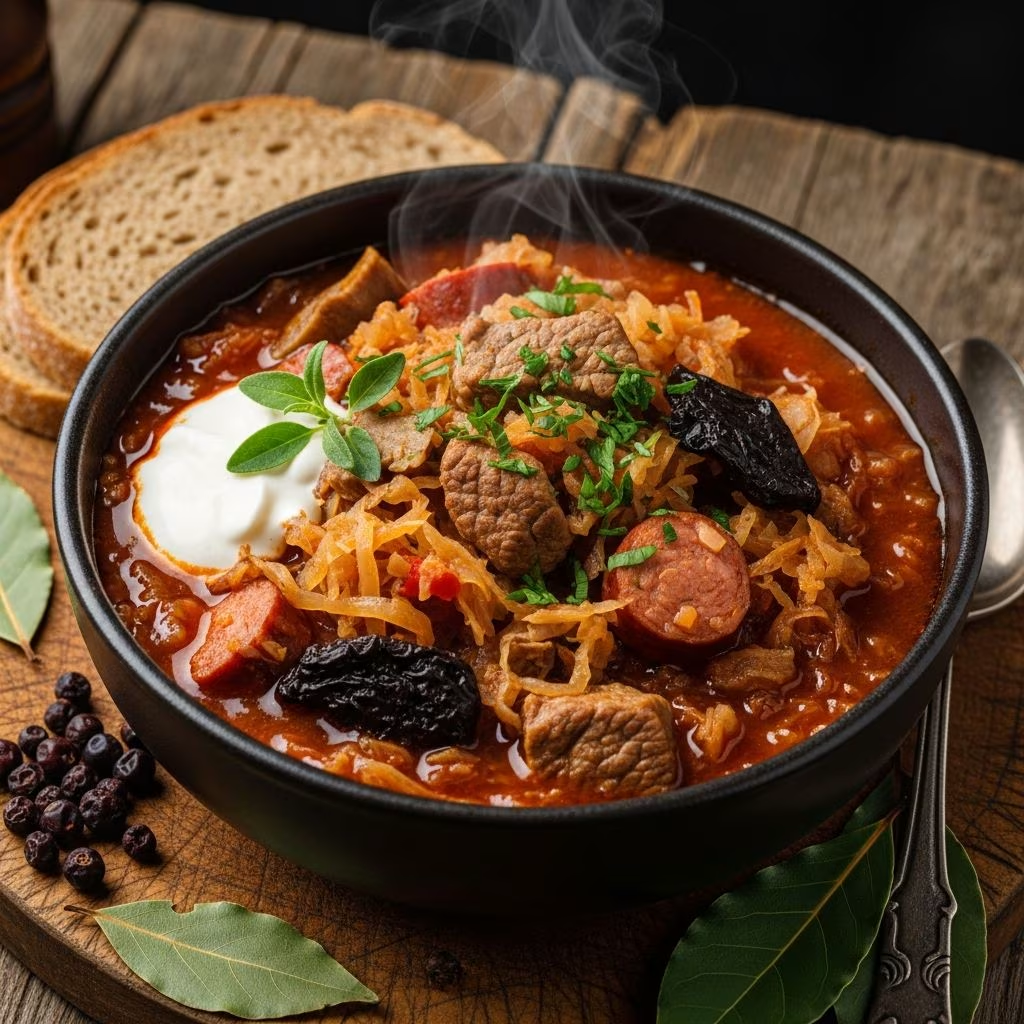
Bigos stands as one of Poland’s most cherished culinary treasures, a robust stew that captures the essence of rustic, forest-inspired cooking. Known affectionately as “Hunter’s Stew,” this dish combines fermented sauerkraut, fresh cabbage, various meats, and earthy mushrooms in a slow-simmered medley of flavors. Its origins trace back to Polish nobility and hunters who foraged and preserved ingredients for long winters, evolving into a staple across households today. What makes Bigos special is its ability to improve with time, as flavors meld over days, making it ideal for batch cooking.
The Historical Roots of Bigos
Bigos has deep ties to Polish history, mentioned in literature as early as the 17th century. Hunters in the vast Polish forests would prepare this stew using game meats, preserved cabbage, and wild mushrooms, sustaining them through harsh seasons. Over centuries, it transitioned from elite tables to everyday peasant fare, incorporating affordable ingredients like pork and sausage. Regional variations emerged, with some areas adding prunes for sweetness or red wine for depth. Today, Bigos symbolizes Polish resilience and communal feasting, often served during holidays like Christmas Eve.
Traditional preparations emphasize fermentation’s role; sauerkraut provides probiotics and tanginess, balancing rich meats. Historical recipes favored wild game like venison or boar, but modern adaptations use beef, pork, and smoked kielbasa for accessibility. The stew’s name, “Bigos,” may derive from the Old High German “bihoz,” meaning “side dish,” reflecting its versatile place in meals.
Essential Ingredients for Authentic Bigos
At its core, Bigos relies on a harmonious blend of acidic, savory, and umami elements. Key components include:
- Sauerkraut: The foundation, providing fermented sharpness. Use 2-3 pounds, drained but reserving juice for moisture.
- Fresh Cabbage: Adds bulk and tenderness; shred about 1 small head.
- Meats: A mix of 1-2 pounds total, such as pork shoulder, beef stew meat, and sliced kielbasa for smokiness.
- Mushrooms: Dried porcini or fresh crimini (1/2-1 ounce dried or 8 ounces fresh) for earthiness.
- Aromatics and Spices: Onions, garlic, bay leaves, allspice berries, peppercorns, marjoram, and caraway seeds.
- Enhancers: Tomato paste, prunes, red wine, or stock for complexity and sweetness.
Quality matters—opt for naturally fermented sauerkraut without additives and high-quality smoked sausage. Proportions can flex: more sauerkraut for tang, more meat for heartiness.
| Ingredient | Quantity (Serves 8-10) | Role |
|---|---|---|
| Sauerkraut | 2-3 lbs | Base tang and fermentation |
| Pork/Beef | 1 lb total | Protein and richness |
| Kielbasa | 1 lb sliced | Smoke and fat |
| Cabbage | 1 small head | Texture and volume |
| Dried Mushrooms | 1 oz | Umami depth |
| Tomato Paste | 1/4 cup | Sweet acidity |
Step-by-Step Guide to Cooking Bigos
Bigos demands patience, with cooking times of 2-4 hours or more. The process builds layers of flavor through browning, simmering, and resting. Here’s a reliable method adapted from traditional practices.
Prep Mushrooms and Meats: Soak dried mushrooms in warm water for 1 hour, reserving the liquid. Cube pork and beef, season with salt and pepper.
Brown Meats: In a large Dutch oven, heat 2-3 tbsp oil or lard over medium-high. Sear meats in batches until crispy, 4-5 minutes per side. Remove and set aside. Brown sliced kielbasa separately for 3 minutes.
Sauté Vegetables: Reduce heat to medium. Cook chopped onions and garlic until golden, 5 minutes. Add fresh mushrooms, stirring 2-3 minutes, then shredded cabbage for another 2 minutes.
Combine and Simmer: Stir in tomato paste, stock (4 cups), sauerkraut, reserved mushroom liquid, chopped soaked mushrooms, prunes, bay leaves, allspice, caraway, and marjoram. Bury meats in the mix. Bring to a simmer, cover, and cook low for 2 hours, stirring occasionally. Uncover partially if too watery.
Finish and Rest: Shred tender meats with forks if needed. Simmer another 1-2 hours until thickened. Cool completely, then refrigerate overnight for best flavor melding.
Reheat gently the next day. Total time: 3-5 hours active, plus resting. Yields 8-10 servings.
| Step | Time | Tips |
|---|---|---|
| Browning | 20 min | Don’t overcrowd pan |
| Initial Simmer | 2 hours | Stir every 30 min |
| Final Cook | 1-2 hours | Taste and adjust salt |
Variations and Modern Twists on Bigos
While traditional Bigos is meat-heavy, adaptations suit dietary needs. For vegetarian versions, swap meats for hearty mushrooms, lentils, or smoked tofu, maintaining sauerkraut dominance. Game meats like venison elevate authenticity for hunters. Add red wine (1 cup) post-sauté for deglazing and richness, or prunes (10-12) for subtle sweetness countering acidity.
Regional Polish styles differ: some include fresh tomatoes or juniper berries. For quicker versions, use a slow cooker—brown first, then low for 6-8 hours. Experiment with spice levels: more caraway for piney notes, allspice for warmth.
Health Benefits and Nutritional Profile
Bigos offers balanced nutrition from fermented foods. Sauerkraut delivers vitamin C, K, and probiotics aiding gut health. Meats provide protein (25-30g per serving), iron, and B vitamins. Cabbage adds fiber for digestion. A 1-cup serving approximates 300-400 calories, with low carbs if cabbage-focused. It’s keto-friendly in moderation due to fats from sausage.
- Probiotics from sauerkraut support immunity.
- Antioxidants in mushrooms combat inflammation.
- Collagen from slow-cooked meats benefits joints.
Storage, Freezing, and Reheating Tips
Bigos shines with age—flavors peak after 2-3 days. Store in airtight containers in the fridge up to 1 week. Freeze portions for 3 months; thaw overnight before reheating. Simmer on stovetop with a splash of stock to revive moisture. Avoid microwaving to preserve texture.
Perfect Pairings and Serving Suggestions
Serve Bigos hot in deep bowls, garnished with fresh dill or sour cream. Pair with rye bread for sopping juices, or boiled potatoes. Polish beer like Żywiec complements smokiness; for wine, try dry red. It’s a feast star for gatherings, scalable for crowds.
Frequently Asked Questions (FAQs)
What is Bigos made of?
Primarily sauerkraut, cabbage, pork, kielbasa, mushrooms, and spices like bay leaves and allspice.
How long does Bigos take to cook?
3-5 hours total, best rested overnight for flavor development.
Can Bigos be made vegetarian?
Yes, replace meats with extra mushrooms, beans, or plant-based sausage.
Why does Bigos taste better the next day?
Ingredients meld, acids tenderize meats, and spices infuse deeply during resting.
Is Bigos gluten-free?
Naturally, if using gluten-free sausage and stock.
Mastering Bigos connects you to Polish heritage while delivering soul-warming meals year-round.
References
- Polish Hunter’s Stew (Bigos) — Jenny Can Cook. Accessed 2026. https://www.jennycancook.com/recipes/polish-hunters-stew-bigos/
- Polish Hunter’s Stew {Bigos} — Polish Your Kitchen. Accessed 2026. https://www.polishyourkitchen.com/polish-hunters-stew-bigos/
- Bigos (Polish Hunter’s Stew) — The Domestic Man. 2018-01-02. https://thedomesticman.com/2018/01/02/bigos-polish-hunters-stew/
- Bigos – Polish Hunter Stew Recipe — Eating European. Accessed 2026. https://eatingeuropean.com/bigos-polish-hunter-stew/
- Bigos Recipe – How to Cook Polish Hunters Stew — YouTube (Kevin All Over). Accessed 2026. https://www.youtube.com/watch?v=Fho_Y0cSFrg