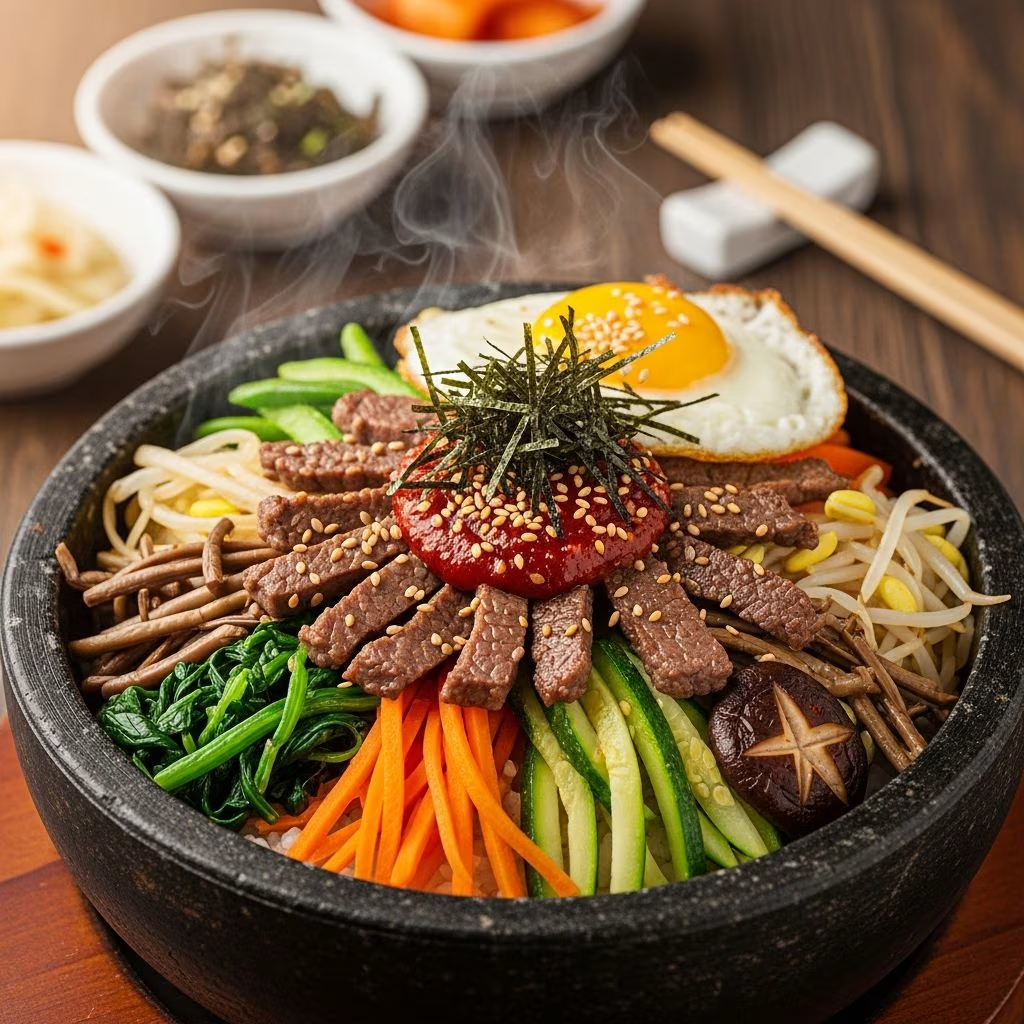
Korean bibimbap is a colorful, nutrient-packed rice dish that combines steamed rice with an array of seasoned vegetables, tender meat, a fried egg, and spicy gochujang sauce. This versatile meal allows for endless customization while delivering balanced flavors and textures in every bite.
The Origins and Cultural Significance of Bibimbap
Bibimbap, meaning “mixed rice” in Korean, has deep roots in Korean culinary tradition, evolving from royal court cuisine to a everyday favorite. Historically served during festivals or as a way to use leftover ingredients, it embodies the Korean philosophy of hansik, focusing on harmony between flavors, colors, and nutrition. The dish gained global popularity through Korean diaspora and modern food trends, praised for its health benefits like high vegetable content and fermented elements.
In traditional settings, bibimbap is prepared in a hot stone bowl called dolsot, where the rice crisps at the bottom for added crunch. Today, it’s enjoyed worldwide in bowls, representing balance: five colors (red, green, yellow, white, black) from vegetables symbolizing the five elements.
Essential Ingredients for Authentic Bibimbap
The beauty of bibimbap lies in its fresh, simple components. Core elements include short-grain rice for stickiness, diverse vegetables for crunch and earthiness, protein like beef or egg, and a robust sauce. Here’s a breakdown:
- Rice: 3-5 cups cooked short-grain or sushi rice, providing a neutral base.
- Vegetables (Namul): Spinach (250g blanched), bean sprouts (350g), carrots (120g julienned), shiitake mushrooms (100g sliced), zucchini, bell peppers, or fernbrake for variety.
- Protein: 100-500g beef mince or strips marinated in soy, sesame oil, garlic, and sugar; 3-4 eggs fried sunny-side up.
- Sauce: Gochujang (Korean chili paste) mixed with sesame oil, soy sauce, vinegar, sugar, and garlic—adjust for spice level.
- Garnishes: Toasted sesame seeds, shredded seaweed, green onions.
Vegetables are individually seasoned with sesame oil, salt, and garlic to preserve distinct tastes.
Step-by-Step Guide to Making Classic Bibimbap
Preparing bibimbap involves cooking each element separately for optimal flavor. This recipe serves 3-4 and takes about 45-60 minutes.
Prepare the Rice
Rinse 2 cups short-grain rice until water runs clear, soak 30 minutes, then cook with 2.5 cups water over medium heat until bubbling, reduce to low for 10-15 minutes. Fluff and keep warm.
Cook the Meat
Marinate 100g beef mince in 1 Tbsp soy sauce, 1 Tbsp sesame oil, 1 tsp sugar, 1/4 tsp garlic for 30 minutes. Stir-fry in hot wok with oil for 3-5 minutes until browned.
Season the Vegetables
- Spinach: Blanch 250g, squeeze water, toss with sesame oil, salt, garlic.
- Bean Sprouts: Boil 350g briefly, drain, season similarly.
- Carrots: Julienne 120g, stir-fry with 1/4 tsp salt and oil for 2-3 minutes.
- Mushrooms: Slice 100g shiitake, sauté with salt until tender.
Make the Sauce and Eggs
Mix 2 Tbsp gochujang, 1 Tbsp sesame oil, 1 Tbsp soy, 1 tsp sugar, 1 tsp vinegar, garlic. Fry eggs sunny-side up.
Assemble and Serve
Layer rice in bowls, arrange veggies and meat in sections, top with egg, sauce, sesame seeds, seaweed. Mix before eating for fusion of flavors.
Vegetarian and Gluten-Free Variations
Bibimbap adapts easily to dietary needs. For vegetarian, skip meat and add tofu or extra mushrooms. Gluten-free versions use tamari instead of soy sauce and certified gochujang.
| Variation | Key Substitutions | Additional Tips |
|---|---|---|
| Vegetarian | Tofu cubes stir-fried with sauce; more fernbrake or asparagus | Increase nuts for protein |
| Gluten-Free | Tamari, rice vinegar; gluten-free rice | Check gochujang labels |
| Vegan | No egg; use avocado slices | Extra sauce for creaminess |
| Dolsot Style | Hot stone bowl with sesame oil base | Rice crisps for nurungji |
Seasonal twists incorporate spring peas, radishes, or pickled veggies for freshness.
Health Benefits and Nutritional Profile
Bibimbap is a superfood bowl: vegetables provide fiber, vitamins (A, C, K from carrots, spinach), and antioxidants. Fermented gochujang aids gut health with probiotics. A serving offers balanced macros—carbs from rice, protein from meat/egg, healthy fats from sesame oil—around 500-700 calories, low in processed ingredients.
- High in iron from spinach and bean sprouts.
- Anti-inflammatory from garlic and mushrooms.
- Customizable for low-carb (cauliflower rice) or keto versions.
Pro Tips for Restaurant-Quality Bibimbap at Home
- Use high heat for quick-cooking veggies to retain crunch.
- Prep all ingredients mise en place style before cooking.
- Balance sauce: start mild, add more when mixing.
- For dolsot effect, preheat cast-iron skillet with oil.
- Experiment with proteins like chicken, pork, or shrimp.
Common pitfalls: overcooking veggies (keep al dente) or skimping on sauce.
Pairing Suggestions and Serving Ideas
Serve bibimbap with kimchi for tang, soybean sprout soup, or cold cucumber salad. Beverages: iced barley tea or soju. It’s ideal for meal prep—store components separately up to 3 days.
Frequently Asked Questions (FAQs)
What is bibimbap made of?
Bibimbap features rice topped with seasoned vegetables like spinach and carrots, meat or egg, gochujang sauce, and garnishes.
Is bibimbap healthy?
Yes, packed with veggies, lean proteins, and minimal oil, it’s nutrient-dense and customizable for diets.
Can I make bibimbap vegan?
Absolutely—omit egg and meat, add tofu or avocado.
What’s the best rice for bibimbap?
Short-grain sticky rice holds toppings well.
How spicy is bibimbap?
Depends on gochujang amount; mild to fiery—adjust to taste.
Advanced Twists and Regional Styles
Beyond basics, try Jeonju bibimbap with raw beef (yukhoe) or algae, or coastal versions with seafood. Fusion ideas: teriyaki chicken or Mexican-inspired with avocado and salsa. For kids, reduce spice and add cheese.
Mastering bibimbap opens doors to Korean cooking—its modular nature encourages creativity while honoring tradition.
References
- Bibimbap (Korean Mixed Rice with Meat and Assorted Vegetables) — My Korean Kitchen. Accessed 2026. https://mykoreankitchen.com/bibimbap-korean-mixed-rice-with-meat-and-assorted-vegetables/
- Bibimbap (Mixed rice with vegetables) recipe by Maangchi — Maangchi. Accessed 2026. https://www.maangchi.com/recipe/bibimbap
- Bimbimbap – Korean Mixed Rice – YouTube — Accessible Gourmet. Accessed 2026. https://www.youtube.com/watch?v=83LDd5NU1gs
- Gluten-Free Vegetable Bibimbap Recipe — GFF Magazine. Accessed 2026. https://gffmag.com/gluten-free-vegetable-bibimbap-recipe/
- Bibimbap! (Korean Rice Bowl) — RecipeTin Eats. Accessed 2026. https://www.recipetineats.com/bibimbap/
- Bibimbap Recipe — Love and Lemons. Accessed 2026. https://www.loveandlemons.com/bibimbap-recipe/