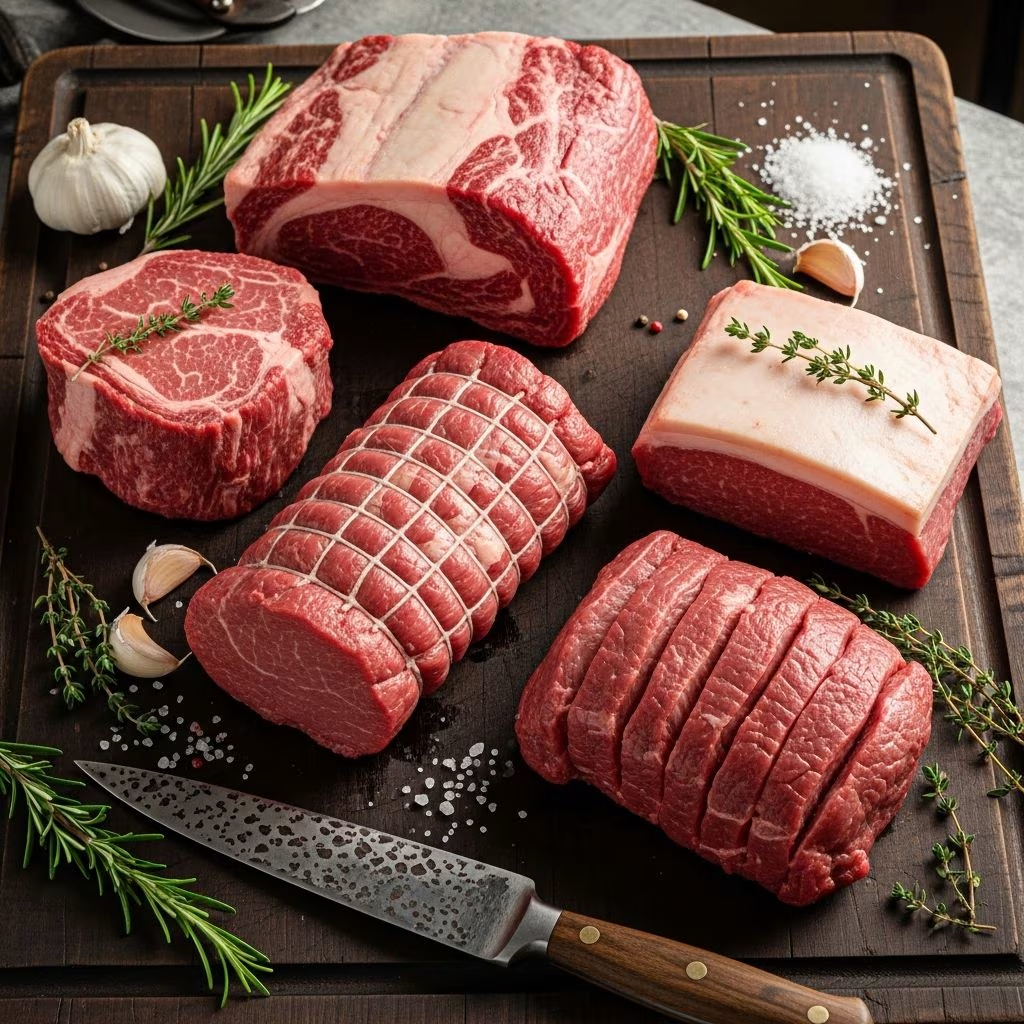
Beef roasts offer versatile options for hearty meals, each cut bringing unique textures and flavors when prepared correctly. These tougher sections from the cow excel in low-and-slow cooking, transforming connective tissues into tender, juicy results ideal for family dinners or gatherings.
Understanding Beef Anatomy for Roasts
Beef roasts primarily come from areas with heavy muscle use, like the shoulder, hindquarters, and chest. These regions develop dense connective tissues and varying fat levels, influencing tenderness and taste. Chuck derives from the shoulder, rich in marbling for bold flavor. Round cuts from the rear provide leaner profiles, while brisket from the chest demands patience to yield succulent meat.
Knowing these origins helps select the right roast. Shoulder cuts like chuck suit flavor-focused dishes, whereas leaner hindquarter options work for lighter meals with added seasonings.
Chuck Roast: The Flavor Powerhouse
Chuck roast, sourced from the cow’s shoulder, stands out for its marbling and robust taste. This cut contains more fat than many others, enhancing juiciness during extended cooking. The shoulder’s constant activity builds tough fibers, but slow methods break them down effectively.
- Flavor Profile: Beefy and rich, thanks to intramuscular fat that melts into the meat.
- Texture: Becomes fork-tender after braising or roasting low and slow.
- Best For: Pot roasts, stews, and slow-cooker recipes where depth of flavor shines.
To prepare chuck roast, sear it first for a caramelized crust, then simmer in broth with vegetables. Average cooking time in a slow cooker is 8-10 hours on low, yielding melt-in-your-mouth results. Its affordability, around $7 per pound, makes it a staple for budget-conscious cooks.
Rump Roast: Lean and Versatile
Rump roast hails from the hindquarter, near the round primal. Leaner than chuck, it offers a cleaner beef taste with less fat, resembling tenderloin in slimness but requiring gentler handling. The rear leg muscles make it firm initially, but proper cooking unlocks tenderness.
- Flavor Profile: Milder and less fatty, benefits from marinades or robust spices.
- Texture: Can turn chewy if rushed; slice thin against the grain post-cooking.
- Best For: Oven roasts, sliced sandwiches, or barbecues with seasoning boosts.
Cook rump to medium-rare in the oven for optimal tenderness, resting before slicing. It cooks faster than chuck, often in 2-3 hours at 275°F, and pairs well with herb rubs.
Round Roasts: Options from the Hindquarter
The round produces several roasts—top round, bottom round, and sirloin tip—known for leanness and beefy essence. These large muscles from the cow’s rear yield economical cuts full of potential.
| Cut | Fat Level | Ideal Cooking | Uses |
|---|---|---|---|
| Top Round | Very Lean | Low Oven Roast | Roast Beef, Steaks |
| Bottom Round | Lean | Braise or Slow Cook | Pot Roast, Stew |
| Sirlon Tip | Moderately Lean | Roast Medium-Rare | Slices, Kabobs |
These roasts demand moisture to prevent drying. Marinating overnight enhances flavor, and cooking to 135°F internally preserves juiciness.
Brisket and Arm Roasts: Tough but Rewarding
Brisket from the chest brims with collagen, ideal for smoking or braising into corned beef classics. Its toughness melts away over hours, self-basting for deep savoriness.
Arm roast, from the shank or lower shoulder, features cross-cut bones adding marrow richness. Like chuck, it thrives in stews or pots, with similar marbling.
- Brisket: 10-12 hours smoked at 225°F for barbecue perfection.
- Arm Roast: Pressure cook for 60-90 minutes to tenderize efficiently.
Comparing Popular Beef Roasts
| Roast Type | Source | Fat Content | Cook Time (Slow) | Flavor Intensity |
|---|---|---|---|---|
| Chuck | Shoulder | High | 8-10 hrs | Rich |
| Rump | Hindquarter | Low | 4-6 hrs | Mild |
| Brisket | Chest | Medium | 10-12 hrs | Deep |
| Top Round | Rear Leg | Very Low | 3-5 hrs | Beefy |
This comparison highlights how fat and location dictate cooking needs. Chuck excels in richness, while round cuts prioritize leanness.
Essential Cooking Techniques for Success
Low-and-slow is key for all roasts. Methods include:
- Oven Braising: 250-300°F covered with liquid for 3-6 hours.
- Slow Cooker: High 4-6 hours or low 8-10; add aromatics.
- Smoking: Ideal for brisket; maintain 225°F with wood smoke.
- Instant Pot: 60-90 minutes under pressure for weeknight ease.
Always sear first, season generously, and use a meat thermometer: 195-205°F for pull-apart tenderness in tougher cuts. Resting 20 minutes post-cook redistributes juices.
Seasoning and Recipe Ideas
Enhance roasts with salt, pepper, garlic, rosemary, or thyme. For chuck pot roast, layer onions, carrots, potatoes in broth. Rump shines in mustard-herb crusted oven roasts. Brisket loves coffee rubs for barbecue.
Quick Recipe: Classic Chuck Pot Roast
Ingredients: 3 lb chuck roast, 2 cups beef broth, veggies, herbs.
Steps: Sear meat, add all to Dutch oven, cook 3.5 hours at 300°F. Serves 6-8.
Buying and Storing Tips
Choose roasts with even marbling and firm texture. Grass-fed offers leaner options; grain-fed more fat. Store in fridge up to 5 days or freeze 6 months. Thaw slowly for best results.
Frequently Asked Questions (FAQs)
What is the best roast for pot roast?
Chuck roast is ideal due to its marbling and flavor when slow-cooked.
Can rump roast be grilled?
Avoid direct grilling; it’s too lean and tough. Opt for low slow methods or marinate heavily.
How do I know when a roast is done?
Probe for 195-205°F internal temp for shreddable texture.
Is brisket the same as chuck?
No, brisket is from the chest with more collagen; both slow-cook well but differ in fat.
Which roast is healthiest?
Round cuts like top round are leanest, lower in fat for calorie-conscious meals.
Troubleshooting Common Issues
- Tough Meat: Extend cook time or add more liquid/acid like vinegar.
- Dry Roast: Use fattier cuts or baste frequently; don’t overcook lean ones.
- Lack of Flavor: Season early and incorporate umami elements like soy or mushrooms.
Mastering beef roasts elevates home cooking with minimal effort for maximum reward. Experiment with cuts to find favorites.
References
- Chuck Roast Vs Rump Roast: What’s The Difference? — Chowhound. 2023. https://www.chowhound.com/1725663/difference-between-rump-roast-vs-chuck-roast/
- Chuck Roast vs. Rump Roast: Which One Should You Use for Slow Cooking? — Wilson Farm Meats. 2024. https://wilsonfarmmeats.com/chuck-roast-vs-rump-roast-slow-cooking/
- Get to know the Roasts — Mannix Family Beef. 2023. https://www.mannixbeef.com/blog/get-to-know-the-roasts
- Our 4 different types of roasts explained! — YouTube (Parker County Beef). 2023. https://www.youtube.com/watch?v=Bf7SE6I1Hj8
- Roasts: How to cook and what are the different types? — D&D Beef. 2024. https://danddbeef.com/blogs/recipe-blog/how-to-cook-the-perfect-roast
- Rump Roast vs. Chuck Roast: Differences in the Cuts of Beef — MasterClass. 2026. https://www.masterclass.com/articles/rump-roast-vs-chuck-roast-guide