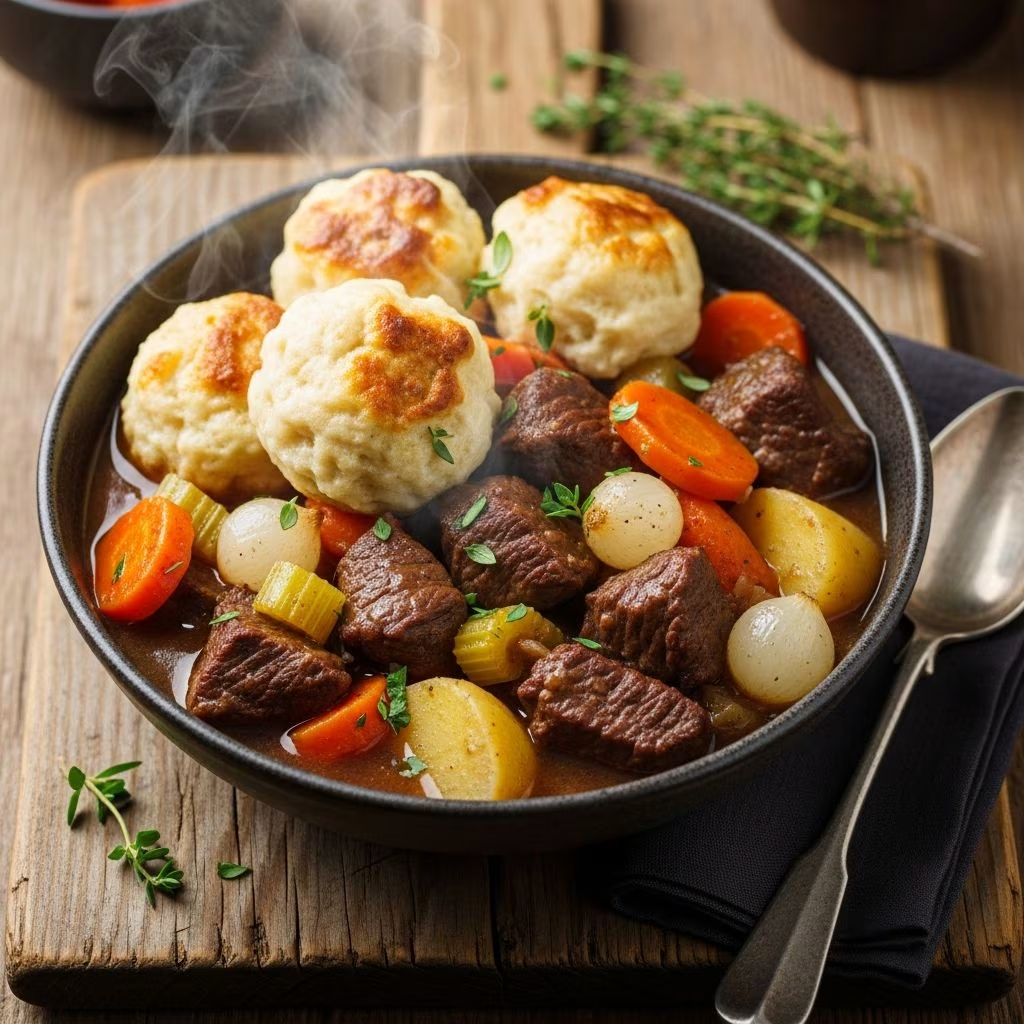
Creating a satisfying beef stew topped with pillowy dumplings represents one of the most rewarding culinary projects for home cooks. This one-pot meal combines tender beef, hearty vegetables, and a savory broth with light, fluffy dumplings that cook directly atop the stew. Whether you’re preparing dinner for your family or hosting guests, this classic dish delivers warmth, comfort, and genuine nourishment in every spoonful.
Understanding the Foundation of an Excellent Beef Stew
The quality of your finished dish depends significantly on the caliber of your foundational ingredients. Selecting the right cut of beef ensures that your stew will develop the rich, tender texture that characterizes this beloved comfort food. Stew meat typically comes from the chuck or shoulder regions of the beef, areas containing sufficient marbling and connective tissue that transforms into gelatin during the cooking process, creating a naturally thickened, luxurious broth.
The vegetable component provides both nutritional value and complementary flavors that balance the richness of the beef. Root vegetables—potatoes, carrots, and parsnips—hold their structure throughout extended cooking, while aromatic vegetables like onions and celery establish the flavor foundation. Fresh garlic, whether minced or paste form, adds pungent depth that enriches the overall complexity of the broth.
Essential Ingredients for Your Stew and Dumplings
The Stew Components
- Beef stew meat (approximately 1.5 to 2 pounds), cut into uniform bite-sized pieces
- Olive oil or vegetable oil for browning
- One to two medium onions, diced into consistent sizes
- Three to four carrots, peeled and cut into rounds or chunks
- Two to three celery stalks, chopped
- Four to six medium potatoes, peeled and diced
- Six cups of beef broth (homemade or store-bought)
- One cup of red cooking wine (optional but recommended)
- Two tablespoons of tomato paste for umami depth
- Worcestershire sauce (approximately one tablespoon)
- Bay leaves (two to three)
- Dried thyme, oregano, and other preferred dried herbs
- Salt and freshly ground black pepper
The Dumpling Mixture
- All-purpose flour (two cups)
- Baking powder (three teaspoons)
- Salt (one teaspoon)
- Dried parsley, thyme, and rosemary for herbal notes
- Milk (one-half cup)
- Melted butter (two tablespoons)
- One to two large eggs (room temperature)
- Optional: sour cream for richness and tang
The Art of Properly Browning Your Beef
Before liquid ever touches your beef, browning the meat creates a crucial flavor foundation through the Maillard reaction—the chemical process that produces those desirable brown, crusty surfaces. Begin by patting your beef pieces completely dry with paper towels, as moisture prevents proper browning. In a large Dutch oven or heavy-bottomed pot, heat oil over medium-high heat until it shimmers and moves quickly across the surface.
Add the beef in a single layer, avoiding overcrowding the pot, which causes steaming rather than browning. Allow each piece to develop a deep brown crust on all sides before stirring—approximately three to four minutes per side. Work in batches if necessary rather than compromising the browning process. Once all beef has been browned and set aside, the fond—those flavorful browned bits stuck to the pot—becomes the base for your aromatic vegetables and ultimately enriches your entire broth.
Building Layers of Flavor Through Aromatics
After removing the browned beef, add your diced onions to the same pot, stirring frequently until they soften and become translucent. This usually requires three to four minutes. Add minced garlic and cook for another minute until fragrant, being careful not to allow the garlic to burn, which would introduce bitterness. Incorporate your tomato paste at this stage, stirring thoroughly to distribute it evenly throughout the vegetables. This step melds the paste into the oil and vegetable juices, maximizing its contribution to the overall depth.
Deglaze your pot by adding a splash of red wine or beef broth, scraping the bottom with a wooden spoon to release those flavorful fond particles into the liquid. This technique ensures that no concentrated flavor goes to waste and incorporates those brown bits directly into your broth.
Assembling and Simmering Your Stew
Return the browned beef to the pot along with your prepared carrots, celery, potatoes, and any other substantial vegetables you’ve chosen. Pour in your full amount of beef broth and red wine, stirring well to combine all ingredients thoroughly. Add bay leaves, dried herbs, Worcestershire sauce, and a measured amount of salt and pepper. The liquid should reach approximately the level of your ingredients; add water if necessary to achieve this ratio.
Bring the mixture to a gentle boil over medium-high heat, then reduce the heat to low and cover with a lid. Maintain a slow, steady simmer rather than a rolling boil, which can toughen the beef and cause vegetables to disintegrate. Stir occasionally to prevent sticking and to ensure even cooking, typically every fifteen to twenty minutes.
The stew requires approximately seventy-five to ninety minutes of simmering time for the beef to become tender and vegetables to cook completely. Test the beef with a fork; properly cooked stew meat should break apart easily without requiring force. The potatoes and carrots should be fork-tender but still maintain their shape rather than becoming mushy.
Preparing Your Dumpling Dough
While your stew simmers during the final thirty minutes, prepare your dumpling dough to ensure it’s ready when your stew reaches perfect tenderness. In a medium mixing bowl, whisk together your flour, baking powder, salt, and dried herbs. The combination of these dry ingredients creates the foundation for light, fluffy dumplings that will cook through completely in the steaming environment provided by your simmering stew.
In a separate measuring cup or bowl, combine your milk, melted butter, and eggs, whisking until well incorporated. Slowly pour this wet mixture into your dry ingredients, stirring gently with a fork or wooden spoon until just combined. The key to tender dumplings lies in avoiding overworking the dough; mix only until the flour has been incorporated and no large streaks of dry flour remain. Overmixing develops gluten, resulting in tough, dense dumplings rather than the light, airy texture you’re aiming for.
Adding and Cooking the Dumplings
Once your stew has reached perfect tenderness and your dumplings are prepared, increase the heat slightly if necessary to bring the stew back to a gentle, consistent simmer. Using a spoon or small ice cream scoop, drop spoonfuls of dumpling dough directly onto the surface of the simmering stew. Space them evenly and don’t overcrowd the surface—they need room to expand during cooking. Typically, this recipe yields approximately six to eight dumplings, depending on size preference.
Immediately cover the pot with a lid and reduce the heat back to low. The dumplings require approximately ten to twenty-five minutes to cook completely, depending on their size and the exact cooking temperature maintained. The dumplings are finished when they appear puffed and fluffy, and a toothpick inserted into one comes out clean without raw batter clinging to it. Do not lift the lid during cooking, as the escaping steam is essential to the cooking process.
Alternative Preparation Methods
Slow Cooker Adaptation
For those who prefer extended, hands-off cooking, beef stew with dumplings translates beautifully to slow cooker preparation. Begin by browning your beef in a skillet on the stovetop, then coat it lightly with flour. Transfer the browned beef and all remaining stew ingredients (excluding dumplings and dumpling-specific ingredients) to your slow cooker set on low heat. Cook for eight hours, allowing the extended time to create exceptionally tender beef and deeply developed flavors.
During the final fifteen to twenty minutes of cooking time, remove the bay leaves from the stew, increase the heat to high if you’re operating a low-setting slow cooker, and add your prepared dumpling dough using the same spooning method described above. Cover and cook for the final fifteen to twenty minutes until dumplings are puffed and cooked through.
Instant Pot or Pressure Cooker Method
High-pressure cookers can significantly reduce cooking time. After browning your beef using the sauté function, add vegetables, broth, and seasonings, then seal and cook on high pressure for approximately thirty to forty-five minutes. Allow natural pressure release before carefully opening and adding your dumpling dough during the final cooking phase.
Techniques for Optimal Results
| Factor | Consideration | Expected Outcome |
|---|---|---|
| Beef Size Uniformity | Cut all pieces to similar dimensions | Even cooking throughout the stew |
| Broth Temperature | Use room temperature or slightly warm broth | More stable stew temperature and consistent cooking |
| Lid Management | Keep covered throughout simmering | Retains moisture and maintains temperature |
| Dumpling Spacing | Place one to two inches apart on stew surface | Room for expansion and even cooking |
| Herb Balance | Use dried herbs (more concentrated) sparingly | Prevents overpowering the dish’s other flavors |
Frequently Asked Questions About Beef Stew and Dumplings
Why did my dumplings turn out dense and heavy?
Dense dumplings typically result from overmixing the dumpling dough. Each time you stir, you’re developing gluten strands that create a tougher texture. Mix only until ingredients are just combined, even if the batter appears slightly lumpy. Additionally, ensure your baking powder hasn’t expired, as it loses potency over time and won’t provide sufficient leavening action.
Can I prepare this stew ahead of time?
Absolutely. Prepare your stew completely without dumplings up to two days in advance and store in the refrigerator. When ready to serve, reheat gently over medium-low heat until simmering, then add your freshly prepared dumpling dough. The flavors actually deepen during refrigeration as they meld together.
What should I do if my stew appears too thin?
If your broth lacks body and richness, create a slurry by mixing equal parts cornstarch or flour with cold water, then whisk it into the simmering stew. Alternatively, simmer uncovered for fifteen to twenty minutes to reduce excess liquid and concentrate flavors. Some cooks add a small amount of tomato paste or beef bouillon for additional richness.
How do I store leftovers?
Transfer cooled stew to airtight containers and refrigerate for up to four days. The stew actually freezes exceptionally well for up to three months. Store dumplings separately if possible, as they can absorb excess moisture over time. Reheat gently on the stovetop over low to medium heat to prevent the dumplings from becoming tough.
Can I use different vegetables?
Yes, beef stew is remarkably versatile. Parsnips, turnips, sweet potatoes, and green peas all work beautifully. Avoid delicate vegetables that disintegrate quickly during extended cooking; stick with hearty root vegetables and cruciferous options that hold their structure.
Serving Suggestions and Final Touches
Ladle your beef stew into wide bowls, ensuring each serving contains generous portions of beef, vegetables, and at least one dumpling swimming in the rich broth. Garnish with fresh chopped parsley, chives, or thyme to add brightness and a fresh herbal note that contrasts beautifully with the stew’s depth. A crack of additional black pepper and a sprinkle of fleur de sel just before serving elevates the presentation and flavor profile.
This satisfying dish pairs wonderfully with crusty bread for soaking up the remaining broth, a simple green salad to cut through the richness, or steamed greens like spinach or kale for additional nutrition. A medium-bodied red wine complements the dish’s savory, umami-rich qualities.
References
- Beef Stew with Homemade Dumplings — Mighty Mrs. Accessed April 2026. https://www.mightymrs.com/beef-stew-with-dumplings/
- Beef Stew with Dumplings — I Am Homesteader. Accessed April 2026. https://iamhomesteader.com/beef-stew-with-dumplings/
- Beef Stew With Dumplings – Good Old Fashioned Comfort Food — Super Mom No Cape. Accessed April 2026. https://www.supermomnocape.com/beef-stew-with-dumplings/
- USDA FoodData Central – Beef, stew meat, raw — U.S. Department of Agriculture. https://fdc.nal.usda.gov/
- Harold McGee on Food and Cooking: The Science and Lore of the Kitchen — McGee, H. (2004). Scribner. Food science reference for Maillard reaction and cooking principles.