Bananas flambé represents one of the most theatrical and elegant desserts you can prepare in your own kitchen. This dramatic dish combines caramelized fruit, aromatic spices, and a spectacular flaming presentation that transforms ordinary bananas into an unforgettable finale to any meal. Whether you’re planning an intimate dinner for two or impressing guests at a special occasion, mastering this technique opens the door to restaurant-quality desserts that require surprisingly minimal ingredients and time.
Understanding the Fundamentals of Flambé Cooking
Flambé cooking is a culinary technique that involves igniting alcohol over heat to create dramatic flames while infusing dishes with complex flavors. The process serves multiple purposes beyond visual spectacle—the flames cause the alcohol to evaporate, leaving behind concentrated flavors and reducing the alcohol content significantly. When applied to bananas, this technique caramelizes the fruit’s natural sugars while the warm spirits enhance the overall flavor profile with subtle notes of vanilla, spice, and oak.
The foundation of any successful bananas flambé begins with understanding how sugars behave under heat. Caramelization occurs when sugars break down through chemical reactions triggered by sustained heat, creating hundreds of new flavor compounds. This process transforms simple brown sugar into a complex, nutty, and slightly bitter component that balances perfectly with the fruit’s natural sweetness.
Essential Ingredients for Authentic Preparation
Creating bananas flambé requires careful selection of ingredients, as each component contributes meaningfully to the final result. The following table outlines the essential components and their roles:
| Ingredient | Typical Amount (serves 2) | Purpose |
|---|---|---|
| Ripe Bananas | 1-2 medium | Main fruit component, provides natural sweetness and texture |
| Unsalted Butter | 2-3 tablespoons | Creates rich sauce base and adds depth |
| Brown Sugar | 3-4 tablespoons | Develops caramel sauce and sweetness |
| Spices (Cinnamon/Cardamom) | ¼ teaspoon each | Adds warmth and aromatic complexity |
| Spirits (Dark Rum or Brandy) | 2-3 tablespoons | Creates flames and develops flavor depth |
| Vanilla Extract | ½ teaspoon | Enhances aromatic profile |
| Vanilla Ice Cream | 1-2 scoops | Provides temperature contrast and creamy complement |
Selecting Premium Bananas
The quality of your bananas significantly impacts the final dish. Choose fruit that exhibits yellow coloring with minimal green at the ends—this indicates optimal ripeness with good flavor development. Bananas that are overly green lack sufficient natural sweetness, while brown-spotted fruit may be too soft to handle during cooking. The fruit should feel slightly firm when gently squeezed, allowing it to maintain its structure through the cooking process.
Choosing Appropriate Spirits
Dark rum and brandy represent the classic choices for flambéed bananas, though each imparts distinct characteristics. Dark rum, particularly Caribbean varieties, adds warm spice notes and a subtle molasses undertone that complements the caramel sauce beautifully. Brandy contributes a more refined, grape-forward flavor with hints of oak and vanilla. Both spirits contain sufficient alcohol content to ignite properly—typically 40% ABV or higher—making them ideal for flaming applications.
Step-by-Step Preparation Technique
Preparing Your Workspace and Equipment
Before beginning, ensure your kitchen is properly prepared. Use a large skillet made from stainless steel or heavy-bottomed cast iron, as these materials distribute heat evenly and prevent hot spots that could cause uneven caramelization. Have all ingredients measured and positioned within arm’s reach—this practice, known as mise en place, ensures smooth progression through the cooking sequence without interruption. Clear the cooking area of loose towels, paper products, and anything flammable.
Creating the Caramel Base
Begin by melting unsalted butter over medium heat in your prepared skillet. Once the butter is foaming, add brown sugar along with your chosen spices. Stir continuously for approximately one to two minutes until the sugar completely dissolves and the mixture begins to bubble gently. This stage requires attention—once bubbling begins, the caramel develops rapidly. Avoid walking away from the stove, as the sugar can progress from perfectly caramelized to burnt within seconds.
Incorporating the Bananas
While the caramel is bubbling, add your prepared bananas to the pan. Traditionally, bananas are sliced lengthwise and then cut into shorter segments, though thin diagonal slices also work well. Arrange the banana pieces in a single layer within the sauce. Cook for approximately one minute on each side until the fruit develops golden-brown coloration and softens slightly. The bananas should remain somewhat firm—overcooking produces mushy texture and loss of structural integrity.
Adding Aromatic Elements
Once the bananas have caramelized slightly, add vanilla extract and any additional aromatics specified in your recipe. Stir gently to combine, ensuring the vanilla distributes evenly throughout the caramel sauce. This is the moment to remove the pan from direct heat briefly, allowing the intense heat to subside slightly before introducing the flammable spirits.
Executing the Flambé Technique Safely
Understanding Flaming Safety
The dramatic flaming component of bananas flambé requires respect and caution. Never attempt this technique without proper preparation and understanding of fire safety principles. Always keep a lid nearby that fits your skillet—this allows you to smother any flames that become unexpectedly vigorous. Long sleeves are recommended, as is tying back any loose hair. Ensure onlookers and pets remain at a safe distance from the cooking area.
Performing the Flambé
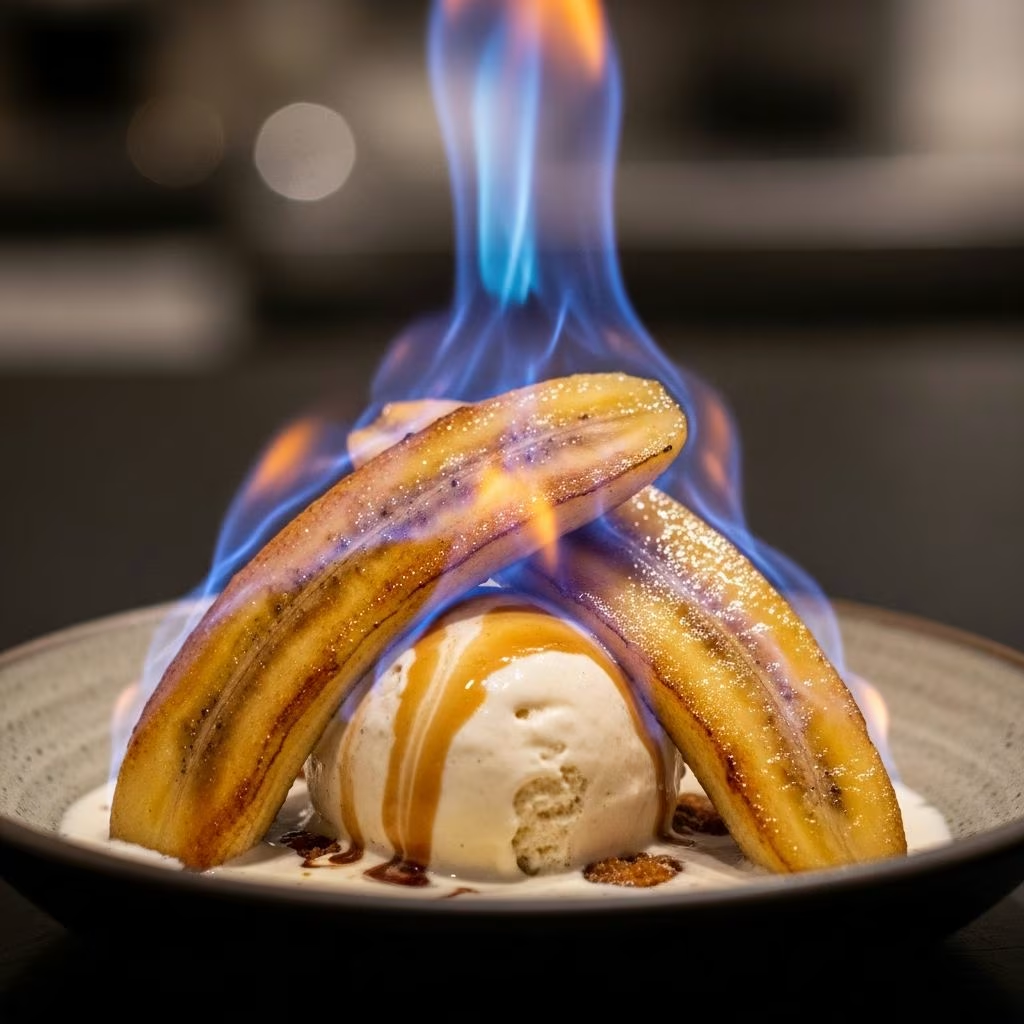
Move the pan away from the burner and tilt it slightly toward you. Pour the measured spirits around the banana mixture in a circular motion. Return the pan to the heat for just a moment—the residual heat will ignite the vapors rising from the alcohol. Alternatively, use a long-handled lighter or long match to ignite the spirits directly. You will observe blue flames dancing across the surface of the sauce. Do not panic—this is the desired effect.
Managing the Flames
The flames typically last between thirty seconds and two minutes, depending on the quantity of spirits and heat intensity. Gently shake the pan from side to side to distribute the flames and ensure even burning. Never lean directly over the pan during flaming. The process is complete when the flames naturally subside. If flames become overly aggressive or dangerous at any point, cover the pan with the prepared lid to smother the fire completely.
Serving and Presentation Considerations
Timing and Plating
Bananas flambé must be served immediately after the flames have died and the pan has been removed from heat. The temperature contrast between the warm caramel sauce and cold vanilla ice cream creates the optimal eating experience. Scoop quality vanilla ice cream into individual serving bowls or shallow dishes. Using a spoon, carefully transfer the caramelized bananas and sauce directly over the ice cream, allowing the warm liquid to slightly melt the cold cream and create a unified dish.
Garnishing and Enhancement
While the classic preparation requires no garnish, creative presentations can elevate this dessert further. Consider adding a light dusting of cinnamon or nutmeg across the top, or a small sprinkle of fleur de sel to provide subtle salinity that balances the sweetness. A thin wafer cookie or small piece of candied citrus peel offers textural contrast. These additions should enhance rather than overshadow the featured caramelized bananas.
Ingredient Variations and Regional Adaptations
International Flavor Profiles
While bananas flambé originated in New Orleans as Bananas Foster, variations have emerged throughout the world. Caribbean adaptations incorporate locally-produced rum and often include citrus zest—lemon or orange—which brightens the heavy caramel sauce. French versions might feature Cognac and include almond liqueur for added complexity. Mediterranean-inspired preparations sometimes incorporate cardamom and other Middle Eastern spices that add warmth and exotic character.
Non-Alcoholic Alternatives
Guests who prefer desserts without alcohol can still enjoy bananas flambé with simple modifications. Replace spirits with fruit juices—passion fruit, pineapple, or orange work particularly well—and reduce them in the pan until slightly syrupy. The flaming component is eliminated, but the caramelized bananas and spiced sauce remain delicious and impressive. Some cooks substitute vanilla liqueur (which contains minimal alcohol post-heating) or skip the flaming stage entirely, focusing on the caramelization technique.
Complementary Ice Cream Alternatives
While vanilla ice cream remains the traditional choice, other varieties can provide interesting contrasts. Butter pecan offers nutty undertones that echo the caramel flavors. Cinnamon ice cream reinforces the spice elements already present. Brown butter or salted caramel ice cream creates a sophisticated, deeply flavored combination. Even simple coconut ice cream provides tropical appeal, particularly in Caribbean-influenced preparations.
Common Questions About Bananas Flambé
Can I prepare this dish in advance?
Bananas flambé cannot be prepared far in advance, as the fruit begins to brown and texture deteriorates within minutes of cooking. However, you can prepare the caramel sauce (without bananas) several hours ahead and refrigerate it. Reheat gently when ready to serve, then add freshly cooked bananas immediately before tableside flaming.
What if I’m uncomfortable with open flames?
Skip the flaming step entirely and simply serve the warm caramelized bananas over ice cream. The dish remains delicious without the theatrical element. Alternatively, heat the spirits in a separate small pan, carefully ignite them there, then pour the flaming liquid over the bananas in your main skillet for a controlled flaming experience.
How ripe should bananas be?
Select bananas that are predominantly yellow with just a few brown specks appearing. Bananas at this stage have optimal ripeness—sweet enough to balance the sauce yet firm enough to maintain structure during cooking and plating.
Can I use frozen bananas?
Frozen bananas will release excess moisture as they thaw and cook, resulting in a watery sauce rather than rich caramel. Stick to fresh fruit for the best textural and flavor results.
Troubleshooting Common Issues
Sauce Too Thin
If your caramel sauce remains thin rather than thickening into proper consistency, simmer the mixture longer before adding bananas. The sauce should bubble consistently for one to two minutes. Additionally, ensure you’re using brown sugar rather than granulated sugar—brown sugar’s molasses content creates thicker caramel.
Bananas Falling Apart
Overripe bananas or excessive cooking time causes bananas to disintegrate in the sauce. Select slightly firmer fruit and reduce cooking time to approximately one minute per side.
Flames Won’t Ignite
If the spirits refuse to ignite, the mixture may have cooled too much. Return the pan to medium-high heat briefly before attempting to flame again. Ensure you’re using spirits with adequate alcohol content—some lower-proof liqueurs may not ignite reliably.
Creating the Perfect Dining Experience
Bananas flambé transcends simple dessert preparation—it represents culinary theater and hospitality. The crackling flames, aromatic spices, and theatrical presentation create memorable moments that extend beyond taste into sensory experience. When executed with care and confidence, this classic dish communicates sophistication and effort to your guests, elevating any meal from ordinary to exceptional.
The beauty of mastering bananas flambé lies in its simplicity combined with dramatic impact. With just a handful of quality ingredients and basic technique, you can recreate restaurant-quality desserts in your home kitchen. Each element—from selecting perfectly ripe bananas to executing the flaming technique—contributes to a cohesive whole that rewards preparation and attention to detail.
References
- The Science of Cooking: Understanding Maillard Reaction and Caramelization — McGill University. 2024. https://www.mcgill.ca/orc/cooking-science
- Banana Ripeness and Nutritional Content Guide — USDA Agricultural Research Service. 2023. https://www.ars.usda.gov/
- Fire Safety and Flambé Cooking Techniques — American Culinary Federation Educational Institute. 2024. https://www.acfchefs.org/
- Caribbean Culinary Traditions: Rum and Citrus in Desserts — Caribbean Tourism Organization. 2023. https://www.onecaribbean.org/