Arctic char represents one of the most versatile and underutilized proteins available to home cooks today. Often overshadowed by salmon in the marketplace, this delicate fish offers a milder flavor profile while maintaining the nutritional benefits associated with fatty fish varieties. The flesh of Arctic char contains high levels of omega-3 fatty acids, making it an excellent choice for those seeking to incorporate heart-healthy seafood into their regular meal planning. When prepared with intention and care, Arctic char becomes the centerpiece of an elegant dinner that requires minimal time in the kitchen yet delivers maximum flavor impact.
Understanding Arctic Char: The Fish That Bridges Salmon and Trout
Arctic char belongs to the Salmonidae family, placing it in close proximity to both salmon and trout from a biological perspective. The fish derives its name from its native habitat in the Arctic waters of Northern Canada, Greenland, and Scandinavia. Unlike wild-caught species that remain limited in availability, farmed Arctic char has become increasingly accessible in supermarkets throughout North America and Europe. This cultivation has made it possible for everyday cooks to access a premium protein without the elevated price point typically associated with wild salmon.
The flavor characteristics of Arctic char lean toward subtlety. Where salmon presents bold, distinctive tastes, Arctic char offers a gentler approach to seafood enjoyment. The fat content, while substantial enough to prevent the fish from becoming dry during cooking, distributes itself more evenly throughout the flesh than in salmon, resulting in consistent texture from fillet edge to center. This consistency makes Arctic char particularly forgiving for novice fish cooks who may struggle with timing and temperature management.
The Foundation: Selecting and Preparing Your Ingredients
Success in preparing Arctic char begins long before the fish enters your kitchen. When shopping, request fillets that display firm, translucent flesh with no discoloration or dark spots along the edges. The skin should appear silvery and intact, offering evidence that the fish was handled carefully. When possible, purchase Arctic char on the day you plan to cook it, storing it in the coldest section of your refrigerator until preparation time arrives.
Preparation of the fillet involves two essential steps that many home cooks overlook. First, rinse the fish under cool running water, then pat it completely dry using paper towels. This moisture removal proves critical for achieving proper browning and ensuring even cooking throughout the fillet. Excess surface moisture creates steam during cooking, which interferes with the development of desirable textural qualities and prevents the flavorful crust from forming properly.
The Signature Herb and Wine Coating
The foundation of this preparation method rests upon a simple but powerful combination of fresh and dried aromatics combined with acidic components that cut through the richness of the fish. The traditional approach incorporates fresh rosemary leaves stripped from their woody stems, minced garlic cloves, and the zest of fresh limes for brightness. These components work in concert to create a flavor profile that enhances rather than masks the delicate taste of the fish itself.
The liquid components deserve equal attention. Dry sherry wine provides subtle sweetness and depth without the harsh alcohol burn that cheaper cooking wines might introduce. Olive oil serves both as a moisture source during cooking and as a vehicle for delivering the fat-soluble flavor compounds from the herbs directly into the fish flesh. Fresh lime juice offers acidity that balances the richness while promoting tenderness through gentle protein modification.
Creating the Aromatic Paste
The most efficient method for combining these elements involves using a food processor fitted with a standard blade. Add your lime juice, quality olive oil, sherry wine, rosemary leaves, and peeled garlic cloves into the processor bowl. Pulse the mixture repeatedly, stopping occasionally to assess the consistency. The goal involves achieving a paste-like texture where the garlic and rosemary remain partially chunky rather than completely uniform. This textural variation creates interesting flavor bursts as diners encounter concentrated pockets of herbaceous intensity alongside smoother sections.
If you lack a food processor, a mortar and pestle provides an excellent alternative, though it requires more physical effort. Alternatively, finely mince the garlic and rosemary by hand on a cutting board, then combine all ingredients in a small bowl, whisking thoroughly until well incorporated.
Temperature Control and Cooking Methodology
Proper oven temperature represents perhaps the most critical factor in preventing overcooked, dry Arctic char. Most recipes calling for baked fish recommend temperatures between 400 and 425 degrees Fahrenheit. This range allows the interior of the fillet to reach the proper doneness level while the exterior develops subtle browning without burning.
Prepare your baking vessel by lining it with aluminum foil, which simplifies cleanup and prevents sticking. This step also allows for easy folding and recovery of any pan juices that develop during cooking. Position the prepared Arctic char fillet on the foil-lined dish, season with sea salt and ground black pepper, then distribute the herb paste evenly across the top surface and sides of the fish.
The Basting Process and Finishing Technique
Approximately halfway through the cooking process, typically around the 6 to 8-minute mark, carefully remove the baking dish from the oven and use a basting brush to coat the fish with the pan juices that have accumulated. This step serves multiple purposes: it prevents the exposed flesh from drying out, it distributes flavors more evenly, and it promotes even cooking throughout the fillet thickness.
As the fish approaches full doneness, indicated by flesh that flakes easily when prodded gently with a fork, some cooks prefer to activate the broiler setting for the final two minutes of cooking. This high-heat finish creates appealing browning on the herb coating and adds textural contrast to the finished dish. Monitor carefully during this broiler phase, as the exposed position under direct heat can quickly transform an ideally cooked fillet into an overdone disappointment.
Doneness Indicators and Temperature Guidelines
The traditional fork test remains a reliable indicator of doneness for home cooks without kitchen thermometers. When properly cooked, Arctic char flesh should separate into opaque flakes when gently pressed with the tines of a fork. The flesh should retain slight moisture rather than appearing bone-dry, indicating that the cooking process has stopped at the optimal moment.
For those preferring precision, a meat thermometer inserted into the thickest portion of the fillet should register 145 degrees Fahrenheit, which represents the minimum safe internal temperature for fish consumption according to food safety guidelines. Allowing the thermometer to remain in place for three to five seconds ensures an accurate reading.
Flavor Enhancement Through Thoughtful Seasoning
Beyond the primary herb coating, additional seasoning options allow for customization based on personal preference and available ingredients. Cayenne pepper sprinkled over the herb paste before cooking introduces subtle heat that builds gradually with each bite. For those avoiding additional spice, freshly ground black pepper applied generously offers peppery warmth without fiery intensity.
The zest from the lime used in the herb paste provides subtle citrus perfume that permeates throughout the cooking process. Adding this zest directly to the fish before applying the herb paste ensures even distribution and maximum flavor impact.
Strategic Plating and Presentation
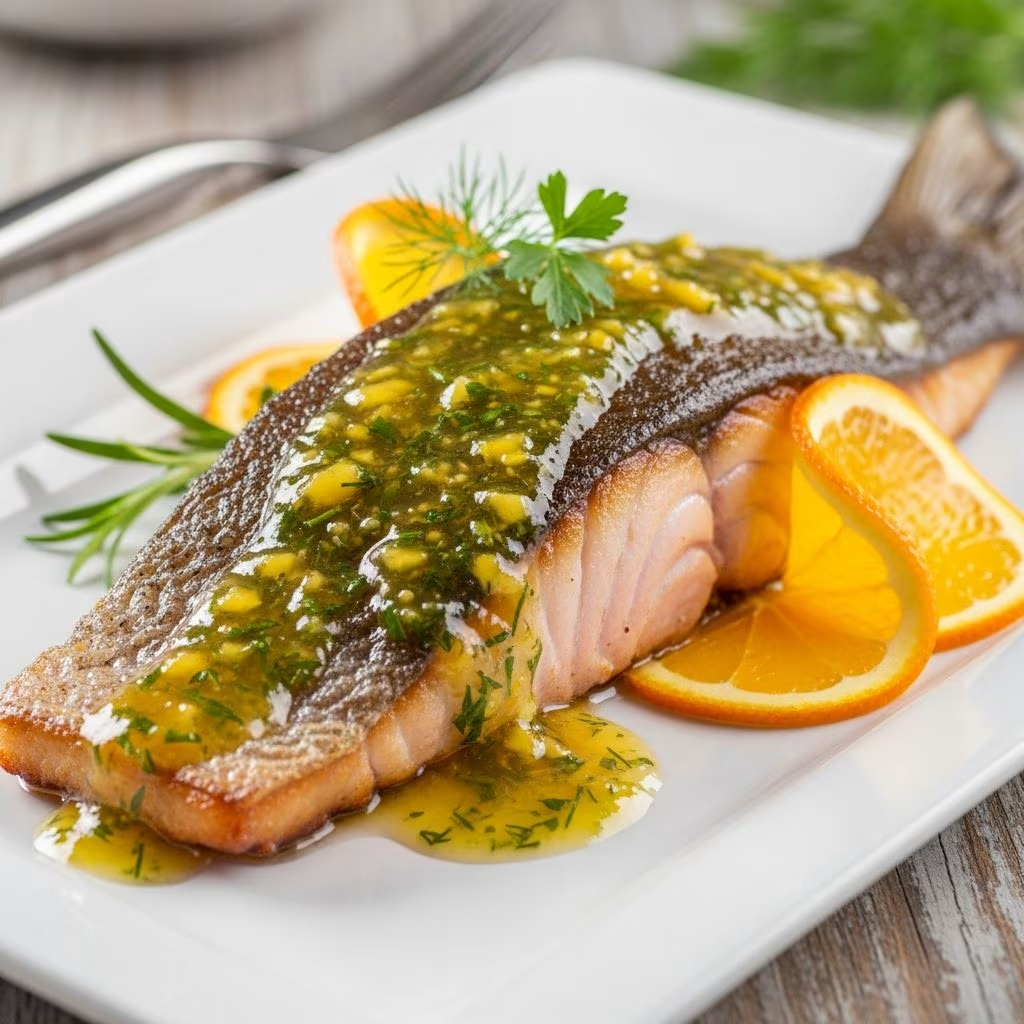
The visual presentation of finished dishes influences how diners perceive and enjoy their meals. Arctic char, with its natural orange-pink coloring, already provides visual interest on the plate. Arrange the cooked fillet on a warm serving plate or individual dinner plates with the herb-crusted top facing upward. Pour any accumulated pan juices around the fish rather than over it, allowing diners to control the level of sauce in each bite.
Fresh lime wedges positioned beside the fillet provide both visual appeal and functional purpose, as their presence indicates optional flavor enhancement available to each diner. Garnishing with additional fresh rosemary sprigs offers visual recognition of the herbs incorporated into the dish.
Complementary Side Dishes and Beverage Pairings
The delicate herbaceous flavors of this preparation method pair beautifully with simple side dishes that don’t compete for attention. Steamed asparagus dressed with a touch of olive oil and sea salt complements the fish without overwhelming the palate. Roasted root vegetables like baby carrots or fingerling potatoes, prepared with minimal additional seasoning, provide textural contrast and satisfying substance to round out the meal.
Grain-based sides like quinoa pilaf or wild rice blend seamlessly with Arctic char, their neutral profiles allowing the fish to remain the focal point of the plate. A simple arugula salad dressed with lemon vinaigrette provides acidity and freshness that refreshes the palate between bites of richer fish.
Wine selection should favor white varieties with crisp acidity and subtle fruit character. Sauvignon Blanc, Albariño, or Pinot Grigio all provide excellent pairing options, their brightness complementing rather than competing with the herb and sherry flavors of the dish.
Troubleshooting Common Preparation Challenges
Dry, Overcooked Texture: This most common issue typically results from excessive cooking time or overly high oven temperature. Use a thermometer to verify actual oven temperature, as many home ovens run hotter than their dial settings suggest. Reduce cooking time by one to two minutes on your first attempt, checking doneness early using the fork method.
Herb Paste Separating or Sliding Off: This occurs when excess moisture from the herb paste causes it to slip during cooking. Ensure fish is completely dry before applying the paste. If separation occurs, gently press the paste back onto the fish after the first basting, typically around the halfway point of cooking.
Herb Coating Burning Excessively: Dark browning of herbs, particularly garlic, can create bitter flavors if taken too far. Position your baking dish in the upper portion of your oven rather than centered, which places the herb coating further from direct heat. If burning appears excessive, tent loosely with foil during the final few minutes of cooking.
Nutritional Considerations and Health Benefits
Arctic char delivers substantial nutritional value in a relatively small package. A typical 10-ounce fillet provides approximately 25 to 30 grams of high-quality protein, essential for tissue repair and maintenance. The omega-3 polyunsaturated fatty acids present in Arctic char, particularly EPA and DHA varieties, support cardiovascular health and cognitive function. These fish-derived omega-3 compounds offer bioavailability advantages over plant-based alternatives, meaning the human body absorbs and utilizes them more efficiently.
The preparation method described here involves minimal added fat beyond the olive oil in the herb coating, making it suitable for those monitoring total fat intake. The use of wine, lime juice, and fresh herbs means no cream-based sauces that would add empty calories without corresponding nutritional benefit.
Make-Ahead Preparation and Storage
The herb paste can be prepared several hours in advance, stored in an airtight container in your refrigerator. This advance preparation proves particularly useful for busy weeknights when time constraints limit cooking flexibility. The flavors actually improve slightly as the herbs infuse into the oil and wine components, so making the paste the morning of your intended dinner offers advantages.
Leftover cooked Arctic char stores well in the refrigerator for up to three days when properly covered. While reheating can sometimes compromise delicate fish texture, cold Arctic char provides excellent use in salads, grain bowls, or as a component in composed dinner plates.
Scaling Recipes for Different Group Sizes
The basic preparation method scales efficiently for both intimate two-person dinners and larger gatherings. For each additional person, simply prepare another individual fillet using identical proportions of the herb paste. When cooking multiple fillets simultaneously, ensure adequate spacing on your baking dish to allow heat circulation, or prepare multiple baking dishes simultaneously in different oven sections.
Frequently Asked Questions About Arctic Char Preparation
Can frozen Arctic char be used with this preparation method? Yes, though thawing in the refrigerator overnight before cooking ensures the best texture and even cooking. Never thaw at room temperature, as this promotes bacterial growth.
What suitable substitutions exist if rosemary proves unavailable? Thyme, dill, or tarragon all provide complementary herbaceous qualities. Use the same total volume of fresh herbs, adjusting specific varieties based on availability and preference.
Does skin-on or skin-off matter for this recipe? Skin-on fillets provide structural integrity during cooking and protect the delicate flesh from excessive browning. Skin-off fillets cook slightly faster but require more careful handling.
Can this dish be prepared using an air fryer instead of a traditional oven? Yes, reduce the cooking temperature to 375 degrees Fahrenheit and the cooking time to 8 to 10 minutes, checking for doneness as described in the traditional oven method.
References
- Omega-3 Fatty Acids and Health — U.S. National Institutes of Health, Office of Dietary Supplements. 2024. https://ods.od.nih.gov/factsheets/Omega3FattyAcids-HealthProfessional/
- Shell Eggs and Egg Products Safe Handling and Storage — U.S. Department of Agriculture, Food Safety and Inspection Service. 2024. https://www.fsis.usda.gov/food-safety/safe-food-handling-and-preparation/food-safety-basics/people-most-risk-foodborne-illness