Self-rising flour is a game-changer for home bakers seeking quick, fluffy results without measuring multiple leaveners. This versatile blend combines all-purpose flour with precise amounts of baking powder and salt, delivering consistent rise and flavor in recipes like biscuits, pancakes, and cobblers. Creating it at home empowers you to control quality, adjust for dietary needs, and bypass commercial variations that can affect texture.
Understanding the Magic Behind Self-Rising Flour
At its core, self-rising flour simplifies baking by pre-incorporating two essential rising agents: baking powder for lift and salt for taste balance. Unlike plain flour, which requires separate additions, this mix ensures even distribution, reducing errors in fast-paced baking sessions. Southern cuisine popularized it due to regional soft wheats, but modern versions adapt to standard all-purpose flours available nationwide.
The leavening power comes from baking powder’s dual-action formula—acid and base that react with liquid and heat to produce carbon dioxide bubbles, expanding doughs gently. Salt not only enhances flavors but strengthens gluten structure for better crumb. Homemade versions shine because you select fresh, high-quality ingredients, avoiding the potency loss in pre-packaged bags exposed to air and moisture.
Essential Ingredients for Homemade Success
- All-Purpose Flour: The base, ideally unbleached for natural performance. Protein content around 10-12% works best; higher levels may need tweaks for tenderness.
- Baking Powder: Fresh double-acting type is crucial. Test by mixing 1 tsp with hot water and a pinch of sugar—bubbles mean it’s active.
- Salt: Fine sea, kosher, or table salt for even blending. Avoid coarse grains that clump.
Optional add-ins like cornstarch soften high-protein flours, mimicking Southern-style lightness. Always sift or whisk to aerate and distribute evenly.
Step-by-Step Recipe for Perfect Self-Rising Flour
Scale this foolproof ratio to your needs: per cup of flour, incorporate precise leaveners for reliable results.
Basic Homemade Self-Rising Flour (Makes 1 Cup)
Ingredients
- 1 cup (120g) all-purpose flour
- 1 ½ teaspoons baking powder
- ¼ teaspoon salt
Instructions
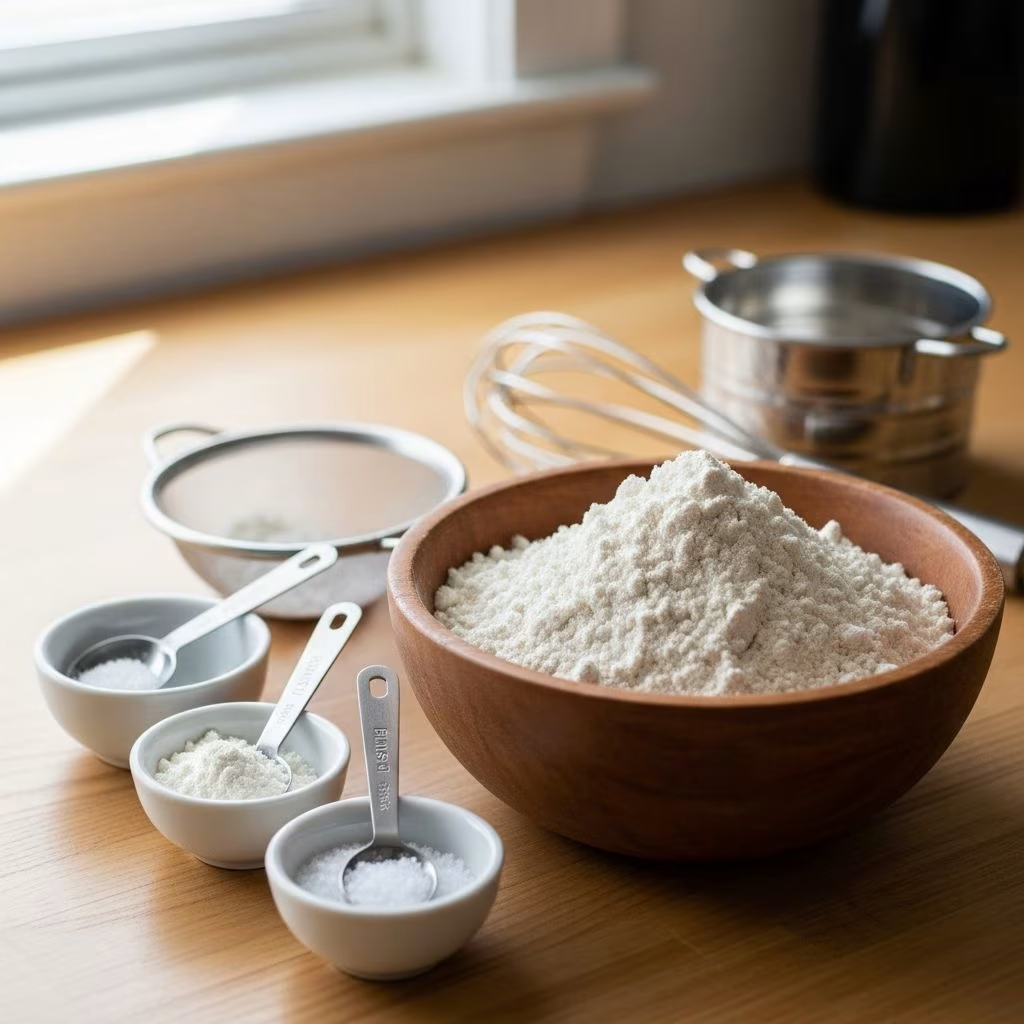
- Sift flour into a medium bowl to remove lumps.
- Add baking powder and salt; whisk vigorously for 1-2 minutes until uniform—no streaks remain.
- Use immediately or transfer to an airtight jar. Label with date; store in cool, dry spot.
Yield: 1 cup. Storage: Up to 6 months, or 1 month for peak freshness.
| Flour Amount | Baking Powder | Salt |
|---|---|---|
| 2 cups | 3 tsp (1 Tbsp) | ½ tsp |
| 4 cups | 6 tsp (2 Tbsp) | 1 tsp |
| 8 cups | 12 tsp (¼ cup) | 2 tsp |
This table ensures proportionality; always whisk thoroughly to prevent settling.
Customizing for Optimal Texture and Flavor
Not all flours behave identically. Northern all-purpose flours often have higher protein (11-13%), yielding chewier results. Counter this with these pro tips:
- Soften with Cornstarch: Replace 1 Tbsp flour per cup with cornstarch. This lowers effective protein, promoting tenderness in biscuits.
- Opt for Pastry Flour: For ultra-flaky layers, use 8-10% protein flour as base.
- Increase Liquids: High-protein blends absorb more moisture; add 1-2 Tbsp extra milk or buttermilk per cup.
- Boost Fat: Incorporate 1 Tbsp extra butter or oil into batters for shorter gluten.
Experiment in small batches. For gluten-free, blend rice flour with xanthan gum, baking powder, and salt—ratios may vary.
Storage Best Practices to Maintain Potency
Freshness is key; baking powder loses efficacy in humid or warm environments. Store in airtight glass jars away from spices, which can impart odors. In humid climates, add silica packets or refrigerate. Check monthly: mix 1 tsp batch with hot water; fizzing confirms viability. Bulk mixes last 6 months max; small portions ensure freshness. Avoid freezer for pre-mixed—moisture condensation weakens leavener.
Classic Recipes Showcasing Your DIY Blend
Fluffy Buttermilk Biscuits
These golden, layered beauties highlight self-rising flour’s strengths.
Ingredients (Makes 8)
- 2 cups homemade self-rising flour
- ¼ cup cold butter, cubed
- 1 cup cold buttermilk
Steps
- Preheat oven to 450°F. Cut butter into flour until pea-sized.
- Stir in buttermilk gently—do not overmix.
- Pat to ¾-inch thick on floured surface; fold 3x for layers. Cut rounds.
- Bake 12-15 min until golden.
Easy Berry Cobbler
Juicy fruit topped with tender crust—summer in a dish.
- 1 cup self-rising flour
- 1 cup sugar
- 1 cup milk
- ½ cup butter, melted
- 2 cups berries
Mix batter, pour over fruit in skillet, bake at 350°F for 40 min.
Common Mistakes and How to Avoid Them
Bakers often overlook these pitfalls:
- Stale Leavener: Always test baking powder.
- Overmixing: Handle dough minimally for tenderness.
- Recipe Conflicts: If original calls for baking powder/salt, omit or halve.
- Packing Flour: Spoon and level, don’t scoop.
Proof batters 10 min pre-bake for max rise.
Why Choose Homemade Over Store-Bought?
Commercial options vary in saltiness, leavening strength, and additives. DIY costs pennies per cup, uses premium ingredients, and scales effortlessly. No fillers or preservatives—just pure baking power. It’s economical: a 5-lb bag of AP flour yields dozens of batches.
Frequently Asked Questions (FAQs)
Can I make self-rising flour gluten-free?
Yes, use a 1:1 GF flour blend, add ¼ tsp xanthan gum per cup, plus standard leaveners.
How long does homemade self-rising flour last?
Up to 6 months in airtight storage; test baking powder periodically.
Is self-rising flour the same as cake flour?
No—self-rising has leaveners; cake flour is low-protein without.
Can I use it in yeast breads?
Avoid; extra baking powder disrupts fermentation.
What if my biscuits are dense?
Cold ingredients, light mixing, and fresh mix are key.
Embracing DIY self-rising flour transforms everyday baking into reliable triumphs. With control over every element, your kitchen creations will consistently impress.
References
- How to Make Self-Rising Flour at Home — Epicurean Delights. 2023. https://www.epicdelights.com/post/how-to-make-self-rising-flour-at-home
- How to Make Self-Rising Flour: Using Basic Pantry Staples — Steph’s Stove by Stephanie Thomas (YouTube). 2023. https://www.youtube.com/watch?v=vJXVY31rlUI
- Homemade Self Rising Flour — Quiltingboard Forums. 2007-01-15. https://www.quiltingboard.com/recipes-f8/homemade-self-rising-flour-t5233.html
- Homemade Self-Rising Flour Recipe — King Arthur Baking Company. 2024-09-12. https://www.kingarthurbaking.com/recipes/homemade-self-rising-flour-recipe