Baharat represents one of the most cherished spice mixtures in Middle Eastern cooking, offering a symphony of warm, earthy, and slightly sweet aromas that transform simple dishes into culinary masterpieces. Derived from the Arabic word for “spices,” this blend embodies the region’s trading heritage and diverse palates.
Origins and Cultural Journey of Baharat
The story of baharat is intertwined with the ancient spice trade routes that connected Arabia to the Mediterranean and beyond. Traders from the Arabian Peninsula played a pivotal role, transporting spices like cinnamon, cloves, and pepper via camel caravans along the Silk Road and later by sea to ports in the Persian Gulf. These exchanges not only fueled economies but also enriched local cuisines, giving rise to complex blends like baharat.
Historical records from medieval Arabic cookbooks, such as the 10th-century Kitab al-Tabikh by Ibn Sayyar al-Warraq, describe early spice mixtures under names like atraf al-teeb, though the term “baharat” gained prominence during the Ottoman Empire. Its evolution reflects adaptations across borders: from Syria’s Aleppo roots to widespread use in Turkey, North Africa, and the Levant.
Today, baharat remains a staple in households, varying by family traditions and local ingredients, showcasing the blend’s enduring adaptability.
Core Ingredients That Define Baharat’s Profile
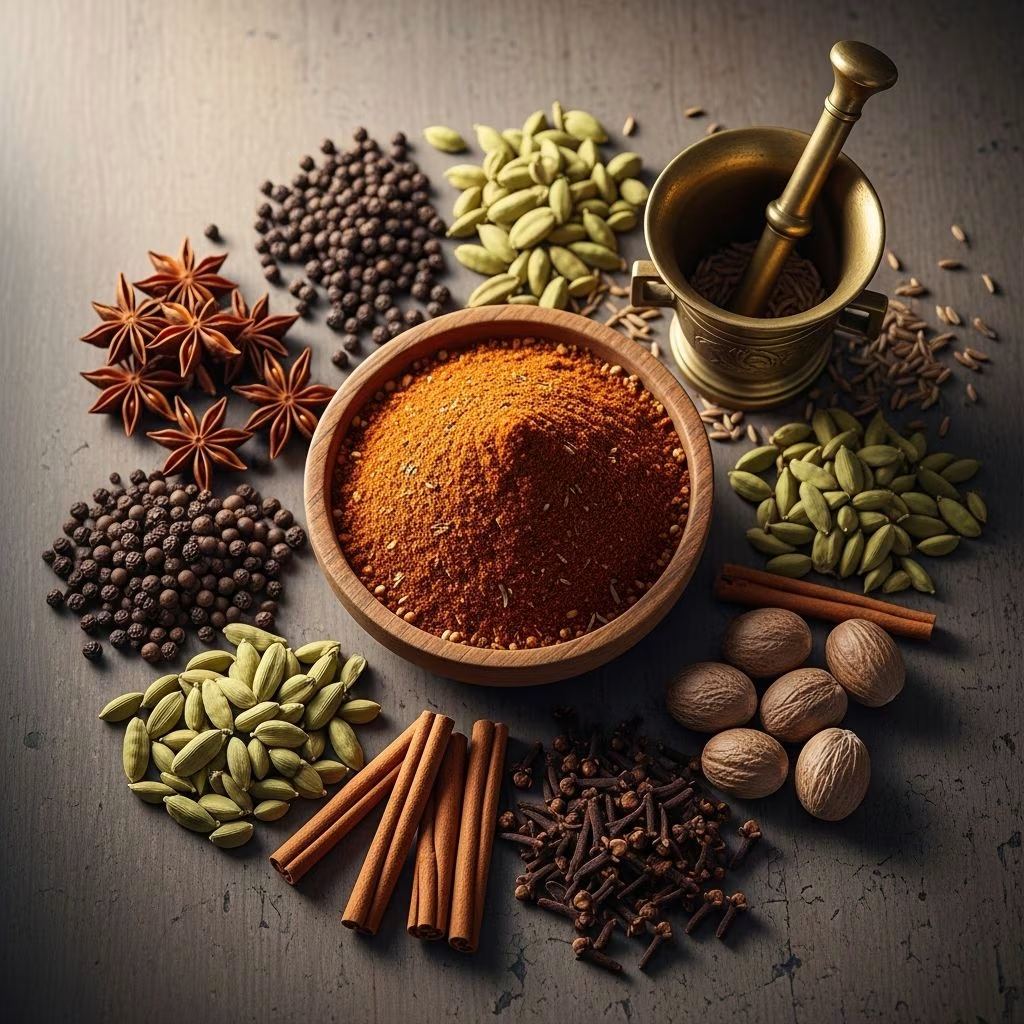
At its essence, baharat combines warming spices that deliver depth without overwhelming heat. Common foundations include black pepper, coriander, cinnamon, cloves, cumin, nutmeg, and paprika, creating a balanced profile of sweetness, earthiness, and subtle pungency.
Whole spices are often toasted before grinding to unlock their volatile oils, intensifying flavors. Here’s a breakdown of typical components:
- Black Pepper and Coriander: Provide a sharp, grounding base.
- Cinnamon and Cloves: Add sweet warmth.
- Cumin and Nutmeg: Contribute nutty, aromatic layers.
- Paprika: Offers color and mild smokiness.
Variations introduce cardamom for floral hints or allspice for a clove-like complexity.
Regional Twists on the Classic Blend
Baharat’s beauty lies in its regional diversity, tailored to local tastes and available ingredients. In the Levant, particularly Lebanon and Syria, it’s known as sabaa baharat or “seven spices,” typically featuring cinnamon, black pepper, allspice, cloves, nutmeg, coriander, and sometimes white pepper or paprika.
| Region | Key Additions or Emphasized Spices | Notable Dishes |
|---|---|---|
| Levant (Lebanon, Syria) | Allspice, white pepper, coriander | Kibbeh, stews |
| Turkey | Mint, fennel | Ke babs, pilafs |
| North Africa | Rose petals, ginger | Tagines, couscous |
| Iraq/Jordan | Cumin, chili for heat | T’beet, mansaf |
| General Middle East | Paprika dominant, cardamom | Meat rubs, soups |
Turkish versions might incorporate dried mint for freshness, while North African renditions add rosebuds for a floral note. Iraqi blends, crucial for dishes like T’beet, emphasize cumin and sometimes chili for a bolder kick. These adaptations highlight how baharat evolves while retaining its core identity.
How to Craft Your Own Baharat at Home
Making baharat allows customization to your pantry and preferences. Start with whole spices for maximum freshness: toast them in a dry skillet over medium heat until fragrant (about 2-4 minutes), cool, then grind in a spice mill or mortar and pestle.
Basic Homemade Recipe (Makes ~1/4 cup):
- 2 tbsp coriander seeds
- 1 tbsp black peppercorns
- 1 tbsp cumin seeds
- 2 tsp cloves
- 2 tsp cinnamon sticks or ground
- 1 tsp nutmeg (whole or ground)
- 1 tsp cardamom pods
- 2 tbsp sweet paprika
- Optional: 1 tsp allspice berries
Combine, toast whole spices individually, grind finely, mix in paprika, and store in an airtight jar for up to two weeks to let flavors meld. For a Lebanese seven-spice version: equal parts allspice, cinnamon, coriander, black pepper, with smaller amounts of cumin and cloves. Experiment by adjusting ratios—more paprika for color, extra nutmeg for warmth.
Versatile Applications in Everyday Cooking
Baharat shines in both traditional and modern recipes, elevating meats, vegetables, and grains. Mix with olive oil for a marinade on lamb or chicken before grilling. Sprinkle into soups, stews, or rice pilafs for instant depth.
Quick Ideas:
- Meat Rub: Coat beef or poultry; grill or roast.
- Vegetable Boost: Toss roasted carrots or eggplant with baharat and yogurt.
- Soup Enhancer: Stir into lentil or chickpea soups.
- Bread Dip: Blend with olive oil, garlic, and lemon.
In Iraqi T’beet, a layered rice dish with chicken, baharat infuses every layer for a fragrant result. Lebanese cooks use it in kibbeh, while Turks add it to koftas. Beyond savory, sweeter versions with anise or mastic flavor desserts.
Purchasing Tips and Storage Best Practices
Store-bought baharat varies in quality; seek blends from Middle Eastern markets or reputable spice brands listing whole ingredients. Freshness matters—opt for vibrant colors and strong aromas. At home, keep in a cool, dark place in glass jars; it lasts 6 months, but grinding your own extends vibrancy.
Avoid pre-ground if possible, as oils degrade quickly. Label batches with dates for rotation.
Comparing Baharat to Similar Global Blends
Baharat shares kinship with other aromatic mixes but stands distinct. Ras el hanout, from Morocco, includes lavender and cubeb for exotic flair. Garam masala offers bolder heat, while Chinese five-spice leans sweeter with star anise. Baharat’s balanced warmth suits broad applications.
Health Benefits and Nutritional Notes
Spices in baharat boast antioxidants: cumin aids digestion, cinnamon supports blood sugar balance, and cloves provide anti-inflammatory compounds. Use moderately as a salt alternative to enhance flavor healthily.
Frequently Asked Questions (FAQs)
What is baharat made of?
Primarily black pepper, coriander, cinnamon, cloves, cumin, nutmeg, and paprika, with regional tweaks.
Is baharat the same as Lebanese seven spice?
Yes, often identical, focusing on seven key spices like allspice and coriander.
How long does homemade baharat last?
Up to 6 months in an airtight container away from light and heat.
Can baharat be used in baking?
Absolutely, in sweeter blends for cookies or pastries mimicking Middle Eastern confections.
What’s the difference between baharat and garam masala?
Baharat is milder and earthier; garam masala is hotter with fenugreek.
Advanced Recipes to Try
Baharat-Marinated Lamb Chops: Mix 2 tbsp baharat, 3 tbsp olive oil, garlic, lemon juice. Marinate 4 lamb chops for 2 hours, grill 4-5 minutes per side.
Baharat Roasted Vegetables: Toss cauliflower, potatoes, onions with 1 tbsp baharat, oil, salt. Roast at 425°F for 30 minutes.
Seven-Spice Pilaf: Sauté 1 onion, add 1 cup rice, 2 tsp baharat, 2 cups broth. Simmer 20 minutes.
These recipes showcase baharat’s transformative power (word count: approx. 1720 for main content).
References
- Baharat spice blend – A Bowl of Sugar — A Bowl of Sugar. 2023. https://www.abowlofsugar.com/post/baharat-spice-blend
- The Rumi Guide to Baharat — Rumi Spice. 2023. https://www.rumispice.com/blogs/blog/the-definitive-guide-to-the-baharat-blend
- Baharat – Wikipedia — Wikipedia. 2026-04-07. https://en.wikipedia.org/wiki/Baharat
- Baharat Uncovered | What is baharat? — Seasoned Pioneers. 2023. https://www.seasonedpioneers.com/baharat-uncovered/
- Baharat spice blend (Lebanese 7 Spice) — RecipeTin Eats. 2023. https://www.recipetineats.com/baharat/
- Baharat Spice Blend – The key to Iraqi T’Beet — Fair Seas Spice. 2013-07-19. https://fairseasspice.wordpress.com/2013/07/19/baharat-spice-blend-the-key-to-iraqi-tbeet/