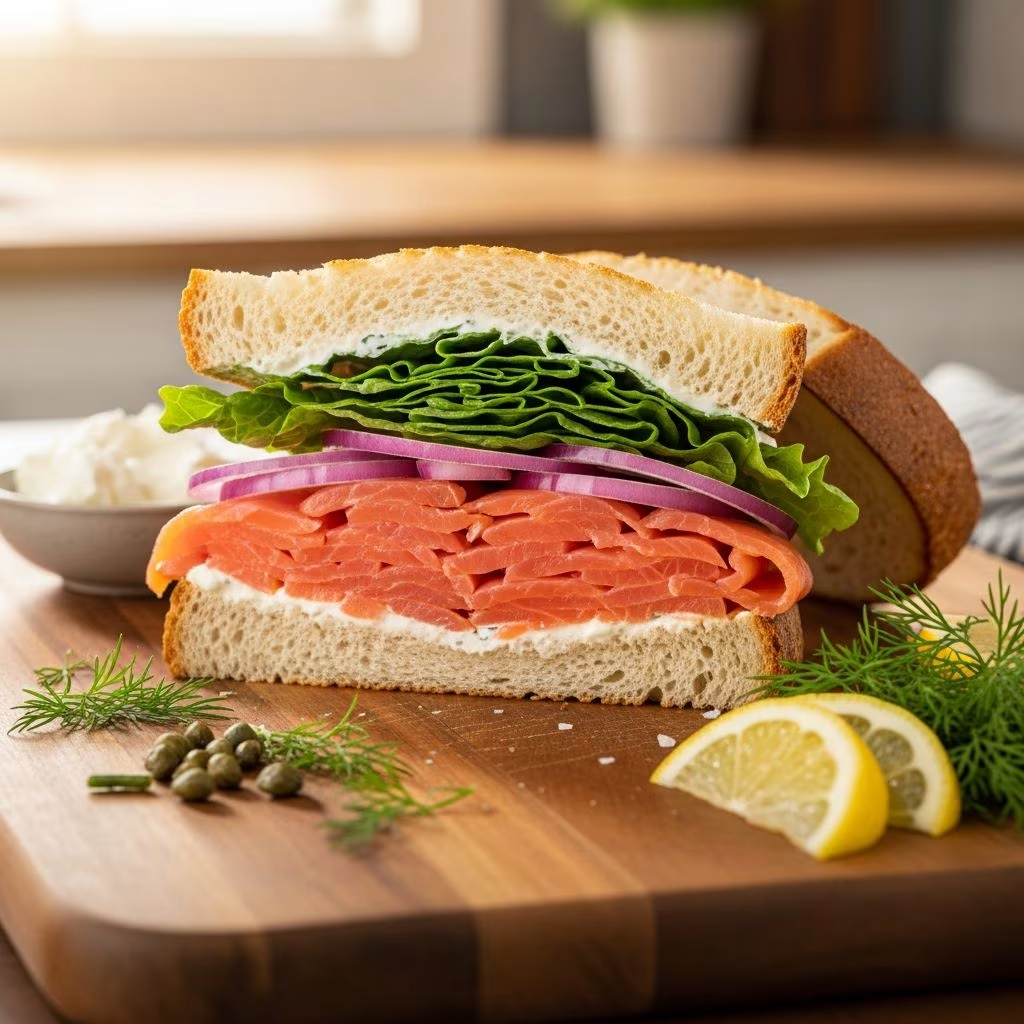
A well-crafted smoked salmon sandwich represents the intersection of simplicity and sophistication. What makes this culinary creation so appealing is its versatility—it can serve as a quick weekday lunch, an elegant brunch option, or even a refined afternoon tea accompaniment. The beauty of this sandwich lies in its straightforward construction combined with the premium quality of its star ingredient. Whether you’re preparing it for yourself or entertaining guests, mastering the fundamentals of sandwich assembly transforms a basic meal into something truly memorable.
Understanding Your Foundation: Bread Selection
The bread you choose establishes the entire character of your sandwich. Different bread options create distinctly different dining experiences. White sandwich bread offers a neutral, soft canvas that allows the salmon’s delicate flavors to shine prominently. Rye bread introduces an earthy, slightly tangy undertone that complements the fish beautifully. For those seeking a more rustic experience, ciabatta rolls provide a hearty texture with an airy crumb structure that won’t collapse under moist fillings. Whole grain options add nutritional value and a subtle nuttiness.
Consider toasting your bread lightly before assembly. This step serves multiple purposes: it creates a subtle textural contrast, helps preserve structural integrity when moist ingredients are added, and imparts a delicate warmth that enhances the overall eating experience. However, if you prefer a softer texture throughout, skipping this step remains entirely valid.
The Creamy Foundation: Spread Options
The spread you apply sets the tone for flavor integration. Traditional mayonnaise provides a classic, neutral base that allows other ingredients to take center stage. Whipped cream cheese offers a richer, more luxurious mouthfeel with subtle tang. Creating a herbed cream cheese spread elevates your sandwich significantly—combining whipped cream cheese with fresh dill, chopped chives, and a squeeze of lemon juice produces a sophisticated spread that complements the salmon without overwhelming it.
Application technique matters considerably. Spread your chosen base generously across both bread surfaces to ensure even flavor distribution and protection against bread sogginess from subsequent vegetable layers.
Protein Selection: Beyond Basic Cold Smoked Salmon
The smoked salmon forms your sandwich’s nutritional and flavor foundation. Cold-smoked salmon, the most common variety, features a silky texture and concentrated smoky character. When selecting smoked salmon, opt for quality brands that use traditional smoking methods without excessive additives. Scottish and Norwegian smoked salmon varieties have earned particular acclaim for their superior flavor profiles and texture.
Allow your smoked salmon to reach room temperature briefly before assembly. This allows the oils to distribute more evenly, releasing fuller flavor. Most sandwiches benefit from 2-3 ounces of salmon per serving, though personal preference ultimately dictates quantity.
Building Your Vegetable Layers
Fresh vegetables provide crucial textural contrast and nutritional balance. Consider these classic combinations:
- Crisp Greens: Spring mix, arugula, or tender lettuce leaves add light freshness without heaviness. Microgreens provide concentrated flavor and visual sophistication.
- Cucumber Slices: Their mild, refreshing quality and high water content create pleasant crunch that contrasts beautifully with creamy elements.
- Tomato Layers: Slice tomatoes into quarter-inch thickness to prevent sogginess. Heirloom varieties offer superior flavor complexity over standard commercial options.
- Red Onion: Thinly sliced raw onion contributes sharpness and bite. Quick pickling in vinegar mellows intensity while preserving crunch.
- Radishes and Sprouts: These additions introduce peppery notes and delicate texture.
Sophisticated Flavor Enhancements
Moving beyond basic ingredients separates home sandwiches from truly memorable creations. Fresh herbs elevate your sandwich substantially. Dill remains the classic choice, its subtle anise notes harmonizing perfectly with salmon. Parsley adds fresh green characteristics. Chives contribute mild onion undertones.
Consider incorporating pickled elements—quick-pickled red onions provide tangy complexity that brightens the entire composition. A light squeeze of fresh lemon juice adds brightness that awakens palate and balances richness. Capers introduce briny, assertive flavors that enliven the sandwich considerably.
For adventurous eaters, creamy avocado slices or a touch of horseradish cream create unexpected flavor dimensions.
Assembly Sequence for Structural Integrity
The order in which you layer ingredients significantly impacts both eating experience and structural stability. Begin by applying your chosen spread to both bread pieces. Layer delicate greens first, creating a moisture barrier between spread and bread. Add lighter vegetables next—cucumber slices and radishes. Progress to heavier elements, positioning smoked salmon approximately in the middle of your build.
This layering method prevents bread degradation while ensuring each component remains distinctive rather than compressed into an inseparable mass. The lighter elements support heavier components naturally through gravity.
Regional Interpretations and Creative Variations
Different culinary traditions approach the smoked salmon sandwich distinctly. Scandinavian smørrebrød represents an open-faced interpretation, presenting a beautiful visual presentation ideal for entertaining. The Danish approach emphasizes simplicity and ingredient quality, typically featuring rye bread, butter, cucumber ribbons, and premium smoked salmon arranged aesthetically.
Salad-based variations combine cubed smoked salmon with a creamy binding—mayonnaise mixed with fresh dill, minced celery, red onion, and lemon juice creates a texture-rich filling that becomes substantial enough for hearty appetites. This approach yields a completely different sensory experience from traditional stacked sandwiches.
Professional Presentation Techniques
How you finish your sandwich influences both visual appeal and eating practicality. Diagonal cuts create elegant triangles suitable for formal settings. Straight cuts through the center produce rectangular halves that photograph well. Remove bread crusts for refined afternoon tea presentations, creating delicate rectangles or triangles.
Consider your serving context when determining finishing style. Casual lunches tolerate whole, uncut sandwiches, while catering situations benefit from pre-cut portions that demonstrate care and attention to detail.
Timing and Preparation Strategy
| Preparation Stage | Timing Recommendation | Storage Notes |
|---|---|---|
| Ingredient Preparation | 30 minutes before serving | Keep ingredients separately until assembly |
| Spread Creation | 15 minutes before serving | Refrigerate herbed spreads until use |
| Sandwich Assembly | 5-10 minutes before serving | Assemble immediately before consumption |
| Completed Sandwich Storage | Maximum 4 hours | Wrap tightly; keep cool |
Assembling your sandwich shortly before consumption preserves optimal texture. If advance preparation becomes necessary, keep wet and dry components separate until final assembly. Transport sandwiches in breathable containers that prevent condensation buildup.
Nutritional Considerations
Smoked salmon sandwiches offer impressive nutritional profiles. Salmon provides omega-3 fatty acids, high-quality protein, and B vitamins. Fresh vegetables contribute fiber and micronutrients. Cream cheese or mayonnaise supplies richness and fat-soluble vitamin absorption. A well-constructed sandwich becomes a nutritionally balanced meal requiring minimal supplementation.
For health-conscious variations, substitute mayonnaise with Greek yogurt, use whole grain bread, and maximize vegetable quantities while maintaining structural integrity.
Frequently Asked Questions
How far in advance can I prepare smoked salmon sandwiches?
While component preparation can occur several hours ahead, final assembly should happen within 30 minutes of consumption to maintain optimal bread texture and prevent vegetables from releasing excess moisture.
Can I freeze smoked salmon sandwiches?
Freezing is not recommended. The moisture content of vegetables and salmon leads to textural degradation upon thawing. Consume sandwiches fresh for best results.
What bread types work best for traveling?
Denser, sturdier breads like ciabatta or whole grain options withstand transportation better than delicate white bread. Toast the bread lightly to increase structural resilience.
How do I prevent my sandwich from becoming soggy?
Apply spread to both bread pieces, create a vegetable moisture barrier, pat vegetables dry before use, and assemble sandwiches shortly before serving.
What’s the difference between cold-smoked and hot-smoked salmon?
Cold-smoked salmon maintains a delicate, silky texture ideal for sandwiches. Hot-smoked salmon becomes flaky and cooked-through, better suited for different applications. For traditional sandwiches, cold-smoked varieties are preferable.
Can I make smoked salmon sandwiches without cream cheese or mayonnaise?
Absolutely. Softened butter, hummus, or Greek yogurt create viable alternatives that modify flavor while maintaining structural functionality.
Conclusion: Elevating Your Sandwich Game
Creating exceptional smoked salmon sandwiches combines understanding ingredient quality, respecting classic preparation principles, and embracing creative personalization. Whether you prefer traditional simplicity or experimental flavor layering, this sandwich framework adapts to your preferences while maintaining essential construction logic. The satisfaction derived from preparing quality food efficiently transforms everyday eating into genuine culinary pleasure.
References
- Seafood and Health — U.S. Food and Drug Administration. 2024. https://www.fda.gov/food/seafood-haccp-and-food-safety/seafood-and-health
- Omega-3 Fatty Acids in Fish — American Heart Association. 2023. https://www.heart.org/en/healthy-living/healthy-eating/eat-smart/fish
- Food Safety Guidelines for Seafood — NOAA Fisheries. 2024. https://www.fisheries.noaa.gov/insight/safer-seafood
- Culinary Techniques in Professional Kitchens — The Culinary Institute of America. 2023. https://www.ciachef.edu/
- Bread Science and Baking — King Arthur Baking Company Research. 2024. https://www.kingarthurbaking.com/learn