As temperatures drop and leaves change color, the kitchen becomes a haven for bakers seeking comfort through delicious treats. Loaf cakes represent one of the most accessible and rewarding baking projects, combining simplicity with impressive results. These versatile creations bridge the gap between quick breads and traditional cakes, offering moist interiors, interesting flavor profiles, and the convenience of single-pan preparation. The autumn season brings particular inspiration to loaf cake creation, with an abundance of seasonal ingredients and flavor combinations that celebrate harvest time.
Understanding the Loaf Cake Category
Loaf cakes occupy a unique position in the baking world, distinct from both traditional layer cakes and quick breads. They are typically baked in standard loaf pans, creating elongated rectangular shapes that slice easily for serving. The texture falls between the crumb of a cake and the heartiness of bread, making them suitable for breakfast, snacking, or dessert. Many bakers appreciate loaf cakes for their forgiving nature—they tolerate slight variations in mixing technique and ingredient temperature better than delicate layer cakes.
The beauty of loaf cakes lies in their flexibility. The same basic formula accommodates numerous flavor variations, allowing bakers to experiment throughout the season. Whether starting with a foundation of pumpkin puree, incorporating warm spices, or adding chocolate elements, loaf cakes maintain their characteristic moistness and tender crumb structure.
Essential Ingredients for Autumn Loaf Cakes
Creating successful autumn loaf cakes requires understanding how ingredients work together to produce desired textures and flavors. The foundation typically begins with all-purpose flour, which provides structure without the density of whole wheat varieties. Most autumn loaf cakes use one and one-half to two cups of flour as their base.
Leavening agents play crucial roles in achieving proper rise and texture. Baking soda reacts with acidic ingredients like pumpkin puree, creating lift during baking. Baking powder provides additional rise, particularly valuable when acidic components are limited. Salt enhances all flavors while balancing sweetness.
Autumn spice blends transform ordinary loaf cakes into seasonal delights. Common spices include cinnamon, nutmeg, ground ginger, and cloves. These warm spices evoke harvest season nostalgia and complement both sweet and savory applications. Pre-mixed pumpkin pie spice offers convenience, though combining individual spices provides greater control and fresher flavor.
Fat content contributes significantly to loaf cake quality. Butter creates rich flavor and golden crusts, while neutral oils like vegetable or canola oil produce exceptionally moist crumbs. Many recipes combine both for optimal results. Typical loaf cakes use between one-half to three-quarters cup of fat.
Pumpkin puree serves as a foundational ingredient for many autumn varieties, providing moisture, natural sweetness, and distinctive flavor. Important to note: cooks must distinguish between pure pumpkin puree and sweetened pumpkin pie filling, as the latter contains added sugar and spices that would throw off recipe balances.
Eggs bind ingredients while contributing structure and moisture. Room temperature eggs incorporate more effectively into batters, creating smoother mixtures. Sugar—both granulated and brown varieties—sweetens while brown sugar adds molasses complexity and moisture retention.
Chocolate elements enhance autumn loaf cakes considerably. Semi-sweet, dark, and milk chocolate chips all work effectively, with darker varieties providing sophisticated flavor contrasts to sweet pumpkin or fruit bases.
Core Flavor Combinations for Harvest Season
Pumpkin and chocolate represent a classic pairing that dominates autumn baking. The earthiness of pumpkin complements chocolate’s richness, creating balanced, sophisticated flavors. These combinations work beautifully in swirled patterns, where layers of pumpkin and chocolate batters create visual interest alongside flavor complexity.
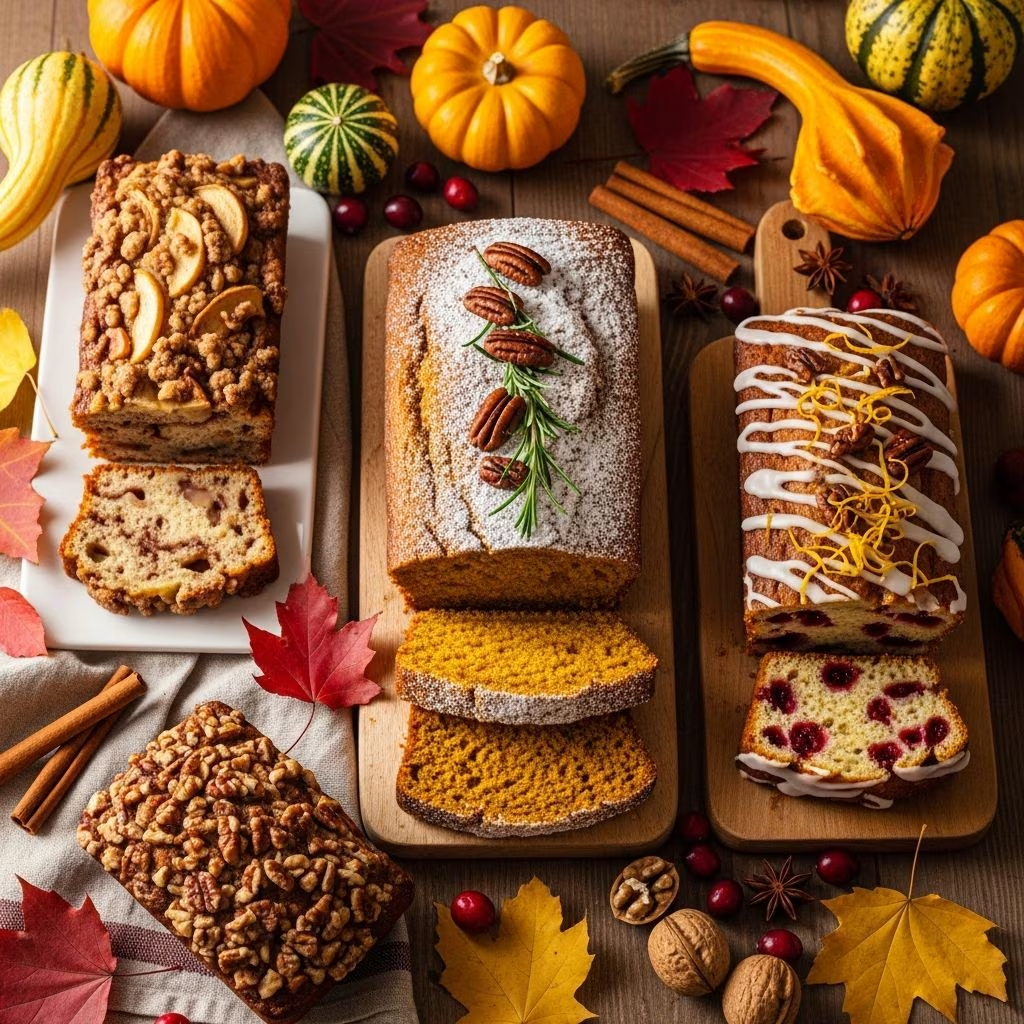
Spice-forward loaves celebrate traditional autumn flavors without relying on pumpkin. Cinnamon, nutmeg, ginger, and cloves create warming sensations that feel appropriate for cooler months. These spice-centered cakes often include nuts like pecans or walnuts, adding textural interest and nutritional value.
Apple-based loaves provide lighter alternatives to heavier pumpkin varieties. Fresh diced apples release juices during baking, naturally hydrating the crumb. Apple fritter-style loaves incorporate cinnamon sugar elements, sometimes with glaze toppings that echo beloved bakery classics.
Cranberry and orange combinations offer tartness that balances sweetness effectively. Citrus zest brightens cranberry’s natural acidity, while orange juice or zest adds aromatic complexity. These flavor pairings appeal to those preferring less-sweet desserts.
Maple elements add sophisticated depth to autumn loaves. Maple syrup contributes moisture and distinctive flavor, particularly effective in pecan or walnut varieties. Maple pairs beautifully with brown sugar and spices, creating complex sweet notes.
Preparation Techniques for Superior Results
Proper preparation separates successful loaf cakes from disappointing ones. Beginning with thoroughly dried and measured ingredients ensures consistency. Sifting dry ingredients—particularly when combining multiple spices—distributes them evenly throughout the batter, preventing spice concentration in certain slices.
Wet ingredient preparation deserves equal attention. Room temperature eggs incorporate smoothly, creating homogeneous batters. Mixing pumpkin puree, oils, and sugars until well combined creates emulsification that supports even moisture distribution throughout the finished cake.
The folding method proves superior to vigorous mixing for loaf cakes. Gently combining dry and wet ingredients using minimal strokes prevents overdeveloping gluten, which would create tough, dense crumbs. Chocolate chips should be folded in last, distributed evenly without crushing.
Proper pan preparation prevents sticking and ensures even baking. Greasing loaf pans thoroughly, then lining with parchment paper, allows easy removal. The parchment paper overhang serves as handles for extracting the finished loaf while still warm.
Baking Guidelines and Temperature Management
Most autumn loaf cakes bake successfully at 350°F (175°C). This moderate temperature allows the exterior to brown without burning while the interior bakes through completely. Loaf pans distribute heat differently than other baking vessels, so rack position matters. Placing loaf pans on middle racks ensures even heat circulation.
Baking duration typically ranges from fifty to seventy minutes, depending on recipe specifics and individual oven variations. The toothpick test remains the most reliable doneness indicator—a toothpick inserted into the center should emerge clean or with only a few moist crumbs, never with wet batter clinging to it.
Oven temperature accuracy significantly impacts results. Many home ovens run hot or cold, affecting baking times. Using an oven thermometer reveals actual temperature, allowing adjustments when necessary.
Flavor Enhancement Through Toppings and Glazes
While excellent on their own, loaf cakes benefit from thoughtful toppings. Powdered sugar glazes provide elegant finishing touches. Basic glazes combine powdered sugar with milk or cream and optional flavorings like cinnamon, vanilla, or citrus zest. These simple toppings complement rather than overwhelm.
Streusel toppings add textural contrast and visual appeal. Combining flour, brown sugar, cinnamon, and butter creates crumbly mixtures that toast beautifully during baking. Nuts incorporated into streusel toppings provide satisfying crunch.
Chocolate drizzles offer sophisticated presentation, particularly effective with fruit-based loaves. Melted dark chocolate, slightly thinned with coconut oil or butter, creates elegant patterns when drizzled over cooled loaves.
Storing and Serving Autumn Loaf Cakes
Proper storage extends the enjoyment of homemade loaf cakes. Most loaf cakes maintain quality at room temperature for two to three days when wrapped tightly in plastic wrap or stored in airtight containers. Cool loaves completely before wrapping to prevent condensation.
Refrigeration extends shelf life to approximately one week. Many bakers find loaf cakes improve slightly after one day of storage, as flavors meld and crumbs set. Bringing refrigerated loaves to room temperature before serving optimizes flavor and texture.
Freezing preserves loaf cakes for extended periods. Wrapped tightly in plastic wrap then aluminum foil, unfrosted loaves freeze successfully for up to three months. Thaw at room temperature before serving. Frosted or glazed loaves freeze adequately but may show slight glaze separation upon thawing.
Creative Variations Worth Exploring
Adventurous bakers find endless possibilities within loaf cake frameworks. Zucchini adds moisture and nutrition while remaining virtually undetectable in flavor. Double chocolate zucchini loaves combine cocoa powder with chocolate chips for intense chocolate flavor balanced by vegetable moisture.
Marbled variations create visual drama. Creating two separate batters—one pumpkin-based and one chocolate—then layering them in pans before swirling creates striking patterns. The contrasting flavors complement each other while the presentation impresses.
Nutty additions enhance autumn loaves. Pecans, walnuts, and even hazelnuts contribute textural interest and nutritional value. Toasting nuts before adding amplifies their flavor contribution.
Savory applications explore loaf cakes beyond dessert contexts. Some creative bakers incorporate herbs, cheese, or vegetable components for breakfast or brunch offerings. These savory loaves often skip additional sweetening beyond natural sugars from vegetables.
Frequently Asked Questions About Autumn Loaf Cakes
- Can loaf cakes be made without eggs?
- Yes, though eggs serve important binding and structural functions. Egg replacers, applesauce, or mashed banana work as substitutes, though results may be slightly denser. Each substitute requires adjusting liquid ratios.
- What causes dry loaf cakes?
- Overbaking represents the primary culprit. Insufficient fat or overmixing gluten can also produce dryness. Adding moisture-rich ingredients like pumpkin puree or reducing oven temperature helps prevent this issue.
- How should loaf cakes be sliced?
- A serrated knife and gentle sawing motion produces clean slices without compressing the crumb. Chilling the loaf slightly before slicing improves presentation.
- Can gluten-free flour work in loaf cake recipes?
- Gluten-free all-purpose blends work reasonably well, though results may be slightly different in texture. Using blends with xanthan gum helps approximate gluten’s binding properties.
References
- Chocolate Chip Pumpkin Spice Loaf Cake Recipe — Cooking with Rita and Ayden. Retrieved April 2026. https://www.youtube.com/watch?v=jviDKRdcP9U
- Easy Autumn Spice Loaf Cake — Pinecones and Acorns. https://pineconesandacorns.com/autumn-spice-loaf-cake/
- 15 Cozy Fall Bread Recipes You’ll Want to Make This Year — Old Salt Farm. https://oldsaltfarm.com/15-cozy-fall-bread-recipes/
- 7 Cozy Breads and Loaf Cakes for Fall Baking — Mom’s Kitchen Handbook. https://www.momskitchenhandbook.com/7-cozy-breads-and-loaf-cakes-for-fall-baking/
- 10 Easy Fall Loaf Cake Quick Bread Recipes — She’s Not Cookin’. https://shesnotcookin.com/10-easy-fall-loaf-cake-quick-bread-recipes/