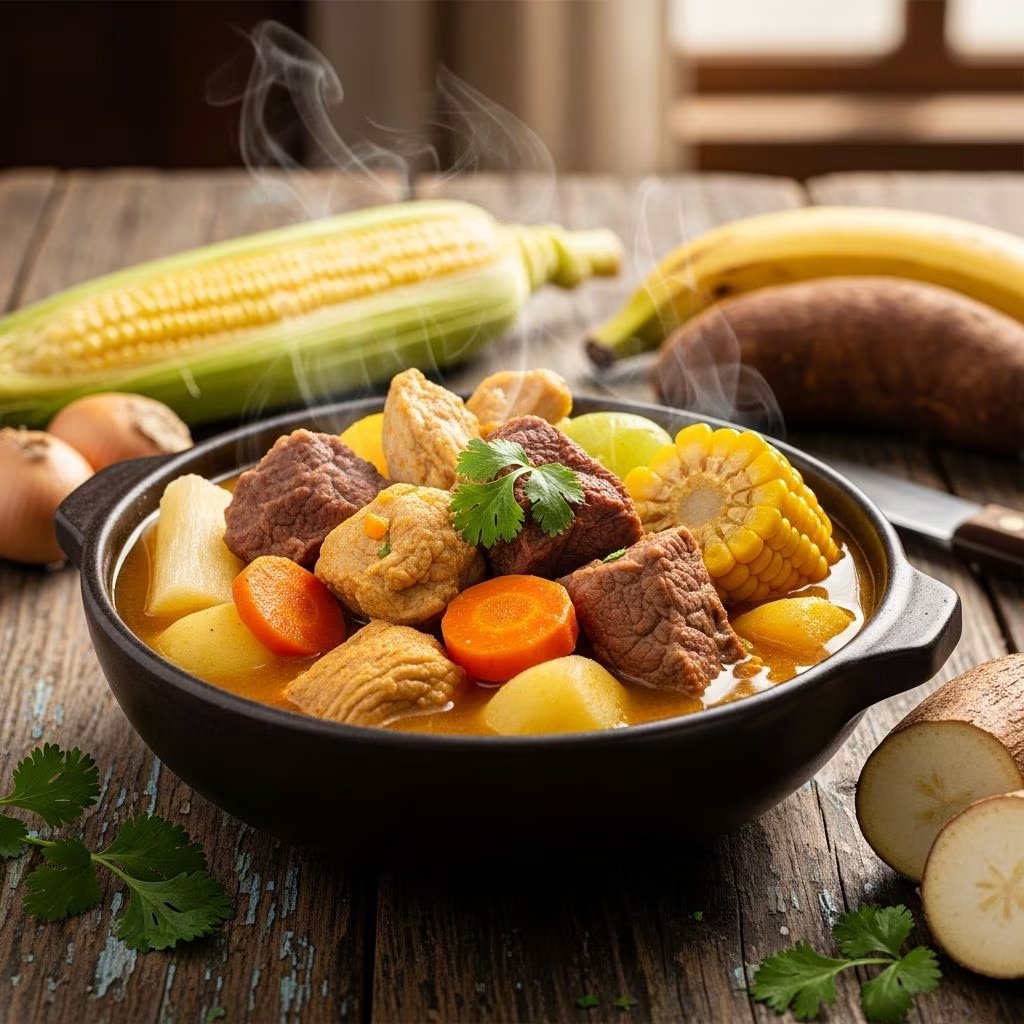
Sancocho stands as one of the most cherished dishes across Latin America, a robust stew that brings together tender chunks of meat, hearty root vegetables, and vibrant seasonings in a single pot. Derived from the Spanish term meaning to parboil, this dish embodies communal cooking and sustenance, perfect for cold days or festive occasions.
The Origins and Cultural Importance of Sancocho
Rooted in the culinary traditions of Spanish colonizers and indigenous peoples, sancocho evolved as a practical meal using available meats and tubers. In countries like the Dominican Republic, Colombia, and Puerto Rico, it holds a special place in family gatherings, holidays, and recovery from illness due to its nourishing qualities. The dish’s versatility allows each region to imprint its unique flavors, from Dominican versions heavy on pork and chicken to Colombian trifásico featuring three meats.
Historically, sancocho served as peasant food, maximizing inexpensive cuts of meat and abundant root crops like yuca, ñame, and plantains. Today, it remains a symbol of hospitality, often simmered for hours to develop deep, soul-warming flavors that draw people to the table.
Key Ingredients That Define Sancocho
The magic of sancocho lies in its layered ingredients, starting with a marinade that infuses meats with bold tastes. Essential components include multiple proteins for richness, starchy vegetables for body, and a sofrito base for aromatic depth.
- Meats: Chicken legs, beef chuck, pork shoulder, and cured ham provide varied textures and flavors.
- Vegetables: Yuca, ñame, yautía, batata, pumpkin, corn on the cob, and plantains form the hearty base.
- Seasonings: Sofrito (onions, peppers, garlic, cilantro), adobo, sazón, oregano, bay leaves, and vinegar create the signature taste.
- Liquids: Beef or chicken stock, tomato sauce, and water build the savory broth.
| Ingredient Category | Examples | Role in Dish |
|---|---|---|
| Proteins | Chicken quarters (1.5 kg), beef chuck (1 kg), pork shoulder (1 kg) | Tender chunks that release fats into broth |
| Root Vegetables (Viandas) | Yuca, ñame, yautía, batata | Thicken stew and add earthiness |
| Aromatic Base | Sofrito (1/2 cup), onion, garlic | Foundation of flavor |
| Seasonings | Adobo (1 tbsp+), sazón (2 tsp), oregano | Enhance umami and spice |
Step-by-Step Guide to Making Authentic Sancocho
Preparing sancocho requires patience, as the slow simmer melds flavors beautifully. This recipe serves 8-10 and takes about 2 hours.
Prepare the Meat Marinade
Combine 1/2 cup white wine vinegar, 1/4 cup sofrito, 1 tbsp adobo, 2 tsp sazón, 1.5 tsp oregano, and 1/2 tsp black pepper. Toss in cut chicken (thigh/drumstick separated), beef chuck, and pork shoulder pieces. Marinate for at least 30 minutes, ideally overnight for deeper flavor.
Brown the Meats
Heat 1 tbsp achiote or olive oil in a large pot over medium-high. Add marinated meats (reserve ham) and brown for 10 minutes, stirring occasionally. This step builds a flavorful fond.
Build the Sofrito Base
Add 1/2 cup sofrito, sliced yellow onion (3 cups), minced garlic (6 cloves), extra adobo (1 tbsp), sazón (2 tsp), oregano (1.5 tsp), and 2 bay leaves. Sauté 4 minutes, reducing heat if needed to prevent burning.
Simmer the Stew
Stir in 1 cup tomato sauce and 4 cups beef stock (add more as needed). Bring to boil, then add cured ham and viandas. Simmer covered on medium-low for 30-35 minutes until tubers soften.
Incorporate Corn and Finish
Add corn pieces and simmer another 20 minutes. Taste and adjust with adobo, pepper, or salt. For Colombian style, blend a green plantain with broth for thickening.
Pro Tip: Use pre-cut viandas from Latin markets or frozen for convenience, ensuring even cooking.
Regional Variations Across Latin America
Sancocho adapts to local ingredients and preferences, showcasing culinary diversity.
- Dominican Sancocho: Features seven viandas, multiple meats including goat, longaniza sausage, and pumpkin. Served with arroz blanco and avocado.
- Colombian Trifásico: Three meats (beef, pork ribs, chicken), green plantains blended for thickness, potatoes, yuca, topped with cilantro.
- Puerto Rican Sancocho: Emphasizes yautía, name, and batata with sofrito heavy on culantro.
- Panamanian Sancocho: Chicken-based with yuca, ñame, and otoe root.
These differences highlight how sancocho unites cultures while allowing personal touches.
Serving Suggestions and Pairings
Ladle steaming sancocho into bowls, ensuring each has meat, vegetables, and broth. Traditional accompaniments elevate the meal:
- Steamed white rice (arroz blanco) for sopping up broth.
- Fried green plantains (tostones) for crunch.
- Sliced avocado for creaminess.
- Lime wedges and hot sauce for brightness.
Pair with cold beer, rum cocktails, or tropical fruit juices. Leftovers taste even better the next day as flavors intensify.
Nutrition and Health Benefits
Sancocho is nutrient-dense: proteins from meats support muscle repair, fiber-rich viandas aid digestion, and vegetables provide vitamins A, C, and potassium. A serving offers balanced macros, though moderation on sodium from adobo/sazón is advised. Customize with leaner meats or more veggies for lighter versions.
| Nutrient (per serving) | Approx. Amount | Benefit |
|---|---|---|
| Protein | 30-40g | Muscle health |
| Fiber | 8-10g | Digestion |
| Vitamin C | 20-30% DV | Immunity |
Common Mistakes and Pro Tips
Avoid these pitfalls for sancocho success:
- Overcrowding the pot: Cook in batches if needed for even browning.
- Rushing the simmer: Low and slow tenderizes tough cuts.
- Skipping marinade: It’s key for flavor penetration.
- Pro: Freeze extras in portions; reheat gently with added stock.
Frequently Asked Questions (FAQs)
What is the best meat for sancocho?
Beef chuck, pork shoulder, and chicken legs offer tenderness and flavor after long cooking.
Can I make vegetarian sancocho?
Yes, substitute mushrooms, jackfruit, or extra viandas for meats, using vegetable stock.
How long does sancocho last in the fridge?
Up to 4 days; freeze for 3 months.
What’s the difference between sancocho and asopao?
Sancocho is chunkier with distinct vegetable pieces; asopao is rice-thickened like gumbo.
Is achiote oil necessary?
It adds color and nutty flavor but olive oil works fine.
Conclusion: Bringing Sancocho to Your Kitchen
Sancocho transcends a mere recipe—it’s a celebration of Latin heritage, comfort, and togetherness. With its forgiving nature and crowd-pleasing appeal, it’s ideal for home cooks eager to explore authentic flavors. Gather your ingredients, invite loved ones, and let the aromas fill your home.
References
- Sancocho (Meat and Vegetable Stew) — Sense & Edibility. Accessed 2026. https://senseandedibility.com/sancocho-latin-american-meat-and-vegetable-stew/
- COLOMBIAN SANCOCHO TRIFÁSICO | How To Make A Three … — Sweet y Salado (YouTube). Accessed 2026. https://www.youtube.com/watch?v=RkgBd09iDjw