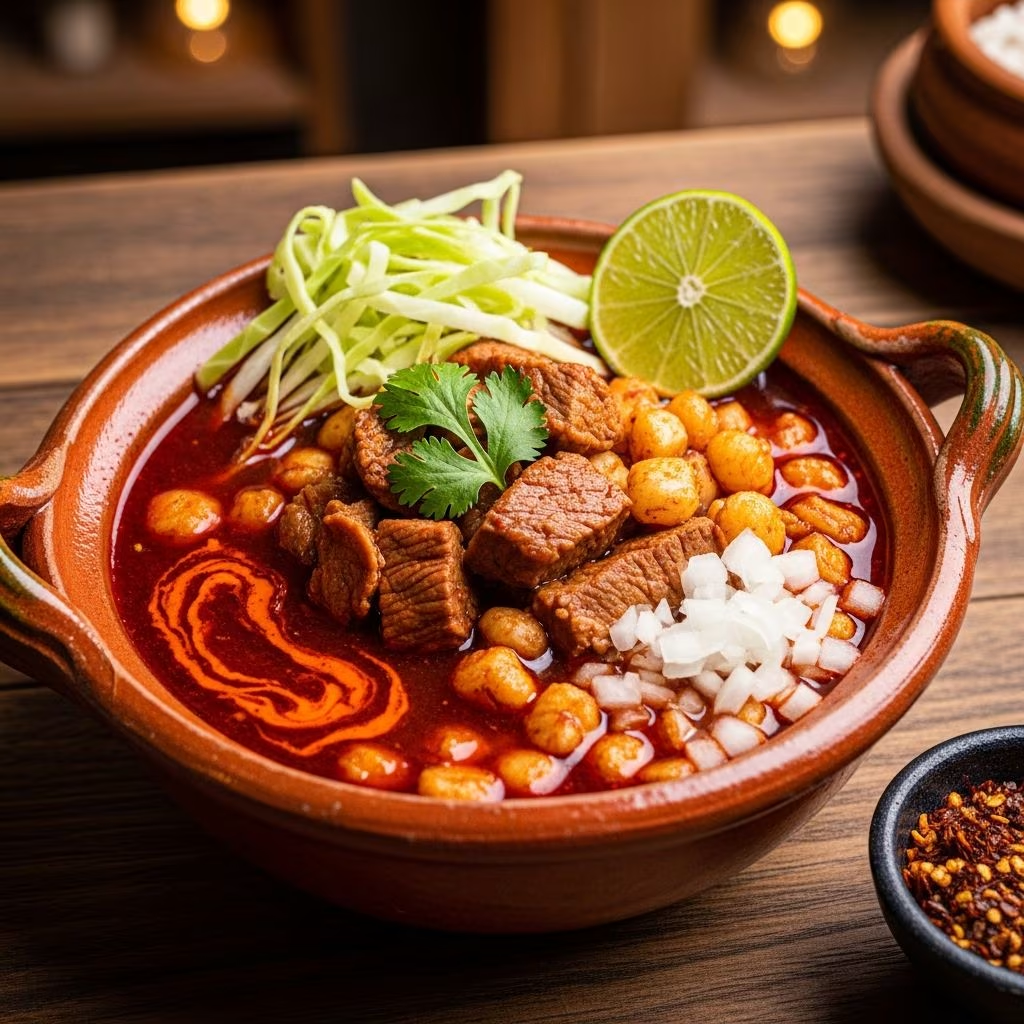
Pork pozole rojo stands as one of Mexico’s most cherished dishes, a hearty stew that brings warmth and bold flavors to any table. This red version gets its vibrant color and smoky depth from dried chiles, paired with tender pork and chewy hominy kernels. Rooted in pre-Hispanic traditions, pozole has evolved into a festive staple for celebrations, family gatherings, and chilly evenings. Whether you’re new to Mexican cooking or a seasoned home chef, this guide will walk you through creating an authentic batch from scratch.
The History and Cultural Significance of Pozole
Pozole’s origins trace back to ancient Mesoamerican civilizations, where it was prepared for special occasions. The name derives from the Nahuatl word ‘pozolli,’ meaning ‘foamy’ or ‘hominy,’ reflecting the key ingredient made from nixtamalized corn. Historically, it featured meats like turkey or even human sacrifices in Aztec rituals, but modern versions use pork or chicken. Today, pozole rojo, verde, and blanco variations symbolize regional diversity across Mexico, often served at Christmas, birthdays, and Independence Day.
In Mexican culture, pozole fosters community. Families gather to shred meat and chop toppings, turning preparation into a social event. Its nourishing qualities—high in protein from pork and fiber from hominy—make it ideal for sustenance during long celebrations. Understanding this heritage enhances the cooking experience, connecting you to generations of tradition.
Essential Ingredients for Perfect Pork Pozole Rojo
Gathering the right components is crucial for balance in flavor, texture, and color. Focus on fresh, quality items to elevate your stew.
- Pork Shoulder or Butt (4-5 lbs, bone-in preferred): Bone-in cuts infuse the broth with rich collagen for silky texture. Trim excess fat but leave some for moisture.
- Dried Chiles (Guajillo, Ancho, possibly Arbol): These provide the signature red hue and layered heat—guajillo for brightness, ancho for depth.
- Hominy (2-3 cans, 25-32 oz each, white): Drained and rinsed, this adds chewiness and authenticity. Canned is convenient; dried requires soaking.
- Aromatics (White Onion, Garlic, Bay Leaves): Onions build sweetness, garlic earthiness, and bay leaves subtle herbal notes.
- Spices (Oregano, Cumin, Salt, Pepper): Mexican oregano differs from Italian—use it for citrusy punch; cumin grounds the profile.
- Broth (Chicken Stock, 6-8 cups): Homemade amplifies flavor, but low-sodium store-bought works.
A table of approximate quantities for a 8-10 serving pot:
| Ingredient | Quantity |
|---|---|
| Bone-in Pork Shoulder | 4 lbs |
| Dried Guajillo Chiles | 4-6 |
| Dried Ancho Chiles | 4 |
| White Hominy | 32 oz (drained) |
| White Onion | 1 large, sliced |
| Garlic Cloves | 6-8 |
| Chicken Stock | 6 cups |
Step-by-Step Guide to Cooking Pork Pozole Rojo
Patience is key—this recipe simmers for hours, melding flavors into a cohesive masterpiece. Total time: 4-5 hours.
Step 1: Prepare the Red Chile Puree
Toast chiles lightly in a dry skillet to release oils, then stem, seed, and soak in hot water for 15-20 minutes until soft. Blend with garlic, onion quarter, cumin, oregano, a splash of vinegar or soaking liquid, and salt until smooth. Strain for silkiness, discarding solids. This base defines the dish’s soul.
Step 2: Sear and Braise the Pork
Cut pork into large chunks, season generously, and sear in hot oil in a Dutch oven until browned (4-5 minutes per side). This Maillard reaction builds complexity. Add sliced onions, bay leaves, and chile puree. Cover with stock, bring to simmer, then braise in a 325-350°F oven for 2.5-3 hours until fork-tender.
Step 3: Shred and Simmer with Hominy
Rest pork, shred into bite-sized pieces, discarding bones and excess fat. Return to pot with drained hominy. Simmer 45-60 minutes, adjusting thickness with stock. Taste and season—lime juice brightens if needed.
Classic Toppings and Serving Suggestions
Pozole shines with personal assembly. Serve hot with these garnishes on the side:
- Thinly sliced radishes for crunch and peppery bite.
- Shredded cabbage or lettuce for freshness.
- Diced white onion and chopped cilantro for sharpness.
- Lime wedges to cut richness.
- Dried oregano and crushed chicharrones for texture.
Accompany with warm corn tortillas, tostadas, or rice. For spice lovers, add fresh jalapeños or hot sauce.
Recipe Variations and Adaptations
Customize to preferences or equipment:
- Slow Cooker Version: Sear pork, transfer to cooker with sauce and stock. Cook low 8 hours or high 4 hours, add hominy last hour.
- Chicken Pozole: Swap pork for thighs/breasts, reduce simmer to 1.5 hours.
- Vegetarian Twist: Use mushrooms or jackfruit for ‘meat,’ vegetable broth.
- Pressure Cooker: Sear, pressure cook 45 minutes natural release.
- Spice Levels: Omit arbol chiles for mild; add chipotle for smoke.
Storage, Freezing, and Reheating Tips
Pozole tastes better next day as flavors meld. Refrigerate up to 4 days in airtight containers. Freeze portions up to 3 months—thaw overnight, reheat gently with splash of stock to prevent drying. Avoid boiling leftovers to preserve tenderness.
Nutrition and Health Benefits
A 1.5-cup serving offers ~400 calories, 25g protein, iron from pork, and B-vitamins. Hominy provides fiber aiding digestion. Balance with veggie toppings for antioxidants. Moderate sodium by using low-salt stock.
Frequently Asked Questions (FAQs)
What is the difference between pozole rojo, verde, and blanco?
Rojo uses red chiles, verde green ones (tomatillos), blanco no chiles—just clear broth.
Can I make pozole without hominy?
Traditionalists say no, but substitute canned corn or ramen for texture in a pinch.
How spicy is pork pozole rojo?
Mild to medium; adjust chiles. Guajillo/ancho are earthy, not fiery.
Is bone-in pork necessary?
Highly recommended for gelatinous broth, but boneless works with longer simmer.
What’s the best way to thicken pozole?
Simmer uncovered or mash some hominy; avoid flour for authenticity.
With these insights, you’re equipped to craft a pozole rojo that rivals Mexican taquerias. Experiment confidently—each bowl tells your story.
References
- Pork Pozole Rojo (Authentic Pork & Hominy Soup) — So Much Food Blog. 2023-10-15. https://somuchfoodblog.com/pork-pozole-rojo/
- Pozole — Tastes Better from Scratch. 2024-02-20. https://tastesbetterfromscratch.com/pozole/
- Classic Red Pork Pozole Recipe — Rancho Gordo. 2023-05-10. https://www.ranchogordo.com/blogs/recipes/classic-red-pork-pozole
- The Best Pork Pozole Recipe {Pork and Hominy Stew} — Hola Jalapeño. 2023-11-05. https://www.holajalapeno.com/pozole-rojo-pork-and-hominy-stew/
- Pozole Rojo (Authentic Mexican Pork & Hominy Stew) — Butter Be Ready. 2024-01-12. https://www.butterbeready.com/pozole-rojo/