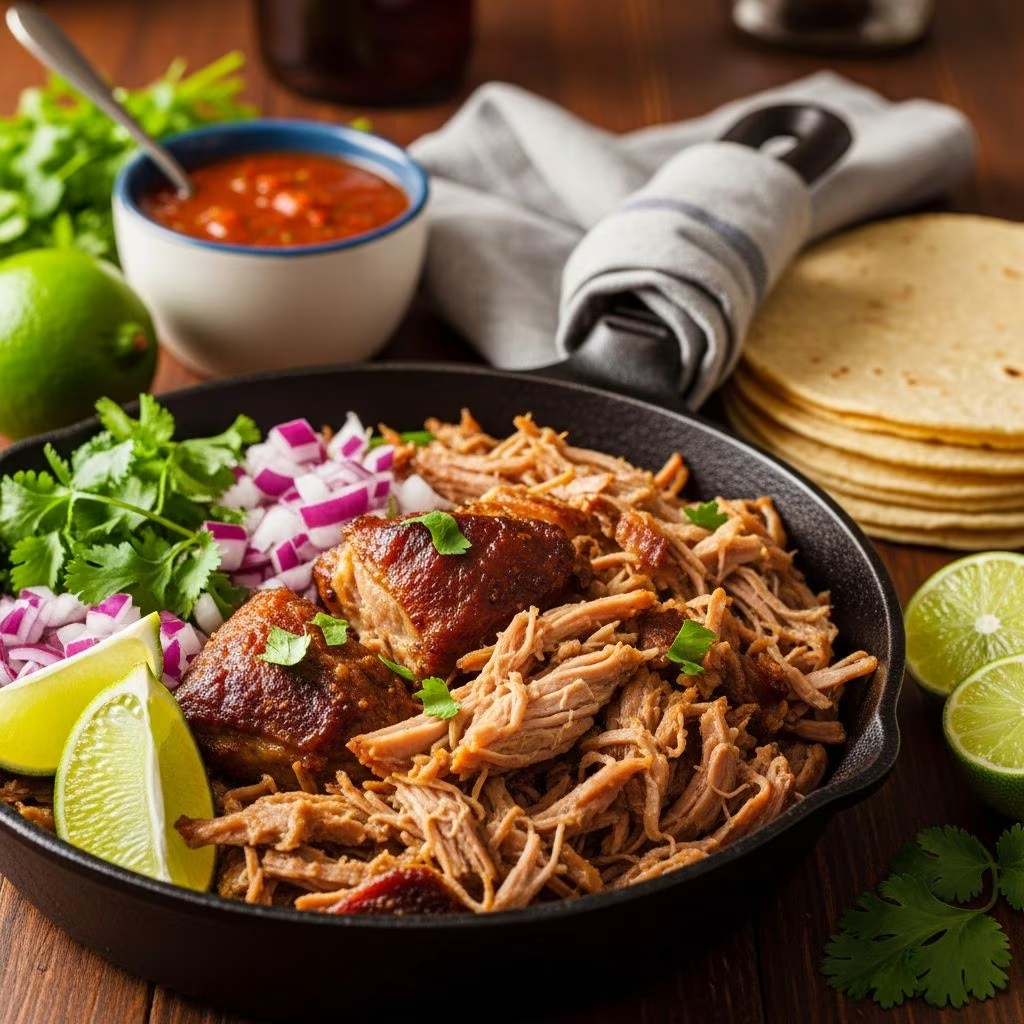
Pork carnitas represent a cornerstone of Mexican cuisine, delivering succulent, melt-in-your-mouth meat that has graced tables for generations. The name itself means “little meats” in Spanish, referring to the traditional preparation method where pork is slowly braised until it reaches perfect tenderness, then crisped to golden perfection. This time-honored technique transforms a humble cut of pork into an extraordinary dish that works beautifully as a filling for tacos, burritos, and countless other applications.
Understanding the Foundation: Selecting Your Pork
The success of your carnitas begins with selecting the right cut of meat. Pork shoulder, also known as pork butt, stands as the ideal choice for this preparation. This particular cut contains sufficient fat marbling and connective tissue that breaks down during the long cooking process, resulting in incredibly tender, flavorful meat rather than dry, stringy results.
When purchasing pork shoulder for carnitas, aim for a piece weighing between three to five pounds, depending on how many servings you need. Boneless, skinless shoulders are preferable for easier handling and more even seasoning distribution, though bone-in varieties can work if you prefer them. The fat content of pork shoulder is actually your friend in this recipe—it bastes the meat from within and eventually renders out to create the crispy exterior that makes carnitas so desirable.
The Flavor Profile: Essential Seasonings and Aromatics
Carnitas derive their distinctive taste from a carefully balanced blend of seasonings that work together harmoniously. The core spice combination typically includes cumin, oregano (preferably Mexican oregano for authenticity), chili powder, salt, and black pepper. These seasonings create a warm, earthy foundation that doesn’t overpower but rather complements the richness of the pork.
Beyond the dry spices, fresh citrus juices play a crucial role in the flavor development. Orange juice and lime juice add brightness and acidity that cuts through the richness of the pork fat, creating a more balanced and sophisticated final dish. Garlic, onions, and bay leaves round out the aromatics, infusing the meat with additional depth and complexity during the extended cooking period.
The beauty of carnitas seasoning lies in its simplicity. Unlike heavily spiced preparations that can become overwhelming, carnitas rely on a restrained approach that allows the natural pork flavor to shine while the spices provide supporting notes of warmth and sophistication.
Cooking Methods: Finding Your Preferred Technique
The Slow Cooker Approach
The slow cooker method represents the most convenient modern approach to making carnitas, requiring minimal hands-on attention while delivering consistently excellent results. Begin by combining your dry seasonings—typically two teaspoons each of cumin and oregano, along with salt and pepper—and rubbing them thoroughly over all surfaces of the pork shoulder. This initial seasoning ensures flavor penetration throughout the meat.
Place the seasoned pork in your slow cooker along with quartered onion pieces, minced garlic cloves, fresh orange juice, fresh lime juice, and either chicken broth or water as your liquid component. The liquid serves multiple purposes: it maintains moisture during the extended cooking period, facilitates the braising process, and combines with the seasonings to create an infused cooking liquid that you’ll use later for finishing the meat.
Cook the pork on the low setting for seven to eight hours, or on high for four to five hours. The exact timing depends on your specific slow cooker’s heat output and the exact size of your meat. The pork is ready when it shreds easily with just a fork, indicating that the collagen has converted to gelatin and the meat has reached optimal tenderness.
The Oven Method
For those preferring a more traditional approach, the oven method harks back to time-tested techniques. Begin by preheating your oven to 325 degrees Fahrenheit. Season your pork shoulder generously on all sides and place it in a Dutch oven or heavy oven-safe pot that just barely accommodates the meat. This tight fit concentrates flavors and prevents excessive evaporation.
Add your liquid components—orange juice, lime juice, garlic, onions, and bay leaves—to the pot, allowing the liquid to partially submerge the meat. Cover the pot with a lid and bake for approximately three to three-and-a-half hours, until the pork reaches a tender consistency that shreds easily. The covered environment creates steam that gently braises the meat, breaking down tough connective tissues.
After the initial braising period, remove the lid and continue cooking uncovered for an additional thirty minutes or so, turning the meat occasionally and allowing it to begin crisping as the liquid evaporates. This finishing phase develops those desirable golden-brown edges.
The Simplified Water-Based Method
Some cooks prefer an even more streamlined approach that focuses on the essential elements. Cut your pork shoulder into strips approximately two inches by three-quarters inch in size, retaining all the fat for maximum flavor. Place these strips in a large skillet or wide Dutch oven and add just enough cold water to barely cover the meat.
Season generously with salt and bring the water to a boil over high heat, then immediately reduce to a gentle simmer over medium-low heat. Allow the pork to cook undisturbed for approximately ninety minutes, during which the water gradually evaporates and the pork becomes increasingly tender. As the water reduces, the meat begins to poach in its own rendered fat, creating exceptional flavor and texture.
The Critical Crisping Phase
Regardless of which initial cooking method you choose, the crisping phase determines whether your carnitas achieve that desirable textural contrast between tender, juicy interior and crispy, caramelized exterior. After your pork reaches the appropriate tenderness, carefully remove it from the cooking liquid and set it aside to cool slightly.
Shred the pork into bite-sized pieces using two forks, working with manageable portions to avoid burning yourself on the hot meat. Spread the shredded pork on a baking sheet, lightly brush it with some of the reserved cooking liquid, and place it under your broiler on high heat. Watch carefully, stirring occasionally, until the edges become golden brown and slightly crispy, typically requiring five to ten minutes depending on your broiler’s intensity.
Alternatively, you can crisp the carnitas in a large skillet over medium-high heat, allowing the rendered fat to create that desirable crust while you stir occasionally to ensure even browning. This stovetop method provides more control than broiling and requires only about five to seven minutes.
Component Preparation Guide
| Component | Preparation Method | Timing |
|---|---|---|
| Pork Shoulder | Trim excess surface fat, season thoroughly, cut if needed | 5-10 minutes |
| Citrus Juice | Freshly squeeze oranges and limes, strain seeds | 5 minutes |
| Aromatics | Mince garlic, quarter or chop onions, prepare bay leaves | 5 minutes |
| Dry Seasonings | Combine all spices in small bowl before application | 2 minutes |
Serving and Application Ideas
The versatility of carnitas extends far beyond traditional taco presentations. While crispy carnitas nestled in warm tortillas with simple toppings remains a classic preparation, the possibilities expand considerably with creative thinking.
Serve carnitas over rice bowls topped with black beans, corn, and fresh salsa for a hearty burrito bowl format. Layer carnitas atop crisp salad greens with avocado, black beans, cotija cheese, and cilantro-lime vinaigrette for a substantial main-course salad. Stuff carnitas into quesadillas alongside melted cheese, sautéed peppers, and onions for a satisfying handheld meal. Top nachos generously with carnitas, beans, cheese, and all your preferred accompaniments for an impressive appetizer or casual dinner.
Breakfast applications work beautifully as well—carnitas combine wonderfully with scrambled eggs, potatoes, and flour tortillas for breakfast burritos, or scattered atop huevos rancheros for added protein and flavor complexity.
Storage and Make-Ahead Considerations
Carnitas benefit from advance preparation and actually improve when the flavors have time to develop. Store leftover carnitas in an airtight container in the refrigerator for three to five days without any loss of quality. The rendered fat helps preserve the meat and prevents it from drying out during storage.
For longer storage, freeze carnitas in airtight freezer containers for up to three months. Thaw overnight in the refrigerator before reheating. You can refresh refrigerated or thawed carnitas by heating them gently in a skillet over medium heat, allowing any rendered fat to reheat the meat while restoring some crispness to the exterior.
Frequently Asked Questions
Can I use a different pork cut for carnitas?
While pork shoulder remains the optimal choice due to its fat content and connective tissue, pork butt can work similarly. Leaner cuts like pork loin will produce drier results and don’t develop the same luxurious texture. Shoulder provides the ideal balance of fat and meat for authentic carnitas preparation.
Is fresh citrus juice necessary, or can I substitute bottled juice?
Fresh citrus juice delivers superior flavor compared to bottled varieties, which often contain additives and lack the vibrant brightness that characterizes excellent carnitas. The small additional effort of squeezing fresh juice noticeably enhances your final result.
What if my cooking liquid hasn’t evaporated after the suggested time?
Cooking times vary based on specific equipment, starting meat temperature, and your stove’s precise heat output. Simply continue cooking until the liquid reduces substantially. The meat will reach tenderness before the liquid completely evaporates, so you can stop cooking when the pork shreds easily even if some liquid remains.
How can I make carnitas less fatty?
The fat is integral to authentic carnitas’ texture and flavor, but you can reduce it by skimming some rendered fat from the cooking liquid before using it to crisp the meat. Alternatively, use a leaner pork cut, though this compromises the traditional result.
Can I make carnitas without the citrus element?
While traditional recipes include orange and lime juice for their acidity and flavor contributions, you can substitute with white wine, apple cider vinegar, or additional broth in a pinch. The result will taste somewhat different but remains delicious.
Perfecting Your Carnitas Technique
Mastering carnitas requires understanding that success depends on respecting the process rather than rushing it. The extended cooking time isn’t merely about reaching tenderness—it’s about allowing flavors to develop and meld, and allowing the pork’s connective tissues to fully convert to silken gelatin. Attempting to shortcut this process by increasing heat typically results in tough, stringy meat rather than the desired outcome.
Similarly, the crisping phase deserves equal attention to the initial braise. Those golden, slightly crispy edges provide textural contrast that elevates carnitas from merely tender to genuinely exceptional. The interplay between juicy interior and crispy exterior creates the textural complexity that makes this dish so craveable.
With practice and attention to these fundamental principles, you’ll develop the confidence to make carnitas that rival those from your favorite Mexican restaurants, all from your own kitchen.
References
- Pork Carnitas Recipe (Slow Cooker or Instant Pot) — The Modern Proper. 2024. https://themodernproper.com/carnitas
- Pork Carnitas Recipe (Authentic, Simple Method) — Fifteen Spatulas. 2024. https://www.fifteenspatulas.com/the-best-and-simplest-carnitas/
- Pork Carnitas (Oven, Slow Cooker or Instant Pot) — Tastes Better From Scratch. 2024. https://tastesbetterfromscratch.com/slow-cooker-pork-carnitas/
- Carnitas (Mexican Slow Cooker Pulled Pork) — RecipeTin Eats. 2024. https://www.recipetineats.com/pork-carnitas-mexican-slow-cooker-pulled-pork/
- Home-Style Pork Carnitas — Rick Bayless. 2024. https://www.rickbayless.com/recipe/home-style-pork-carnitas/