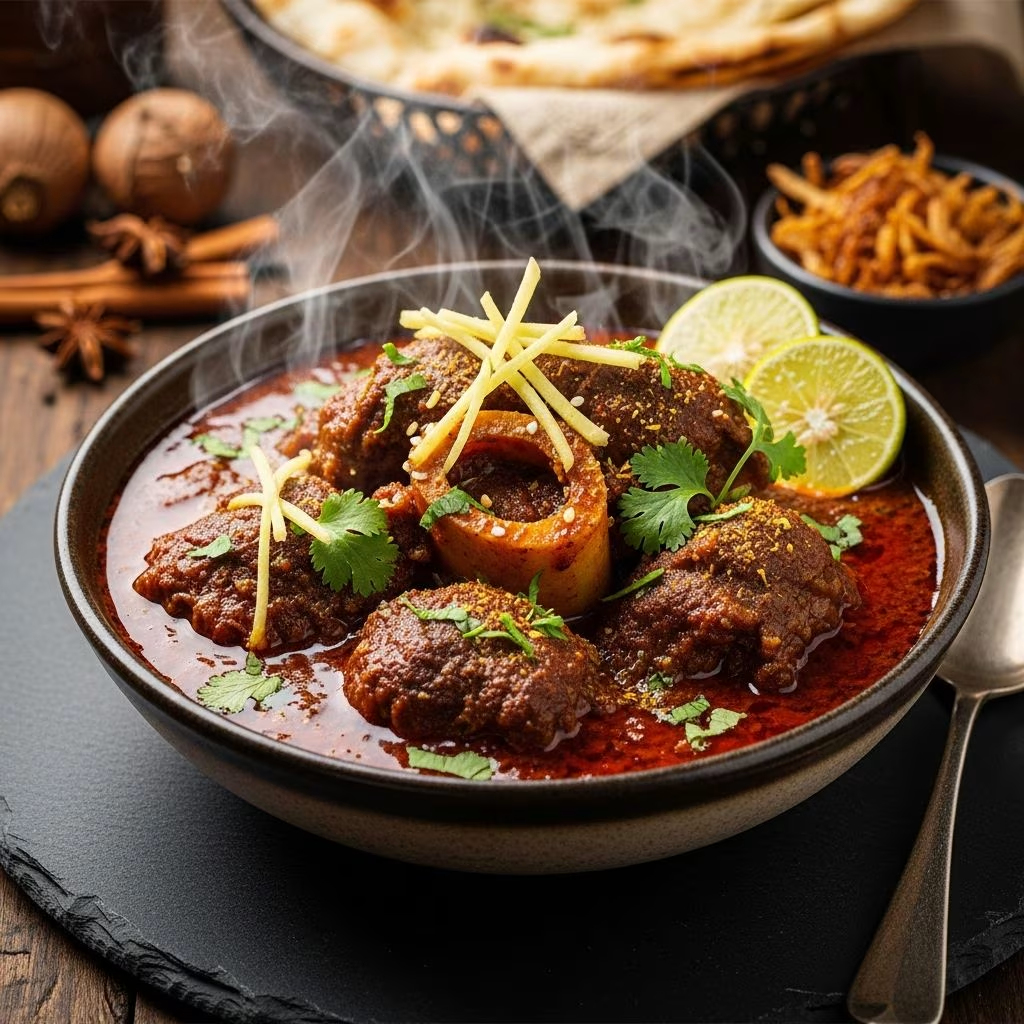
Pakistani Nihari stands as a cornerstone of South Asian culinary tradition, celebrated for its deep, layered flavors and melt-in-your-mouth texture. This slow-cooked beef stew, primarily made with shank meat, draws from Mughal influences and has evolved into a breakfast staple in Pakistan, often paired with warm naan. Unlike quicker curries, Nihari demands patience, allowing spices to infuse the broth over hours, resulting in a gravy that’s both silky and robust.
The Roots and Cultural Significance of Nihari
Nihari originated in Lucknow, India, during the Mughal era, where it was crafted for royalty using the ‘nihari’ cut—beef shanks prized for their gelatinous quality when slow-cooked. Post-partition, it became a hallmark of Pakistani cuisine, especially in Lahore and Karachi. Families gather around steaming pots of Nihari during Ramadan or winter mornings, symbolizing comfort and heritage. Its name derives from ‘nihari,’ meaning morning, as it was traditionally simmered overnight for dawn servings.
In modern contexts, Nihari bridges generations, with home cooks adapting it to appliances like Instant Pots while preserving authenticity. The dish’s allure lies in its balance: bold spices tempered by a subtle wheat flour roux, creating a gravy that clings to bread without overwhelming the palate.
Essential Ingredients for Authentic Nihari
Building a great Nihari starts with quality components. Beef shanks are non-negotiable for their collagen, which breaks down into a luxurious broth. Whole spices provide complexity, while a special flour mixture thickens without heaviness.
- Meat: 2-3 lbs beef shanks or stew meat, cut into 2-inch pieces for optimal tenderness.
- Aromatics: 2 large onions (sliced), 6-8 garlic cloves, 2-inch ginger (crushed).
- Whole Spices: 2-3 black cardamoms, 4-5 green cardamoms, 1-inch cinnamon stick, 8-10 cloves, 1 tsp black peppercorns, 2 tsp fennel seeds, 1 tsp cumin seeds.
- Powdered Spices: 1 tsp turmeric, 2 tsp coriander powder, 1-2 tsp red chili powder (adjust for heat), 1.5 tsp salt.
- Thickener: 1/4 cup durum wheat atta (roasted) or rice flour for gluten-free.
- Other: 1/2 cup oil or ghee, 8-10 cups water, lemon for garnish, fresh cilantro, ginger juliennes.
Pro Tip: Roast the atta separately on low heat until golden to avoid raw flour taste and enhance nuttiness.
Classic Stovetop Nihari Recipe
The traditional method yields the most depth, taking 4-6 hours but rewarding with unparalleled flavor.
- Heat oil/ghee in a large Dutch oven over medium-high. Fry whole spices for 30 seconds until fragrant.
- Add sliced onions; sauté 10-15 minutes until deep golden. Stir in garlic-ginger paste; cook 2 minutes.
- Brown beef pieces for 5-7 minutes. Sprinkle powdered spices and salt; stir 1 minute to bloom.
- Pour in water, bring to boil, then simmer covered on low for 4-5 hours until meat shreds easily.
- Mix roasted atta with 1 cup water into slurry. Gradually whisk into pot, simmering 20-30 minutes to thicken.
- Finish with lemon juice, cilantro, and ginger slivers. Rest 30 minutes before serving.
Serves 6-8. Total time: 5-6 hours. Nutrition per serving (approx.): 450 calories, 30g protein, 25g fat.
Quick Instant Pot Adaptation
For busy days, the Instant Pot cuts time to under 2 hours while retaining tenderness.
| Step | Action | Time |
|---|---|---|
| 1 | Sauté onions, spices, meat as in stovetop (use Sauté mode). | 15 min |
| 2 | Add 4-5 cups water. Pressure cook High for 45-50 min + 15 min natural release. | 1 hr |
| 3 | Sauté to reduce liquid, add atta slurry, simmer 10 min. | 15 min |
This method tenderizes shanks perfectly, mimicking slow cooking via pressure. Discard whole spices before serving.
Slow Cooker Convenience
Ideal for overnight prep: Brown aromatics on stovetop first, transfer to slow cooker with water and meat. Cook Low 8-10 hours (shanks) or High 6 hours. Thicken on stovetop post-cook. Minimal hands-on time makes it weekend-friendly.
Customizing Your Nihari: Variations and Tips
Adapt for preferences:
- Heat Levels: Use Kashmiri chilies for color without fire, or bird’s eye for spice.
- Vegetarian Twist: Swap beef for mushrooms and jackfruit, increasing simmer time.
- Gluten-Free: Rice or sorghum flour works seamlessly.
- Storage: Refrigerate 3-4 days; freezes 2 months. Flavors intensify over time.
Common Pitfalls: Over-thickening—add slurry slowly. Undercooked meat—test by pressing; it should flake. Source your shanks from butchers for best fat marbling.
Pairing Suggestions and Serving Ideas
Serve Nihari hot with naan or sheermal (sweet bread). Accompany with pickled onions, lime wedges, and chaat masala. For brunch, add boiled eggs. Beverage: Lassi or masala chai cuts richness.
Health Benefits and Nutritional Insights
Nihari’s collagen-rich shanks support joint health and skin elasticity. Spices like turmeric offer anti-inflammatory properties; ginger aids digestion. Opt for lean cuts and less oil for lighter versions. A balanced serving provides iron, protein, and B vitamins essential for energy.
Frequently Asked Questions (FAQs)
What cut of beef is best for Nihari?
Beef shanks (with bone) for authentic gelatinous gravy; stew meat as substitute.
Can I make Nihari without atta?
Yes, use cornflour slurry or skip for thinner curry, though texture changes.
How spicy is Nihari traditionally?
Mild-medium; adjust chilies to taste.
Is Nihari freezer-friendly?
Absolutely—portion and thaw overnight for quick reheats.
Difference between Nihari and beef curry?
Nihari uses shanks, atta thickener, and longer cook for stew-like consistency vs. quicker yogurt-based curries.
Advanced Techniques for Restaurant-Quality Results
Elevate your Nihari with bone marrow addition for umami depth or fried onion garnish (bagaar) for crunch. Temper with browned garlic oil at end. Experiment with roasted spice blends—dry-toast and grind for potency. Track simmer progress: Gravy should coat a spoon thickly.
Mastering Nihari transforms everyday cooking into a cultural ritual, blending patience with bold tastes.
References
- Easy Nihari (Pakistani Beef Stew) – Stovetop + Slow Cooker — Tea for Turmeric. 2023-05-15. https://www.teaforturmeric.com/easy-slow-cooker-nihari-beef-stew/
- Instant Pot Pakistani Beef Stew (Curry) — Tea for Turmeric. 2023-08-20. https://www.teaforturmeric.com/easy-instant-pot-pakistani-beef-curry-stew/
- Pakistani Beef Stew — Tickle Those Taste Buds. 2022-11-10. https://ticklethosetastebuds.com/pakistani-beef-stew/