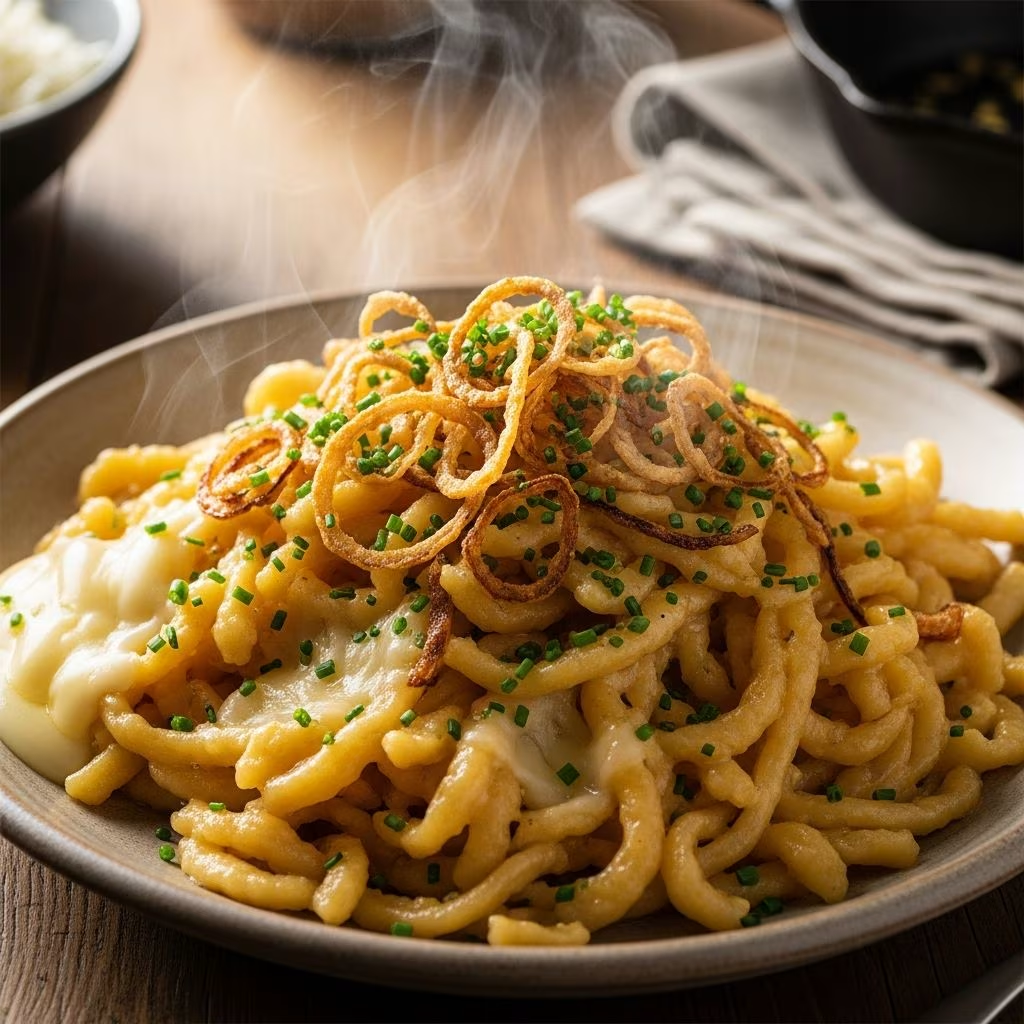
Käsespätzle represents one of Germany’s most cherished comfort foods, blending simple ingredients into a dish of remarkable depth and satisfaction. This traditional recipe combines tender egg noodles known as spätzle with melted cheese and caramelized onions, creating layers of flavor that have made it a staple across Bavaria and Austria for generations. Whether you’re seeking to recreate the tastes of a German beer hall or exploring authentic European cuisine, understanding the fundamentals of Käsespätzle preparation will elevate your culinary repertoire.
Understanding Spätzle: The Foundation of the Dish
Spätzle, pronounced “SHPAYT-zul,” refers to small, irregularly shaped egg noodles that form the essential base of this dish. Unlike traditional pasta, which relies on a rigid structure, spätzle dough features a looser consistency that allows it to be pressed directly into boiling water, creating tender, slightly chewy noodles with a distinctive homemade character. The name itself derives from the German word “spatz,” meaning sparrow, referencing the small size and shape of these beloved noodles.
Creating authentic spätzle requires understanding the proper dough consistency. The batter should achieve a balance between firmness and fluidity, flowing readily through a spätzle maker or colander while maintaining enough structure to form distinct noodle shapes. This precision distinguishes homemade spätzle from both commercial varieties and other pasta types, contributing significantly to the final dish’s texture and taste.
Essential Ingredients for Your Käsespätzle Masterpiece
The Spätzle Base Components
Preparing homemade spätzle begins with straightforward pantry staples. The dough requires all-purpose flour as the primary ingredient, though some culinary traditions incorporate semolina flour to enhance texture and structure. A combination of approximately 80 percent all-purpose flour with 20 percent semolina creates an optimal texture profile that produces slightly firmer noodles.
Eggs provide crucial binding properties and create the rich, tender character distinctive to spätzle. The liquid component traditionally consists of lukewarm water or milk, though some preparations employ carbonated water to introduce subtle air pockets that lighten the final noodles. Seasoning with salt, pepper, and a delicate touch of nutmeg rounds out the flavor profile, with nutmeg being a particularly important traditional component that adds warmth without overwhelming the palate.
Cheese Selection and Quantity
The cheese component transforms spätzle into the luxurious dish known as Käsespätzle. Emmental cheese, with its mild, slightly nutty character, serves as the traditional choice and pairs beautifully with the tender noodles. Gruyère offers another excellent option, providing additional complexity and depth. Many contemporary preparations blend multiple cheese varieties, combining younger Gouda with aged versions for multilayered flavor development, or mixing Alpine cheeses like Bergkäse with Emmental for enhanced character.
Typical recipes call for between 10.5 ounces and 12 ounces of shredded cheese per portion serving four to six people, though some enthusiasts increase this quantity for more pronounced cheese presence. The cheese should be freshly grated rather than pre-shredded, as this ensures superior melting properties and smoother integration throughout the dish.
Caramelized Onions: The Crowning Element
While spätzle and cheese form the dish’s foundation, caramelized onions provide the textural contrast and deep, complex sweetness that elevates Käsespätzle from simple to exceptional. Traditional preparations typically employ one to three large yellow onions, sliced into thin rings and slowly cooked in butter until deeply golden and concentrated in flavor. This extended cooking process, typically spanning 20 to 30 minutes, allows the natural sugars within the onions to caramelize gradually, developing the rich, almost jammy quality that distinguishes excellent Käsespätzle.
Detailed Preparation Techniques
Crafting the Spätzle Foundation
Begin by whisking together eggs with your chosen liquid—lukewarm water, milk, or carbonated water—in a medium bowl. In a larger mixing vessel, combine flour, nutmeg, salt, and pepper, creating a dry mixture that will form the noodles’ structure. Gently incorporate the wet ingredients into the flour mixture, stirring thoroughly with a wooden spoon until achieving a batter that flows smoothly yet maintains sufficient body to hold shape when pressed.
Bring a large pot of salted water to a rolling boil, preparing your workspace with a slotted spoon and bowl of ice water nearby. Position a spätzle maker or colander with large holes over the boiling water, pouring hot water over the tool first to ease the batter’s passage. Working in batches, add approximately half a cup of batter to the spätzle maker, using a spatula or spoon to press it through the holes into the simmering water below.
The noodles will initially sink, then gradually rise to the surface as they cook. Allow them to simmer for approximately two minutes after floating, ensuring they achieve proper doneness and firmness. Remove the finished spätzle with your slotted spoon and transfer immediately to ice water, gently swirling until the cooling medium melts. Drain thoroughly and transfer to a large bowl, tossing with a tablespoon of oil and light seasoning to prevent clumping.
Developing Perfect Caramelized Onions
While spätzle cooks, begin the caramelization process that creates Käsespätzle’s signature component. Melt butter in a heavy-bottomed skillet over medium heat, then add your sliced onions with a generous pinch of salt. The salt will draw moisture from the onions, initiating the breakdown process that enables caramelization.
Cook the onions for 20 to 30 minutes, stirring occasionally to ensure even browning and prevent burning. Approximately halfway through cooking, sprinkle with a small amount of sugar to accelerate the natural caramelization process. The goal is achieving deep golden-brown color throughout, with edges that may appear slightly charred. Properly caramelized onions should be soft, intensely flavored, and almost jam-like in consistency.
Assembling the Final Dish
Once spätzle and caramelized onions are complete, assembly proceeds with layering precision. Pour half of the cooked spätzle into a buttered oven-safe dish or cast-iron pan, followed by half of your shredded cheese mixture. Distribute half of the caramelized onions across this cheese layer, then repeat the sequence with remaining spätzle, cheese, and onions, creating a visually appealing and flavor-balanced construction.
Preheat your oven to 400 degrees Fahrenheit. Transfer the assembled dish to the oven and bake uncovered for approximately 10 to 30 minutes, depending on your specific preparation method and whether the spätzle was warm or chilled. The dish is complete when the cheese has melted thoroughly, creating a cohesive, creamy mixture, and some edges show signs of browning or crisping. Some preparations prefer additional finishing under the broiler, which creates a beautifully golden top layer in approximately one minute, though careful attention prevents unwanted burning.
Cheese and Flavor Combinations Worth Exploring
| Cheese Type | Flavor Profile | Best Use |
|---|---|---|
| Emmental | Mild, slightly nutty, creamy | Traditional base cheese |
| Gruyère | Complex, earthy, robust | Enhanced depth and richness |
| Swiss/Jarlsberg | Mild, sweet, buttery | Smooth melting alternative |
| Bergkäse | Alpine, nutty, pronounced | Alpine mountain character |
| Gouda Blend | Young and aged combination | Family-friendly sweetness |
Essential Equipment for Success
While Käsespätzle preparation doesn’t require specialized or expensive equipment, certain tools significantly enhance the process. A proper spätzle maker, featuring small holes and a sliding mechanism, produces uniform noodles more efficiently than alternative methods. For those without a dedicated spätzle maker, a standard box grater or colander with large holes provides adequate results, though the noodles may appear slightly less uniform.
A heavy-bottomed skillet proves essential for developing properly caramelized onions without burning, while a cast-iron pan creates superior results for the final baking and browning stages. A large pot for cooking spätzle in abundant boiling water, a slotted spoon for safe removal, and mixing bowls for dough preparation round out the necessary tools.
Customization and Variation Possibilities
While traditional recipes maintain their charm, modern interpretations embrace various creative modifications. Some cooks incorporate heavy cream or broth into the cheese mixture, creating a sauce that coats the noodles more thoroughly and prevents drying during baking. Others experiment with cheese quantities, caramelized onion ratios, or supplementary ingredients like fresh chives or parsley, which add brightness and visual appeal to the finished dish.
For those seeking vegetarian adaptations, the basic recipe requires no modification—it remains naturally meatless. Some enthusiasts enhance the savory profile by incorporating mushrooms, crispy sage leaves, or truffle oil, though these additions stray from traditional preparations.
Storage and Make-Ahead Strategies
Homemade spätzle benefits from advance preparation, as it can be made several hours or even a day in advance and refrigerated until needed. Allow refrigerated spätzle to reach room temperature before incorporating into the final assembly, ensuring even cooking and cheese melting throughout. The complete assembled Käsespätzle dish can be prepared several hours ahead, covered with plastic wrap, and refrigerated, then baked when ready to serve. Add approximately 5 to 10 extra minutes to baking time if beginning with a cold dish.
Serving Suggestions and Pairing Ideas
Käsespätzle traditionally serves as a main course, though its rich, substantial nature suits side-dish portions equally well. Authentic presentations include crusty bread for soaking up any remaining cheese sauce and simple green salads featuring vinaigrette dressing to cut through the richness. German beer, particularly wheat beers or pale ales, represents the traditional beverage pairing, though dry white wines complement the dish admirably.
For complete meal planning, consider preceding Käsespätzle with a light soup, such as potato or vegetable varieties, reserving heavier appetizers for other occasions. The dish’s substantial nature means generous portions satisfy most appetites adequately.
Frequently Asked Questions
Can I use store-bought spätzle instead of homemade?
Yes, commercially produced spätzle provides acceptable results when homemade versions aren’t feasible. However, homemade spätzle delivers superior texture, flavor, and the satisfaction of from-scratch preparation that distinguishes truly authentic Käsespätzle.
What if I don’t have a spätzle maker?
A box grater or colander with large holes serves as an effective substitute, though noodles may appear less uniform. Some cooks successfully use potato ricers with appropriate holes, though results vary depending on specific equipment design.
How can I prevent the cheese from becoming stringy or separating?
Ensure cheese is freshly grated rather than pre-shredded, and incorporate it into warm—not scorching hot—spätzle. Some cooks toss cheese with a small amount of cornstarch to prevent clumping and separation, though this remains optional.
Is Käsespätzle appropriate for dietary restrictions?
The traditional recipe naturally suits vegetarian diets. Those with gluten sensitivities can experiment with gluten-free flour blends, though results may differ from traditional preparations. Dairy-free versions remain challenging without acceptable cheese substitutes.
How long does Käsespätzle keep after preparation?
Properly stored in airtight containers, Käsespätzle maintains quality for two to three days refrigerated. Reheating in a low oven or microwave restores temperature, though the dish is ideally served fresh.
References
- Käsespätzle – German Cheesy Spaetzle — Ramshackle Pantry. Accessed April 2026. https://ramshacklepantry.com/kasespatzle-german-cheesy-spaetzle/
- Cheese Spaetzle Recipe (German Käsespätzle) — Plated Cravings. Accessed April 2026. https://platedcravings.com/cheese-spaetzle-recipe/
- Austrian Käsespätzle, or Cheese Spaetzle — Angie’s Web. Accessed April 2026. https://angiesweb.com/kaesespaetzle/
- Käsespätzle (German Cheese Spaetzle) — Recipes From Europe. Accessed April 2026. https://www.recipesfromeurope.com/kaesespaetzle/
- Käsespätzle (German Cheese Spaetzle) — Whisked Away Kitchen. Accessed April 2026. https://whiskedawaykitchen.com/kasespatzle/
- Käsespätzle (German Cheese Spaetzle) — The Daring Gourmet. Accessed April 2026. https://www.daringgourmet.com/kasespatzle-swabian-german-macaroni-and-cheese/
- Easy Käsespätzle (German Cheese Spätzle) — dirndl kitchen. Accessed April 2026. https://dirndlkitchen.com/easy-kasespatzle-german-cheese-spatzle/