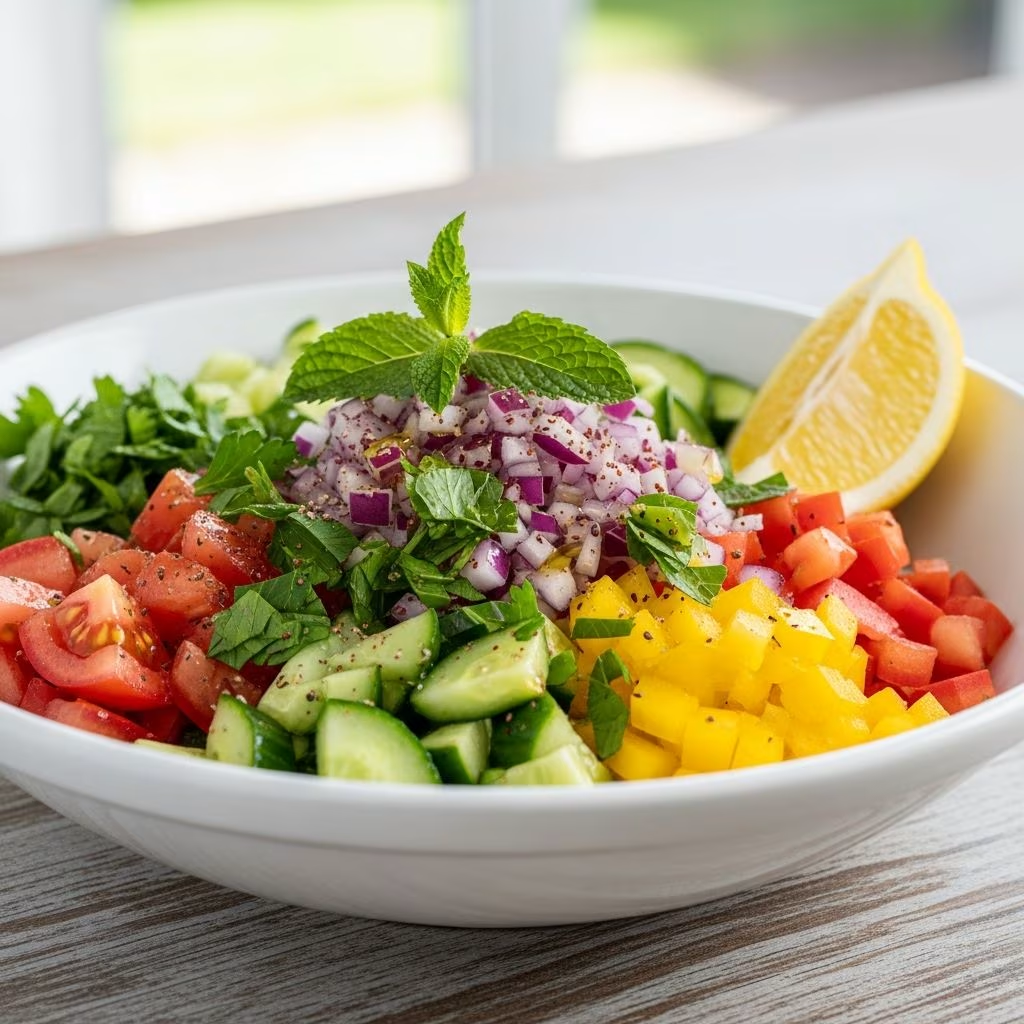
This vibrant dish captures the essence of Mediterranean freshness, combining finely chopped vegetables with aromatic herbs and a light citrus dressing. It’s a staple in Israeli cuisine, known for its simplicity and bold taste, making it ideal for everyday meals or gatherings.
Origins and Cultural Significance
Israeli salad, often called salatim in its homeland, traces its roots to the Levant region, where similar chopped vegetable mixtures have been enjoyed for generations. It gained popularity in Israel during the early 20th century on kibbutzim, where locally grown produce like cucumbers, tomatoes, and peppers formed the base. Influenced by Turkish coban salatasi and other neighboring traditions, it evolved into a versatile side dish served at breakfast, lunch, or dinner[10].
Today, it’s a symbol of healthy eating in Israeli culture, frequently appearing alongside falafel, shawarma, or hummus. Its adaptability allows for regional twists, such as adding sumac for tanginess or zhug for heat, reflecting the diverse influences in Israeli kitchens.
Essential Ingredients for Authentic Flavor
The beauty of this salad lies in its minimalism—high-quality, seasonal vegetables shine without heavy processing. Core components include:
- Tomatoes: Ripe Roma or summer varieties provide juiciness and sweetness. Seed them to avoid excess moisture.
- Cucumbers: Persian or English types are preferred for their thin skins and minimal seeds, offering crisp texture.
- Bell Peppers: Red or green add crunch and color; dice finely for even distribution.
- Onions: Red onion brings mild sharpness; white or yellow works too.
- Fresh Herbs: Parsley is essential, with mint, cilantro, or dill for brightness.
For the dressing, fresh lemon juice cuts through richness, while extra-virgin olive oil binds everything. Season with salt, pepper, and optional sumac or za’atar.
Step-by-Step Preparation Guide
Preparation takes under 15 minutes, focusing on uniform small dice for optimal flavor melding.
- Prep Vegetables: Wash all produce. Dice tomatoes, cucumbers, peppers, and onions into 1/4-inch pieces. This size ensures every bite has balanced flavors.
- Chop Herbs: Mince parsley (and mint if using) finely to release aromas without overpowering.
- Mix Base: Combine vegetables and herbs in a large bowl. Avoid over-mixing to preserve crunch.
- Dress the Salad: Drizzle with 3 tablespoons olive oil, 2-3 tablespoons lemon juice (or zest for extra zing), and salt to taste. Toss gently; let sit 5-10 minutes for juices to develop.
- Serve Immediately: Enjoy fresh to maintain texture; it doesn’t store well due to moisture release.
Pro Tip: Use a sharp knife or food processor for efficiency, but hand-chopping preserves texture better.
Classic Recipe Yield: 4-6 Servings
| Ingredient | Quantity |
|---|---|
| Roma tomatoes, diced | 4 medium (about 1 lb) |
| Persian cucumbers, diced | 4 small (about 1 lb) |
| Red bell pepper, diced | 1 large |
| Red onion, finely diced | 1/2 medium |
| Fresh parsley, chopped | 1/2 cup |
| Fresh mint (optional), chopped | 2 tbsp |
| Extra-virgin olive oil | 3 tbsp |
| Fresh lemon juice | 3 tbsp |
| Kosher salt | 3/4 tsp, or to taste |
| Black pepper | To taste |
Nutritional perks per serving (approx.): 80 calories, 6g fat, 6g carbs, 1g protein, rich in vitamins A, C, and K from fresh veggies.
Customizations and Variations
Adapt this salad endlessly:
- Spicy Kick: Add diced jalapeños or zhug sauce for heat.
- Protein Boost: Mix in chickpeas, feta, or grilled chicken.
- Herb Swaps: Dill or cilantro for parsley; experiment based on availability.
- Acidity Twist: Red wine vinegar alongside lemon.
- Crunch Add-Ins: Radishes, olives, or seeds.
For a heartier meal, serve over quinoa or as a wrap filling.
Perfect Pairing Ideas
This salad complements a range of dishes:
- With grilled meats like lamb kebabs or fish.
- As a breakfast topper for eggs or yogurt.
- Beside hummus, pita, and falafel for meze platters.
- In rice bowls or stuffed into pitas.
Its lightness balances rich flavors, making it a summer BBQ essential.
Health Benefits and Nutrition
Packed with antioxidants, fiber, and hydration, this salad supports digestion and immunity. Tomatoes provide lycopene, cucumbers aid hydration, and herbs offer anti-inflammatory compounds. Low-calorie and vegan, it’s suitable for most diets.
Storage and Make-Ahead Tips
Best eaten fresh, but store undressed components separately in airtight containers for up to 2 days. Dress just before serving to avoid sogginess. Not ideal for freezing.
Frequently Asked Questions (FAQs)
What makes Israeli salad different from Greek salad?
Israeli salad uses finely diced raw vegetables without lettuce or olives, focusing on cucumbers, tomatoes, and herbs with a lemon-olive oil dressing. Greek includes feta and oregano.
Can I use regular cucumbers?
Yes, but peel and seed them to reduce wateriness. Persian varieties are ideal for authenticity.
Is sumac necessary?
No, but it adds a lemony tang. Substitute with more lemon zest.
How long does it take to make?
About 10-15 minutes of chopping and mixing.
Gluten-free and vegan?
Yes, naturally both.
Expert Tips for the Best Results
- Choose firm, ripe produce for peak flavor.
- Taste and adjust seasoning after resting.
- Uniform cuts ensure even marination.
- Room temperature ingredients meld best.
References
- Israeli Salad (Easy Tomato Cucumber Salad) — Downshiftology. 2023. https://downshiftology.com/recipes/israeli-salad/
- Andrew Zimmern Cooks: Israeli Salad — Andrew Zimmern. 2022. https://andrewzimmern.com/recipes/andrew-zimmern-cooks-israeli-salad/
- Israeli Salad — A Cedar Spoon. 2021. https://www.acedarspoon.com/israeli-salad/
- Israeli Salad Recipe! Simple, Authentic & Healthy! — Feasting at Home. 2023. https://www.feastingathome.com/israeli-salad/
- Easy Israeli Salad Recipe with Tomato and Cucumber — Pook’s Pantry. 2022. https://www.pookspantry.com/israeli-salad/
- Israeli Salad – Simple Healthy Middle Eastern Recipe — Tori Avey. 2019-03-13. https://toriavey.com/israeli-salad-week/