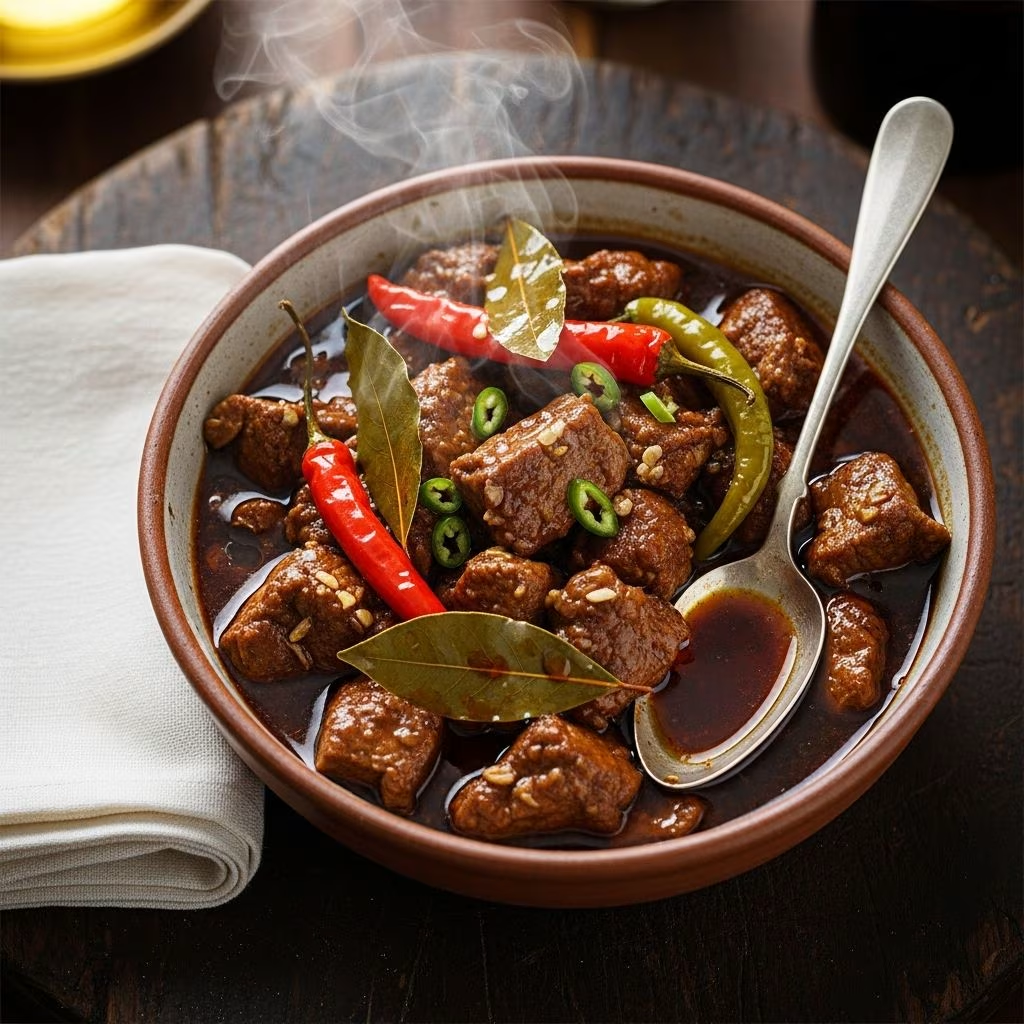
Pork pepperpot stands as a cornerstone of Guyanese culinary tradition, a hearty stew where tender pork melds with robust spices and the unique ingredient cassareep to create a dish that not only satisfies but preserves beautifully over days. This slow-cooked masterpiece, often enjoyed during festive seasons, draws from indigenous and colonial influences, offering deep, savory layers that intensify with time.
The Roots and Cultural Significance of Pepperpot
Pepperpot’s origins trace back to Guyana’s diverse heritage, blending Amerindian techniques with African and European flavors. Indigenous peoples used cassareep, a boiled-down cassava juice, as a natural preservative long before refrigeration. Colonizers adapted it into stews simmered for hours, turning it into a holiday staple served on Christmas morning with plait bread.
In Guyanese homes, pepperpot symbolizes abundance and community. Families prepare large pots that last a week, reheating daily as flavors deepen. Its enduring popularity stems from cassareep’s antimicrobial properties, allowing safe consumption without spoilage—a practical boon in tropical climates.
Essential Ingredients for Authentic Flavor
Building a superior pork pepperpot relies on quality components. Start with fresh, well-marbled pork cuts like shoulder or butt, which tenderize during long cooking. Pair with beef or oxtail for textural contrast, though pork-centric versions highlight its richness.
- Cassareep: The star, providing dark color, tangy sweetness, and preservation. Seek authentic Guyanese brands for best results.
- Aromatic Vegetables: Onions, garlic, celery leaves, and green herbs form a seasoning paste base.
- Spices: Cinnamon sticks, cloves, allspice, and orange peel infuse warmth and citrus notes.
- Sweetener and Heat: Brown sugar balances bitterness; wiri wiri or scotch bonnet peppers add authentic fire.
Optional additions like pigtail or cow foot enhance chewiness and depth, common in traditional recipes.
Step-by-Step Guide to Cooking Pork Pepperpot
Preparation demands patience, with marinating and low-slow simmering key to tenderness. Plan for 2-3 hours active cooking plus overnight resting for peak flavor.
Marinating the Meats
Cube 2-3 pounds pork shoulder and 1-2 pounds beef. Blend onions, garlic, celery leaves, thyme, and peppers into a paste. Coat meats thoroughly, adding salt, pepper, and bouillon. Refrigerate 30 minutes to overnight, allowing flavors to penetrate.
Searing for Depth
In a heavy Dutch oven, heat oil over medium-high. Brown marinated pork in batches, 3-5 minutes per side, locking in juices. Repeat with beef. This step builds a flavorful fond.
Building the Stew
Return all meats to the pot. Pour in ¾-1 cup cassareep, brown sugar, cinnamon sticks, cloves, orange peel, and enough hot water to cover. Bring to boil, then simmer covered for 2-3 hours until fork-tender. Skim foam periodically; add water if needed, but keep gravy thick.
Avoid stirring excessively post-simmer to prevent mushiness. Taste and adjust salt or sugar midway.
Variations and Meat Combinations
While pork leads, flexibility defines pepperpot. Here’s a comparison of popular mixes:
| Variation | Meats Used | Cook Time | Flavor Profile |
|---|---|---|---|
| Classic Pork-Beef | 2 lb pork, 1.5 lb beef | 2.5 hours | Balanced richness, tender |
| Offal-Rich | Pork + pigtail, cow foot | 3+ hours | Chewy, gelatinous depth |
| Goat or Lamb | 3 lb goat/lamb | 2 hours | Gamy, aromatic |
| Vegetarian Twist | Mushrooms, roots | 1.5 hours | Earthy, lighter |
Each adapts to availability, maintaining cassareep’s essence.
Preservation Secrets and Storage Tips
Cassareep’s magic lies in its ability to inhibit bacteria, letting pepperpot thrive for 7-10 days at room temperature. Reheat fully each serving to 165°F for safety. Refrigerate for longer life, up to two weeks, or freeze portions.
Pro tip: Reboil daily if left out, adding water to prevent sticking. This tradition ensures no waste and evolving taste.
Perfect Pairings and Serving Ideas
Serve piping hot with plait bread to sop up gravy, or rice for heartiness. Homemade bread recipes feature sweet, dense dough ideal for dunking.
- Vegetables: Cassava, eddoes, or plantains on side.
- Beverages: Sorrel drink or mauby for contrast.
- Holiday Twist: Accompany with cook-up rice or black cake.
Common Mistakes and Pro Tips
Avoid these pitfalls for success:
- Insufficient Cassareep: Yields pale, short-lived stew—use at least ¾ cup per 4 lbs meat.
- High Heat: Causes tough meat; maintain gentle simmer.
- Over-Stirring: Breaks down texture; stir only when adding ingredients.
- Skipping Sear: Misses flavor foundation—always brown first.
Enhance with fresh wiri wiri peppers for authentic heat, sourcing from Caribbean markets.
Nutritional Profile and Health Notes
A 1-cup serving offers ~400 calories, high protein (30g+), and iron from meats. Cassareep adds minimal carbs but watch sugar. It’s nutrient-dense with spices’ antioxidants, though offal versions boost collagen.
For lighter takes, trim fat or use leaner cuts. Consult dietary needs, as it’s rich in sodium from seasonings.
Historical Evolution in Caribbean Kitchens
From Amerindian cassiri brews to enslaved cooks’ survival stews, pepperpot evolved across the Caribbean. Guyana claims the definitive version, but Antigua and Jamaica offer spins. Modern chefs experiment with smoked meats or vegan bases, preserving its legacy.
FAQs
What is cassareep, and where to buy it?
Cassareep is reduced cassava juice, key for color and preservation. Find at Caribbean grocers or online.
Can pepperpot be frozen?
Yes, up to 3 months. Thaw overnight and reheat slowly.
How spicy is it traditionally?
Mild to fiery, depending on peppers. Start small.
Is it safe to eat for a week?
Yes, due to cassareep, with proper reheating.
Vegetarian version possible?
Absolutely—use mushrooms, eggplant, and roots.
Scaling Up for Gatherings
For crowds, double ingredients but cook in batches to ensure even tenderness. Large kalikoe pots suit traditions, yielding 12+ servings. Prep marinade day prior for ease.
References
- Guyanese Pepperpot – The Foreign Fork — Alexandria Drzazgowski. 2023. https://foreignfork.com/guyanese-pepperpot/
- Guyanese pepper pot W/pork & beef | recipe – YouTube — CANDY THA GLAM COOK. 2022-12-16. https://www.youtube.com/watch?v=csAsZC3oTsE
- Pepperpot – Immaculate Bites — Immaculate Bites. N/A. https://www.africanbites.com/pepperpot/
- Pepperpot on Christmas Morning — Alica’s Pepperpot. N/A. https://www.alicaspepperpot.com/pepperpot-on-christmas-morning/