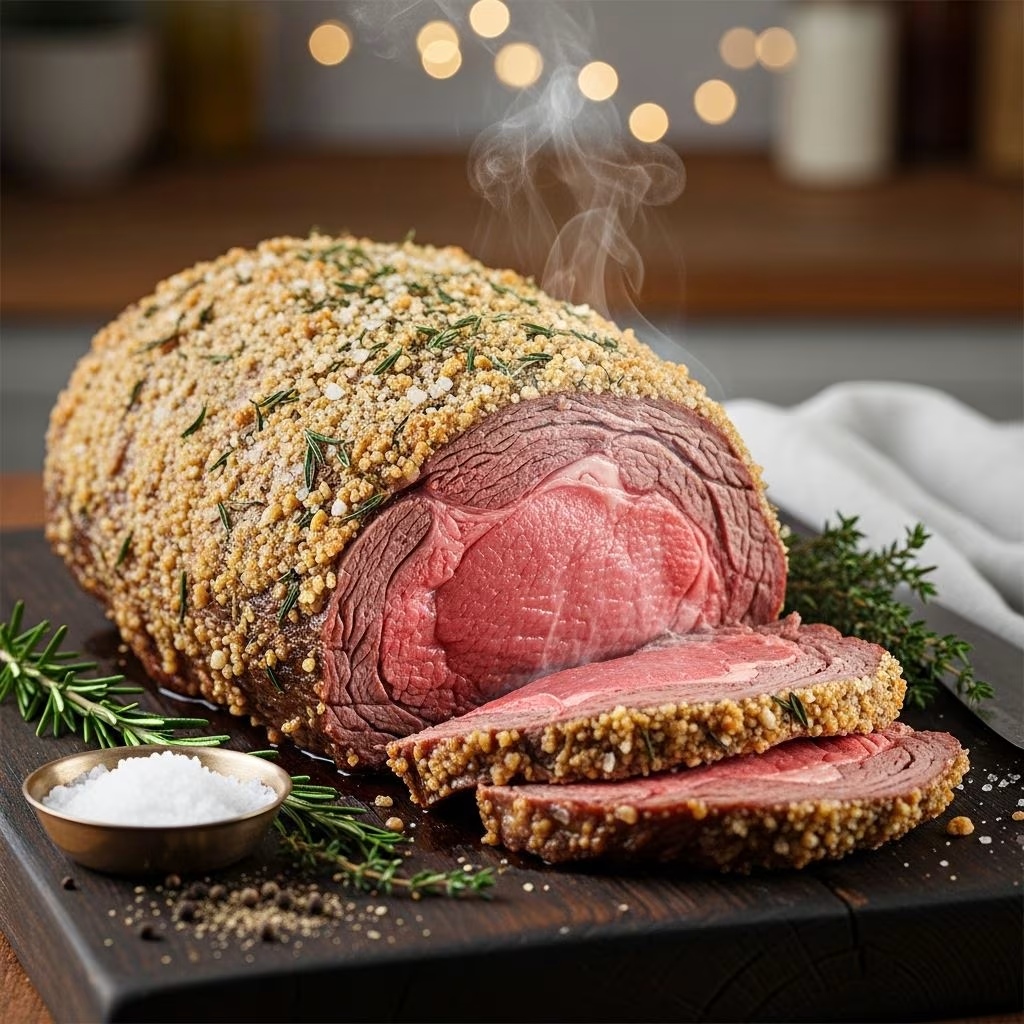
Preparing a salt-crusted prime rib elevates any meal into a gourmet experience, delivering a tender interior wrapped in a savory shell that locks in natural flavors. This technique, favored by home cooks and chefs alike, uses a thick layer of kosher salt to create a moisture barrier during roasting, resulting in exceptionally juicy results.
Why Choose Salt-Crusted Prime Rib?
The magic of this method lies in its simplicity and effectiveness. The salt forms a hard crust that traps steam and juices inside the meat, preventing dryness even during long cooking times. Unlike traditional seasoning, which can draw out moisture, the crust seals everything in, yielding a rosy pink center with minimal effort. Ideal for celebrations like holidays or dinner parties, it serves 8-12 people depending on roast size and impresses with its dramatic presentation when cracked open at the table.
Selecting the Perfect Prime Rib Roast
Start with a high-quality bone-in rib roast, typically 6-8 pounds for a standard gathering. Look for even marbling—those white fat veins that melt during cooking for added richness. The bones not only add flavor but also act as a natural rack, promoting air circulation. If boneless, opt for a New York strip loin of similar weight. Always plan for 1 pound per person to account for bone weight and leftovers.
- Bone-in vs. Boneless: Bone-in offers superior flavor; boneless cooks slightly faster.
- Grade Matters: Choose USDA Prime or Choice for best tenderness and taste.
- Freshness Check: Firm, moist surface without off odors.
Essential Ingredients for the Crust
The star is coarse kosher salt—a full 3-pound box provides the volume needed for a sturdy shell. Its large grains don’t penetrate the meat, unlike fine table salt. Liquid binders like water, Worcestershire sauce, or egg whites help the mixture pack firmly. Enhance with cracked pepper, garlic powder, or herbs for subtle infusion.
| Ingredient | Quantity (6-8 lb Roast) | Purpose |
|---|---|---|
| Kosher Salt (3 lb box) | Full box, divided | Forms protective crust |
| Bone-in Prime Rib | 6-8 lbs | Main protein |
| Worcestershire Sauce | 3 tbsp | Flavor base |
| Cracked Black Pepper | 2 tbsp | Seasoning |
| Garlic Powder | 2 tsp | Aromatic boost |
| Water | 1/2 cup | Binds salt |
Step-by-Step Preparation Guide
Patience and precision ensure success. Allow 1-2 hours for the roast to reach room temperature, promoting even cooking. Preheat your oven to 450°F (232°C) for the initial sear.
Prep the Pan: Line a large roasting pan with heavy-duty foil for easy cleanup. Spread 3 cups (half the salt box) into a 1/2-inch bed, slightly larger than the roast base.
Season the Meat: Dry the roast thoroughly with paper towels. Brush with Worcestershire, then dust generously with pepper and garlic powder. Place fat-side up on the salt bed.
Mix the Crust: Combine remaining salt with water (or oil/egg whites for variations) until it forms a packable dough-like paste. Avoid excess liquid to prevent crumbling.
Encapsulate: Press the mixture firmly from the base upward, covering sides and top completely. The crust should be 1/2-inch thick all around.
High-Heat Start: Roast at 450°F for 15 minutes to form the crust.
Low and Slow: Reduce to 325°F. Cook 2-2.5 hours until internal temperature hits 130°F for medium-rare or 145°F for medium. Use a probe thermometer inserted into the thickest part, avoiding bone.
Rest Crucially: Remove from oven, tent loosely, and rest 20-30 minutes. This redistributes juices.
Unveil: Crack off the salt shell (discard it), brush away residue, and slice against the grain.
Mastering Cooking Times and Doneness
Timing varies by roast size and oven quirks. General rule: 15-20 minutes per pound at 325°F post-sear. Monitor with a reliable thermometer—carryover cooking raises temp 5-10°F during rest.
| Doneness | Internal Temp (Post-Rest) | Color Description |
|---|---|---|
| Rare | 125°F | Cool red center |
| Medium-Rare | 135°F | Warm red, juicy |
| Medium | 145°F | Pink, slightly firm |
| Medium-Well | 150°F | Slight pink |
For larger roasts (15+ lbs), extend sear to 30 minutes and use a grill like Traeger at 450°F initially.
Flavor Variations to Elevate Your Roast
- Herb-Infused: Blend fresh rosemary, thyme, and garlic cloves into the salt paste for aromatic notes.
- Spicy Kick: Add chile powder or smoked paprika before encrusting.
- Olive Oil Bind: Mix 1 tbsp oil into salt for richer adhesion.
- Garlic Lovers: Slit roast and insert peeled cloves pre-seasoning.
- Smoker Twist: Finish on a pellet grill post-oven for smoky depth.
Pro Tips for Flawless Results
Avoid common pitfalls with these insights: Always use coarse kosher salt—fine varieties oversalt the meat. Test crust moisture; it should hold shape without dripping. No peeking mid-cook to maintain seal integrity. Post-rest, the meat slices like butter if rested properly.
- Room temp roast: Evens cooking.
- Dry surface: Ensures crust sticks.
- Thermometer essential: Guesses lead to overcooking.
- Foil pan option: Simplifies cleanup.
Perfect Pairings and Serving Suggestions
Serve with horseradish cream, au jus from pan drippings, or Yorkshire pudding. Sides like roasted vegetables, mashed potatoes, or green beans complement the richness. A bold red wine such as Cabernet Sauvignon cuts through the fat.
Frequently Asked Questions (FAQs)
Does the salt make the meat too salty?
No—the crust blocks penetration, and it’s fully removed before serving. Brush well for mild seasoning.
Can I reuse the salt crust?
Not recommended; it’s baked hard and flavorless post-cook. Discard safely.
What if my crust cracks?
Slight cracks are fine if sealed. Add minimal water next time for better packability.
Grill vs. Oven?
Oven for precision; grill/smoker adds smoke. Maintain temps closely.
How to store leftovers?
Refrigerate up to 4 days; reheat gently in low oven to avoid drying.
Troubleshooting Common Issues
Undercooked Center: Extend low-temp phase, check probe placement.
Dry Meat: Insufficient rest or high final temp.
Crust Falls Off: Too wet mix or low initial heat.
Soggy Exterior: Skip drying step—pat meticulously.
This method transforms prime rib into a showstopper, balancing ease with wow-factor. Experiment confidently for your next feast.
References
- THE BEST Kosher Salt Encrusted Prime Rib Recipe — Montana Happy. 2023-12-01. https://montanahappy.com/kosher-salt-encrusted-prime-rib-recipe/
- Salt Encrusted Prime Rib — Traeger Grills. 2024-05-15. https://www.traeger.com/recipes/salt-crusted-prime-rib
- Salt Crusted Prime Rib — Steemit. 2018-11-20. https://steemit.com/food/@generikat/salt-crusted-prime-rib
- Salt Crusted Prime Rib — EGGhead Forum. 2022-12-10. https://eggheadforum.com/discussion/1015595/salt-crusted-prime-rib
- Salt-Crusted Prime Rib — Stop & Shop Recipe Center. 2023-08-05. https://recipecenter.stopandshop.com/recipes/253297/salt-crusted-prime-rib