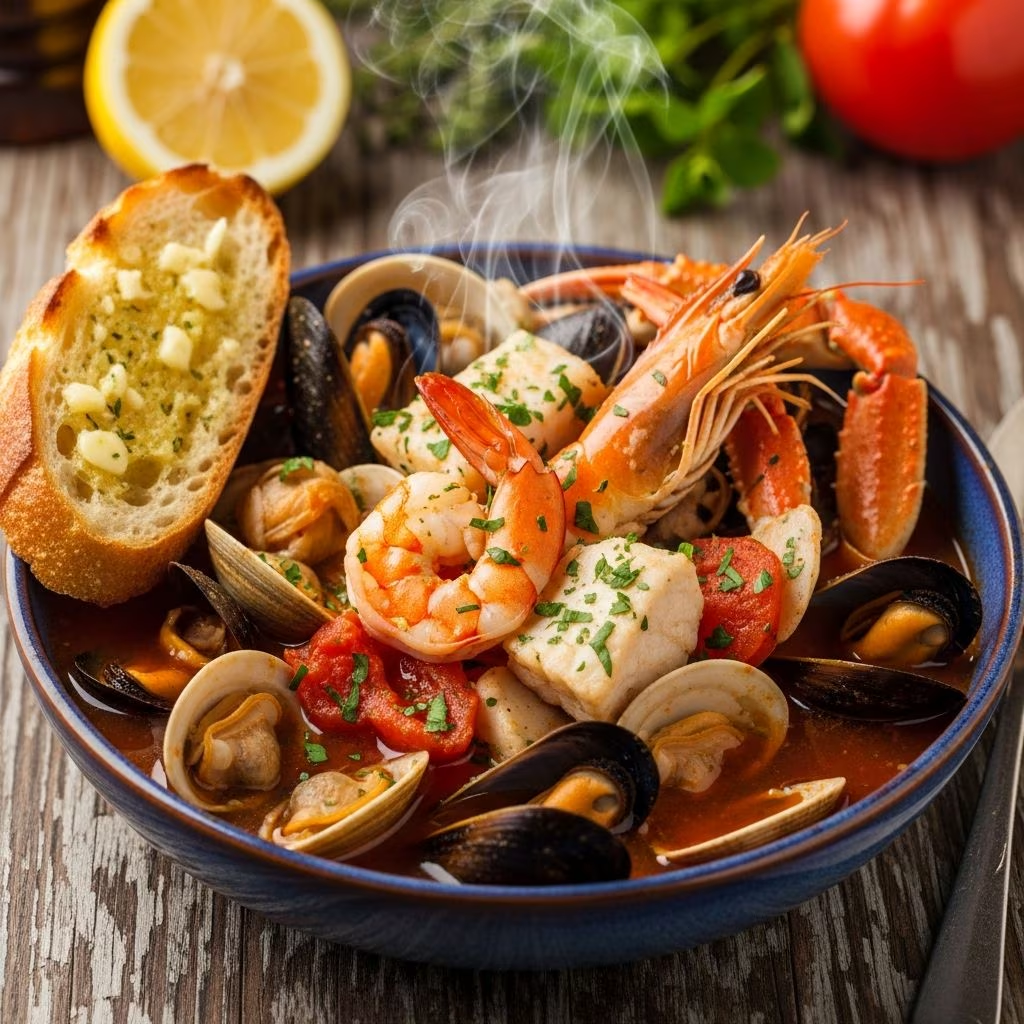
Seafood cioppino stands as a pinnacle of coastal cuisine, blending the freshest ocean bounty into a single, simmering pot of flavor. This stew, celebrated for its robust tomato base infused with herbs, wine, and garlic, captures the essence of Italian immigrant traditions from San Francisco’s fishing docks. Whether you’re hosting a dinner party or craving a luxurious weeknight meal, this guide delivers everything needed to craft an authentic version at home.
The Heritage of Cioppino: From Fishermen’s Pots to Fine Dining
Cioppino emerged in the late 19th century among Italian and Portuguese fishermen along California’s waterfront. These hardworking seafarers would pool their unsold catches—crab, clams, shrimp, and whatever fish the day yielded—into a communal pot. The name ‘cioppino’ likely derives from the Genoese word ‘ciuppin,’ meaning ‘to chop,’ reflecting the rustic, chopped-up nature of the dish.
Over time, this humble fisherman’s stew evolved into a staple of San Francisco’s culinary scene, gracing menus from casual eateries to upscale restaurants. Its appeal lies in the balance of briny seafood against a tangy, spice-kissed broth, making it ideal for the Feast of the Seven Fishes on Christmas Eve or any festive gathering. Today, home cooks recreate this legacy, emphasizing fresh, local ingredients for peak authenticity.
Essential Ingredients for Authentic Flavor
Success with cioppino hinges on quality seafood and a well-built broth. Start with a seafood stock made from shells to infuse depth, then layer in aromatics and tomatoes for the base.
Seafood Selection
- Crab: 1-2 lbs Dungeness or king crab legs, cracked for easy eating and stock-making.
- Shrimp: 1 lb large, shell-on for stock; devein after peeling.
- Clams and Mussels: 1 lb each littleneck clams and mussels, scrubbed and debearded; discard any that don’t open during cooking.
- Fish: 1 lb firm white varieties like halibut, cod, sea bass, or black cod, cut into 1-inch chunks.
- Optional Add-Ins: Scallops, lobster tails, or squid for variety.
Broth Builders
- Onions, fennel, celery, and garlic for aromatic foundation.
- Canned San Marzano tomatoes or crushed tomatoes for sweetness and body.
- Dry red or white wine (about 1-2 cups) to deglaze and add complexity.
- Herbs: Bay leaves, thyme, oregano, parsley; red pepper flakes for heat.
- Seafood stock (4 cups), fish sauce or clam juice as enhancers.
Freshness is non-negotiable—visit a trusted fishmonger and avoid anything with a strong odor.
Step-by-Step Guide to Cooking Cioppino
Preparation takes about 30 minutes, with 45-60 minutes of cooking. This yields 6-8 servings.
- Prepare Seafood Stock: Use kitchen shears to crack crab legs and remove meat; reserve shells. Peel shrimp, reserving shells and tails. In a stockpot, cover shells with water (plus 1 inch), add salt, and simmer 20-30 minutes. Add clams/mussels briefly to steam open, then strain.
- Sauté Aromatics: In a large Dutch oven, heat olive oil over medium. Add diced onion, fennel, celery, and garlic; cook until softened, 5-7 minutes. Stir in tomato paste, red pepper flakes, and herbs.
- Build the Broth: Deglaze with wine, scraping bits. Add tomatoes, stock, bay leaves, and seasonings. Simmer covered 20-30 minutes to meld flavors.
- Add Seafood in Stages: Bring to a simmer. First, clams and mussels (cover 5 minutes until open). Add fish chunks, simmer 3 minutes. Stir in shrimp and crab; cook 2-3 more minutes until shrimp pinkens and fish flakes.
- Finish and Serve: Discard unopened shells and bay leaves. Garnish with chopped parsley. Ladle into bowls with crusty sourdough for sopping.
Pro Tips for Cioppino Perfection
Elevate your stew with these expert techniques drawn from seasoned recipes.
- Stock Secret: Homemade stock trumps store-bought for unmatched savoriness; simmer longer for richer results.
- Don’t Overcook: Seafood toughens quickly—add in order of cooking time: shellfish first, then fish and shrimp last.
- Spice Control: Start with ½ tsp red flakes; adjust for heat preference.
- Make-Ahead: Broth can simmer a day ahead; add seafood fresh to preserve texture.
- Pairings: Rustic red wines like Zinfandel or crisp whites like Pinot Grigio complement the brininess.
Customizing Your Cioppino: Variations and Dietary Twists
Adapt cioppino to tastes or restrictions while keeping its soul intact.
| Variation | Key Changes | Why It Works |
|---|---|---|
| Spicy Louisiana-Style | Add andouille sausage, more cayenne | Brings bold Cajun flair to the Italian base |
| Light & Skinny | Less oil, more veggies, no wine | Reduces calories without sacrificing flavor |
| Gluten-Free | GF bread, check stock for additives | Naturally GF; perfect for allergies |
| Lobster Luxury | Swap crab for lobster tails | Elevates for special occasions |
| Vegetarian | Mushrooms, artichokes for ‘seafood’ | Mimics texture in plant-based broth |
These tweaks ensure broad appeal, from family dinners to elegant soirées.
Nutrition and Serving Suggestions
A 1.5-cup serving offers about 350-450 calories, high in protein (30g+), omega-3s, and vitamins from seafood and tomatoes. Serve family-style with garlic bread, a green salad, and lemon wedges. For pasta lovers, spoon over linguine.
Frequently Asked Questions (FAQs)
What is the best wine for cioppino?
Dry white like Sauvignon Blanc or light red like Chianti cuts through richness without overpowering seafood.
Can I make cioppino in advance?
Yes—prepare broth up to 2 days ahead; refrigerate and reheat gently before adding seafood.
How do I clean mussels and clams?
Scrub shells under cold water; debeard mussels by pulling fibrous threads. Soak clams in salted water to purge sand.
Is cioppino spicy?
Moderately, from red pepper flakes—adjust to taste for mild or fiery versions.
What if I can’t find Dungeness crab?
King, snow, or even lump crab meat works; prioritize fresh, sustainable options.
Storage and Reheating Best Practices
Store leftovers in airtight containers up to 2 days in the fridge. Reheat gently on stovetop with a splash of stock to prevent drying. Freezes well for 1 month—thaw overnight before reheating. Avoid microwaving to preserve delicate seafood textures.
Mastering cioppino transforms any cook into a seaside chef, delivering restaurant-worthy results with everyday effort. Gather premium ingredients, follow the stages meticulously, and let the pot work its magic for a dish that’s as nourishing as it is nostalgic.
References
- Cioppino – Tastes Better From Scratch — Tastes Better From Scratch. 2023. https://tastesbetterfromscratch.com/cioppino/
- San Francisco Cioppino: Easy Authentic Seafood Stew — Coley Cooks. 2023. https://coleycooks.com/cioppino/
- Cioppino (Italian Fish Stew) — Feasting At Home. 2023. https://www.feastingathome.com/cioppino-recipe/
- Cioppino — Skinnytaste. 2023. https://www.skinnytaste.com/cioppino/
- Cioppino: A Special Occasion Italian Seafood Soup — Homemade Italian Cooking. 2023. https://www.homemadeitaliancooking.com/cioppino-a-special-occasion-italian-seafood-soup/