Cochinita pibil stands as one of Mexico’s most celebrated culinary treasures, originating from the Yucatán Peninsula where indigenous cooking traditions meet Spanish colonial influences. This iconic dish features succulent pork shoulder transformed through a centuries-old cooking method that infuses the meat with complex flavors from annatto paste, tropical citrus, and aromatic spices. The name itself carries historical significance—”cochinita” refers to young pig, while “pibil” derives from the Mayan word for the underground pit where the dish was traditionally cooked. Today, home cooks can recreate this restaurant-quality masterpiece using modern kitchen equipment, producing remarkably authentic results that honor the dish’s rich heritage.
Understanding the Essential Ingredients and Their Roles
The foundation of exceptional cochinita pibil begins with selecting quality ingredients, each contributing distinct layers of flavor and texture to the final dish. The primary component, pork shoulder, becomes the canvas for the marinade, requiring careful selection to ensure optimal results.
The Pork Selection
Pork shoulder, also known as pork butt, serves as the ideal cut for this preparation method. The meat’s marbling and connective tissue break down during the extended cooking process, yielding that signature fall-apart tenderness. Plan for approximately one pound of pork per two servings, accounting for moisture loss during cooking. Trim excessive exterior fat while preserving internal marbling, as these fat deposits contribute essential moisture and flavor throughout the cooking process. Cutting the pork into uniform pieces, typically one to three-inch cubes, ensures even marinade penetration and consistent cooking throughout the batch.
The Achiote Paste Foundation
Achiote paste, made from annatto seeds ground with spices and oil, provides the distinctive orange hue and earthy, slightly peppery flavor that defines authentic cochinita pibil. This ingredient cannot be substituted without compromising the dish’s integrity and authentic character. Achiote paste is readily available in the international sections of most supermarkets or through specialty Latin American markets. When selecting achiote paste, verify that it contains primarily ground annatto seeds with minimal additives, ensuring superior flavor development during cooking.
Citrus Juice Components
The acidic environment created by fresh citrus juices serves multiple culinary functions—tenderizing the meat, preserving its color, and infusing bright, complex flavors throughout. Traditional recipes employ sour orange juice, a staple in Yucatán cuisine. For home preparation, combining fresh orange juice with fresh lime juice creates an acceptable substitution that delivers comparable acidity and flavor profiles. Using freshly squeezed juices rather than bottled varieties significantly enhances the final result, as processed juices lack the vibrant aromatics and complex notes found in fresh-pressed alternatives.
The Aromatic Spice Blend
Beyond achiote, the marinade incorporates carefully balanced spices that create the characteristic warmth and complexity of traditional cochinita pibil. Cumin provides earthy undertones, while garlic and onion contribute pungent, savory notes. Cinnamon and cloves introduce subtle sweetness and warmth. Some preparations include coriander seeds, peppercorns, allspice, and bay leaves for additional depth. The precise proportions of these seasonings can vary based on regional traditions and family preferences, allowing for personalization while maintaining the dish’s essential character.
Creating the Marinade: Technique and Timing
The marinade represents the critical foundation for flavor development and meat tenderization. Proper preparation and application techniques directly impact the final result’s quality.
Marinade Preparation Methods
Begin by combining all marinade ingredients in a high-powered blender or food processor. For the most authentic approach, toast whole spices before grinding them into a powder, then combine with remaining ingredients. This technique intensifies aromatic compounds and develops deeper, more complex flavors compared to using pre-ground spices. Blend the mixture until achieving a smooth, pourable consistency, ensuring all solid components are thoroughly incorporated and no large chunks remain. The resulting paste should coat the back of a spoon and move slowly when poured.
Marinating Duration and Storage
Proper marination timing significantly affects flavor penetration and meat texture. Most recipes recommend a minimum of six hours, though extended marination up to twenty-four hours yields superior results. During this time, the acidic citrus juices begin breaking down muscle fibers and connective tissue, while the spices gradually permeate the meat. Store marinating pork in the refrigerator in a covered container or sealed plastic bag, ensuring all pieces contact the marinade. Gently massage the marinade into the meat periodically during marination to promote even coating and flavor distribution.
Cooking Methods for Home Preparation
Traditional cochinita pibil requires cooking in a pib, an underground stone oven that maintains consistent heat and moisture. Modern home cooks can achieve nearly identical results using contemporary kitchen equipment.
Dutch Oven Method
The Dutch oven approach most closely mimics the traditional pib’s cooking environment. Line the bottom and sides of a heavy Dutch oven with softened banana leaves, creating a protective barrier that imparts subtle flavor while retaining moisture. Transfer the marinated pork along with all accumulated marinade into the prepared pot, then fold the banana leaves over the top to create a complete seal. Cover with the Dutch oven lid and place in a preheated 275-degree Fahrenheit oven. Cook for approximately three and one-half to four hours, until the pork shreds easily with a fork. The low, gentle heat combined with the sealed environment creates steam that keeps the meat incredibly moist while the extended cooking time ensures complete tenderness.
Slow Cooker Alternative
For maximum convenience, a slow cooker produces excellent results with minimal active preparation. Arrange softened banana leaves in the slow cooker’s interior, add the marinated pork with its liquid, and fold the banana leaves over the meat. Add approximately one-half cup of water to maintain adequate moisture, then cover and cook on the low setting for approximately eight hours. This method yields equally tender, flavorful results while requiring virtually no monitoring or attention once cooking begins.
Oven-Roasting Without Banana Leaves
When banana leaves are unavailable, aluminum foil provides an acceptable alternative, though the subtle flavor contribution of banana leaves will be absent. Wrap the marinated pork securely in heavy-duty foil, creating an airtight packet that traps steam. Place the wrapped packet in a baking dish and roast at 275 degrees Fahrenheit for three and one-half hours. This method still produces tender, flavorful results suitable for traditional serving presentations.
Traditional Accompaniments and Serving Suggestions
Cochinita pibil reaches its full potential when paired with carefully chosen accompaniments that complement and enhance the main dish.
Pickled Red Onions
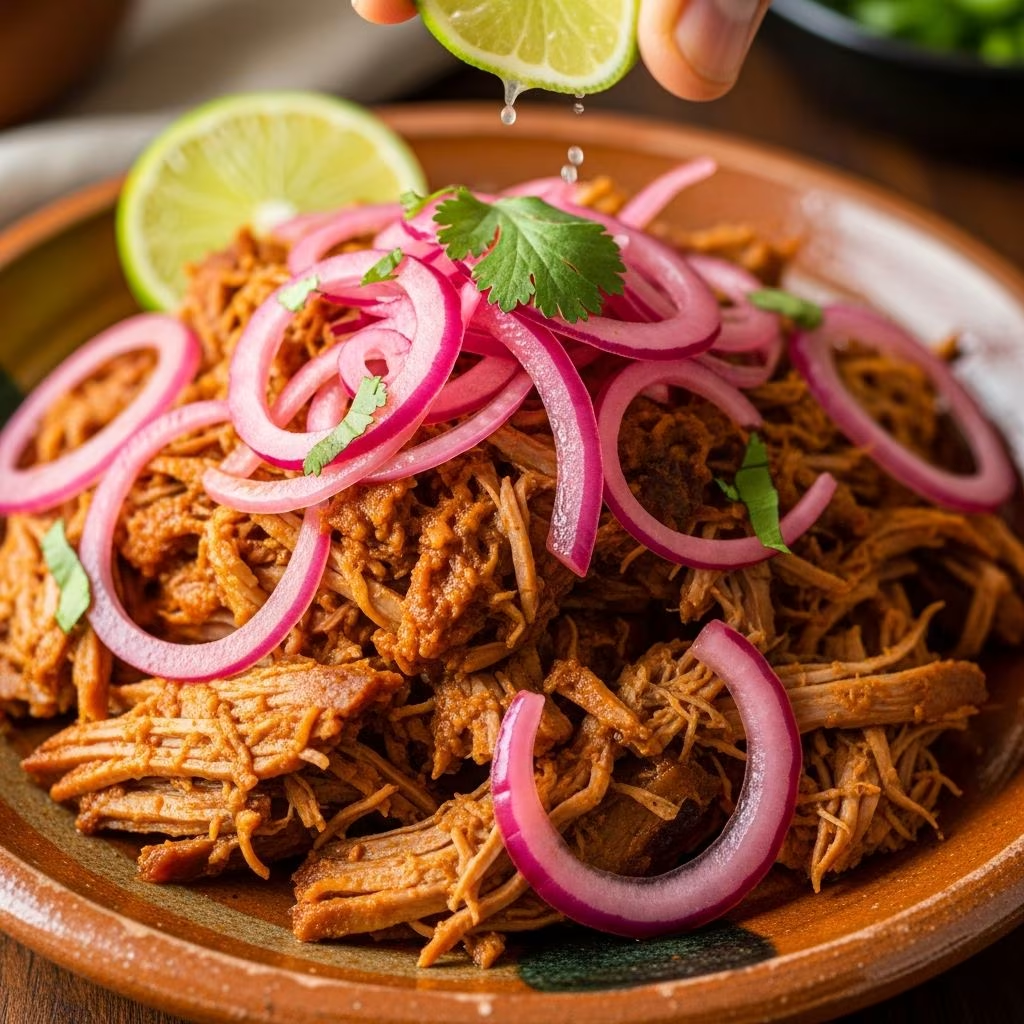
Acidic, slightly sweet pickled onions provide essential textural contrast and flavor balance to the rich pork. Prepare by slicing fresh red onions thinly and combining with red wine vinegar, lime juice, orange juice, sugar, salt, and coriander seeds. The pickling liquid should completely cover the onion slices. Allow the mixture to rest for at least one hour before serving, though overnight refrigeration develops more pronounced flavors. The bright acidity cuts through the pork’s richness while the slight sweetness echoes the subtle cinnamon notes in the meat.
Corn Tortillas and Cheese
Warm corn tortillas provide the traditional vehicle for enjoying cochinita pibil, allowing diners to customize each bite according to personal preference. Crumbled cotija cheese, with its salty, tangy character, adds textural interest and complementary flavor. Some preparations incorporate fresh cheese like queso fresco for its mild, creamy qualities.
Fresh Garnishes and Condiments
Fresh cilantro, lime wedges, and traditional habanero salsa round out the serving presentation. The cilantro’s bright, herbaceous notes refresh the palate between bites, while lime juice adds additional acidity. Habanero salsa introduces gentle heat and smoky complexity that balances the pork’s richness.
Frequently Asked Questions About Cochinita Pibil
Can I prepare cochinita pibil without banana leaves?
Yes, aluminum foil or parchment paper provides adequate moisture retention, though banana leaves contribute subtle flavor nuances that enhance authenticity. The dish remains delicious regardless of wrapping material.
How far in advance can I prepare the marinade?
The marinade can be prepared up to three days before use and stored in a sealed container in the refrigerator. This advance preparation allows you to streamline the cooking process significantly.
Is it possible to freeze cochinita pibil for later consumption?
Absolutely. Cooked cochinita pibil freezes excellently for up to three months when stored in airtight containers with the cooking liquid. Thaw overnight in the refrigerator and reheat gently on the stovetop, adding a small amount of water if needed to restore moisture.
What adjustments should I make for a crowd?
The recipe scales proportionally—simply multiply all ingredients by the desired number of servings. Cooking time may extend slightly with significantly larger quantities, so check for doneness rather than relying solely on time guidelines.
Can I substitute other citrus juices?
While sour orange juice is traditional, the orange-lime combination provides an acceptable alternative. Lemon juice alone can replace lime, though the flavor profile shifts slightly. Avoid using bottled or processed citrus juices, which lack the bright complexity of fresh fruit.
Nutritional Considerations and Health Aspects
Cochinita pibil provides substantial protein and essential minerals including iron, zinc, and B vitamins from the pork. The achiote paste contributes fiber and beneficial plant compounds. The extended marination and slow cooking make the protein particularly bioavailable for efficient absorption. Balanced portions paired with fresh vegetable sides and pickled garnishes create nutritionally complete meals. The cooking method’s retention of natural meat juices minimizes the need for added fats, making this traditional preparation relatively healthful compared to many contemporary pork dishes.
Storage and Reheating Recommendations
Properly stored cochinita pibil maintains excellent quality for three to four days in the refrigerator when kept in an airtight container with its cooking liquid. The moisture from the braising liquid prevents the meat from drying out during storage. To reheat, gently warm the pork in a skillet over medium-low heat or in a low oven, adding a splash of water if the mixture appears dry. Avoid high-heat reheating, which can toughen the delicate, tender meat fibers.
Regional Variations and Personal Adaptations
Throughout the Yucatán Peninsula, subtle variations reflect local preferences and ingredient availability. Some cooks incorporate additional spices like cumin or allspice, while others adjust the balance of citrus juices based on available fruit. Modern adaptations sometimes include liquid smoke for subtle depth, though this represents a contemporary addition rather than a traditional element. Experimenting with ingredient proportions while maintaining the core components—achiote, citrus, and slow cooking—allows you to develop a personal version that respects tradition while reflecting individual taste preferences.
References
- Cochinita Pibil Recipe (Yucatán-Style Pulled Pork) — Isabel Eats. 2024. https://www.isabeleats.com/cochinita-pibil/
- Cochinita Pibil (Yucatan Pulled Pork) — Kevin is Cooking. 2024. https://keviniscooking.com/cochinita-pibil-yucatan-treasure/
- Cochinita Pibil – Sisters and Spice — Sisters and Spice. 2024. https://sistersandspice.com/cochinita-pibil/
- Mexican Cochinita Pibil (Roasted Yucatan Style Pork) — Blackberry Babe. 2022. https://blackberrybabe.com/2022/03/09/cochinita-pibil/
- Cochinita Pibil on the grill (for a crowd) — Rick Bayless. 2024. https://www.rickbayless.com/recipe/cochinita-pibil/
- Oven-Roasted Cochinita Pibil (Yucatán-Style Pulled Pork) — Masienda. 2024. https://masienda.com/blogs/learn/cochinita-pibil