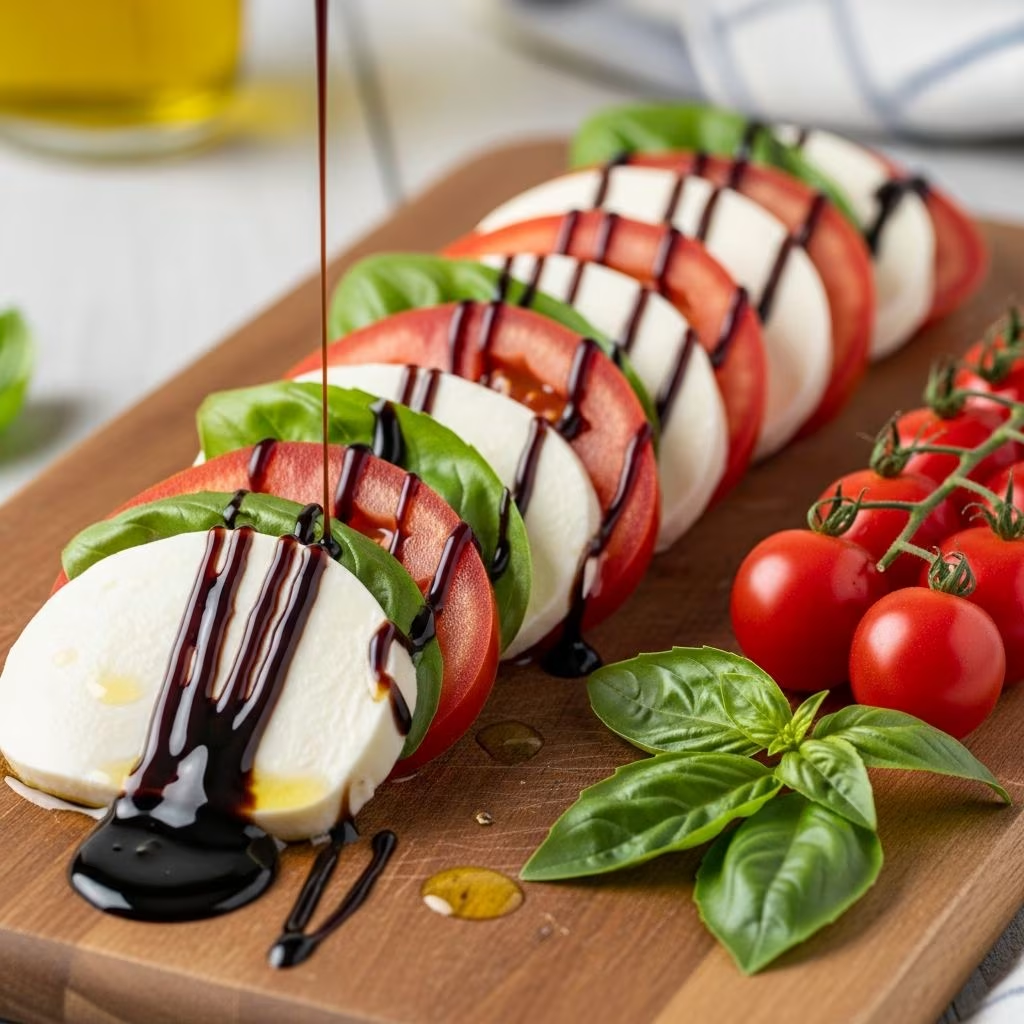
Caprese salad stands as a timeless embodiment of Italian culinary simplicity, where the finest ingredients shine without elaborate preparation. This dish, originating from the island of Capri, celebrates the harmony of ripe tomatoes, creamy mozzarella, and aromatic basil, elevated by a luscious balsamic glaze. Whether you’re hosting a summer barbecue or seeking a light starter, this recipe delivers vibrant flavors in under 30 minutes.
The Allure of Authentic Caprese
At its core, Caprese salad reflects Italy’s commitment to fresh, high-quality produce. The classic combination evokes the colors of the Italian flag—red tomatoes, white cheese, and green herbs—making it not just a dish but a visual feast. Traditionally served as an antipasto, it pairs beautifully with crusty bread or grilled meats, offering a burst of summer in every bite.
Modern twists, like the balsamic reduction, add a sweet-tangy depth that complements the natural juices of the tomatoes. This glaze transforms ordinary balsamic vinegar into a syrupy drizzle, intensifying flavors without overpowering the salad’s purity. Home cooks appreciate its versatility; prepare it ahead and use it on everything from grilled vegetables to desserts.
Selecting Premium Ingredients for Superior Taste
Success with Caprese hinges on ingredient quality. Opt for tomatoes at peak ripeness—vine-ripened or heirloom varieties provide the juiciest, most flavorful base. Look for firm yet yielding flesh with a deep red hue, avoiding pale or mealy specimens.
- Tomatoes: Choose heirloom or vine-ripened, sliced 1/4-inch thick for even layering.
- Mozzarella: Fresh mozzarella in brine or buffalo variety offers creaminess; avoid pre-shredded for authenticity.
- Basil: Pluck large, vibrant leaves from a living plant if possible; Genovese basil delivers the ideal peppery note.
- Balsamic Vinegar: Traditional Modena balsamic reduces beautifully, but any good-quality aged vinegar works.
Seasonings remain minimal: sea salt enhances natural sweetness, cracked black pepper adds bite, and extra-virgin olive oil binds it all with fruity undertones.
Step-by-Step Guide to Balsamic Glaze Mastery
Crafting the glaze is straightforward and rewarding. It requires just two ingredients and patience for reduction.
- Combine 1 cup balsamic vinegar with 1-2 tablespoons honey or sugar in a small saucepan.
- Heat over medium-high until boiling, then lower to a simmer.
- Stir occasionally, reducing by half (10-15 minutes) until syrupy. Cool completely before use.
This yields about 1/3 cup, enough for multiple salads. Store in the fridge for up to two weeks; rewarm gently if it thickens.
Assembling the Perfect Caprese Platter
Presentation elevates Caprese from side dish to showstopper. Use a large, shallow platter for dramatic layering.
| Step | Action | Tip |
|---|---|---|
| 1. Prep | Slice tomatoes and mozzarella uniformly (1/4-inch). | Pat dry to prevent sogginess. |
| 2. Layer | Alternate tomato, cheese, and basil leaves in a circle or overlapping fans. | Start and end with tomato for symmetry. |
| 3. Season | Sprinkle salt, pepper evenly. | Use flaky sea salt for texture. |
| 4. Dress | Drizzle olive oil, then balsamic glaze in zigzags. | Go light to let ingredients star. |
Serve at room temperature for optimal flavor melding. Chilling dulls the tomatoes’ brightness.
Nutritional Profile and Health Benefits
Caprese salad is naturally low-calorie, packing antioxidants from tomatoes (lycopene fights inflammation) and healthy fats from olive oil. Mozzarella provides protein and calcium, while basil offers anti-bacterial compounds. A 1-cup serving clocks in at around 200 calories, making it ideal for balanced meals.
- Rich in vitamins A, C, K from tomatoes and basil.
- Heart-healthy monounsaturated fats from EVOO.
- Probiotic potential from fresh mozzarella cultures.
Creative Variations to Elevate Your Salad
While purists stick to basics, experimentation keeps Caprese exciting.
- Watermelon Caprese: Swap half the tomatoes for watermelon cubes for a refreshing twist.
- Grilled Version: Char tomato and mozzarella slices lightly for smoky depth.
- Berry Infusion: Add strawberries alongside tomatoes for sweet acidity.
- Stuffed Bites: Roll mozzarella with basil and tomato in prosciutto.
- Pesto Drizzle: Blend basil with nuts and garlic for a greener glaze alternative.
These adaptations maintain the dish’s essence while suiting dietary needs, like vegan versions using tofu or cashew cheese.
Pairing Suggestions for Complete Meals
Caprese shines as an appetizer but pairs seamlessly with mains. Serve alongside grilled fish, pasta primavera, or marinated eggplant. For wine, crisp whites like Pinot Grigio or Prosecco cut through the richness; reds like Chianti complement bolder glazes.
Incorporate into charcuterie boards with salami, olives, and artisan breads for crowd-pleasing spreads.
Storage, Make-Ahead, and Troubleshooting
Freshness is key—assemble just before serving. If prepping ahead, store components separately: glaze in jar, slices wrapped in damp paper towels. Reassemble and dress last-minute.
Common issues:
- Watery salad: Salt tomatoes 10 minutes prior, discard juices.
- Glaze too thin: Simmer longer or add cornstarch slurry.
- Basil wilting: Add whole leaves last; tear gently.
Seasonal Sourcing and Sustainability Tips
Source locally for peak flavor—farmers’ markets yield superior tomatoes mid-summer. Grow basil indoors year-round. Opt for sustainable mozzarella from grass-fed sources to minimize environmental impact.
FAQ: Your Caprese Questions Answered
Can I use store-bought balsamic glaze?
Yes, it’s a time-saver, but homemade offers fresher taste and no additives.
Is Caprese salad gluten-free?
Absolutely, with no grains or binders required.
How far in advance can I make the glaze?
Up to two weeks refrigerated; it thickens but thins with gentle heat.
What if I can’t find fresh mozzarella?
Ciliegine or bocconcini balls work; drain well.
Vegetarian or vegan options?
Skip cheese for vegan; use coconut aminos in glaze for soy-free.
References
References
- USDA FoodData Central: Tomatoes, raw — United States Department of Agriculture. 2023-05-15. https://fdc.nal.usda.gov/fdc-app.html#/food-details/170457/nutrients
- Mozzarella Cheese Nutrition Facts — National Dairy Council. 2024-02-10. https://www.nationaldairycouncil.org/content/2024/cheese-nutrition
- Health Benefits of Basil — PubMed Central (PMC). 2022-08-20. https://www.ncbi.nlm.nih.gov/pmc/articles/PMC9502788/
- Olive Oil and Cardiovascular Health — American Heart Association. 2025-01-12. https://www.heart.org/en/healthy-living/healthy-eating/eat-smart/fats/olive-oil
- Balsamic Vinegar Production Standards — Consorzio Tutela Aceto Balsamico di Modena. 2023-11-05. https://www.acetobalsamico.modena.it/en/