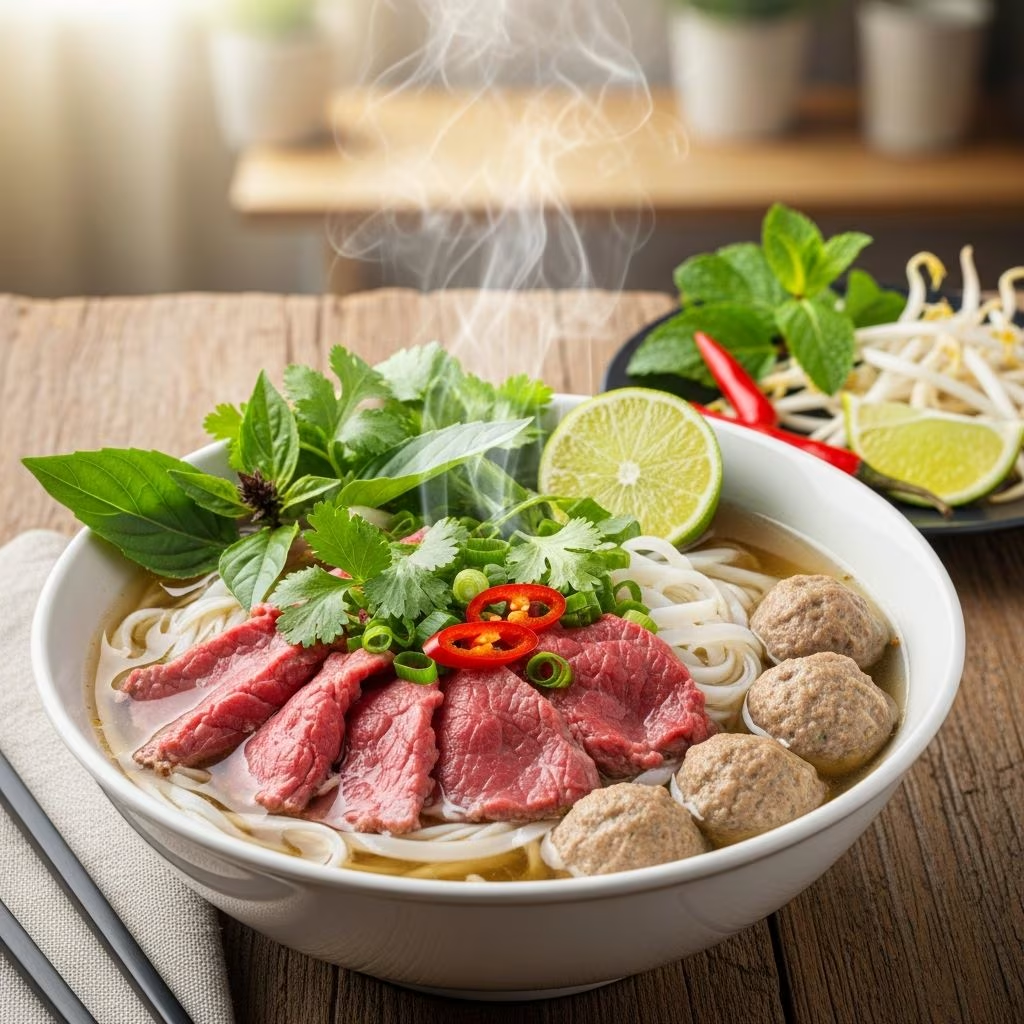
Beef pho, known as pho bo in Vietnamese, stands as one of the world’s most beloved noodle soups. Originating from northern Vietnam in the early 20th century, it has evolved into a national dish cherished for its harmonious blend of savory broth, tender beef, and vibrant fresh toppings. This recipe guides you through crafting an authentic version at home, emphasizing a crystal-clear yet deeply flavorful broth simmered for hours with quality beef bones and aromatic spices.
The Essence of Pho: Broth as the Foundation
The heart of any great pho lies in its broth. A superior pho broth achieves clarity while packing intense umami from beef bones, charred aromatics, and toasted spices. Traditional methods involve parboiling bones to remove impurities, roasting onions and ginger for sweetness, and gently simmering with spices like star anise, cinnamon, and cloves. Patience is key—expect 6 to 12 hours of simmering for the best results, yielding a broth that’s light on the palate but rich in layered flavors.
Selecting the Right Beef Cuts for Pho
Choosing quality beef is crucial. Opt for a mix of marrow-rich bones (like femur or knuckle bones) and meaty cuts such as oxtail, beef shank, chuck, or short ribs. These provide gelatinous body and deep savoriness. For serving, use thinly sliced raw eye round, brisket, or flank steak that cooks gently in the hot broth. Aim for about 4-5 pounds of bones and 2-3 pounds of meaty cuts per large batch to serve 8-10 people.
Recommended Beef Components
- Marrow bones: Femur or knuckle for richness.
- Meaty bones: Oxtail, short ribs for tenderness.
- Chuck or shank: For slicing and simmering.
- Eye of round or sirloin: Thinly sliced raw for topping.
Essential Spices and Aromatics
Pho’s signature perfume comes from a precise spice blend. Toast spices briefly to unlock their oils: star anise (3-5 pods), cinnamon sticks (2-3), cloves (5-6), coriander seeds (2 tsp), fennel seeds (2 tsp), and black cardamom (1-2 pods). Char yellow onions, ginger, and sometimes garlic under a broiler or over an open flame to add smoky sweetness without bitterness.
Step-by-Step Broth Preparation
- Parboil the bones and meat: Rinse 10 lbs beef bones and 2-3 lbs meaty cuts. Cover with water, bring to a boil for 10-15 minutes, then drain and rinse to discard scum. This step ensures a clean broth.
- Char aromatics: Halve 2 large onions and 4-inch ginger pieces; broil or flame-char until blackened. Peel off most char.
- Toast spices: In a dry pan, toast spices over medium heat for 2-3 minutes until fragrant. Place in a spice bag or cheesecloth.
- Assemble and simmer: In a large stockpot, add parboiled bones/meat, charred aromatics, spice bag, 1-2 tbsp salt, 3-4 tbsp fish sauce, and 1-2 tbsp sugar or rock sugar. Cover with 6-8 quarts cold water. Bring to a boil, skim foam, then simmer uncovered on low for 6-12 hours, adding water as needed.
- Strain and rest: Remove solids, strain broth through cheesecloth. Cool and skim fat, or leave some for flavor. Refrigerate overnight for easier fat removal.
Preparing the Noodles and Beef
Use flat rice noodles (banh pho), about 1/4-inch wide. Soak in warm water for 30 minutes or blanch briefly in boiling water until just tender—do not overcook, as they continue softening in the broth. For beef toppings, chill raw slices to make paper-thin cuts against the grain. Pre-cook brisket or shank by simmering in the broth until tender, then slice.
Assembling the Perfect Pho Bowl
Assembly is an art for hot, fresh pho. Divide softened noodles into large bowls. Arrange sliced cooked beef, raw beef (if using), thin onion slices, chopped scallions, and cilantro. Ladle boiling broth over to cook raw beef instantly. Serve immediately with a platter of accompaniments.
Classic Accompaniments Table
| Category | Ingredients | Preparation |
|---|---|---|
| Herbs | Thai basil, cilantro, mint | Fresh leaves, whole or torn |
| Veggies | Bean sprouts, lime wedges, sliced jalapeños | Washed, fresh; lime quartered |
| Sauces | Hoisin, sriracha, extra fish sauce | Served on side for customizing |
Customizing Your Pho Experience
Pho is endlessly adaptable. For richer flavor, add beef tendon or tripe simmered separately. Vegetarians can swap beef for vegetable broth with mushrooms. Spice lovers might include cinnamon or more chilies. Regional variations from northern Hanoi (simpler, dill-heavy) to southern Saigon (sweeter, more herbs) inspire tweaks.
Common Mistakes to Avoid
- Skipping parboil: Leads to cloudy, off-flavored broth.
- Over-spicing: Toast lightly to prevent bitterness.
- Weak broth: Use minimal water and quality bones.
- Overcooked noodles: Blanch just before serving.
- Ignoring freshness: Herbs and sprouts must be crisp.
Nutritional Profile of Beef Pho
A typical bowl (about 2 cups broth, 4 oz beef, noodles) offers around 400-500 calories, high protein (25-30g), and collagen from bones for joint health. It’s naturally gluten-free with rice noodles and low-carb adaptable by reducing noodles.
Storage and Reheating Tips
Store broth separately from noodles and toppings in airtight containers up to 5 days in fridge or 3 months frozen. Reheat broth to a rolling boil before reassembling to preserve clarity and safety. Noodles rehydrate well but avoid refreezing.
Scaling for Crowds or Leftovers
This recipe scales easily: double bones and water for 16 servings. Freeze broth in portions for quick weeknight pho. Leftover cooked beef shines in stir-fries or salads.
Frequently Asked Questions (FAQs)
What makes authentic pho broth so special?
It’s the long simmer of bones, charred aromatics, and toasted spices that creates depth without cloudiness.
Can I make pho in a slow cooker?
Yes, after parboiling and charring, cook on low for 8-12 hours, but stovetop allows better skimming.
Is raw beef in pho safe?
Ultra-thin slices cook instantly in boiling broth (160°F+), similar to rare steak tartare methods.
Where to buy pho ingredients?
Asian markets for fresh noodles, spices, and beef; online for specialty bones.
How spicy is pho traditionally?
Mild broth; heat comes from optional fresh chilies and sriracha on the side.
Pairing Suggestions
Serve pho as a standalone meal, but iced Vietnamese coffee or fresh spring rolls complement its warmth. For drinks, light beers like Saigon Lager cut through richness.
References
- How to Make Authentic Vietnamese Pho (Pho Bo) — Cooking Therapy. 2023-05-15. https://www.cooking-therapy.com/traditional-vietnamese-pho-recipe/
- Authentic Pho — The Taste of Montana. 2022-11-20. https://thetasteofmontana.com/authentic-pho-2/
- Authentic Vietnamese Beef Pho Noodle Soup (Phở Bò) — Delightful Plate. 2024-02-10. https://delightfulplate.com/authentic-vietnamese-beef-pho-noodle-soup/
- Vietnamese Pho recipe — RecipeTin Eats. 2023-08-05. https://www.recipetineats.com/vietnamese-pho-recipe/
- Pho Recipe (How to Make Vietnamese Noodle Soup) — The Forked Spoon. 2024-01-12. https://theforkedspoon.com/pho-recipe/
- Pho {Vietnamese Beef Noodle Soup} — Foodie With Family. 2023-10-18. https://www.foodiewithfamily.com/pho-vietnamese-beef-noodle-soup/
- Pho Recipe (Vietnamese Noodle Soup) — The Woks of Life. 2024-03-22. https://thewoksoflife.com/pho-vietnamese-noodle-soup/