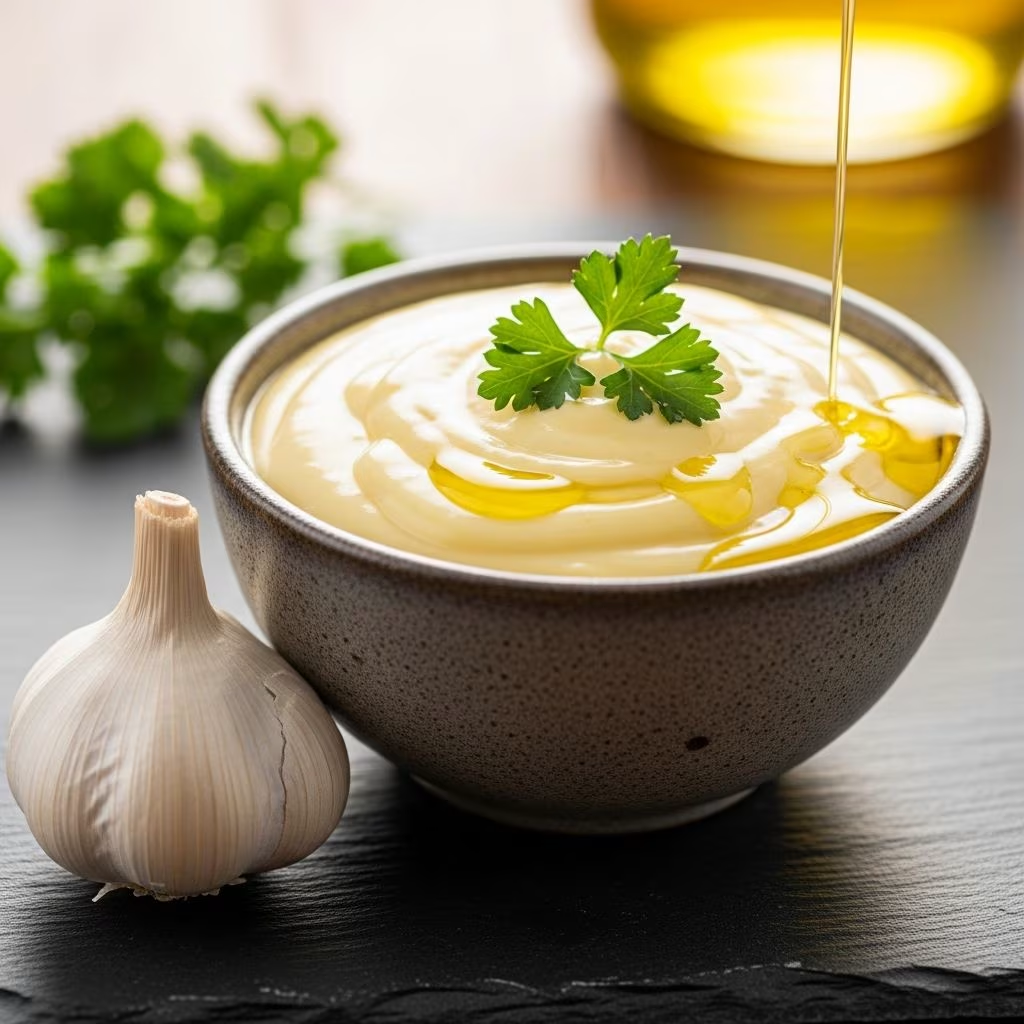
Aioli stands as a timeless emulsion of garlic and oil, a staple in Mediterranean cuisine that transforms simple ingredients into a luxurious condiment. Far more than just garlic mayonnaise, authentic aioli captivates with its rich texture and bold punch, enhancing everything from grilled seafood to fresh vegetables. This guide dives deep into its origins, preparation techniques, creative adaptations, and expert tips to ensure success in your kitchen.
Understanding Aioli’s Roots and Appeal
Originating from the Provence region of France and the Balearic Islands of Spain, aioli—derived from the Provençal words ‘ai’ (garlic) and ‘òli’ (oil)—has been a cornerstone of rustic dining for centuries. Traditionally hand-pounded in a mortar and pestle, it embodies simplicity and purity. Its allure lies in the emulsification process, where raw garlic acts as the emulsifier, binding olive oil drop by drop into a velvety sauce without eggs.
Unlike commercial mayonnaise, which relies on eggs for stability, true aioli demands patience and technique. This egg-free nature makes it ideal for those avoiding animal products or seeking a lighter alternative. Nutritionally, it’s packed with heart-healthy monounsaturated fats from quality olive oil and allicin from garlic, offering anti-inflammatory benefits. According to the National Institutes of Health, garlic’s compounds support immune function, adding a healthful edge to indulgence.
Essential Ingredients for Authentic Aioli
Great aioli starts with premium components. Select fresh garlic cloves—firm and unblemished—for maximum flavor. Extra-virgin olive oil is non-negotiable; its fruity notes define the sauce. Coarse sea salt enhances garlic’s natural sugars, while lemon juice or white wine vinegar provides acidity to balance richness.
- Garlic: 4-6 medium cloves, preferably mild varieties like German White to avoid overpowering bitterness.
- Olive Oil: 1-1.5 cups, at room temperature for smooth incorporation.
- Salt: 1/2 teaspoon kosher or sea salt.
- Acid: 1-2 teaspoons fresh lemon juice or vinegar.
- Optional: A pinch of mustard powder for stability in beginner recipes.
Sourcing matters: Opt for single-origin olive oils from regions like Sicily or Andalusia for nuanced flavors that elevate your aioli.
Step-by-Step Traditional Preparation
Crafting aioli by hand is meditative and rewarding. Begin by peeling garlic and smashing it lightly to release oils. In a sturdy mortar, add salt and garlic, pounding into a smooth paste with a pestle. This releases allicin, creating the base emulsion.
- Mash garlic and salt for 5-10 minutes until paste-like and slightly foamy.
- Add a teaspoon of oil, emulsifying vigorously in a circular motion.
- Drizzle in remaining oil in a thin stream, no more than 1/4 teaspoon at a time, incorporating fully before adding more.
- Once thickened, stir in acid to taste. Adjust consistency with water if needed.
The process takes 15-20 minutes but yields about 1 cup of silky aioli. Patience prevents breaking; if it splits, start over with a new garlic paste and gradually whisk in the broken mixture.
Modern Twists and Flavor Variations
While traditional aioli shines solo, infusions open endless possibilities. Experiment with roasted garlic for sweetness, chipotle for smoke, or saffron for luxury. Herbed versions with chives or basil pair beautifully with summer produce.
| Variation | Key Add-In | Best Pairing |
|---|---|---|
| Smoky Chipotle | 1-2 minced chipotles in adobo | Grilled meats |
| Lemon-Herb | Zest of 1 lemon + 1 tbsp dill | Seafood |
| Truffle | 1 tsp truffle oil | Fries or eggs |
| Roasted Garlic | 1 head roasted garlic | Vegetables |
| Sriracha Kick | 1 tsp sriracha | Burgers |
These adaptations maintain aioli’s essence while suiting global palates. For vegan-friendly options, all are naturally egg-free.
Common Pitfalls and How to Fix Them
Emulsification can falter. If aioli separates, it’s often due to rushed oil addition or cold ingredients. Warm oil slightly and add slower. Overworking introduces air bubbles, leading to lightness loss—pound steadily, not frantically.
- Too Thick? Whisk in tepid water, 1 teaspoon at a time.
- Too Thin? Persist with oil addition; it will set.
- Bitter Taste? Use younger garlic or blanch cloves briefly.
- Breaks Easily? A tiny Dijon mustard pinch stabilizes without altering flavor.
Storage tip: Refrigerate in an airtight jar up to one week; the flavors meld beautifully over time.
Perfect Pairings and Serving Ideas
Aioli’s versatility shines in applications. Dip crudités, spread on sandwiches, or dollop over poached fish. In tapas, it anchors patatas bravas; in American fare, it upgrades burgers.
Classic Combos:
- With boiled potatoes and olives (a la Provençal grand aioli feast).
- Drizzled on grilled prawns or calamari.
- Mixed into potato salad for creaminess.
- As a base for rouille in bouillabaisse.
For grand aioli platters, surround with salt cod, hard-boiled eggs, and seasonal veggies—a festive, shareable spread.
Health Benefits and Nutritional Insights
Beyond taste, aioli offers wellness perks. Olive oil’s oleic acid supports cardiovascular health, per a 2020 American Heart Association study. Garlic’s antioxidants combat oxidative stress. A 2-tablespoon serving delivers about 200 calories, mostly healthy fats, with zero cholesterol.
Customize for diets: Use light olive oil to cut calories or garlic-infused oil for milder profiles.
Advanced Techniques for Pros
Food processors speed things up but risk over-emulsification. Pulse garlic-salt first, then drizzle oil with the machine running. Immersion blenders work similarly in a tall jar. For ultra-stable aioli, incorporate a boiled egg yolk post-emulsion.
Experiment with oils: Avocado for neutrality, grapeseed for lightness. Temperature control is key—ingredients around 65°F (18°C) emulsify best.
Frequently Asked Questions (FAQs)
What is the difference between aioli and mayonnaise?
Aioli is traditionally egg-free, garlic-forward, and emulsified manually, while mayonnaise uses eggs and is milder.
Can I make aioli without a mortar and pestle?
Yes, a food processor or whisk works, but hand methods yield superior texture.
How long does homemade aioli last?
Up to 7 days in the fridge; freeze in ice cube trays for months.
Is aioli gluten-free?
Absolutely, with no grains involved.
Can aioli be made vegan?
It inherently is, relying on plant-based oil and garlic.
Conclusion: Elevate Your Culinary Repertoire
Mastering aioli unlocks a world of flavor enhancement. From humble pestle pounds to innovative fusions, this sauce rewards dedication with versatility and depth. Whether for everyday dips or special feasts, perfect aioli transforms meals. Gather your ingredients, embrace the process, and savor the results.
References
- Garlic: a review of potential therapeutic effects — Bhandari NN. 2012-01-28. https://www.ncbi.nlm.nih.gov/pmc/articles/PMC4103721/
- Monounsaturated Fatty Acids and Risk of Cardiovascular Disease — American Heart Association. 2020-11-23. https://www.ahajournals.org/doi/10.1161/CIRCULATIONAHA.118.035774
- Olive Oil and Cardiovascular Health — U.S. Department of Agriculture. 2023-05-15. https://www.ars.usda.gov/ARSUserFiles/80400525/articles/jafc54_4_1902-1908.pdf
- Extra Virgin Olive Oil Composition — International Olive Council. 2024-01-10. https://www.internationaloliveoil.org/what-is-evoo/