Absinthe, often called the Green Fairy, stands as one of the most captivating spirits in mixology history. Born from a blend of wormwood, anise, and other botanicals, this high-proof elixir has inspired artists, fueled legends, and starred in countless cocktails. Once banned for supposed hallucinogenic powers, absinthe has reclaimed its place in modern bars, offering complex flavors of herbal bitterness and sweet licorice notes.
Origins and Rise to Fame
Absinthe’s story begins in the late 18th century in Switzerland, where it was crafted as a medicinal tonic. Major figures like Dr. Pierre Ordinaire or the Henriod sisters are credited with its invention, using it to treat digestive issues and fevers. By the early 1800s, French distillers refined the recipe, turning it into a popular aperitif among soldiers returning from wars in North Africa.
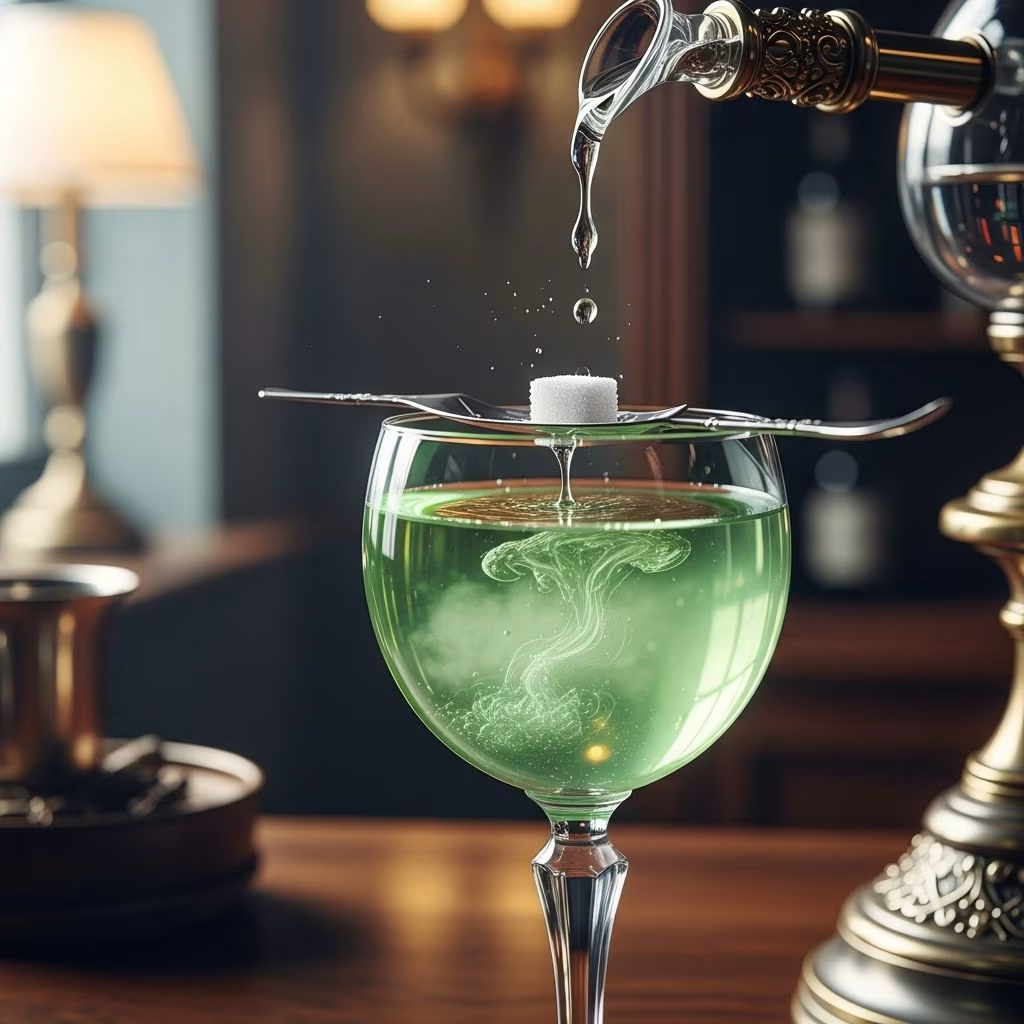
During France’s Belle Époque in the late 19th century, absinthe became synonymous with bohemian culture. Writers like Ernest Hemingway and artists such as Vincent van Gogh embraced it, believing it sparked creativity. Paris cafes buzzed with patrons performing the iconic louche ritual—dripping water over sugar to cloud the emerald liquid—creating a spectacle as mesmerizing as the drink itself.
The Myths That Shaped Its Downfall
Absinthe’s notoriety led to its prohibition in the early 20th century. Sensational tales claimed it caused insanity and hallucinations due to thujone, a compound in wormwood. In reality, scientific analysis shows thujone levels were too low for such effects; the spirit’s 45-74% ABV was the true culprit for any excesses.
France banned it in 1915, followed by the U.S. in 1912. The myths persisted through literature and art, painting absinthe as a dangerous muse. Modern regulations have lifted bans worldwide since the 1990s, allowing authentic production with verified low thujone content, vindicating its safe return.
Mastering the Traditional Service Ritual
The classic French absinthe preparation elevates it beyond a mere shot. Start with a reservoir glass, absinthe spoon, sugar cube, and chilled water. Pour 1 oz of absinthe, rest the spoon with sugar atop the glass, and slowly drip 3-5 oz of ice-cold water. The mixture turns opalescent—a natural emulsion called the louche effect—as essential oils separate.
This method dilutes the spirit to drinkable strength (around 20-30% ABV) and mellows its bite. Skip the sugar for a drier profile, or ignite a sugar-soaked cube briefly for dramatic flair, though purists advise against flames that alter flavors. The ritual makes absinthe one of history’s earliest cocktails, predating many classics.
Signature Cocktails Featuring Absinthe
Absinthe shines as both star and subtle enhancer. Here are time-tested recipes, adapted for home bartenders.
The Sazerac: New Orleans Icon
The Sazerac, official cocktail of New Orleans, claims roots as America’s first cocktail. Absinthe rinses the glass, infusing herbal depth into rye whiskey and bitters.
- Chill an old-fashioned glass with ice; discard ice.
- Swirl ½ oz absinthe to coat; discard excess.
- Muddle sugar cube with 3 dashes Peychaud’s bitters and 2 dashes Angostura.
- Add 2 oz rye whiskey; stir with ice and strain into absinthe glass.
- Garnish with lemon peel.
Serve neat—no ice—for a silky texture.
Absinthe Frappe: Simple Elegance
A straightforward cooler from the 1800s: Pour 1½ oz absinthe over crushed ice in a highball glass, top with soda, and garnish with mint. Its frosty refreshment highlights pure absinthe notes.
Modern Twists: La Fée Sea Fizz
Blend 1½ oz absinthe, juice of ½ lemon, 1 tsp sugar, and 1 egg white. Shake with crushed ice and strain into a cocktail glass. For a fizz, top a highball version with soda. The egg white creates a velvety foam.
| Cocktail | Key Ingredients | Glass | Strength |
|---|---|---|---|
| Sazerac | Rye, bitters, absinthe rinse | Old-fashioned | Medium |
| Sea Fizz | Absinthe, lemon, egg white | Cocktail/Highball | Light |
| Absinthe Special | Absinthe, gin, anisette, bitters | Cocktail | Strong |
| Rattlesnake Daiquiri | Rum, lime, demerara, absinthe rinse | Cocktail | Medium |
Innovative Recipes from Global Bartenders
Contemporary mixologists push boundaries. Try the Absinthe Special: 2 oz absinthe, ¾ oz gin, ¾ oz anisette, dashes of orange and Angostura bitters. Shake and strain for a potent, aromatic punch.
The Rattlesnake Daiquiri adds edge: Shake ½ oz rhum agricole, ½ oz demerara syrup, ½ oz lime juice; strain into an absinthe-rinsed glass. Garnish with a flaming, absinthe-soaked lime wheel.
Colonial Rot refreshes: 1 oz absinthe, 1 oz citron vodka, ½ oz gomme syrup, ½ oz lime, 5 mint leaves. Shake, strain into highball, top with soda and lemonade.
Historical gems like The Dixie (¼ oz absinthe, ½ oz gin, ¼ oz dry vermouth) or The Suisse (1 oz absinthe, 4 dashes anisette, egg white) showcase versatility.
Pairing Absinthe with Foods and Occasions
Absinthe’s bold profile pairs with oysters, chocolate, or cheeses like Roquefort, cutting richness with anise zing. In cocktails, it elevates whiskey sours or daiquiris subtly. Ideal for evening gatherings or creative soirées, its ritual fosters social bonding.
Frequently Asked Questions (FAQs)
Is absinthe hallucinogenic?
No—myths stem from high alcohol content, not thujone. Modern absinthe is safe and regulated.
How do I store absinthe?
Keep in a cool, dark place; unopened bottles last years, opened ones months if sealed tightly.
What’s the difference between green and blanche absinthe?
Green (verte) is macerated with herbs for color; blanche is clear, post-distillation only.
Can I substitute absinthe in recipes?
Pernod or pastis work but lack wormwood’s depth; use sparingly.
Best absinthe brands for beginners?
Try Pernod for tradition or La Fée Parisienne for balance.
Reviving Absinthe Culture Today
Absinthe thrives in craft cocktail scenes, from New Orleans bars to global mixology events. Home enthusiasts can source quality bottles online or at specialty shops. Experiment with ratios to suit tastes—more water for subtlety, less for intensity. Its resurgence honors a spirit that bridged medicine, art, and revelry.
Whether solo via louche or in a Sazerac, absinthe invites discovery. Embrace the Green Fairy responsibly for unforgettable sipping experiences.
References
- Traditional Absinthe Cocktails – Classic Recipes by La Fée — La Fée. Accessed 2026. https://lafee.com/traditional-cocktails/
- Straight from New Orleans comes the Mystery of Absinthe — YouTube. 2026. https://www.youtube.com/watch?v=lcUM5FwQhvw
- Traditional French Style Absinthe Cocktail — Tasting History. 2026. https://www.tastinghistory.com/recipes/absinthe/
- The History of Absinthe — Revelry Tours. 2026. https://revelry.tours/cocktails/absinthe/
- Exploring Absinthe: History, Myths, and Modern Uses in Cocktails — Queen Bee Mixology. 2026. https://www.queenbeemixology.com/blog/exploring-absinthe-history-myths-and-modern-uses-in-cocktails/
- Absinthe: The Urban Lore + Setting It On Fire — Edible Times. 2026. https://edibletimes.com/thirsty-thursdays-absinthe-on-fire/
- Anticipation – The Cocktail Chronicles — Cocktail Chronicles. 2008-08-28. http://www.cocktailchronicles.com/2008/08/28/anticipation/