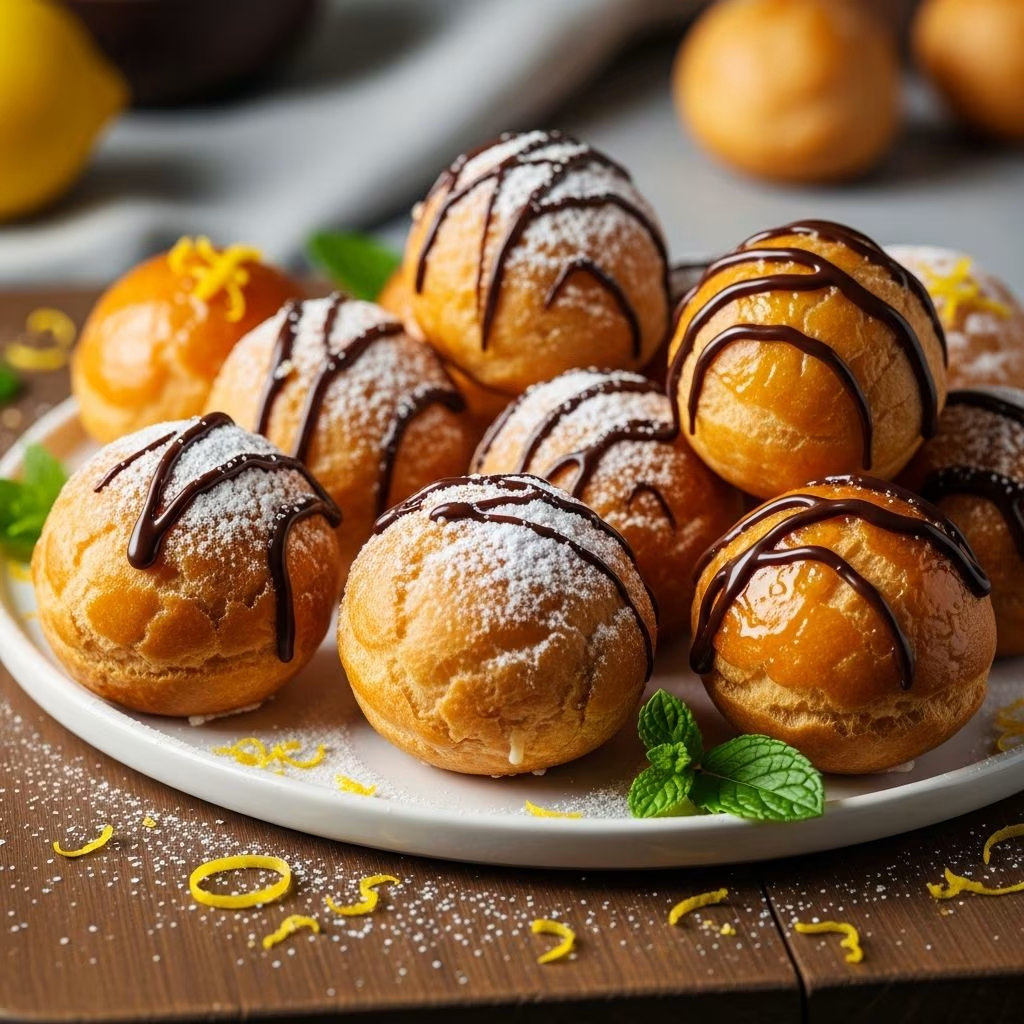
Italian cuisine boasts countless treasures, but few treats capture the essence of celebration and tradition quite like zeppole. These delightful fried pastries represent more than just a dessert; they embody centuries of culinary heritage and cultural significance. Whether enjoyed warm from the fryer dusted with powdered sugar or filled with creamy custard and topped with fresh cherries, zeppole remain a cherished indulgence throughout Italy and among Italian communities worldwide.
Understanding the Roots and Cultural Significance
The fascinating history of zeppole stretches back through multiple civilizations and cultures. Historical evidence suggests that zeppole have ancient origins, with some culinary historians tracing their lineage to ancient Rome where they may have played a role in celebrations honoring pagan deities. The word \”zeppole\” itself carries linguistic significance, deriving from the Arabic term \”Zalābiyya,\” which refers to fried soft dough. This etymological connection reveals the complex cultural exchange that shaped Mediterranean cuisine.
Beyond Rome, zeppole traditions also connect to Egypt and other northern African regions, suggesting a recipe that evolved across multiple cultures before becoming distinctly Italian. The recipe took on particular importance in Naples, where documented versions emerged by the early nineteenth century. Most significantly, zeppole became inextricably linked with the Feast of Saint Joseph on March 19th, a celebration observed throughout Sicily and southern Italy, extending northward to Rome and beyond.
The Sicilian variation of zeppole deserves special mention. In Sicily, a distinctive version called \”sfinge\” incorporates ricotta cheese into the dough, creating a unique texture and flavor profile that distinguishes it from other Italian zeppole preparations. This regional adaptation demonstrates how local ingredients and traditions have shaped the evolution of this beloved pastry across Italy’s diverse culinary landscape.
Types and Variations of Zeppole
The beauty of zeppole lies in their remarkable versatility. Multiple preparation methods and flavor profiles have emerged throughout Italy, each offering distinct characteristics and appeal. Understanding these variations helps home cooks choose the approach that best suits their preferences and skill level.
Traditional Yeast-Based Zeppole
The most common contemporary preparation employs active dry yeast to create a light, airy dough. This version features minimal sugar in the dough itself—often just a quarter teaspoon to feed the yeast—with sweetness applied after frying. The resulting pastries achieve a pillowy texture when properly prepared, offering an ideal canvas for various toppings and coatings. Home bakers appreciate this method for its straightforward approach and consistent results.
Choux-Based Zeppole di San Giuseppe
An alternative approach creates zeppole using choux pastry (pâte à choux), the same dough foundation used for cream puffs and eclairs. This method requires heating butter and water together, then incorporating flour to create a smooth paste before adding eggs. The result yields zeppole with a crispy exterior and tender interior, providing an excellent structure for elaborate cream fillings and toppings. This technique particularly suits the formal presentation style associated with San Giuseppe celebrations.
Ricotta-Enriched Variations
For those seeking a richer texture and more substantial pastry, incorporating ricotta cheese into the batter offers distinct advantages. This variation produces zeppole with superior moisture retention and a slightly denser crumb structure. The ricotta imparts subtle tang and richness, complementing both simple sugar coatings and more elaborate fillings.
Essential Ingredients and Substitutions
| Ingredient Category | Primary Options | Notes |
|---|---|---|
| Leavening Agent | Active dry yeast or baking soda | Yeast creates lighter texture; baking soda works with ricotta versions |
| Fat | Vegetable oil or unsalted butter | Vegetable oil provides neutral flavor; butter adds richness to doughs |
| Flour | All-purpose or unbleached flour | All-purpose flour offers consistent results for home bakers |
| Liquid | Water or milk | Warm water for yeast activation; milk can enrich certain formulations |
| Protein | Eggs or ricotta cheese | Eggs provide structure and richness; ricotta adds moisture and density |
| Finishing | Powdered sugar, cinnamon sugar, or chocolate | Multiple coating options allow customization based on preference |
Mastering the Basic Preparation Process
Creating the Dough Foundation
The initial dough preparation sets the foundation for successful zeppole. For yeast-based versions, begin by combining warm water (approximately 100-110 degrees Fahrenheit) with active dry yeast and minimal sugar, allowing the mixture to bloom for roughly two minutes until it achieves a creamy consistency. In a separate large mixing bowl, combine flour with salt, then incorporate the activated yeast mixture and olive oil, stirring with a wooden spoon until a sticky dough develops. Cover the mixture with plastic wrap and permit it to rise in a warm environment for one and one-half to two hours until the dough approximately doubles in volume.
For choux-based preparations, combine water, butter, sugar, and salt in a medium saucepan over medium heat. Using a whisk or wooden spoon, stir these ingredients as the butter melts completely. Once the mixture reaches a rolling boil, immediately remove it from heat and add the flour all at once, mixing rapidly and thoroughly with a wooden spoon until a smooth paste develops. This step requires attention and technique, as proper incorporation prevents lumps while developing the dough’s structure.
Frying Technique and Temperature Control
Successful zeppole depend critically on proper frying temperature. Pour approximately two inches of vegetable oil into a heavy-bottomed pot and attach a candy thermometer to monitor temperature precisely. The optimal frying temperature typically ranges between 350-375 degrees Fahrenheit, though exact temperatures vary slightly depending on the specific dough formulation and individual frying vessel characteristics. Maintaining consistent temperature prevents greasy, undercooked pastries while avoiding burnt exteriors that mask the tender interior texture.
When frying, work in small batches to prevent temperature fluctuations. Using two spoons or a special zeppole spoon, carefully drop portions of dough into the hot oil, allowing them to fry until golden brown on both sides—typically two to three minutes total. Remove finished zeppole with a slotted spoon and drain briefly on paper towels before applying coatings or fillings.
Filling and Finishing Options
The transformation of simple fried pastry into an elegant dessert occurs during the filling and decoration phase. Classic Italian zeppole di San Giuseppe typically feature rich pastry cream filling, though contemporary adaptations embrace creative variations.
Traditional Pastry Cream Fillings
The traditional approach combines egg yolks, sugar, flour or cornstarch, milk, and vanilla to create smooth, luxurious pastry cream. Some regional variations incorporate lemon zest or juice to provide brightness and subtle complexity. Prepare the pastry cream while zeppole cool to room temperature, ensuring the cream achieves the proper consistency—thick enough to hol