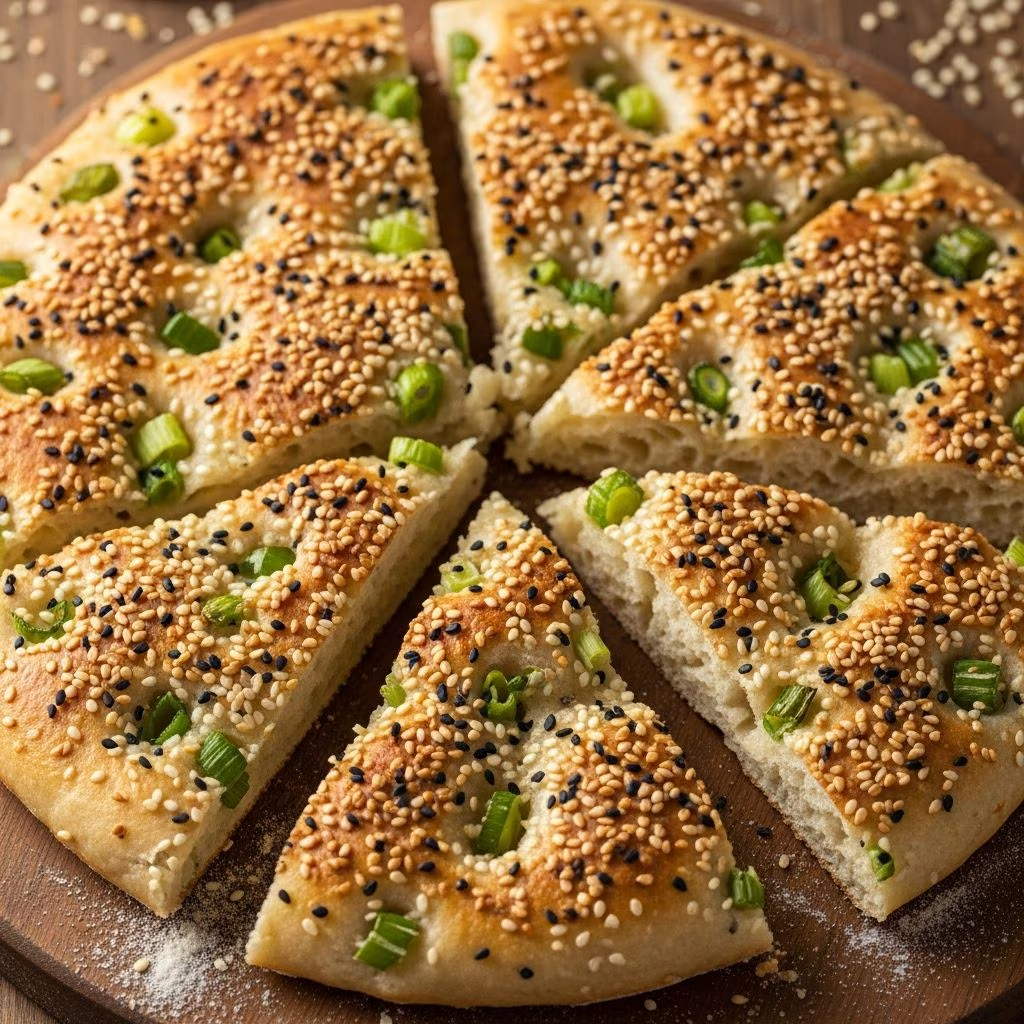
Yeasted scallion sesame flatbread, a beloved staple in Chinese cuisine, combines the lightness of yeast-leavened dough with the aromatic punch of fresh scallions and nutty sesame seeds. This flatbread achieves its signature texture through careful proofing, layering, and pan-frying, resulting in a crisp exterior and fluffy, pull-apart interior. Whether you’re new to bread-making or a seasoned baker, this comprehensive guide will walk you through every step to produce restaurant-quality results at home.
Understanding the Essentials of Yeasted Flatbread
The magic of this flatbread lies in its yeasted dough, which ferments to create air pockets for fluffiness. Unlike quick flatbreads, the yeast activation and proofing times—typically 1-2 hours for the initial rise—develop gluten for chewiness while keeping the crumb tender. Key ingredients include all-purpose or bread flour for structure, warm water (around 105-115°F) to awaken the yeast, a touch of sugar or honey to feed it, and sesame oil for flavor and richness. Baking powder or soda often makes a cameo to boost lift without over-fermenting.
Scallions provide moisture and savoriness, releasing juices during rolling that steam into layers. Sesame seeds add crunch and toast beautifully in the pan. Neutral oils like vegetable or peanut prevent sticking and promote crisping. Mastering temperature control during proofing and cooking is crucial: too hot, and the dough toughens; too cool, and it won’t rise properly.
Gathering Your Ingredients
Start with high-quality basics for the best flavor and texture. Here’s a reliable recipe scaled for 3-4 large flatbreads, drawing from proven home cooking methods.
| Ingredient | Quantity | Purpose |
|---|---|---|
| All-purpose flour | 2-2.5 cups | Main structure and chew |
| Warm water (105-115°F) | 1-1.25 cups | Hydrates and activates yeast |
| Active dry yeast | 1 tsp or 1 packet | Leavening for fluffiness |
| Sugar or honey | 1-2 tsp | Feeds yeast, adds subtle sweetness |
| Baking powder | 1/2-1 tsp | Extra lift for tenderness |
| Sesame oil | 2-4 tbsp | Flavor and layering moisture |
| Fresh scallions, finely chopped | 4-6 stalks | Aromatic filling |
| Sesame seeds (white or mixed) | 3-4 tbsp | Crunchy coating |
| Kosher salt | 1 tsp | Balances flavors |
| Neutral oil (peanut/veg) | 2-4 tbsp | For frying |
Optional add-ins: a pinch of five-spice powder for depth or chili flakes for heat. Measure flour by weight (about 250-300g) for precision, as volume can vary.
Step-by-Step Dough Preparation
- Activate the Yeast: In a bowl, dissolve sugar/honey in warm water, then stir in yeast. Let sit 5-10 minutes until frothy—this confirms viability. If no foam, your yeast is dead; start over.
- Mix Dry Ingredients: Whisk flour, salt, and baking powder in a large bowl. For extra tenderness, add 1-2 tbsp glutinous rice flour.
- Form the Dough: Pour yeast mixture and 1-2 tsp sesame oil into dry ingredients. Stir until shaggy, then knead 5-10 minutes by hand or 3-5 with a stand mixer until smooth and tacky. Avoid over-kneading to prevent toughness.
- First Proof: Oil a bowl, place dough inside, cover with plastic or a damp towel. Let rise in a warm spot (75-85°F, like oven with light on) for 45-120 minutes until doubled. Punch down gently to release gases.
This process builds flavor through fermentation, similar to how artisan breads develop complexity.
Layering for Flaky Texture
The signature layers come from strategic folding and rolling, trapping scallions and oil between sheets of dough.
- Divide proofed dough into 3-4 equal pieces (about golf ball size for larger bing).
- On a floured surface, roll each into a thin rectangle or circle (8-10 inches), rotating to keep even.
- Brush with sesame oil, scatter chopped scallions and a pinch of salt evenly.
- Roll tightly like a cigar, then coil into a spiral (cinnamon roll style) or fold accordion-style for more layers.
- Gently flatten coil to 6-8 inches diameter, brush top with oil, press sesame seeds firmly into both sides.
- Rest 15-30 minutes covered—this relaxes gluten for easier rolling and final puff.
Pro tip: Finely chop scallions to avoid tears in dough; pat dry if watery to prevent sogginess.
Perfect Pan-Frying Technique
Low-and-slow frying ensures even cooking without burning.
- Heat a skillet (cast iron ideal) over medium-low. Add 1-2 tbsp neutral oil.
- Place flatbread seam-side down. Cover and cook 5-8 minutes until golden and crisp underneath.
- Flip, add a splash of water around edges for steam, cover again 5-10 minutes until puffed and both sides are done.
- Drain on paper towels; slice into wedges while hot for maximum steam release.
Serve immediately for peak crispness, or reheat in a 350°F oven to revive.
Flavor Variations and Serving Ideas
Customize your flatbread beyond basics:
- Spicy Version: Mix chili oil or flakes into scallion filling; pair with soy-vinegar dip (soy sauce, rice vinegar, sesame oil, brown sugar).
- Sweet-Savory Twist: Brush with honey-sugar water before sesame for a glazed effect, inspired by baked shaobing.
- Herb Boost: Add cilantro, garlic chives, or five-spice.
- Gluten-Free: Swap with a 1:1 GF flour blend, though texture may be denser.
Pair as street food with congee, wrap around eggs or meats for breakfast, or tear for dumpling soup dipping. Stores 2 days at room temp or freezes dough balls pre-rolling.
Troubleshooting Common Issues
| Problem | Cause | Solution |
|---|---|---|
| Dough too sticky | Excess water | Add flour 1 tbsp at a time; use wet hands |
| Flat, dense bread | Under-proofed or cold pan | Extend rise; preheat slowly |
| Tears during rolling | Coarse scallions or dry dough | Chop finer; rest longer |
| Not crispy | Too much water/steam | Less lid time; higher heat finish |
| Yeast not foaming | Dead yeast or wrong temp | Check expiration; water 105-115°F |
Nutrition and Storage Tips
One large flatbread (1/4 recipe) offers ~300 calories, mostly from carbs and healthy fats. Rich in antioxidants from scallions and sesame. Store baked in airtight container 1-2 days; refrigerate up to 4. Reheat in skillet. Freeze raw coiled dough up to 1 month; thaw and proof before cooking.
FAQs
Can I use instant yeast instead of active dry?
Yes, mix directly with flour—no proofing needed. Reduce by 25%.
How do I make it vegan?
It already is! Swap honey for sugar if strict.
Why add baking powder?
Provides instant lift alongside yeast for extra fluff without long fermentation.
Can I bake instead of fry?
Yes, 400°F for 15-20 minutes on parchment, but you’ll miss the crisp crust.
How far in advance can I prep dough?
Overnight in fridge for deeper flavor; let warm to room temp before shaping.
References
- Chinese Scallion Sesame Bread Recipe — Whiskey and Booch. 2023. https://www.whiskeyandbooch.com/blog/chinese-scallion-sesame-bread-chinese-bing-recipe
- Yeasted Scallion Flatbread (Qiang Bing) — Woo Can Cook. 2022. https://www.woocancook.com/qiang-bing
- Scallion Bing or Chinese Flat Bread — The Foodie Takes Flight. 2021. https://thefoodietakesflight.com/scallion-bing-chinese-flat-bread/
- Shanghai Scallion Flatbread (Qiang Bing) — The Woks of Life. 2020. https://thewoksoflife.com/shanghai-scallion-flatbread-qiang-bing/
- Crispy Taiwanese Scallion Shaobing — Cooking in Chinglish. 2023. https://cookinginchinglish.com/taiwanese-scallion-shaobing/