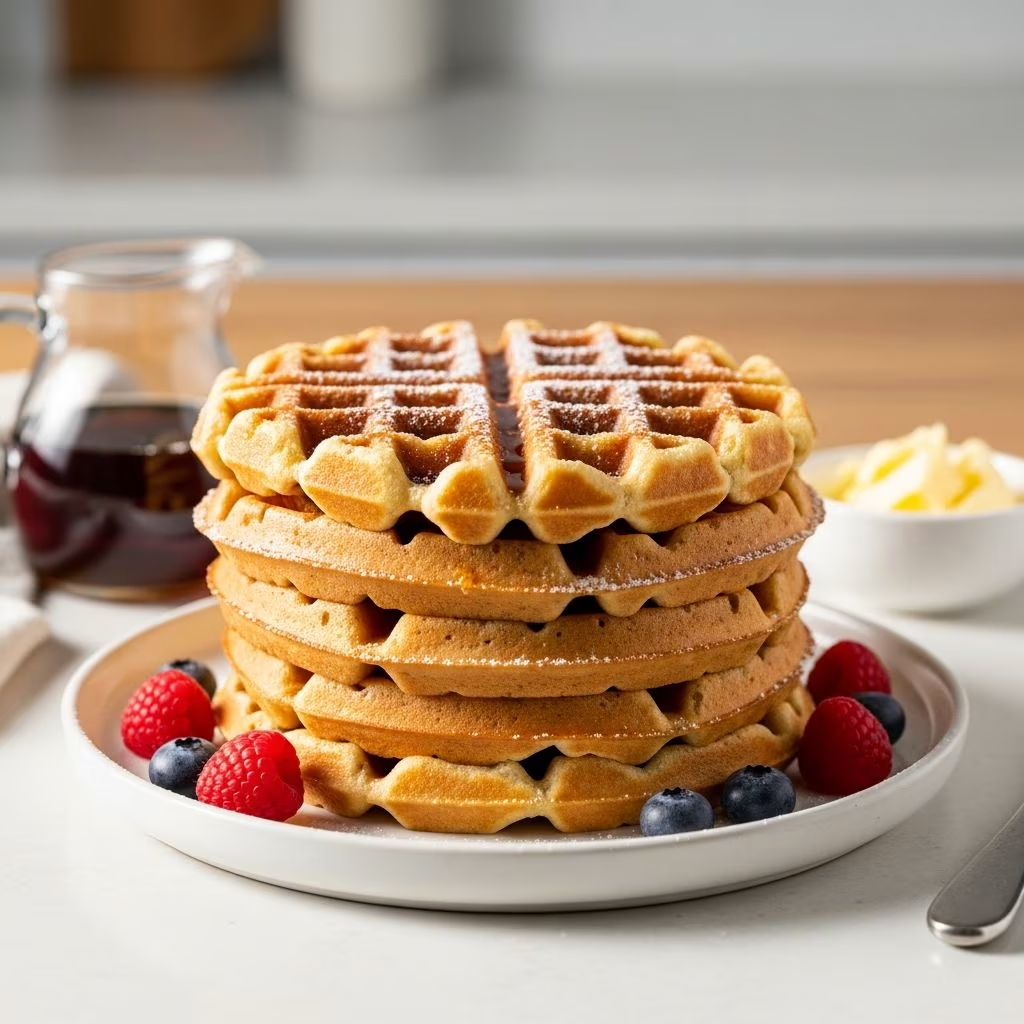
Belgian waffles stand out for their deep pockets, golden crispness, and tender crumb, achieved through yeast fermentation rather than quick-leavening agents. This method draws from traditional European baking, yielding waffles that hold toppings generously while maintaining structural integrity.
Why Choose Yeast for Belgian Waffles?
Yeast imparts a subtle tang and airy structure absent in baking powder versions. The fermentation process breaks down starches, enhancing flavor complexity and digestibility. Home bakers appreciate the make-ahead convenience, as batter improves overnight in the fridge.
Compared to standard waffles, yeast-raised ones offer superior texture: crisp exteriors from extended cooking times and moist interiors from bubbly batter expansion. Professional testers note they rival diner-quality results with pantry staples.
Essential Ingredients Breakdown
Gather these for about four 7-inch deep-pocket waffles:
- 1.5 cups lukewarm milk (activates yeast without killing it)
- 6 tablespoons melted butter (adds richness and crispness)
- 2-3 tablespoons maple syrup (optional, for gentle sweetness)
- 3/4 teaspoon salt (balances flavors)
- 1 teaspoon vanilla extract (deepens aroma)
- 2 large eggs (provides lift and moisture)
- 2 cups all-purpose flour (structure base; unbleached preferred for clean taste)
- 1.5 teaspoons instant yeast (fast-acting for reliable rise)
Weights for precision: 340g milk, 85g butter, 241g flour. Lukewarm milk (around 100°F) ensures yeast blooms effectively.
| Ingredient | Role | Substitution Notes |
|---|---|---|
| Milk | Hydrates dough, feeds yeast | Buttermilk for tangier profile |
| Butter | Tenderness, browning | Oil for dairy-free |
| Yeast | Fermentation, rise | Active dry (proof first) |
| Flour | Gluten network | Half whole wheat max |
Step-by-Step Preparation Process
Prep time: 5 minutes. Rest: 1 hour to overnight. Cook: 5-6 minutes per waffle. Total yield: 4 large Belgian-style.
- Mix batter: Whisk wet ingredients (milk, butter, syrup, salt, vanilla, eggs) in a large bowl. Add flour and yeast; stir until combined. Lumps are fine—overmixing toughens gluten.
- First rise: Cover with plastic wrap. Let sit at room temperature for 1 hour. Bubbles form as yeast activates, doubling volume.
- Optional overnight rest: Refrigerate covered batter up to 12-16 hours. Flavors deepen; discard if off-smelling.
- Preheat iron: Heat Belgian waffle maker to medium-high. Spray generously with nonstick oil to prevent sticking.
- Cook waffles: Pour 2/3-3/4 cup batter per 7-inch iron. Spread to edges with spoon if needed. Close lid; bake 5-6 minutes until deep golden. Steam indicates doneness.
- Keep warm: Oven at 200°F on rack preserves crispness while cooking batches.
Pro tip: For quarter-waffles from remnants, fill partial grids.
Mastering Texture and Flavor Variations
Achieve restaurant crispness by not overcrowding the iron and using ample oil spray. Overnight rest maximizes yeasty depth, but for milder taste, add 1.5 teaspoons baking powder post-rest and cook after 30 minutes—no fridge needed.
- Quick version: Include baking powder with yeast; rest 30 minutes only.
- Sweet boost: Increase syrup to 1/4 cup or fold in cinnamon.
- Savory twist: Omit syrup; add herbs or cheese pre-cook.
- Gluten-free: Swap flour with 1:1 GF blend; add xanthan gum if absent.
Freezing extras: Cool fully, separate with parchment, store airtight up to 3 months. Toast from frozen for crisp revival.
Common Pitfalls and Fixes
Soggy waffles? Underheating iron or insufficient oil. Solution: Preheat fully, re-spray between batches.
Dense texture? Cold milk killed yeast or overmixed batter. Use thermometer for milk; stir gently.
Not rising? Expired yeast—test by blooming in warm milk first.
Too yeasty? Shorten rest or add baking powder as noted.
Perfect Pairings and Serving Ideas
Top with fresh berries, whipped cream, or powdered sugar for classic appeal. Drizzle chocolate or caramel for indulgence. Savory options: fried chicken, eggs Benedict, or pulled pork.
Nutritional perks: Yeast aids digestion; whole ingredients provide sustained energy. Pair with fruit for balanced brunch.
Equipment Essentials
Invest in a deep-pocket Belgian iron (7-inch standard). Nonstick models simplify cleanup. Digital timers ensure even browning.
Measuring tools: Scale for accuracy, especially flour. Liquid measures for milk.
Storage and Make-Ahead Strategies
Batter: Fridge 1-2 days max. Waffles: Airtight room temp 2 days; freeze 3 months.
Batch prep: Double recipe, freeze cooked waffles for weekday toast.
Frequently Asked Questions
Can I use active dry yeast instead of instant?
Yes, proof in lukewarm milk 10 minutes first, then proceed.
How do I know when waffles are done?
Deep golden color, no steam escaping, easy release from iron (5-6 minutes typical).
Why rest the batter overnight?
Develops complex flavors via slow fermentation, mimicking artisan breads.
Vegetarian/vegan adaptations?
Replace eggs with flax eggs; use plant milk and vegan butter.
Scaling the recipe?
Halve for 2 servings; batter freezes well pre-cook.
Advanced Techniques for Pro Results
Experiment with vanilla bean paste for intensified aroma. Brush cooked waffles with extra melted butter for shine. Infuse milk with citrus zest pre-mix.
Track rises: Note bubble density post-rest for consistent batches.
References
- Overnight Belgian Waffles | A Baker’s House — A Baker’s House. 2023-01-15. https://www.abakershouse.com/overnight-belgian-style-yeast-waffles/
- Belgian-Style Yeast Waffles Recipe | King Arthur Baking — King Arthur Baking. 2024-05-10. https://www.kingarthurbaking.com/recipes/belgian-style-yeast-waffles-recipe
- Belgian-Style Yeast Waffles | King Arthur Baking — King Arthur Baking. 2011-02-01. https://www.kingarthurbaking.com/blog/2011/02/01/continental-breakfast-belgian-waffles