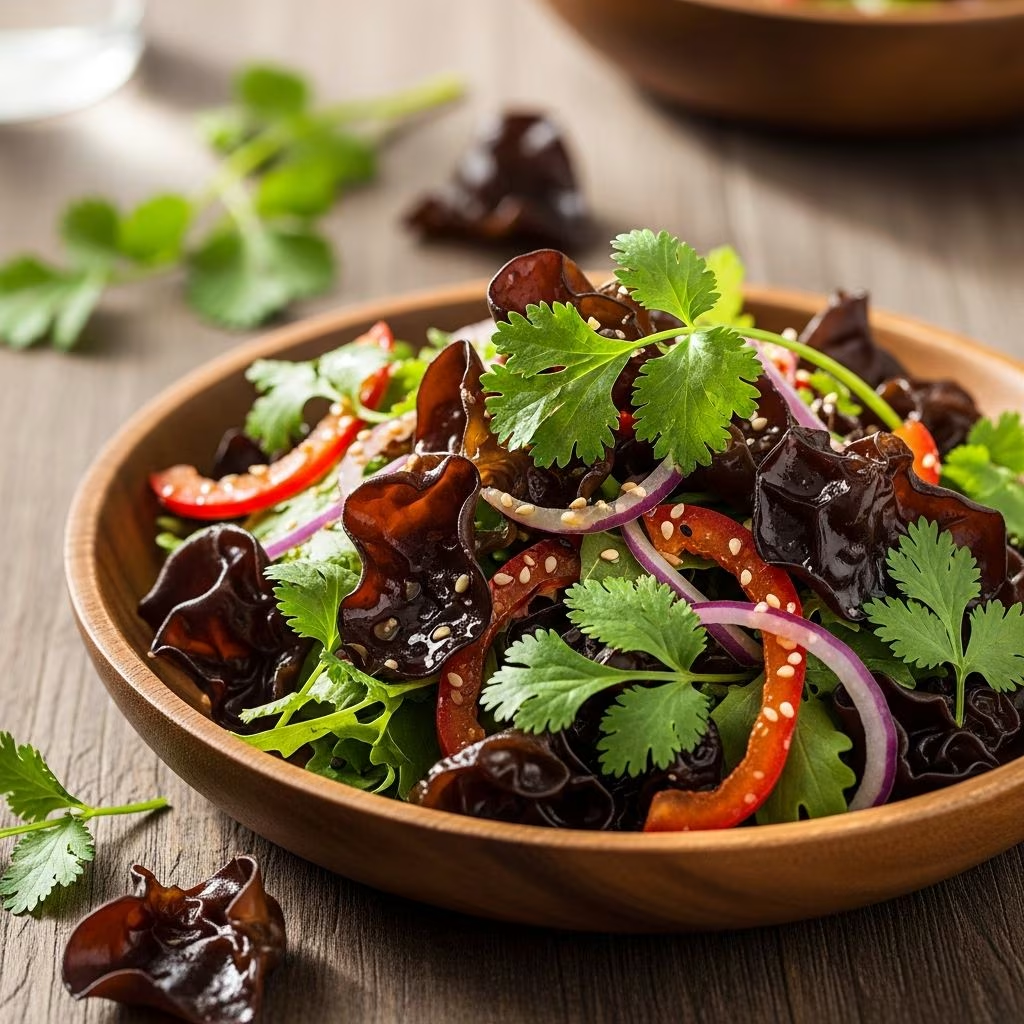
Wood ear mushrooms represent one of Asia’s most prized culinary ingredients, celebrated for their distinctive gelatinous yet crisp texture and remarkable ability to absorb surrounding flavors. This particular salad combines these unique mushrooms with fresh cilantro, creating a dish that balances textural contrast with aromatic brightness. The following guide provides comprehensive instruction for preparing this elegant yet approachable recipe that serves as either a standalone dish or a sophisticated accompaniment to stir-fried entrees.
Understanding Wood Ear Mushrooms
Wood ear mushrooms, scientifically known as Auricularia auricula-judae, grow on fallen tree logs and dead wood throughout East and Southeast Asia. In Japanese cuisine, they are called kukurage (きくらげ), a name translating to “wood jellyfish,” which captures their distinctive gelatinous consistency. These fungi earned their English name from their ear-like appearance when attached to their natural growing substrate, resembling miniature ears sprouting from tree bark.
The culinary appeal of wood ear mushrooms extends beyond their visual peculiarity. While they contain minimal inherent flavor, their remarkable textural properties—simultaneously providing crunch and gelatinous suppleness—make them invaluable in numerous Asian preparations. This textural versatility allows them to serve as a canvas for bold seasonings and complementary ingredients, transforming them into a memorable component of any dish in which they appear.
Key Ingredients and Their Functions
The Mushroom Foundation
Dried wood ear mushrooms form the salad’s structural base. The drying process concentrates their natural properties and extends their shelf life significantly. When rehydrated through soaking in hot water, they regain their characteristic texture while becoming receptive to absorbing the flavors imparted by surrounding dressings and seasonings.
The Aromatic Elements
Fresh garlic cloves, finely minced, provide the pungent aromatics that ground the dish in savory depth. Toasted sesame oil contributes a nutty undertone that rounds out the flavor profile without overwhelming the palate. Unseasoned rice vinegar introduces brightness and acidity, cutting through the richness of the oil while providing a subtle sweetness characteristic of quality rice vinegar production.
Complementary Additions
Dried goji berries introduce subtle sweetness and vibrant color, their slight tartness providing another layer of complexity to the overall composition. Red finger chiles deliver heat without masking other flavors, while their seeds can be removed if less spice intensity is desired. Finally, coarsely chopped fresh cilantro adds herbaceous freshness, its peppery-citrus notes providing the final aromatic signature.
Detailed Preparation Instructions
Stage One: Rehydrating the Mushrooms
Begin by placing dried wood ear mushrooms in a large bowl and covering them with boiling water. The mushrooms require approximately ninety minutes of soaking to achieve the ideal texture—pliable enough to tear easily yet retaining sufficient structural integrity to maintain their distinctive crunch when bitten. During this waiting period, monitor the mushrooms periodically, adding additional hot water if the level drops significantly below the surface of the fungi.
In parallel, place dried goji berries in a separate small bowl and cover them with cold water. These berries require only thirty minutes of soaking to soften adequately. This staggered timing ensures all components reach optimal texture simultaneously.
Stage Two: Processing and Combining
Once the mushrooms have achieved the proper consistency, carefully drain them and transfer to a clean kitchen towel. Gently squeeze the excess moisture while avoiding aggressive wringing that might damage their delicate structure. Examine the mushrooms closely, removing any remaining woody debris or tough stem portions that may have survived the soaking process. Tear oversized mushrooms into smaller, bite-sized pieces.
In the now-empty bowl, combine the processed mushrooms with the drained goji berries, tossing gently to distribute them evenly throughout the mixture.
Stage Three: Dressing Preparation
In a separate small bowl, whisk together the minced garlic, toasted sesame oil, unseasoned rice vinegar, and three-quarters teaspoon of kosher salt. This whisking action emulsifies the oil and vinegar, creating a more cohesive dressing that distributes evenly throughout the mushroom mixture rather than separating into distinct layers.
Stage Four: Initial Marinating
Pour the prepared dressing over the mushroom and goji berry combination, then toss thoroughly to ensure every element receives an even coating. Allow the mixture to rest at room temperature for ten minutes, then toss once more. Taste the developing salad and adjust seasoning as needed, adding additional salt or vinegar according to personal preference and the intensity of the mushrooms used.
Stage Five: Extended Flavor Development
Allow the salad to sit at room temperature for a minimum of one hour and a maximum of six hours, permitting the mushrooms to fully absorb the dressing flavors. If the salad must be held for longer than one hour, cover it and transfer to refrigeration. This extended resting period allows the individual flavor components to meld and develop greater complexity.
Stage Six: Final Assembly
Immediately before serving, add the sliced red finger chiles and freshly chopped cilantro to the marinated mushroom mixture, tossing gently to combine all components. This timing prevents the fresh herbs from becoming soggy or oxidizing during the extended resting period, preserving their vibrant color and crisp texture.
Variations and Adaptations
Regional Interpretations
Chinese preparations of wood ear mushroom salads frequently incorporate black vinegar, soy sauce, Sichuan pepper, and chili oil, creating a more assertively spiced version. This variant introduces additional layers of complexity through the addition of white or red onion slices and sometimes red bell pepper. Some recipes employ hot oil poured over minced garlic to create a fragrant base before combining with other ingredients.
Japanese and other East Asian interpretations tend toward subtler seasoning profiles, allowing the mushroom’s textural properties to remain the primary focus while complementary flavors provide supporting notes rather than dominant statements.
Ingredient Substitutions
In circumstances where fresh wood ear mushrooms prove unavailable, suitable alternatives include shiitake, maitake, or enoki varieties, though each will impart somewhat different textural properties to the finished dish. The cooking method may require adjustment depending on the mushroom variety selected, as different species respond differently to heat and soaking.
Customization Approaches
The proportion of red chile can be adjusted based on personal heat tolerance, with seeds removed if a milder presentation is preferred. The cilantro quantity can similarly be modified according to individual preference, as some diners enjoy more herbaceous intensity while others prefer subtler herbal notes. Additional sesame oil can enhance nuttiness, while additional vinegar provides increased brightness and acidity.
Serving Recommendations
As a Standalone Dish
This salad functions excellently as a light appetizer, offering approximately four servings when portioned thoughtfully. The combination of textures and flavors creates sufficient complexity to satisfy as an independent course without requiring accompaniment.
As an Accompaniment
The salad pairs exceptionally well with stir-fried preparations, particularly those featuring rich or heavily seasoned mains such as mapo tofu or black pepper beef preparations. The refreshing brightness and textural contrast provide welcome balance against more intense or indulgent dishes.
Temperature Considerations
While the salad may be enjoyed immediately after assembly, many preparation enthusiasts prefer making this dish a full day in advance, allowing flavors to further develop and intensify through extended marinating. This advance preparation approach also proves convenient for entertaining purposes, as the salad requires no final-moment attention.
Storage and Make-Ahead Information
The undressed mushroom component maintains quality for several days when stored in a sealed container within refrigeration, permitting advance preparation of this element before dressing application. The dressing components can similarly be combined in advance, though optimal results emerge when dressing and mushrooms combine relatively shortly before serving rather than extending the combination beyond six hours.
After the cilantro and chiles have been added, the completed salad remains at peak quality for approximately one to two hours, though the components maintain acceptable quality in refrigeration for up to twenty-four hours despite some textural softening.
Nutritional Considerations
This preparation offers a primarily plant-based profile suitable for vegan and vegetarian dietary frameworks. Wood ear mushrooms provide minimal calories while offering interesting textural experiences and micronutrient contributions. The sesame oil component supplies heart-healthy monounsaturated fats, while the abundance of fresh cilantro provides additional micronutrients and phytonutrients valued in traditional medicinal frameworks across numerous Asian cultures.
Frequently Asked Questions
- What distinguishes wood ear mushrooms from other mushroom varieties?
- Wood ear mushrooms present a unique combination of gelatinous suppleness and crisp crunchiness that distinguishes them from conventional mushroom offerings. Their minimal inherent flavor makes them exceptional flavor absorbers, rendering them ideal for bold dressings and aromatic seasonings.
- Can this salad be prepared using fresh wood ear mushrooms rather than dried?
- Yes, fresh wood ear mushrooms can be employed when available. The preparation method adjusts to brief boiling rather than extended soaking, typically requiring two to three minutes in boiling water followed by ice bath immersion to preserve textural properties.
- How should dried wood ear mushrooms be stored?
- Dried wood ear mushrooms remain stable for extended periods when maintained in cool, dry conditions within sealed containers, away from excessive moisture and direct sunlight exposure.
- What determines optimal salad consistency?
- The mushrooms should achieve a texture that remains pliable and easily torn by hand while retaining sufficient structure to provide the characteristic crunch when consumed. Excessive soaking beyond two hours may result in mushrooms becoming excessively soft.
- Can the salad be prepared without sesame oil?
- While sesame oil contributes distinctive nutty undertones difficult to replicate, neutral oils such as vegetable or canola oil provide acceptable alternatives, though the resulting flavor profile will differ from the traditional preparation.
Conclusion
The wood ear mushroom and cilantro salad represents an elegant yet straightforward preparation that celebrates textural contrast and balanced flavor development. Its combination of accessible ingredients, manageable preparation requirements, and versatile serving applications makes it suitable for both everyday cooking endeavors and more refined entertaining occasions. Whether enjoyed as a standalone course or as a supporting accompaniment to more assertively flavored main preparations, this salad delivers memorable sensory experiences through thoughtful ingredient selection and careful preparation technique.
References
- Easy Wood Ear Mushroom and Coriander Salad — Patient.info. Accessed 2026-04-08. https://patient.info/recipes/vegan-recipes/wood-ear-and-cilantro-salad
- Wood Ear Mushroom Salad – The Foodie Takes Flight — The Foodie Takes Flight. Accessed 2026-04-08. https://thefoodietakesflight.com/wood-ear-mushroom-salad/7/
- Wood Ear Mushroom Salad — Love in My Belly. 2017-11-07. https://www.loveinmybelly.com/news/2017/11/7/wood-ear-mushroom-salad
- Wood Ear & Cilantro Salad — Marc’s Recipes. Accessed 2026-04-08. https://marcsrecipes.com/wood-ear-cilantro-salad/