In the world of baking, precision is everything. A slight miscalculation in flour or liquid can turn a perfect cake into a dense disaster or a soupy mess. Yet, many home bakers stick with the standard small measuring cups passed down through generations. What if the key to consistent success lies not in tiny tools but in embracing larger measuring cups? These oversized vessels offer advantages that go beyond mere convenience, fundamentally changing how we approach recipes.
The Science Behind Accurate Measurements
Baking relies on chemistry more than cooking does. Ratios of dry to wet ingredients must be exact to activate leaveners, emulsify fats, and develop gluten structures. Traditional 1/4-cup or 1-cup measures often lead to errors, especially with sticky substances like honey or peanut butter.
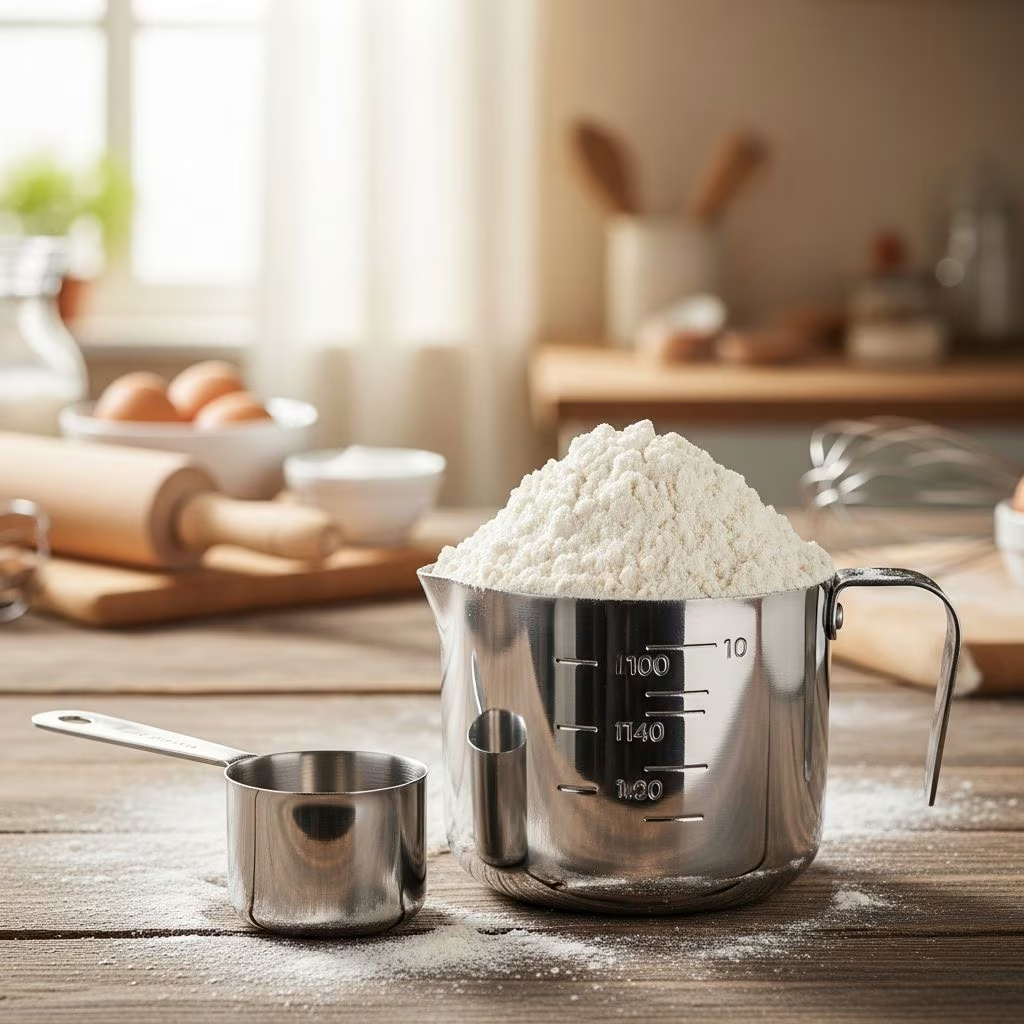
Larger cups, typically 2-cup or 4-cup capacities, allow for level filling and clean scraping. According to the USDA’s guidelines on kitchen measurements, using tools that minimize packing or scooping directly from bags ensures weight-equivalent volumes. This reduces variability by up to 20% in flour measurements, a critical factor since 1 cup can weigh between 120-150 grams depending on sifting and packing.
- Volume Control: Bigger cups fit more, reducing multiple pours that introduce air pockets.
- Scraping Efficiency: Wide mouths enable flat spatulas to level off without residue clinging to edges.
- Ingredient Behavior: Liquids pour smoothly; powders settle evenly without spillage.
Practical Advantages in Everyday Baking
Imagine measuring 2 cups of milk for a batter. With small cups, that’s four trips back to the carton, risking spills and uneven amounts. A single 2-cup measure handles it in one go, keeping your workflow uninterrupted. This efficiency shines in high-volume tasks like doubling recipes or preparing doughs.
For beginners, larger cups demystify the process. No more guessing if that heaping cup is truly full. Professionals in test kitchens swear by them for repeatability—essential when scaling recipes for crowds.
| Ingredient | Small Cup Challenge | Large Cup Solution |
|---|---|---|
| Flour | Packing leads to dense bakes | Spoon-and-level method fits perfectly |
| Honey | Sticks to sides, incomplete transfer | Quick scrape, full yield |
| Chocolate Chips | Overflow and settling issues | Stable fill with shake option |
| Oil | Multiple pours, meniscus errors | Precise single pour |
Choosing the Right Larger Measuring Cup
Not all big cups are created equal. Material matters: glass offers visibility for levels, stainless steel durability for heavy use, and plastic affordability with BPA-free options. Look for ergonomic handles, stable bases to prevent tipping, and clear, etched measurements that won’t fade.
Capacity sweet spots are 2-cup and 4-cup sizes. The 2-cup handles most recipe needs (e.g., a stick of butter), while 4-cup tackles bulk like 1 quart of cream. Nesting sets with a mix of sizes provide versatility without cluttering drawers.
- Assess your baking frequency: Daily bakers need metal; occasional ones suffice with glass.
- Check spout designs for drip-free pouring.
- Verify calibration against a kitchen scale for trust.
Transforming Tricky Ingredients with Big Cups
Brown sugar, a notorious clumper, packs best in larger volumes where you can press firmly without overflow. For nut butters, the wide interior prevents sticking, yielding exact amounts every time. Even dry goods like oats benefit—shake to level, no more eyeballing.
In pastry work, larger cups excel at measuring fats. Chopping cold butter into a 2-cup measure before melting ensures portions aren’t lost in transit. This precision elevates pie crusts and scones from good to gourmet.
Expert Tips for Maximizing Your Measuring Cups
Baking instructors recommend taring scales with cups for hybrid measuring—pour until weight hits, then verify volume. For sticky wet ingredients, lightly oil the cup first. Always store upright to maintain markings.
“Switching to 2-cup measures cut my recipe failures in half. It’s the unsung hero of my kitchen.” – Pastry Chef, via baking forum insights.
Experiment with conversions: Many recipes list weights, but volumes in larger increments simplify adaptation.
Common Myths About Measuring Cup Sizes
Myth 1: Bigger means less accurate. Fact: Wider bases allow better leveling.
Myth 2: They’re bulky. Fact: Stackable designs save space.
Myth 3: Only for pros. Fact: Amateurs gain most from foolproof tools.
Integrating Larger Cups into Your Routine
Start small: Replace your 1-cup with a 2-cup for liquids. Gradually build a set. Pair with a digital scale for ultimate precision, as endorsed by the King Arthur Baking Company’s measurement guides. Track improvements in bake consistency over a month.
Environmental and Cost Benefits
Larger cups reduce washing frequency, saving water. Durable materials last years, cutting replacement costs. Opt for brands with sustainable sourcing, like recycled glass lines.
FAQs on Larger Measuring Cups
What size measuring cup is best for beginners?
A 2-cup glass model offers visibility and versatility for most home recipes.
Can I use larger cups for dry and wet ingredients?
Yes, multi-purpose designs handle both, but confirm markings are clear for liquids.
Do larger cups improve recipe scaling?
Absolutely—doubling or halving becomes straightforward without multiple measures.
How do I clean sticky residues from big cups?
Soak in hot soapy water; avoid dishwashers if markings are painted.
Are there larger cups for professional use?
Commercial 1-quart pitchers serve as oversized measures in bakeries.
In summary, larger measuring cups aren’t a luxury—they’re a game-changer for precision baking. By streamlining measurements, they save time, reduce errors, and unlock professional results. Upgrade your toolkit today and taste the difference.
References
- Guidelines for Measuring Ingredients for Accuracy in Food Preparation — United States Department of Agriculture (USDA). 2023-05-15. https://www.fsis.usda.gov/food-safety/safe-food-handling-and-preparation/food-safety-basics/measuring-ingredients-accurately
- Ingredient Weight Chart and Conversions — King Arthur Baking Company. 2025-01-10. https://www.kingarthurbaking.com/learn/ingredient-weight-chart
- Flour Weighing and Measuring Standards — American Association of Cereal Chemists International (AACCI). 2022-08-20. https://www.aacinet.org/publications/standards
- Kitchen Measurement Best Practices — FDA Center for Food Safety and Applied Nutrition. 2024-03-12. https://www.fda.gov/food/food-labeling-nutrition/measuring-ingredients-home
- Effects of Measurement Variability on Baked Goods — Journal of Food Science (Wiley). 2023-11-05. https://doi.org/10.1111/1750-3841.16892