Understanding the Consumer Shift Toward Cleaner Foods
The modern food landscape has undergone a significant transformation over the past decade. Consumers increasingly scrutinize ingredient labels, seeking products that prioritize simplicity and transparency. This movement toward clean eating has particularly influenced the protein snack category, where manufacturers now face growing pressure to eliminate unnecessary additives, preservatives, and artificial flavoring agents. Rather than viewing minimal ingredients as a limitation, forward-thinking companies recognize this approach as an opportunity to differentiate their offerings in a crowded marketplace.
The appeal of uncomplicated formulations extends beyond mere health consciousness. Many consumers express genuine concern about understanding what they consume, preferring items they can recognize and pronounce. This shift represents a departure from decades of processed food dominance, where convenience often trumped ingredient clarity. Today’s snacking behavior reflects a more informed consumer base that values authenticity alongside functionality.
The Evolution of Beef-Based Protein Snacks
Beef jerky and similar dried meat products have long occupied a niche in the American snacking tradition. Originally developed as preservation techniques for hunters and travelers, these items have evolved into mainstream convenience foods. Traditional formulations typically relied on complex marinades containing multiple seasonings, preservatives like sodium nitrite, and various flavor enhancers to achieve their characteristic taste profiles.
The contemporary approach represents a philosophical shift. Rather than masking or enhancing natural beef flavors through elaborate seasoning blends, producers now emphasize the meat itself as the primary ingredient. This strategy aligns with broader food trends that celebrate ingredient transparency and minimize processing. The transition also reflects advances in food science, allowing manufacturers to achieve desired shelf stability and food safety through alternative methods beyond traditional chemical preservatives.
What Defines Truly Minimal-Ingredient Products
A three-ingredient formulation might seem impossibly restrictive for creating appealing snack products, yet manufacturers have developed innovative approaches to make this concept viable at commercial scale. The core challenge involves balancing flavor development, texture optimization, and food safety without relying on conventional additives.
- Ingredient One: Premium Beef Selection — Products typically begin with high-quality cuts, often grass-fed and finished beef that provides superior flavor and nutritional profiles. The sourcing and processing of this base ingredient becomes paramount when limiting total components.
- Ingredient Two: Essential Seasonings — Salt and natural smoke flavoring often comprise the secondary component, providing both preservation and taste complexity without artificial enhancement.
- Ingredient Three: Functional Addition — A third element might include liquid smoke for preservation and flavor, or minimal seasoning blends that maintain the clean-label philosophy while enabling palate appeal.
Nutritional Advantages of Simplified Formulations
Products constructed from minimal ingredients often deliver superior nutritional profiles compared to conventional alternatives. When manufacturers eliminate filler ingredients and unnecessary additives, the nutrient density per serving typically increases. A two-ounce serving of a three-ingredient beef product can deliver substantial protein content—often exceeding 30 grams—with minimal added sodium compared to traditionally formulated competitors.
The absence of added sugars represents another significant advantage. Many conventional jerky products contain sweeteners to balance savory elements and appeal to broader consumer palates. By removing these additions, minimal-ingredient alternatives cater to consumers monitoring sugar intake or following specific dietary approaches like ketogenic or paleo protocols.
| Product Type | Typical Protein Content | Added Sugar | Sodium Levels |
|---|---|---|---|
| Traditional Jerky | 20-25g | 3-8g | High |
| Minimal-Ingredient Beef | 31g+ | 0-1g | Moderate |
Manufacturing Innovations Behind Minimal-Ingredient Products
Creating commercially viable meat snacks with just three ingredients requires sophisticated food science expertise. Manufacturers must solve several technical challenges that conventional formulations address through additive combinations. These include maintaining consistent texture, preventing oxidation that leads to rancidity, achieving appropriate moisture levels for shelf stability, and ensuring pathogenic organism control.
Air-drying represents one method that enables ingredient reduction. This traditional technique relies on controlled temperature, humidity, and airflow to safely remove moisture while developing characteristic flavors through enzymatic processes. Modern facilities employ precise environmental controls to replicate artisanal methods at industrial scale, allowing producers to minimize or eliminate synthetic preservatives entirely.
The use of grass-fed beef sourcing also contributes to the simplified approach. Grass-fed cattle develop meat with distinct flavor profiles that require less aggressive seasoning to achieve consumer satisfaction. The natural complexity in grass-fed beef allows producers to maintain palatability without supplementary flavor enhancers, supporting the minimal-ingredient philosophy.
Market Expansion and Product Diversity
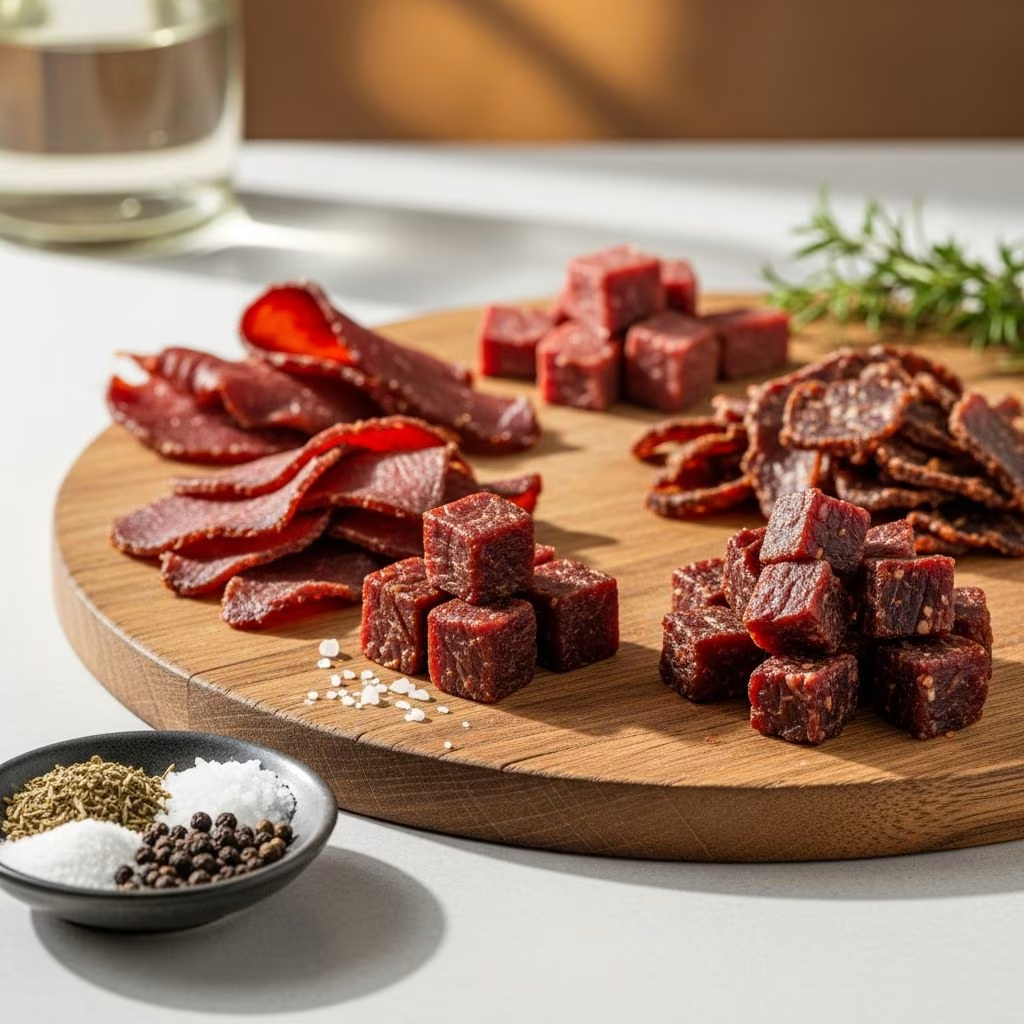
The introduction of three-ingredient formulations has catalyzed broader category expansion beyond traditional jerky. Manufacturers now offer minimal-ingredient beef sticks, air-dried slices, and steaks in various flavor profiles, providing consumers with versatile options for different consumption occasions. Some products feature regional variations, such as hickory-smoked versions, while maintaining the simplified ingredient structure.
The rollout strategy typically begins with core offerings in original and established flavor variants, allowing for consumer familiarity while demonstrating commitment to ingredient transparency. Subsequent expansions introduce complementary products across different formats—from portable sticks suited for on-the-go consumption to larger steaks for more substantial snacking occasions. This diversification approach maximizes market penetration by addressing varied consumer preferences and usage contexts.
Beyond beef products, manufacturers extending this philosophy have begun developing antibiotic-free poultry alternatives and specialized formulations for consumers following particular dietary approaches. Zero-sugar beef variations cater to low-carbohydrate diet adherents, while grass-fed options appeal to sustainability-conscious shoppers prioritizing environmental considerations alongside personal nutrition.
Addressing Consumer Questions About Minimal-Ingredient Snacks
Frequently Asked Questions
- How do three-ingredient products maintain food safety without conventional preservatives?
- Minimal-ingredient products rely on moisture reduction through air-drying, controlled processing environments, and packaging innovations like vacuum sealing. Salt provides natural preservation properties, while careful handling throughout production prevents contamination. These methods have been used successfully for centuries and undergo rigorous testing for modern food safety compliance.
- Do simplified formulations compromise on taste compared to traditional jerky?
- Consumer preference varies based on individual palates. Some appreciate the cleaner flavor profile that allows natural beef characteristics to shine, while others may prefer more intensely seasoned options. The minimal-ingredient approach represents a different flavor philosophy rather than an inferior product—emphasizing beef quality over additive complexity.
- What makes grass-fed beef specifically suited to minimal-ingredient products?
- Grass-fed cattle produce meat with more pronounced natural flavors, including beneficial omega-3 fatty acids and distinct taste compounds. This inherent complexity reduces the necessity for supplementary seasonings or flavor enhancers, supporting clean-label formulations without sacrificing palatability.
- Are minimal-ingredient products appropriate for all dietary approaches?
- Most three-ingredient beef products suit omnivorous diets well. Specific formulations accommodate various dietary preferences—zero-sugar versions for ketogenic approaches, antibiotic-free options for consumers avoiding pharmaceutical residues, and grass-fed variants for sustainability-focused individuals. However, these remain animal-based products unsuitable for vegetarian or vegan diets.
- How should consumers evaluate minimal-ingredient snack quality?
- Check sourcing information, including beef origin and feeding practices. Examine packaging for certification marks indicating grass-fed status or antibiotic-free production. Review nutritional labels for protein content, sodium levels, and added sugars. Consider personal flavor preferences, as minimal-ingredient products often taste distinctly different from heavily seasoned alternatives.
The Intersection of Health Trends and Commercial Viability
The emergence of minimal-ingredient protein snacks reflects convergence between consumer health consciousness and commercial feasibility. Modern consumers increasingly view food labels as communication tools—transparent ingredient lists signal trustworthiness and align with broader wellness philosophies. For manufacturers, simplification represents both opportunity and challenge: differentiation through constraint, where limitation becomes competitive advantage.
This market evolution demonstrates that consumer preferences significantly influence product development timelines. Companies recognizing demand for cleaner formulations invest in research and infrastructure to deliver products that meet these expectations. The financial success of simplified offerings validates this strategic direction, encouraging continued investment in clean-label initiatives across the protein snacking category.
Future Directions for Minimal-Ingredient Innovation
The trajectory of three-ingredient meat snacks suggests continued expansion and refinement. Manufacturers likely will introduce additional flavor variations while maintaining ingredient minimalism, exploring regional preferences and culinary inspirations within the simplified framework. Packaging innovations may emerge to enhance sustainability alongside ingredient transparency, addressing environmentally conscious consumers.
International market opportunities represent another growth vector. As global consumers increasingly adopt clean-eating philosophies, minimal-ingredient formulations appeal across diverse markets. Regional adaptations—incorporating locally preferred beef preparations or cultural flavor preferences—could expand this category’s reach beyond current geographic concentrations.
Research into alternative production methods may further enhance the minimal-ingredient approach. Emerging technologies in controlled environment processing or novel preservation techniques could enable even more streamlined formulations while improving consistency and scalability. These developments would strengthen the viability of producing high-quality protein snacks with genuinely minimal intervention.
Making Informed Choices in the Simplified Snacking Landscape
Consumers navigating expanding minimal-ingredient options should consider individual priorities beyond ingredient count. Quality sourcing, certifications indicating production standards, and transparent company communication about processing methods all contribute to overall product quality. Personal taste preferences matter equally—cleaner formulations don’t automatically provide superior enjoyment if flavor profiles don’t align with individual palates.
Price comparisons reveal that minimal-ingredient products typically command premium positioning, reflecting the costs associated with quality beef sourcing, processing infrastructure, and supply chain transparency. Consumers should evaluate whether these higher price points align with their budgetary constraints and prioritization of ingredient simplicity versus cost efficiency.
References
- Jack Link’s Launches 3-Ingredient Line of Beef Sticks, Steaks and Slices — Jack Link’s Official Blog. March 2, 2026. https://www.jacklinks.com/blog/jack-links-launches-3-ingredient-line/
- Jack Link’s Launches 3-Ingredient Meat Snacks — Prepared Foods Magazine. https://www.preparedfoods.com/articles/131431-jack-links-launches-3-ingredient-meat-snacks
- The Best Copy-Cat Jack Links Sweet & Hot Beef Jerky Recipe Ever! — Easy Cooking For All (YouTube). https://www.youtube.com/watch?v=hTNjsX4J0gw
- Jack Link’s Original Beef Jerky – Top Secret Recipes — Top Secret Recipes. https://topsecretrecipes.com/jack-links-original-beef-jerky-copycat-recipe.html