White sangria stands as one of the most versatile and approachable beverages for entertaining, offering a perfect balance of elegance and simplicity. This refreshing concoction transforms everyday white wine into a stunning pitcher drink that delights guests at any gathering. Whether you’re hosting a backyard barbecue, poolside celebration, or intimate dinner party, understanding the fundamentals of white sangria preparation ensures you’ll consistently create an impressive beverage that tastes as beautiful as it appears.
Understanding the Foundation of White Sangria
At its core, white sangria comprises five essential components that work together harmoniously. The base starts with dry white wine, which provides the structural foundation for the entire drink. Quality matters here, though you need not invest in expensive bottles—wines that taste pleasant on their own will shine when combined with other ingredients. Popular selections include Sauvignon Blanc, Pinot Grigio, and Viognier, each contributing distinct flavor profiles to your finished beverage. Spanish white wines also work exceptionally well, honoring the drink’s authentic origins.
The secondary alcohol component introduces complexity and depth. Orange liqueurs like Grand Marnier or Cointreau add botanical notes and subtle sweetness without overwhelming the palate. Some variations incorporate brandy, particularly apple brandy, which contributes a softer finish and nuanced flavor complexity. These spirit additions transform simple wine into something distinctly more sophisticated.
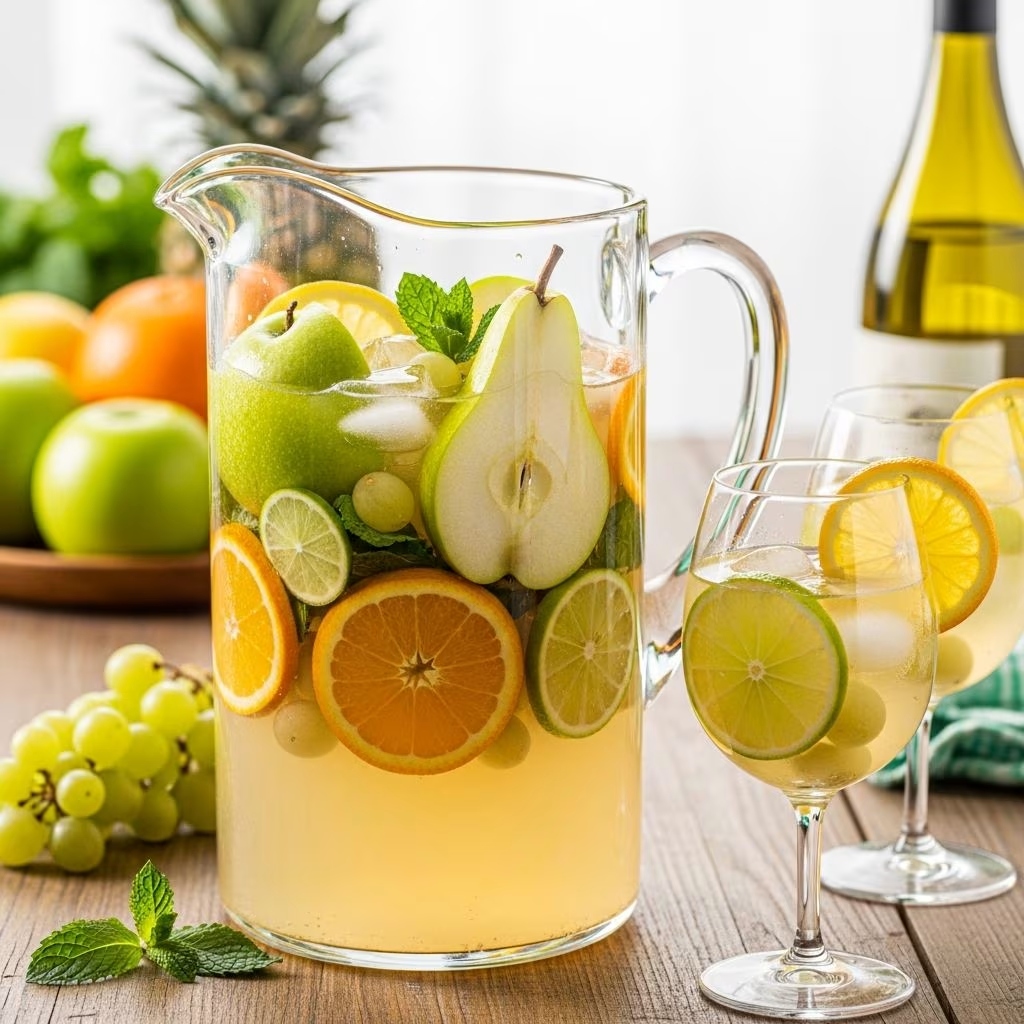
Fresh fruit serves as the third pillar, providing natural sweetness, vibrant color, and visual appeal. The beauty of white sangria lies in its adaptability—you can feature whatever fruits are at peak ripeness during your preparation period. The fruit infuses the wine while the wine, in turn, flavors the fruit, creating an interactive tasting experience.
Selecting and Preparing Your Fruit
The fruit component determines much of your sangria’s final character. Summer fruits perform particularly well, as they align naturally with when people crave refreshing beverages. Consider these tried-and-tested options:
- Stone fruits including peaches, nectarines, and apricots add natural sweetness and subtle floral notes
- Citrus varieties such as oranges, lemons, and limes provide brightness and acidity
- Berries including strawberries, blueberries, and blackberries contribute color and tartness
- Grapes, particularly green or red varieties, offer refreshing texture and natural sugars
- Apples deliver crispness and help balance sweeter elements
- Kiwis introduce tropical undertones and visual interest
Preparation technique matters significantly. Slice citrus fruits into thin rounds to maximize surface area for infusion. Cut stone fruits into bite-sized pieces that won’t overwhelm the pitcher or drinking experience. Leave small berries whole while halving or quartering larger varieties. The goal involves creating fruit pieces large enough to remain identifiable while small enough to be easily consumed from a glass.
A valuable trick involves reserving a portion of your prepared fruit specifically for glass garnishes and final presentation. This creates visual distinction between the fruit that infuses the wine and the fruit that decorates individual servings.
The Sweetening Strategy
Sweetness levels require careful calibration, as white sangria benefits from restrained sweetening rather than candied excess. Powdered sugar dissolves readily into cold liquid and distributes evenly throughout the pitcher. Some recipes omit added sweetness entirely, relying on natural fruit sugars to achieve balance. This approach works well when using perfectly ripe, in-season fruit but may require adjustment when fruits lack optimal ripeness.
Alternative sweetening options provide flexibility:
| Sweetening Option | Characteristics | Best For |
|---|---|---|
| Powdered sugar | Dissolves instantly, neutral flavor | Traditional preparations, quick mixing |
| Honey | Adds depth, slower to dissolve | Complex flavor profiles, warmth |
| Agave nectar | Smooth sweetness, mild flavor | Modern variations, dietary preferences |
| Fruit juice | Natural sweetness, added flavor dimension | Flavor amplification, reduced sugar |
The amount of added sweetener should complement rather than dominate. Start with minimal additions—remember that you can always add more, but removing excess sweetness proves impossible. Many experienced bartenders recommend tasting as you go, adjusting based on your specific wine selection and fruit choices.
The Chilling Process and Timing
Proper chilling develops flavor complexity and ensures the most refreshing drinking experience. Once you’ve combined all ingredients except the sparkling component, refrigerate the pitcher for at least four hours. This timeframe allows the wine to fully infuse with fruit flavors while the fruit absorbs the wine’s characteristics. Many hosts prepare sangria a full day in advance, creating even deeper integration and more sophisticated flavor development.
The extended chilling period offers practical advantages beyond flavor development. It allows you to prepare the beverage hours before guests arrive, eliminating last-minute preparation stress. The sight of fruit-studded sangria chilling in a clear pitcher also serves as attractive kitchen décor during the waiting period.
Just before serving, ensure your sparkling component—whether Prosecco, Cava, or sparkling water—remains properly chilled. The temperature contrast between the infused wine and the cold bubbly creates the desired effervescence and sensation on the palate. Some preparations benefit from briefly freezing grapes, which serve dual purposes: they chill the beverage without diluting it through melting ice, while providing textural contrast and visual appeal.
Assembling the Perfect Serving
The final presentation moment deserves attention and intention. When ready to serve, place ice directly into individual glasses rather than the pitcher—this prevents excessive dilution of the prepared sangria. Gently stir the pitcher once more to redistribute settled fruit and flavors evenly.
Pour the sangria roughly three-quarters full into each glass, then top with your chosen sparkling element. The ratio should favor the infused wine mixture while allowing the bubbles to create appealing effervescence. A final gentle stir ensures proper blending of all components.
Garnish thoughtfully with the reserved fruit pieces. A single orange wheel, lime slice, or berry positioned on the glass rim elevates the visual presentation considerably. Some hosts add fresh mint sprigs or other herbs for aromatic enhancement and aesthetic appeal.
Ingredient Variations and Creative Directions
While the foundational recipe remains relatively consistent across variations, creative possibilities abound. Some interpretations introduce different spirits—rum adds tropical warmth, while peach schnapps brings subtle stone fruit sweetness. Experimentation with your fruit selection based on seasonal availability keeps the recipe fresh and exciting across different entertaining seasons.
For those preferring lower alcohol content, increasing the sparkling water or seltzer proportion creates a lighter, more refreshing beverage without sacrificing flavor complexity. Some recipes incorporate fruit juices—particularly white cranberry or citrus juices—adding another flavor dimension while maintaining the drink’s essential character.
Wine Selection Beyond the Basics
While Pinot Grigio and Sauvignon Blanc dominate most white sangria recipes, exploration of other varieties yields interesting results. Viognier, a French white wine with fruity aromatics, brings floral complexity to the blend. Spanish white wines honor the drink’s authentic heritage while offering excellent value for entertaining quantities. The key principle involves selecting any dry white wine you’d happily drink on its own—the quality of your base ingredient directly influences the quality of your finished product.
Budget considerations needn’t compromise quality. Excellent white wines suitable for sangria exist at various price points. Rather than purchasing premium bottles that may be underappreciated when mixed with fruit and spirits, select mid-range bottles that provide quality without unnecessary expense.
Frequently Asked Questions About White Sangria
How long can white sangria be stored before serving?
Prepared white sangria keeps refrigerated for up to 24 hours before service. The extended storage time actually improves flavor development and integration. However, add the sparkling component only immediately before serving to maintain optimal effervescence.
Can white sangria be made without alcohol?
Absolutely. Replace the wine and spirits with additional sparkling water, fruit juices, or non-alcoholic alternatives. The fruit infusion remains the primary flavor driver, creating a refreshing beverage for those avoiding alcohol or driving.
What’s the ideal serving temperature?
Serve white sangria well-chilled, typically between 45-50 degrees Fahrenheit. This temperature preserves the refreshing quality while preventing the drink from becoming numbingly cold.
How many servings does a standard pitcher produce?
A standard 750ml bottle of wine combined with typical ingredient quantities yields approximately 6-8 servings, depending on glass size and dilution preferences.
Can frozen fruit be substituted for fresh?
While fresh fruit remains ideal, frozen fruit works in a pinch. Thaw frozen fruit partially before adding to prevent excessive ice crystal dilution. The texture and appearance won’t match fresh fruit, but flavors remain adequate.
Making White Sangria Your Own
The true beauty of white sangria lies in its adaptability to personal preferences and available ingredients. Use this guide as a foundation while encouraging your own creative variations. Taste your wine and add fruits that complement its flavor profile. Adjust sweetness according to your preference. Experiment with different spirit combinations to discover your signature version.
Whether you prepare traditional recipes or develop personalized variations, white sangria remains an accessible, impressive beverage that transforms simple ingredients into something worthy of celebration. The combination of quality white wine, fresh fruit, complementary spirits, and proper chilling technique creates a pitcher drink that consistently delights across seasons and occasions.
References
- White Sangria Recipe — The Art of Food and Wine. 2024. https://theartoffoodandwine.com/white-sangria-recipe/
- Easy Traditional White Sangria — Minimalist Baker. 2024. https://minimalistbaker.com/easy-traditional-white-sangria/
- Best White Sangria Recipe — Delish. 2024. https://www.delish.com/cooking/recipe-ideas/a27103875/classic-white-wine-sangria-recipe/
- Easy White Sangria — Spend With Pennies. 2024. https://www.spendwithpennies.com/easy-white-sangria/