Creating restaurant-quality ribs at home requires understanding a fundamental cooking principle that separates mediocre results from exceptional ones. The distinction lies not in expensive equipment or rare ingredients, but rather in applying a time-tested technique that major dining establishments have perfected over decades. This article explores how to transform ordinary baby back ribs into a show-stopping centerpiece that will elevate any gathering.
Understanding the Dual-Cooking Approach
The foundation of exceptional ribs begins with recognizing that one cooking method cannot accomplish everything needed to achieve both tenderness and desirable char marks. Professional kitchens have long understood that applying high heat directly to raw ribs results in tough, unevenly cooked meat with a dried outer layer. Instead, a two-phase approach separates the tenderizing process from the finishing stage, allowing each phase to accomplish its specific purpose.
The first phase employs low heat over an extended period to break down connective tissues and allow moisture to penetrate evenly throughout the meat. The second phase applies intense heat briefly to create a caramelized exterior and impart a smoky flavor. This methodology ensures that the interior reaches optimal tenderness while the surface develops the desirable crust that makes ribs memorable.
Phase One: The Low-Temperature Preparation
Beginning with two 2-pound slabs of baby back pork ribs, the first step involves sectioning each full rack into two equal halves. This division serves multiple purposes: it allows the ribs to fit more uniformly in your cooking vessel, ensures more even heat distribution, and makes handling easier during transitions between cooking phases.
Before wrapping, season the meat generously with salt, ground black pepper, and ground red chile pepper. The key to proper seasoning involves using more pepper than salt, as this creates a flavorful crust that will develop during cooking. The chile pepper adds depth and a subtle heat that complements the subsequent sauce.
Individually wrap each half-rack tightly in aluminum foil, ensuring complete coverage to trap moisture during the low-temperature baking phase. Preheat your oven to 300 degrees Fahrenheit and place the wrapped ribs directly on the racks. This temperature setting is critical—it allows the meat to cook slowly enough that connective tissue breaks down gradually while moisture is retained rather than evaporated.
The two-and-a-half-hour baking duration may seem lengthy, but this timeframe is essential for achieving the desired tenderness. During this extended period, the collagen in the meat gradually converts to gelatin, which is responsible for that coveted fall-off-the-bone texture. Remove the wrapped ribs from the oven and allow them to rest for ten minutes before the next phase.
Developing Your Custom Sauce Foundation
While the ribs are baking, you have the opportunity to prepare a sophisticated sauce that will distinguish your finished dish. The sauce begins by heating vegetable oil in a medium saucepan over medium heat. Add minced onion to the warming oil and cook while stirring frequently for approximately five minutes, until the onion becomes translucent and begins to brown slightly.
The next component involves introducing a water-tomato paste combination that creates the sauce’s foundation. Add one-and-a-half cups of water and one-half cup of tomato paste to the onion mixture, stirring thoroughly to ensure even distribution. This base provides umami depth and acidic balance.
To this foundation, introduce white vinegar and brown sugar in equal quantities—each one-half cup. These ingredients establish the sweet-and-sour profile that characterizes barbecue sauce. Add honey and Worcestershire sauce to enhance complexity: two-and-a-half tablespoons of honey and two tablespoons of Worcestershire contribute distinct flavor notes that layer upon one another.
The distinguishing element of this particular sauce involves the whiskey addition. While two teaspoons may seem minimal, whiskey contributes a subtle oak-barrel complexity and a slight smoky undertone that elevates the sauce beyond conventional barbecue preparations. The alcohol content largely evaporates during the extended simmering process, leaving behind only the refined flavors.
Layering Spices for Depth and Character
After establishing the base, incorporate the spice blend that will round out the sauce profile. Season with salt, ground black pepper, liquid smoke flavoring, garlic powder, paprika, and onion powder. Each spice contributes distinctly to the final flavor composition:
- Liquid smoke: Provides the characteristic barbecue smokiness without requiring actual smoking
- Garlic powder: Contributes pungent, savory notes that anchor the sauce
- Paprika: Adds subtle sweetness and color depth
- Onion powder: Enhances the existing onion elements with concentrated flavor
- Dark molasses: Creates richness and adds deep caramel notes
- Ground red chile pepper: Introduces gentle heat and complexity
Bring the sauce mixture to a rolling boil, then immediately reduce the heat to low. Allow the sauce to simmer uncovered for one-and-a-quarter hours. This extended simmering accomplishes two critical objectives: it thickens the sauce through moisture evaporation, and it allows the individual flavors to meld and mature into a cohesive whole. The sauce is ready when it has reduced significantly and coats a spoon without running off immediately.
Phase Two: The High-Heat Finishing Stage
Once the baked ribs have rested appropriately, carefully remove them from the aluminum foil and prepare your outdoor grill for high heat. Preheating is essential—aim for a grill temperature that will create visible heat waves above the grates. This intense heat is what will caramelize the exterior and create the appealing char marks.
Place the ribs on the preheated grill and cook for three to four minutes per side. During this brief period, the exterior will develop a attractive crust through the Maillard reaction, which creates complex flavors and improved texture through protein and sugar browning.
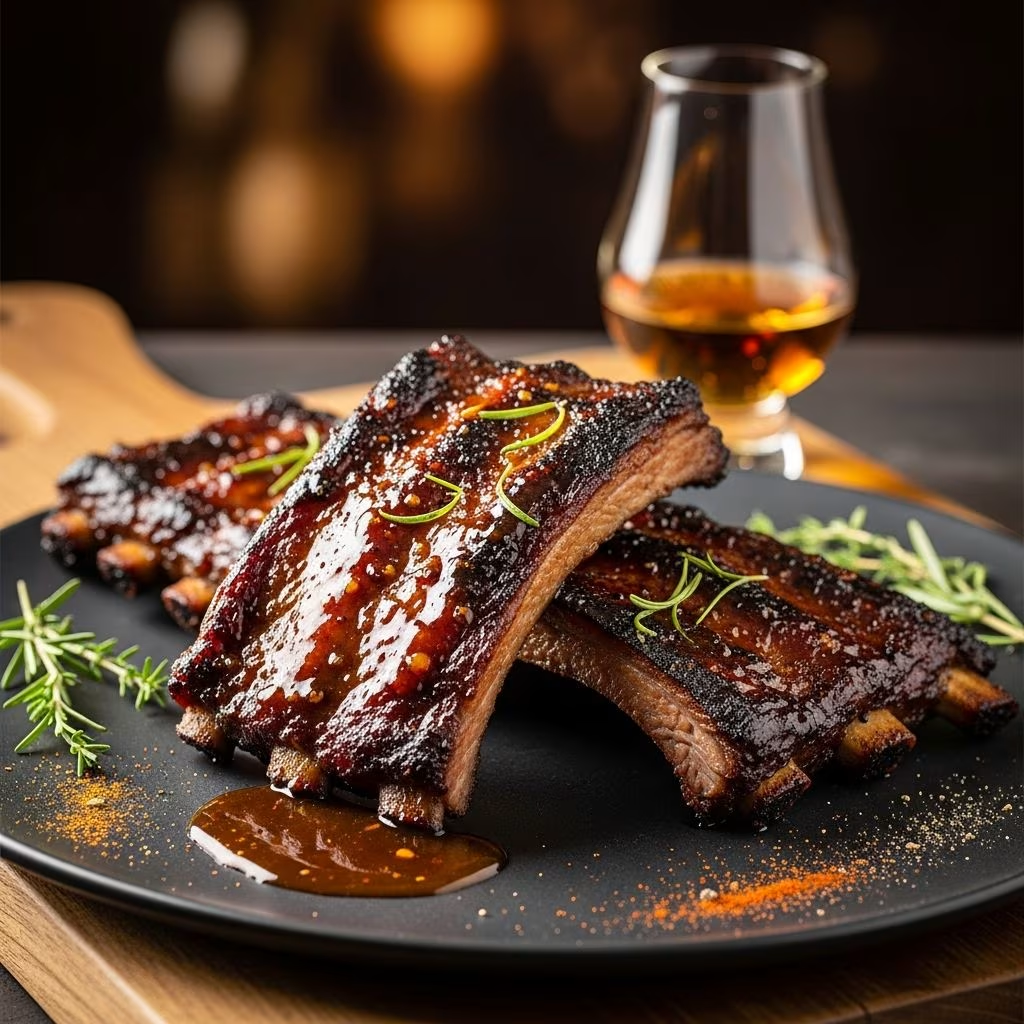
The timing of sauce application is critical to success. Apply the sauce only during the final moments of grilling, just before serving. Adding sauce too early will cause it to burn, creating bitter flavors and a charred appearance. By brushing the sauce on immediately before removing the ribs from the grill, it will caramelize slightly without burning, creating a glossy coating that clings to the meat.
Essential Timing Overview
| Cooking Phase | Duration | Temperature | Purpose | |
|---|---|---|---|---|
| Preparation and Seasoning | 20 minutes | Room temperature | Cutting ribs, seasoning, wrapping | |
| Initial Baking | 2 hours 30 minutes | 300°F oven | Tenderness development | |
| Sauce Preparation and Reduction | 1 hour 35 minutes | Medium-high to low heat | Flavor integration and thickening | |
| Resting Period | 10 minutes | Room temperature | Temperature stabilization | |
| Grilling and Finishing | 6-8 minutes | High heat | Crust development and sauce caramelization |
Ingredient Specifications and Measurements
The following ingredient list represents a proven combination that yields approximately four generous servings. Understanding the role of each ingredient helps in making informed substitutions if necessary.
- 2 slabs (approximately 4 pounds total) baby back pork ribs
- Coarsely ground black pepper (approximately 1 tablespoon, plus additional for initial seasoning)
- Ground red chile pepper (2 tablespoons total: 1 tablespoon for initial seasoning, 1/2 tablespoon for sauce)
- Vegetable oil (2.25 tablespoons for sauce)
- Onion (1/2 cup minced)
- Water (1.5 cups)
- Tomato paste (1/2 cup)
- White vinegar (1/2 cup)
- Brown sugar (1/2 cup)
- Honey (2.5 tablespoons)
- Worcestershire sauce (2 tablespoons)
- Salt (2 teaspoons for sauce, plus initial seasoning)
- Liquid smoke flavoring (1.25 teaspoons)
- Whiskey (2 teaspoons)
- Garlic powder (2 teaspoons)
- Paprika (1/4 teaspoon)
- Onion powder (1/2 teaspoon)
- Dark molasses (1 tablespoon)
Frequently Asked Questions
Can I prepare this recipe without access to an outdoor grill?
While the outdoor grill imparts distinctive character through direct flame and smoke, you can achieve acceptable results using an indoor broiler or even a cast-iron skillet. The high-heat finishing phase can be accomplished under a broiler element set to maximum temperature, though some smoky character will be sacrificed.
What is an acceptable substitute for whiskey in the sauce?
If whiskey is unavailable or undesirable, consider bourbon, rye, or even brandy in equal quantities. Alternatively, you can omit the alcohol entirely and add an additional one-quarter teaspoon of liquid smoke to compensate for lost depth. The alcohol primarily serves to enhance complexity rather than dominate the flavor profile.
How far in advance can I prepare components of this dish?
The sauce can be prepared up to three days in advance and refrigerated in a sealed container. The ribs should not be seasoned more than four hours before baking, as salt can draw out moisture. The complete dish, however, should be served immediately after grilling for optimal texture and temperature.
Is it necessary to use baby back ribs specifically?
Baby back ribs are preferred because of their smaller bone structure and favorable meat-to-bone ratio, but this method works equally well with spare ribs or St. Louis-cut ribs. Cooking times may require slight adjustment based on thickness variation.
Culinary Insights and Professional Techniques
The methodology described herein represents the approach employed by professional establishments to achieve consistent excellence. The two-stage cooking process ensures that restaurants can prepare ribs to order while maintaining uniform quality. By separating the time-intensive tenderness development from the quick finishing phase, a kitchen can complete the entire process within reasonable timeframes while maintaining quality standards.
The sauce preparation is deliberately extended through slow simmering to allow flavor components to mature and integrate fully. This contrasts with quick preparations where raw spices remain distinct and sometimes harsh. The extended simmering also reduces the sauce volume by approximately thirty to forty percent, concentrating flavors and creating a consistency that adheres to the meat rather than running off.
Temperature control throughout the process is paramount. The initial 300-degree oven temperature is specifically selected because it is high enough to cook the meat in reasonable time while remaining low enough to preserve moisture. Temperatures significantly higher would create an undesirably tough exterior before the interior achieves proper tenderness.
Serving Recommendations and Presentation
These ribs are best served immediately after completion, while the interior remains hot and the exterior retains its slight firmness. Plate them with attention to the char marks and gloss from the sauce application, as visual appeal enhances the dining experience. Accompany with simple sides that do not compete with the ribs’ complex flavors—coleslaw, baked beans, or roasted vegetables allow the ribs to remain the focal point.
The recipe yields four generous servings suitable for a family dinner or casual gathering. For larger events, the recipe scales linearly: simply prepare multiple batches, as the primary time constraint is oven and grill availability rather than preparation complexity.
References
- Scott David Hibbard Whiskey Grilled Ribs Recipe — Lake of the Woods Tourism. April 2026. https://lakeofthewoodsmn.com/scott-hibbs-whiskey-grilled-ribs/
- Amazing Whiskey Grilled Baby Back Ribs — Cooking For Love. June 2010. https://cooking4love.com/2010/06/25/amazing-whiskey-grilled-baby-back-ribs/
- How to Grill Baby Back Ribs | Pork Recipe — Allrecipes.com. YouTube. https://www.youtube.com/watch?v=Onh6wogK-WU