When seeking an appetizer that balances simplicity with sophistication, few dishes rival the combination of silky whipped feta cheese crowned with sweet, caramelized roasted tomatoes. This Mediterranean-inspired creation has become a staple on elegant dinner tables and casual gatherings alike, proving that the most memorable dishes often require just a handful of quality ingredients and minimal preparation.
The beauty of this dish lies in its versatility and accessibility. Whether you’re hosting a formal dinner party or preparing a casual spread for friends, this appetizer adapts seamlessly to any occasion. The contrast between the cool, creamy feta base and the warm, concentrated tomato topping creates a textural and flavor experience that lingers long after the last bite.
Understanding the Foundation: Quality Feta Selection
The success of this dish hinges entirely on selecting the right feta cheese. While pre-crumbled feta might seem convenient, whole blocks of feta offer superior texture and blending capabilities. When shopping, look for feta packaged in brine rather than vacuum-sealed options, as these tend to be softer and more suitable for whipping into a smooth, creamy consistency.
Different feta varieties can yield varying results. Some European fetas are denser and require more processing time to achieve the desired silky texture, while others blend almost instantly. Taste testing different brands before committing to your appetizer preparation can help you identify which varieties work best in your kitchen.
The crumbly texture of raw feta transforms dramatically when processed with complementary ingredients. This metamorphosis is what elevates the dish from merely spreading cheese on bread to creating a luxurious dip worthy of special occasions.
Crafting the Perfect Whipped Texture
Achieving the ideal consistency requires understanding the role of supporting ingredients. A food processor becomes your essential tool, transforming crumbly feta into a cloud-like spread through sustained blending. The typical preparation combines feta cheese with olive oil and an additional creamy component—either Greek yogurt, sour cream, or water—depending on the desired richness level.
Greek yogurt offers a protein boost and subtle tang that complements the feta’s saltiness. Sour cream provides a richer, more indulgent mouthfeel. Water serves as the lightest option, allowing the feta’s natural flavors to shine without additional competing tastes. Lemon juice brightens the overall profile, while fresh garlic adds depth and complexity.
The blending process typically requires two to three minutes of continuous processing. Stop periodically to scrape down the processor bowl, ensuring all ingredients combine evenly. A critical warning: over-processing can cause the feta to become watery and separate, so monitor carefully and stop as soon as smooth creaminess is achieved.
The Roasting Process: Developing Concentrated Flavor
While the feta processes, prepare the tomatoes for their transformation. Cherry or grape tomatoes work best, as their smaller size allows for even cooking and their natural sweetness intensifies during roasting. Toss the whole tomatoes with generous amounts of olive oil, fresh or dried herbs, and seasonings.
Roasting at moderate to high temperatures—typically between 350°F and 400°F—takes approximately 15 to 40 minutes depending on your oven and tomato size. The goal is to achieve visible softening, with some tomatoes beginning to split and release their juices. The longer roasting time concentrates sugars, developing caramelized notes that provide sweet contrast to the salty feta base.
Thyme and oregano are traditional choices, but don’t hesitate to experiment with basil, rosemary, or even Italian seasoning blends. Garlic cloves roasted alongside the tomatoes add mellow sweetness, while a splash of vinegar—whether red wine, sherry, or balsamic—provides brightness and acidity that balances richness.
Assembly and Presentation Techniques
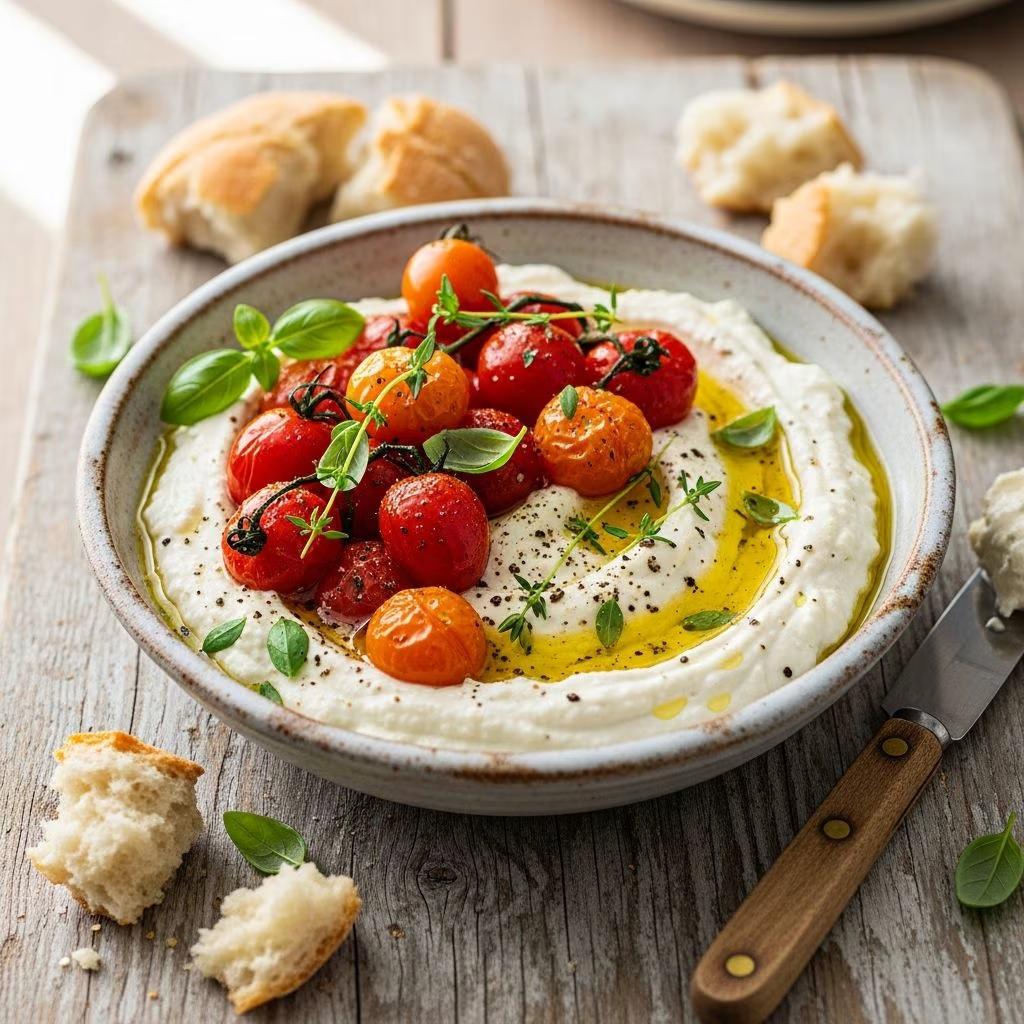
Transfer the whipped feta to a shallow serving bowl, creating a slight well in the center if desired. Spoon the warm roasted tomatoes and their oil directly over the feta, allowing the warm liquid to create pools of flavor throughout the spread. The contrast between warm tomatoes and cool (or room-temperature) feta creates an engaging sensory experience.
Garnish generously with fresh herb leaves, a sprinkle of flaky sea salt, and cracked black pepper. A drizzle of excellent quality olive oil adds a finishing touch that elevates the presentation and flavor profile. This final layer of oil creates visual appeal while adding richness that ties all elements together.
Bread Preparation: The Perfect Delivery Vehicle
Crusty bread serves as both vehicle and essential component. A quality baguette, sourdough, or ciabatta works exceptionally well. Slice the bread to approximately half-inch thickness, brush both sides generously with olive oil, and toast until crispy and lightly charred. The toasting process should be brief—just one to two minutes per side—to maintain a tender interior while achieving a crisp exterior.
For grilling, use medium-high heat and watch carefully to prevent burning. If cooking indoors, a cast-iron skillet or grill pan works beautifully. For those preferring gentler toasting, a broiler or standard toaster oven accomplishes the goal with less risk of over-charring.
Flavor Combinations Worth Exploring
| Herb Profile | Complementary Ingredients | Best Occasions |
|---|---|---|
| Traditional Mediterranean | Thyme, oregano, garlic | Formal dinners, wine tastings |
| Fresh and Bright | Dill, parsley, lemon zest | Spring gatherings, casual entertaining |
| Robust and Earthy | Rosemary, basil, balsamic vinegar | Fall entertaining, hearty meals |
| Modern Twist | Chili flakes, cumin, cilantro | Contemporary dinner parties, adventurous palates |
Making It Your Own: Creative Variations
The fundamental technique serves as a canvas for personal expression. Some preparations incorporate honey drizzled into the roasted tomatoes, adding subtle sweetness that amplifies the natural fruit notes. Others mix ricotta with the feta for increased creaminess and lighter overall taste.
Incorporating roasted red peppers or sun-dried tomatoes alongside fresh roasted varieties adds complexity and texture variation. A touch of pomegranate molasses or red wine vinegar introduces tangy depth, while crushed red pepper flakes provide subtle heat that doesn’t overwhelm delicate palates.
For those avoiding raw garlic, roasting garlic cloves alongside tomatoes produces mellow, sweet results that contribute depth without aggressive bite. Experimenting with different oil varieties—walnut, hazelnut, or peppery olive oils—creates subtle flavor shifts that intrigue discerning guests.
Serving Suggestions and Menu Placement
This appetizer works beautifully as part of a larger spread, alongside cured meats, aged cheeses, and marinated vegetables. Its Mediterranean character pairs naturally with Greek or Italian wines, particularly white varieties like Sauvignon Blanc or Vermentino. Light rosés and even certain whites from Eastern European regions complement the dish’s profile.
Serve at room temperature or slightly warm for optimal flavor expression. If preparing ahead, the feta can be whipped and refrigerated for up to three days, while roasted tomatoes store separately for similar durations. Combine just before serving to maintain textural contrast and visual appeal.
Portion-wise, this recipe typically serves four to six people as an appetizer. Account for individual appetites and whether other courses follow. The richness means smaller portions satisfy more thoroughly than lighter appetizers might.
Practical Timing and Preparation
The entire process—from ingredient preparation to serving—requires approximately 45 minutes. Component timing is important: begin roasting tomatoes first, then start the whipping process about 20 minutes in. Meanwhile, prepare and toast bread so all elements finish simultaneously.
For entertaining purposes, complete feta whipping up to one hour in advance, storing at room temperature. Toast bread immediately before serving to ensure maximum crispness. This staggered approach reduces last-minute pressure while maintaining quality.
If time is genuinely limited, room-temperature preparations work perfectly. The feta requires no cooking, and tomatoes can roast while guests arrive. The entire assembly takes fewer than five minutes, making this ideal for spontaneous entertaining or last-minute dinner contributions.
Addressing Common Preparation Challenges
Occasionally feta refuses to achieve desired smoothness despite adequate processing time. This typically indicates lower-quality feta or insufficient moisture content. Solutions include adding more Greek yogurt or a tablespoon or two of additional olive oil, then processing further. If the mixture becomes too thin, stop immediately and serve as a lighter dip.
Tomatoes that don’t adequately caramelize may result from oven temperature variations or particularly watery tomato batches. Extend roasting time slightly, or increase oven temperature by 25 degrees for remaining cooking time. Conversely, if tomatoes char too quickly, reduce temperature and monitor carefully.
Bread that turns soggy shortly after toasting indicates either over-generous oil application or premature assembly. Toast bread within 15 minutes of serving, and apply oil moderately—enough for flavor and crispness, not so much that bread becomes saturated.
Frequently Asked Questions
Can this dish be prepared in advance?
Yes. Whip the feta up to two days ahead, storing covered in the refrigerator. Roast tomatoes the morning of serving. Combine just before serving to maintain optimal texture contrast and prevent the feta from absorbing excess tomato liquid.
What if I don’t have a food processor?
A blender works adequately, though it may require more patience and additional liquid. Alternatively, mash feta thoroughly with a fork, gradually incorporating other ingredients until achieving desired creaminess. This method produces slightly grainier texture but remains delicious.
Are there dairy-free alternatives?
Cashew cream or silken tofu can substitute for traditional feta, though the distinctive salty tang will be absent. Additional seasoning—particularly lemon juice and salt—helps compensate for these absent flavor notes.
How do I prevent the feta from becoming watery?
Avoid over-processing, which causes feta to separate. Use block rather than crumbled feta. If the mixture does become watery, drain excess liquid through a fine-mesh strainer lined with cheesecloth, then continue blending.
Can roasted tomatoes be made several days ahead?
Absolutely. Store roasted tomatoes with their oil in the refrigerator for up to five days. Gently reheat before serving to restore optimal temperature and flavor expression.
Conclusion: Mastering a Timeless Appetizer
This combination of whipped feta and roasted tomatoes represents refined simplicity—proof that exceptional dishes need not require complicated techniques or obscure ingredients. The preparation rewards attention to detail while remaining fundamentally forgiving and adaptable to personal preferences and available resources.
Whether you’re developing entertaining skills or seeking to impress sophisticated palates, this appetizer delivers reliably excellent results. The Mediterranean flavors transport diners while the humble ingredient list and straightforward preparation reassure the cook. Master this foundation, then feel empowered to explore variations that reflect your culinary style and the seasons available in your kitchen.
References
- Whipped Feta with Roasted Tomatoes — The Original Dish. 2019-08-07. https://www.theoriginaldish.com/2019/08/07/whipped-feta-with-roasted-tomatoes/
- Warm Cherry Tomatoes with Feta Cream and Herbs — Andrea Buckett. https://andreabuckett.com/warm-cherry-tomatoes-with-feta-cream-and-herbs-d41/
- Whipped Feta Dip with Roasted Tomatoes — Downshiftology. https://downshiftology.com/recipes/whipped-feta-with-roasted-tomatoes/
- Whipped Feta with Roasted Tomatoes — Don’t Go Bacon My Heart. https://www.dontgobaconmyheart.co.uk/whipped-feta-roasted-tomatoes/